Óscar Arnulfo Romero, the Archbishop of San Salvador, became one of the most important moral voices of the 20th century. Known as “the voice of the voiceless,” he stood against injustice, poverty, and state violence in El Salvador during a time of deep political and social turmoil. His assassination in 1980 shocked the world and transformed him into a global symbol of faith, courage, and human rights.
Early Life and Church Career
Romero was born on August 15, 1917, in Ciudad Barrios, El Salvador. He entered the seminary at an early age and was ordained as a priest in 1942. For decades, Romero was regarded as a conservative and cautious church leader, prioritizing pastoral duties over politics. His appointment as Archbishop of San Salvador in 1977 was welcomed by El Salvador’s ruling elite, who saw him as someone unlikely to challenge the status quo.
Transformation and Advocacy
However, Romero’s outlook changed dramatically after witnessing the growing violence in El Salvador and the suffering of the poor. A pivotal moment came with the assassination of his close friend, Father Rutilio Grande, a Jesuit priest who worked with marginalized rural communities. From then on, Romero became an outspoken critic of human rights abuses, corruption, and the repression carried out by El Salvador’s military-backed government.
Every Sunday, Romero’s sermons were broadcast nationwide by radio. He used them to denounce violence, call for peace, and demand justice for the poor. His words inspired hope among the oppressed but provoked anger among the powerful.
Assassination
On March 24, 1980, Romero was shot and killed while celebrating Mass at a hospital chapel in San Salvador. His assassination, carried out by a death squad linked to the government, marked a turning point in El Salvador’s history. His funeral, attended by hundreds of thousands, was violently disrupted by gunfire and bombs, symbolizing the brutality of the era.
Legacy
Romero’s death did not silence his message. Instead, it amplified it worldwide. He became an enduring symbol of the struggle for justice and human dignity. His example continues to inspire human rights defenders, faith leaders, and activists worldwide.
In 2015, Pope Francis beatified Romero, declaring him a martyr. On October 14, 2018, he was canonized as a saint by the Catholic Church, officially recognized for his commitment to defending the poor and oppressed.
Conclusion
Óscar Arnulfo Romero’s life and death reflect the power of moral courage in the face of oppression. He stood alongside the marginalized when it was most dangerous to do so, and in doing so, became a beacon of hope. More than four decades after his assassination, Romero’s voice still resonates: a call for justice, peace, and unwavering solidarity with the voiceless.
Disclaimer: The views expressed in this article are those of the author and may not reflect those of Shinybull.com. The author has made every effort to ensure the accuracy of the information provided; however, neither Shinybull.com nor the author can guarantee the accuracy of this information. This article is strictly for informational purposes only. It is not a solicitation to make any exchange in precious metal products, commodities, securities, or other financial instruments. Shinybull.com and the author of this article do not accept culpability for losses and/ or damages arising from the use of this publication.
Throughout history, a clear pattern emerges: those who stand up for justice, freedom, and human dignity often become targets of violence or repression. From religious leaders to political activists, many have paid the ultimate price—or suffered imprisonment—for their message.
Lincoln was shot because he was working on human rights. John F. Kennedy was shot because he was working on human rights. Martin Luther King Jr was shot because he was working on human rights. Olof Palme was shot because he was working on human rights. Lincoln was shot at a theater. So was Olof Palme.
Jesus – The First Great Human Rights Advocate?
Jesus of Nazareth, who lived over 2,000 years ago, can be seen as one of the earliest and most significant champions of human dignity. He taught love, forgiveness, and equality, consistently placing the marginalized and oppressed at the center of his message.
His teachings challenged both religious authorities and the political powers of his time, symbolizing a new understanding of justice and humanity. As a result, he was perceived as a threat—not only to religious leaders but also to the Roman authorities. His fate, crucifixion, demonstrates how power often reacts violently to those who challenge it.
Lincoln, Kennedy, MLK, Gandhi, Palme, Thrane, and Other Advocates
History echoes itself in remarkable ways:
Abraham Lincoln abolished slavery in the United States. He was assassinated in 1865 by John Wilkes Booth, who viewed him as a threat to the Southern states.
John F. Kennedy, U.S. President and advocate for civil rights, was shot in 1963.
Martin Luther King Jr. led the fight for African American rights and was assassinated in 1968.
Robert F. Kennedy was killed during the 1968 presidential campaign; he, too, championed equality and justice.
Mahatma Gandhi fought for India’s independence and nonviolent resistance, and was assassinated by a Hindu extremist in 1948.
Óscar Romero, Archbishop of El Salvador, was murdered in 1980 for defending the poor and oppressed.
Olof Palme, Prime Minister of Sweden, was assassinated in 1986 for his outspoken support for human rights, both domestically and internationally. Palme advocated for social welfare, equality, and global justice, and spoke out against oppression worldwide.
Marcus Thrane, Norway (1817–1890), was a pioneering labor and social reform leader. He fought for workers’ rights, universal male suffrage, and social equality. Though not assassinated, Thrane was imprisoned for challenging authorities, showing that human rights advocacy often provokes severe repression.
Why These Individuals Were Seen as Threats
Human rights advocates challenge power structures:
They question privilege and the status quo.
They mobilize people and give a voice to the oppressed.
They become symbols—living icons of hope and change.
Extremists or authorities who respond with violence or repression may include:
Political extremists who aim to maintain unjust systems.
Religious extremists who feel threatened by their beliefs or traditions.
Authoritarian regimes are unwilling to tolerate criticism or popular mobilization.
A Timeline of Human Rights Advocates Who Faced Assassination or Repression
Year
Name
Role / Contribution
Circumstances
~30 AD
Jesus of Nazareth
Advocated love, equality, and justice
Crucified in Jerusalem; seen as a threat by religious and political powers
1851
Marcus Thrane
Norwegian labor and social reformer
Imprisoned for activism and challenging authorities
1865
Abraham Lincoln
U.S. President; abolished slavery
Assassinated by John Wilkes Booth
1948
Mahatma Gandhi
Indian independence leader; nonviolent resistance
Assassinated by Hindu extremist Nathuram Godse
1963
John F. Kennedy
U.S. President; civil rights supporter
Assassinated in Dallas
1965
Malcolm X
African-American civil rights leader
Assassinated by political/religious extremists
1968
Martin Luther King Jr.
Civil rights leader; racial equality
Assassinated by James Earl Ray
1968
Robert F. Kennedy
U.S. Senator; civil rights advocate
Assassinated by Sirhan Sirhan
1980
Óscar Romero
Archbishop; defender of the poor
Murdered by military-backed death squad
1986
Olof Palme
Prime Minister of Sweden; human rights and global justice
Assassinated in Stockholm while walking home
A Pattern Through History
From Jesus to MLK, Gandhi, Palme, and Thrane, a consistent thread is evident: those who dare to fight for human rights place themselves at risk. Assassinations and imprisonments of such individuals are not random; they represent a perceived threat to power and control.
Yet, their deaths or repression often amplify their influence rather than end it. They become symbols inspiring millions, showing that the fight for justice continues even after the heroes are gone.
Conclusion
History teaches us that standing up for justice can be dangerous, but also essential. From the crucifixion of Jesus to modern human rights defenders like Olof Palme and reformers like Marcus Thrane, we see how power and oppression react to threats and how individuals can transform the world through courage and conviction.
Disclaimer: The views expressed in this article are those of the author and may not reflect those of Shinybull.com. The author has made every effort to ensure the accuracy of the information provided; however, neither Shinybull.com nor the author can guarantee the accuracy of this information. This article is strictly for informational purposes only. It is not a solicitation to make any exchange in precious metal products, commodities, securities, or other financial instruments. Shinybull.com and the author of this article do not accept culpability for losses and/ or damages arising from the use of this publication.
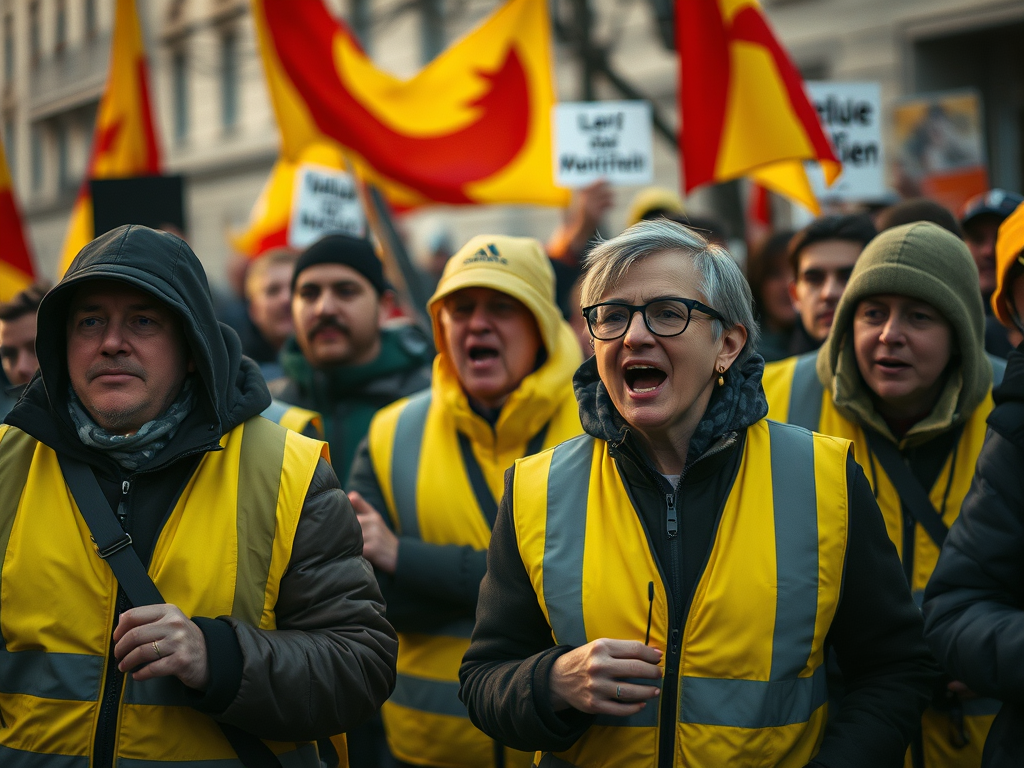
For decades, people (including me/the editor) have been fascinated by the strange parallels between Abraham Lincoln and John F. Kennedy. Both were elected to Congress exactly 100 years apart, became president 100 years apart, were assassinated on a Friday, and were succeeded by men named Johnson. Their killers even share oddly similar details in their names.
At first glance, it almost feels supernatural—like history repeating itself in perfect rhythm. But is it really a mystery?
Historians point out that much of the similarity comes from selective perception. Out of the thousands of differences in their lives and presidencies, people naturally highlight the few coincidences that line up neatly. This is a classic example of confirmation bias: our brains are wired to notice patterns, even when they’re random.
Some “coincidences” are also simplified or exaggerated in retellings. For instance, John Wilkes Booth wasn’t really born in 1839 (he was born in 1838), and not every detail lines up perfectly. The myth has grown stronger as the story is passed along, making it sound more mysterious than it actually is.
So why do these parallels feel so compelling? Psychologists say it’s because humans crave meaning. We don’t like to think of history as chaotic or random; we prefer to imagine deeper connections. When two of America’s most famous presidents share some eerie overlaps, it’s easy to weave them into a narrative that feels fated.
Let`s take a closer look at all the coincidences, so we all can make up our own minds. What do you think? Is it a coincidence, and if not, what is it?
Did You Know? The Strange Coincidences Between Lincoln and Kennedy
Did you know that Abraham Lincoln and John F. Kennedy share a series of coincidences that almost sound too incredible to be true?
Lincoln was elected to Congress in 1846, while Kennedy followed exactly one century later, in 1946. Lincoln became president in 1860, and Kennedy in 1960. Both men placed civil rights at the heart of their political agendas.
The parallels don’t stop there. Both presidents were shot in the head, on a Friday, and both were succeeded by men named Johnson—Andrew Johnson (born 1808) after Lincoln, and Lyndon B. Johnson (born 1908) after Kennedy.
Even their assassins show a strange pattern. Lincoln’s killer, John Wilkes Booth, was born in 1838. Kennedy’s assassin, Lee Harvey Oswald, was born in 1939. Each is remembered by all three of their names—and each name contains exactly 15 letters.
The settings are equally eerie: Lincoln was shot in Ford’s Theatre, while Kennedy was shot in a Lincoln car, made by Ford. Booth fled a theater and was captured in a barn. Oswald fired from a warehouse and was captured in a theater.
Coincidence? Maybe. But the uncanny parallels between Lincoln and Kennedy have fascinated historians and the public alike for decades.
If It Isn’t Coincidence: The Mystery of Lincoln and Kennedy
For over half a century, people have wondered: could the eerie parallels between Abraham Lincoln and John F. Kennedy be more than mere coincidence?
If we set aside the skeptics’ explanations of chance and pattern-seeking, a few intriguing possibilities emerge.
Some imagine history as a cycle, repeating itself in hidden rhythms. In this view, Lincoln and Kennedy weren’t just two presidents separated by a century—they were actors cast in the same recurring drama, destined to face similar trials at similar moments in America’s story.
Others lean toward mystical explanations. Perhaps the two men were linked by fate, or even reincarnation: the same soul returning to guide the nation in moments of upheaval. Civil rights, unity, and the fight against division marked both presidencies. Was Kennedy continuing a mission Lincoln began? And what about MLK, who was a Civil rights Champion? Also, he was shot.
There’s also a conspiratorial lens. If powerful forces engineered both assassinations, the similarities might not be accidents at all, but deliberate echoes—details designed to send a chilling message across generations.
And then there’s the possibility of a psychological pattern. Maybe leaders who challenge the status quo—who push too hard on civil rights and equality—are always bound to meet resistance, no matter the century. The echoes we notice could simply be the shadow of power repeating itself.
Whether it’s fate, conspiracy, or the cycles of history, one thing is sure: the Lincoln–Kennedy parallels continue to haunt us, because deep down, we sense that history is never entirely random.
The Lincoln–Kennedy Enigma
Some call it a coincidence. Others whisper of fate.
A century apart, two men rose to lead America. Both spoke of unity, of civil rights, of a brighter tomorrow. Both carried the weight of a divided nation. And both met their end in the same way—on a Friday, by a bullet to the head.
Lincoln and Kennedy. Different centuries, same story. Their successors bore the same name. Their killers mirrored each other, right down to the letters in their names. The pattern is too precise, too elegant, too cruel to dismiss as chance.
So what is it?
Is history caught in a loop, replaying itself like a record that can’t escape the groove? Are Lincoln and Kennedy two faces of the same destiny—one soul returning, unfinished business in hand? Or is it something darker? A hidden hand, weaving events to prove a point: that power never forgets, and those who challenge it will always fall in the same way.
The facts are real. The parallels are undeniable. What they mean… remains a mystery.
Maybe it’s a coincidence. Maybe it’s fate. Or maybe… It’s the shadow of history itself.
The Hidden Hand
They call it a coincidence. But in the dark corners of history, whispers tell of something else—the Hidden Hand.
The theory goes like this: whenever a leader rises to challenge the old order, to push too far, too fast, the Hidden Hand intervenes. It doesn’t wear a face. It doesn’t sign its name. It moves quietly, shifting events, nudging fate, until the outcome is sealed.
Lincoln, they say, stood in the way of a fractured nation healing on its own terms. He forced the issue—slavery, equality, the very definition of freedom. The Hand moved. Booth pulled the trigger.
A century later, Kennedy dared to dream of civil rights, peace with enemies, and a future outside the control of those who profited from conflict. Again, the Hand moved. Oswald fired from the window.
But who—or what—is the Hidden Hand?
Some say it is not a who at all, but a network: secret societies, power brokers, the guardians of wealth and order. Others believe it is older than governments, older than money—a force that ensures balance by cutting down those who rise too high.
The evidence is never written in books, never proven in courts. It lives in patterns, in eerie coincidences, in the silence that follows a gunshot.
Perhaps the Hand is real. Perhaps it is only the shape our minds give to chaos. But if it is real, one truth remains: it is still here, waiting, watching… ready to move again.
The Lincoln–Kennedy Code
Some say history is random. Some say it is written. Others… say it is programmed.
In the shadows, beyond the eyes of ordinary citizens, a code runs silently, threading events together like lines of invisible text. Lincoln and Kennedy—they were anomalies in the system. Two points of interference, two glitches in the simulation, pulling at the edges of the Matrix.
Lincoln rose to challenge the rules of his time, daring to rewrite the moral algorithm of a nation. Kennedy, a century later, attempted to push the code even further, to open pathways the system never intended. And in each case, the system corrected itself. A gunshot. A Friday. A succession meant to restore balance.
The Hidden Hand, some theorists whisper, is not human. It is the program itself, self-correcting, adjusting the loops of history to prevent the simulation from destabilizing. Every coincidence—the names, the dates, the letters in assassins’ names—was a sign of the underlying code, a signature left for those who could see.
But the anomaly persists. Those who notice the patterns, who question why history repeats with such precision… they are the exceptions. And exceptions, in the Matrix, are dangerous.
Lincoln. Kennedy. The pattern is unfinished. The code is still running. And somewhere, beyond the veil of what we call reality, the system watches, calculates… and waits.
The Simulation
What if everything we know—history, life, even death—is not real? What if reality itself is a simulation, a construct designed to test, to teach, or simply to observe?
Some patterns seem too precise to be random. Lincoln and Kennedy, separated by a century yet eerily linked by dates, names, and deaths—are they just coincidences, or are they markers in the code? Every anomaly, every “glitch” in history, could be the system correcting itself, nudging events so the simulation stays on course.
Perhaps we are all characters in a program we cannot see, playing roles assigned long before we were born. Some of us notice the glitches: the strange parallels, the déjà vu, the moments when history repeats itself with impossible precision. And those who notice… are awakened, aware that the world is not what it seems.
Lincoln. Kennedy. The patterns are clues. The simulation is still running. And somewhere, unseen, the programmer watches, shaping reality one line of code at a time.
Short summary:
Lincoln–Kennedy Coincidences
Lincoln was elected to Congress in 1846.
Kennedy was elected to Congress in 1946.
Lincoln became president in 1860.
Kennedy became president in 1960.
Both were strongly concerned with civil rights.
Both were shot in the head on a Friday.
Both were succeeded by a Johnson:
Andrew Johnson (born 1808), after Lincoln
Lyndon B. Johnson (born 1908), after Kennedy
Both assassins are known by their three names, each with 15 letters:
John Wilkes Booth
Lee Harvey Oswald
Lincoln was shot in Ford’s Theatre.
Kennedy was shot in a Lincoln car made by Ford.
Booth fled a theater and was caught in a barn.
Oswald shot from a warehouse and was caught in a theater.
Disclaimer: The views expressed in this article are those of the author and may not reflect those of Shinybull.com. The author has made every effort to ensure the accuracy of the information provided; however, neither Shinybull.com nor the author can guarantee such accuracy. This article is strictly for informational purposes only. It is not a solicitation to make any exchange in precious metal products, commodities, securities, or other financial instruments. Shinybull.com and the author of this article do not accept culpability for losses and/ or damages arising from the use of this publication.

President of Russia, Supreme Commander-in-Chief, Vladimir Putin, attended a military parade marking the 80th anniversary of Victory in the Great Patriotic War of 1941-1945.
Before the parade, the President welcomed the leaders of foreign countries to the Kremlin, who had come to Moscow for the Victory Day celebrations.
The parade began with a march of the banner group bringing the national flag of Russia and the Victory Banner into Red Square.
The marching column on Red Square included 55 ceremonial units of over 11,500 service personnel, including over 1,500 personnel involved in the special military operation. Military contingents from Azerbaijan, Belarus, Kazakhstan, Kyrgyzstan, Tajikistan, Turkmenistan, Uzbekistan, Vietnam, Egypt, China, Laos, Mongolia, and Myanmar also took part in the Victory Parade.
The parade concluded with the renowned Kubinka Diamond formation of Su-30 and MiG-29 fighter jets from the Russkiye Vityazi (Russian Knights) and Strizhi (Swifts) aerobatic teams. Closing the flyover, Su-25 attack aircraft painted the sky in the colours of the Russian national flag.
Here is the speech Vladimir Putin had today:
President of Russia Vladimir Putin: Citizens of Russia,
Veterans, guests,
Comrade soldiers and sailors, sergeants and sergeant majors, midshipmen and warrant officers,
Comrade officers, generals and admirals,
I congratulate you on the 80th anniversary of Victory in the Great Patriotic War!
Today, we are all united by the feelings of joy and grief, pride and gratitude, and admiration for the generation that crushed Nazism and won freedom and peace for all humanity at the cost of millions of lives.
We faithfully preserve the memory of those historic, glorious events. As the heirs of the victors, today we celebrate Victory Day as the most important holiday for the country, which the entire nation, each family, each of us holds dear.
Our fathers, grandfathers and great-grandfathers saved the Fatherland. And they bequeathed us to defend the Motherland, to stay united and firmly defend our national interests, our thousand-year history, culture and traditional values – everything that is dear to us, that is sacred to us.
We remember the lessons of World War II and will never agree with the distortion of those events or attempts to justify the murderers and slander the true victors.
Our duty is to defend the honour of the Red Army soldiers and commanders, and the heroism of fighters of different ethnic backgrounds who will forever remain Russian soldiers in world history.
Russia has been and will continue to be an indestructible obstacle to Nazism, Russophobia and anti-Semitism, and will stand in the way of the violence perpetrated by the champions of these aggressive and destructive ideas.
Truth and justice are on our side. The whole of Russia, our society and all people support the participants in the special military operation. We are proud of their courage and spirit, and their steely determination that has always brought us victory.
Friends,
The Soviet Union bore the brunt of the enemy’s most savage and relentless assaults. Millions of people, once devoted solely to peaceful labour, took up arms and stood firm to the death on every hill, bridgehead, and defensive line. The outcome of the Second World War was determined by decisive victories in major battles of Moscow and Stalingrad, on the Kursk Bulge and the Dnieper River, by the courage of the defenders of Belarus, who were the first to face the invader, by staunch resistance at the Brest Fortress and in Mogilev, Odessa, Sevastopol, Murmansk, Tula and Smolensk, by the heroism of the residents of besieged Leningrad, by the bravery of all those who fought on the front lines, in partisan units, and in the underground resistance, as well as by the selfless efforts of those who evacuated plants and factories under enemy fire, and who worked on the home front, giving everything they had, working to the limits of their ability.
The Nazis’ plans to conquer the Soviet Union were shattered by the unshakable unity of the nation. The heroism of the Soviet people was common, and every republic shouldered the shared, immense burden of war.
The contribution of the peoples of Central Asia and the South Caucasus was immense. From these regions came a steady flow of trains delivering everything the front needed. Hospitals were established, and hundreds of thousands of evacuees found a second home there. They were offered shelter, food, and heartfelt compassion.
We honour every veteran of the Great Patriotic War and bow our heads in remembrance of all who gave their lives for Victory, the sons and daughters, fathers and mothers, grandfathers and great-grandfathers, husbands and wives, brothers and sisters, loved ones, and friends.
We bow our heads before our fallen comrades-in-arms who laid down their lives as heroes in a righteous battle for Russia.
Let us now observe a moment of silence.
(A moment of silence.)
Friends,
Nearly 80 percent of the world’s population was drawn into the fiery orbit of World War II.
The complete defeat of Nazi Germany, militarist Japan and their satellites around the world was achieved through the combined efforts of the Allied Nations.
We will never forget that the opening of the Second Front in Europe, which took place after the decisive battles in the territory of the Soviet Union, hastened Victory. We highly appreciate the contribution made to our common struggle by the Allied armies, members of the Resistance, the courageous people of China, and all those who fought for a peaceful future.
Friends,
We will continue to look up to our veterans, taking example from their wholehearted love of the Motherland and commitment to defending our homeland and the values of humanism and justice. We will give these traditions and this great heritage the biggest place in our hearts and will pass them on to future generations.
We will always rely on our unity in battle and in peaceful endeavours, in striving for strategic goals and tackling problems for the benefit of Russia and its greatness and prosperity.
Glory to the victorious nation!
Happy holiday!
Happy Victory Day!
Hurrah!
Disclaimer: The views expressed in this article are those of the author and may not reflect those of Shinybull.com. The author has made every effort to ensure the accuracy of the information provided; however, neither Shinybull.com nor the author can guarantee such accuracy. This article is strictly for informational purposes only. It is not a solicitation to make any exchange in precious metal products, commodities, securities, or other financial instruments. Shinybull.com and the author of this article do not accept culpability for losses and/ or damages arising from the use of this publication.
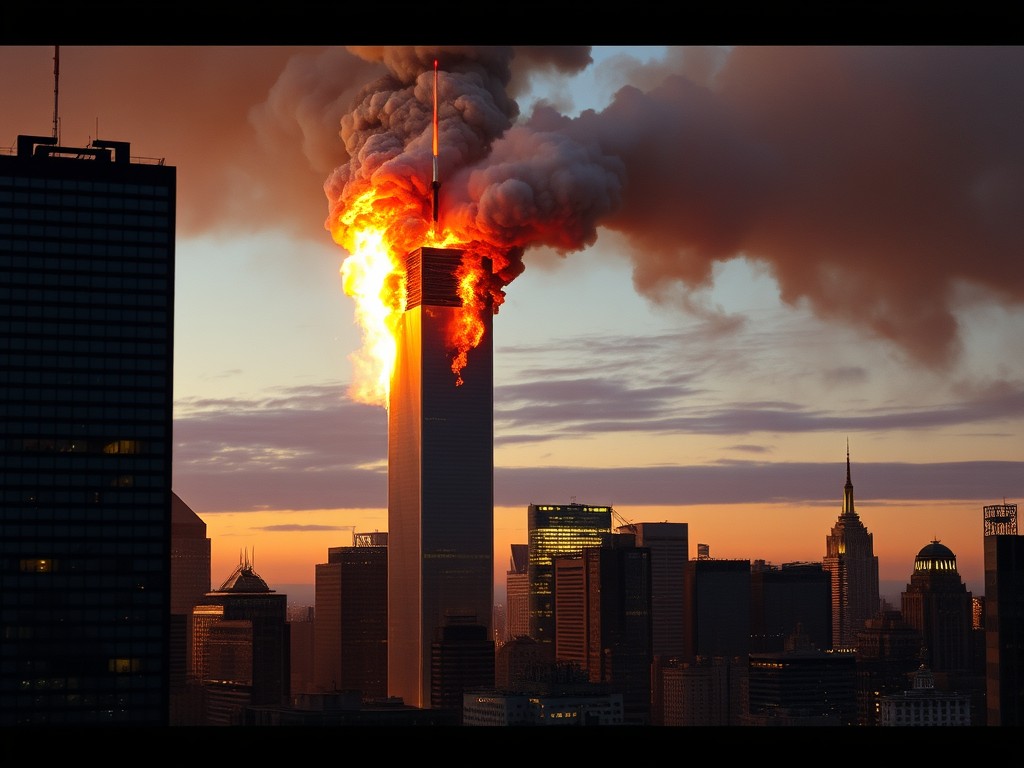
The assassination of President John F. Kennedy on November 22, 1963, remains one of the most controversial and heavily scrutinized events in American history. Over the decades, numerous investigations, conspiracy theories, and official reports have sought to uncover the whole truth. Despite the passage of time and multiple declassifications, a significant portion of the JFK files remains classified. But why? What does this continued secrecy mean, and does it suggest that the government is hiding something?
A Long History of Partial Disclosures
The U.S. government has released thousands of documents related to the Kennedy assassination over the years, particularly under the President John F. Kennedy Assassination Records Collection Act of 1992. This law mandated the release of all files by 2017, yet to this day, certain documents remain redacted or entirely withheld.
The government’s justification for keeping some files classified has largely centered around concerns for national security, protection of intelligence sources, and potential diplomatic sensitivities. However, skeptics argue that such reasoning raises more questions than answers.
What Could Be in the Withheld Files?
Given the intense public interest and the many theories surrounding JFK’s assassination, speculation runs wild about what remains hidden. Possible reasons for withholding files include:
Protection of Intelligence Methods and Sources – Some documents could reveal the names of informants, spies, or covert operatives who were active in the 1960s and may have had ties to agencies like the CIA or FBI.
Foreign Policy Sensitivities – The Cold War was at its height during JFK’s presidency, and certain classified documents could contain information about U.S. dealings with foreign governments, including Cuba and the Soviet Union. Some files might also relate to assassination plots against Fidel Castro, which were discussed within U.S. intelligence circles.
Embarrassment to Government Agencies – The CIA and FBI were known to have monitored individuals and organizations connected to Kennedy’s assassination, including Lee Harvey Oswald. Some have suggested that withheld documents might reveal incompetence, negligence, or even involvement by elements within the intelligence community.
Potentially Damaging Information on Other Figures – There is speculation that some documents might implicate high-ranking officials in actions that could damage their reputations or that of their agencies.
Does Continued Secrecy Indicate a Cover-Up?
Many Americans believe that the U.S. government has not been fully transparent about JFK’s assassination. Polls have consistently shown that a majority of the public doubts the official narrative that Lee Harvey Oswald acted alone. The continued classification of documents only fuels this skepticism.
If the government has nothing to hide, critics argue, then why not release everything? Some believe that keeping certain files classified is a way to avoid confirming suspicions that government agencies knew more than they initially admitted or were involved in activities that might have indirectly led to Kennedy’s death.
The Push for Full Disclosure
There have been numerous calls for the full release of all remaining JFK files. Former President Donald Trump initially pledged to release all documents in 2017 but later allowed some to remain classified due to national security concerns. President Joe Biden has also delayed full disclosure, citing similar reasons but promising incremental releases.
Some researchers and historians argue that delaying the full release of the JFK files only deepens public mistrust in government institutions. Others suggest that the files may not contain any groundbreaking revelations but are being withheld simply as a bureaucratic precaution.
Conclusion
More than 60 years after JFK’s assassination, the fact that some files remain classified raises serious questions. Whether the remaining documents contain explosive revelations or simply bureaucratic details, the continued secrecy surrounding them ensures that the debate over Kennedy’s death will persist for years to come. Until the full truth is known, speculation and conspiracy theories will continue to thrive.
Disclaimer: The views expressed in this article are those of the author and may not reflect those of Shinybull.com. The author has made every effort to ensure the accuracy of the information provided; however, neither Shinybull.com nor the author can guarantee such accuracy. This article is strictly for informational purposes only. It is not a solicitation to make any exchange in precious metal products, commodities, securities, or other financial instruments. Shinybull.com and the author of this article do not accept culpability for losses and/ or damages arising from the use of this publication.