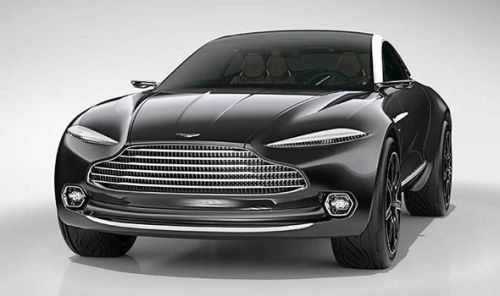
If you`re a big fan of James Bond, you
already know what Aston Martin is. The British company are the main
supplier of cars to 007. But will James Bond be linked to the new SUV
in the future? Probably not, because the target for the new vehicle
is wealthy women.
Most of the British company`s current customers are men, so they want to widen its appeal to women with this long-awaited £158,000 DBX model. The new car goes from 0-62mph in 4-5 seconds and have a top speed of 181mph.
A new car travels 51,7mpg on average in
the UK, which is more than twice as much as Aston Martins at 19,7
miles per gallon of petrol. The comapny said it «targeted» 269g of
CO2 emissions per kilometre, compared with an average of 120,4g/km of
new cars registered in the EU.
Aston Martin is a British independent manufacturer of luxury cars and it was founded in 1913. The 106 year old carmaker has gone bankrupt seven times and the stock has been declining for a long time, so they need a boost to get back in balance again. Maybe the new DBX can help the company to reach their goal. The stock went up 2,01% after their release earlier today, on Wednesday.
The DBX is designed to compete against
Bentley`s £133,000 Bentayga, Rolls-Royce`s £264,000 Cullinan,
Porsche`s £101,000 Cayenne Turbo and Lamborghini`s £160,000 Urus.
They launched the car simultaneously in
Los Angeles and Beijing and said the DBX had been «very deliberately
created with instant familiarity and ease of use from the start».
The company hopes to roll-off its production line in spring 2020.
Disclaimer: The views expressed in this article are those of the author and may not reflect those of Shiny bull. The author has made every effort to ensure accuracy of information provided; however, neither Shiny bull nor the author can guarantee such accuracy. This article is strictly for informational purposes only. It is not a solicitation to make any exchange in precious metal products, commodities, securities or other financial instruments. Shiny bull and the author of this article do not accept culpability for losses and/ or damages arising from the use of this publication.
Lowe`s Companies will report earnings
before the market opens on Wednesday 20, and the consensus EPS
forecast for the quarter is $1,35. That`s much better than last years
$1,04 at the same time.
EPS at $1,35 will be a jump of +29,8 percent YoY, and revenue is estimated to be $17,69 billion. Lowe`s are joining Trump`s economic boom in the market and have so far jumped 25 percent in 2019. I think they can feel the boost of the Fed`s interest rate cuts.
Builders started construction on new
homes at a pace of 1,314 million in October, the Commerce Department
reproted Tuesday. Housing starts were up 3,8 percent from revised
1,266 million in
September and 8,5 percent higher than
the same month last year.
Building permits for privately-owning
housing units were authorized at a seasonally-adjusted rate of 1,461
million, and that was 5 percent above the revised pace of 1,391
million set in September, and 14 percent above last year`s rate.
This was the fastest rate of
building-permit authorizations recorded since 2007. Permits for
new-home construction hits post-recession record high in October.
Home Depot dropped yesterday after the
company cut full-year sales growth guidance. They reported $2,53 in
EPS. Wall Street predicted $2,52, but the results are looking fine.
Comparable store sales growth in 2019 will be 3,5 percent compared
with pror guidance of 4 pecent, the management of Home Depot said.
Lowe`s dropped 1,42 percent yesterday while Home Depot dropped 5,46 percent. Lowe was dragged down by Home Depot. Will Lowe turn that around on Wednesday? Lowe`s has a call scheduled for 9 a.m ET on Wednesday.
Disclaimer: The views expressed in this article are those of the author and may not reflect those of Shiny bull. The author has made every effort to ensure accuracy of information provided; however, neither Shiny bull nor the author can guarantee such accuracy. This article is strictly for informational purposes only. It is not a solicitation to make any exchange in precious metal products, commodities, securities or other financial instruments. Shiny bull and the author of this article do not accept culpability for losses and/ or damages arising from the use of this publication.
So far, it has been a good earnings
season with a higher than average seventy-five percent of S&P 500
companies that have reported beating expectations. That was strong
enough to push the stock market to record highs.
On Tuesday 19, Home Depot will report earnings before market open. The report will be for the fiscal Quarter ending October 2019, and the consensus EPS for the quarter is $2,52, which is up from the same quarter last year at $2,51.
The Home Depot is the largest home
improvement retailer in the United States, and considered to be the
best run retailer in the world. I have been watching this stock for
years and it`s interesting and funny to see that they beat estimates
time after time.
Home Depot opened up two stores 40
years ago. In 1979, the first two stores, built in spaces leased from
J.C Penny that werw originally Treasure Island «hypermarket». As of
October 20, 2019, they have 2,285 locations and 413,000 employees.
The founders created a company to keep alive the values that were important to them; Values like respect among all people, excellent customer service and giving back to communities and society.
In December 2006. the Home Depot
announced its acquistion of the Chinese home improvement retailer The
Home Way. The acquisition gave the Home Depot an immediate presence
in China, with 12 stores in six cities.
But the Home Depot didn`t succeed in
China. They lack of success in China has been attributed t o the
disconnect between The Home Depot`s do-it-yourself ethos and Chinese
culture. The market in China is more of a do-it-for-me culture.
So, as of April 2011, Home Depot shut
its last Beijing store, the fifth Home Depot to close in China in the
previous two years. As of September 16, 2012, all seven of the box
stores in China had been shut down, and they has no immediate plans
to further expand its specialty stores in China.
The US-China trade war is risky but the
impeachment is even more risky. They want to impeach a president that
have done so much for its own people, and tax cuts and many reforms
have boosted to U.S economy.
Strong consumer activity and low
interest rate is helping companies like Home Depot, and this is why
they beat earnings all the time. At least for the last two years. But
according to DM Martin`s Research, the RMI (remodeling market index)
and future bid activity have come off their 2017 peaks in the past
several quarters.
The management doesn`t seems to be concerned about the demand. Last quarter they said; «Current health of the U.S consumer and a stable housing environment» was postive for them. Its difficult not to be bullish, and share repurchase can push the EPS higher.
Disclaimer: The views expressed in this article are those of the author and may not reflect those of Shiny bull. The author has made every effort to ensure accuracy of information provided; however, neither Shiny bull nor the author can guarantee such accuracy. This article is strictly for informational purposes only. It is not a solicitation to make any exchange in precious metal products, commodities, securities or other financial instruments. Shiny bull and the author of this article do not accept culpability for losses and/ or damages arising from the use of this publication.
30 years ago, some people in Germany
were isolated from the rest of the world. They were trapped inside
the Berlin Wall that was a guarded concrete barrier that physically
and ideologically divided Berlin from 1961 to 1989.
Construction of the Wall was commenced by the German Democratic Republic (GDR, East Germany) on 13 August 1961. The Wall cut off West Berlin from surrounding East Germany, including East Berlin.
The Eastern Bloc portrayed the Wall as
protecting its population from fascist elements conspriring to
prevent the «will of the people» in building a socialist state in
East Germany. GDR authorities officially referred to the Berlin Wall
as the Anti-Fascist Protection Rampart.
The West Berlin city government
sometimes referred to it as the «Wall of Shame», a term coined by
mayor Willy Brandt in reference to the Wall`s restriction on freedom
of movement. The wall came to symbolize physically the «Iron
Curtain» that separated Western Europe and the Eastern Bloc during
the Cold War.
U.S Secretary of State Mike Pompeo
praised Reagan on Friday, saying he «courageously denounced the
greatest threat to that freedom, the Soviet Empire, the evil Empire.»
Reagan held a speech in 1987, but John F Kennedy said «Ich bin ein
Berliner» in a speech in West Berlin, on June 26, 1963.
That speech is widely regarded as the
best-known speech of the Cold War and the most famous anti-communist
speech.
Kennedy aimed to underline the support
of the United States for West Germany 22 months after Soviet-occupied
East Germany erected the Berliin Wall to prevent mass emigration to
the West. The message was aimed as much at the Soviets as it was at
Berliners and was a clear statement of U.S policy in the wake of the
construction of the Berlin Wall.
Another phrase in the speech was also
spoken in German, «Lasst sie nach Berlin kommen» (Let them come to
Berlin»), addressed at those who claimed «we can work with the
Communists», a remark at which Nikita Khrushchev scoffed only days
later.
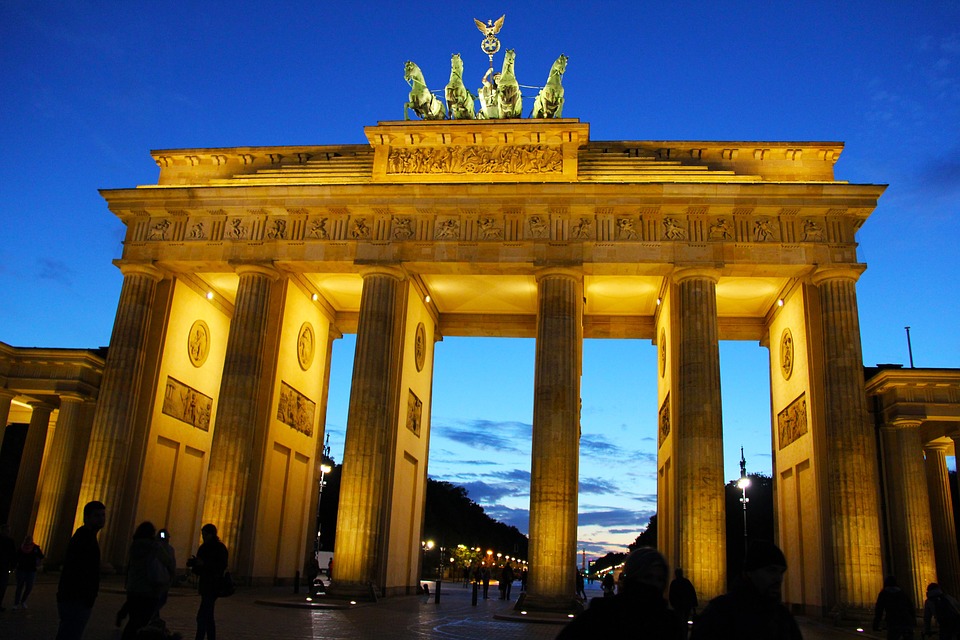
Chancellor Angela Merkel thanked the United States for its support in reunification in a speech on Friday. Kennedy`s speech «Ich bin ein Berliner», and Ronald Reagan`s memorable Berlin sentence from 1987, «Mr. Gorbachev tear down this wall,» as well as Barrack Obama`s speech at the Brandenburg Gate in 2016, are in all German`s memories.
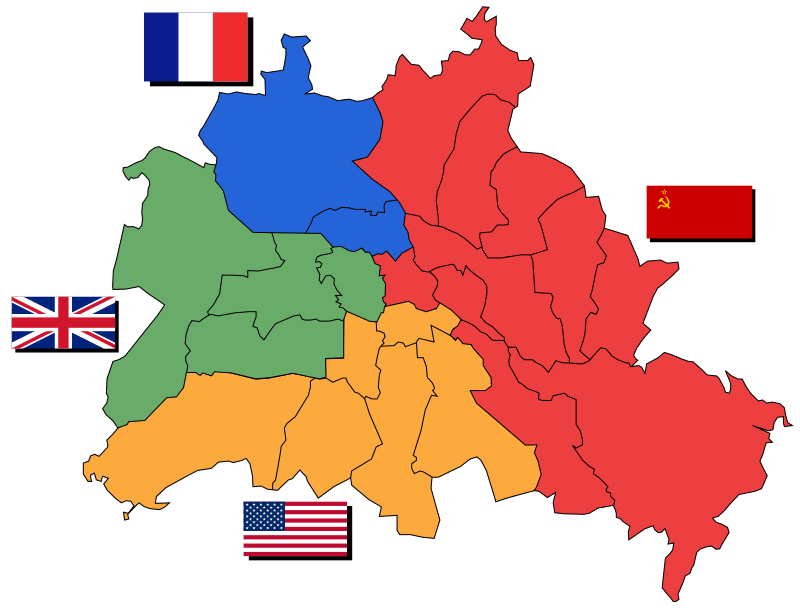
Germany`s capital, Berlin was deep
within the area controlled after World War II by the Soviet Union.
Initially governed in four sectors controlled by the four Allied
powers (United States, United Kingdom, France and the Soviet Union).
Tensions of the Cold War escalated
until the Soviet forces implemented the Berlin Blockade, which the
Western allies relieved with the dramatic airlift. Afterward, the
sectors border between East and West was closed everywhere but in
Berlin.
Hundreds of thousands of East Germans
defected to the West via West Berlin, a labour drain that threatened
East Germany with economic collapse.
In 1961, the East German government
under Walter Ulbricht erected a barbed-wire barrier around West
Berlin, officially called the antifaschistischer Schutzwall
(anti-fascist protective barrier).
The East German authorities argued that
it was meant to prevent spies and agents of West Germany from
crossing into East. However, it was universally known as the Berliin
Wall and its real purpose was to keep East German citizens from
escaping to the West.
The Wall closed the biggest loophole in
the Iron Curtain, and Berlin went from being one of the easiest
places to cross from East Europe to West Europe to being one of the
most difficult.
The West, including the U.S., was
accused of failing to respond forcefully to the erection of the Wall.
Officially, Berlin was under joint occupation by the four allied
powers, each with primary responsibility for a certain zone.
Kennedy`s speech marked the first instance where the U.S acknowledged that East Berlin was part of the Soviet bloc along with the rest of East Germany. On July 25, 1961, Kennedy insisted in a presidential address that the U.S would defend West Berlin, asserting its Four-Power rights, while making it clear that challenging the Soviet presence in Germany was not possible.
30 years ago, in 1989, a series of
revolutions in nearby Eastern Bloc countries, Poland and Hungary in
particular, caused a chain reaction in East Germany that ultimately
resulted in the demise of the Wall.
After several weeks of unrest, the East
German government announced on 9 November 1989 that all GDR citizens
could visit West Germany and West Berlin. Crowds of East Germans
crossed and climbed onto the Wall, joined by West Germans on the
other side in a celebratory atmosphere.
The «fall of the Berlin Wall» paved
the way for German reunification, which formally took place on 3
October 1990.
Some people in Berlin say that they are
more divided today than 30 years ago. It actually started right after
World War II. East Germany differed from West Germany (Federal
Republic of Germany), which developed into a Western capitalist
country with a social market economy and a democratic parliamentary
government.
Continual economic growth starting in
the 1950`s fueled a 20-year «economic miracle». As West Germany`s
eceonomy grew, and its standard of living steadily improved, many
East Germans wanted to move to West Germany.
Today, we can see that it all boil down
to one ting: The richest people in Germany live in the West.
Big companies and high income is
missing in the East were only 36 og Germany`s 500 biggest companies
have headquarters. In 1991, East Germany`s GDP per capita was
equivalent to just 43 percent of that in West Germany, but now it`s
75 percent (2018). According to a poll, most East Germans still feel
like «second class citizens.»
About 2 million people have left the East for the West after the fall of the wall, and two thirds of them were women. The Eastern population is older, poorer and more male. Only two soccer teams out of 18 are from the East. Interestigly, the far-right is doing it better in the East.
It all goes back to Stalin and the
Communists. The German Democratic Republic (GDP, East Germany) was
declared on 7 October 1949. By a secret treaty, the Soviet Ministry
of Foreign Affairs accorded the East German state administrative
authority, but not autonomy. The Soviet permeated East German
administrative, military and secret police structure and had full
control.
The Organization for Economic
Cooperation and Development (OECD) said schools were «a justifiable
source of pride for the East Germans.» OECD said that while
education system in the former West focused on dividing children into
different ability groups early on, the Eastern system was more
equitable.
But after the fall of the wall, the
East was eager to do everything in the Western way, even education.
The education system in the East become more unequal. Kids drops out
of school and are worce off in the East than in the West. In West
Germany, people look back at East Germany in a very negative sense.
The West are more conservative and
religious. Politically, Germany is still very divided. Voters in the
former Communist states are voting the far-right AfD.
You can see what the communists have
done to the mindset and the community. We know the story of one of
the founders of Google, Sergei Brin. His parents escaped from Moscow
to the United States. They separated the kids on the school. Brin
couldn`t participate with the other kids in gym and matematics.
Indoctrination of Marxism-Leninism
became a compulsory part of the school curricula, sending professors
and students fleeing to the West. The East Germans created an
elaborate political police apparatus that kept the population under
close surveillance, inluding Soviet SMERSH secret police.
Who wants to live in a hell like this?
The emigrants tended to be young and well-educated, leading to the
brain drain feared by officials in East Germany. They stated «the
flight of the intelligentsia has reached a particularly critical
phase.»
The loss was disproportionately heavy
among professionals, engineers, technicians, physicians, teachers,
lawyers and skilled workers. The brain drain of professionals had
become so damaging to the political credibility and economic
viability of the East Germany that the re-securing of the German
communist frontier was imperative.
Following World War II, Soviet leader
Joseph Stalin headed a group of nations on his Western border, the
Eastern Bloc, that then included Poland, Hungary and Czechoslovakia,
which he wished to maintain alongside a weakened Soviet-controlled
Germany.
As early as 1945, Stalin revealed to
German communist leaders that he expected to slowly undermine the
British position within the British occupation zone, that the United
States would withdraw within a year or two, and that nothing would
then stand in the way of a unified communist Germany within the bloc.
The major task of the ruling communist
party in the Soviet zone was to channel Soviet orders down to both
the administrative apparatus and the other bloc parties, which in
turn would be presented as internal measures.
Property and industry was nationalized
in the East German zone. If statements or decisions deviated from the
described line, reprimands and punishment would ensure, such as
imprisonment, torture and even death.
In 1949, following disagreements
regarding reconstruction and a new German currency, Stalin instituted
the Berlin Blockade, preventing food, materials and supplies from
arriving in West Berlin. The United States, the United Kingdom,
France, Canada, Australia, New Zealand and several other countries
began a massive «airlift», supplying West Berlin with food and
other supplies.
The Soviets mounted a public relations
campaign against the Western policy change. Communists attempted to
disrupt the elections of 1948, preceding large losses therein, while
300,000 Berliners demonstrated for the international airlift to
continue. In May 1949, Stalin lifted the blockade, permintting the
resumption of Western shipments to Berlin.
After the Soviet occupation of Eastern
Europe at the end of World War II, the majority of those living in
the newly acquried areas of the Eastern Bloc aspired to independence
and wanted the Soviets to leave.
Taking advantage of the zonal border
between accupied zones in Germany the number of GDR citizens moving
to West Germany totaled 187,000 in 1950. 165,000 in 1951. 182,000 in
1952, and 331,000 in 1953.
One reason for the sharp 1953 increase
was fear of potential further Sovietization, given the increasingly
paranoid actions of Joseph Stalin in late 1952 and early 1953.
The fall of the Berlin Wall is a symbol
of the Cold War in post-World War II Europe. The Wall separated East
and West Berlin for 28 years, and it illustrated the gap between two
political ideologies; Capitalism and Communism.
On Saturday 9 November, Berlin will celebrate the 30th anniversary of the peaceful revolution and the fall of the wall.
Disclaimer: The views expressed in this article are those of the author and may not reflect those of Shiny bull. The author has made every effort to ensure accuracy of information provided; however, neither Shiny bull nor the author can guarantee such accuracy. This article is strictly for informational purposes only. It is not a solicitation to make any exchange in precious metal products, commodities, securities or other financial instruments. Shiny bull and the author of this article do not accept culpability for losses and/ or damages arising from the use of this publication.
Russia is a big country, but like many other countries, it also has a dark side; The Communists. Lenin killed Tsar Nicholas II and his family and stole the country. A story most of the Russians aren`t proud of. The Communists was the worst terrorist organization ever. What they did was big crime.
The abdication of Tsar Nicholas II on 15 March 1917 as a result of the February Revolution ended 304 years of Romanov rule, establishing the Russian Republic under the Russian Provisional Government in the lead up to the Russian Civil War.
In 1918, the Tsar and his family were executed by the Bolsheviks and the 47 surviviors of the House of Romanov`s 65 members went into exile abroad. (If you are interested in that story you can watch it on Netflix).
Putin are interested in the history of
the Tsar family called Romanov and want to celebrate what they
started hundreds of years ago. What Lenin and his army did was crime
and that is nothing to celebrate.
That`s why Putin in 2005 created Unity
Day, also called Day of People`s Unity or National Unity Day in
Russia which is a national holiday held on November 4.
It commemorates the popular uprising
which expelled Polish-Lithuanian occupation forces from Moscow in
November 1612, and more generally the end of the Time of Troubles and
turning point of the Polish-Muscovite War (1605-1618).
The day`s neme alludes to the idea that
all classes of Russian society united to preserve Russian statehood
when there was neither a tsar nor a patriarch to guide them. In 1613
tsar Mikhail Romanov instituted a holiday named «Day of Moscow`s
Liberation from Polish Invaders».
It was celebrated in the Russian Empire
until 1917, when it was replaced with a commemoration of the Russian
Revolution.
Unity Day was reinstitued by the
Russian Federation in 2005, when the events of the year 1612 have
been celebrated instead of those of 1917 every November 4 since. The
day is also the feast day of the Russian Orthodox icon of Our Lady of
Kazan.
The holiday replaced the Day of Accord
and Reconciliation, established by former President Boris Yeltsin
following the collapse of the Soviet Union, which was itself a
replacement for Revolution Day. Huh….what a mess.
President Vladimir Putin reestablished
the holiday in order to replace the commemoration of the October
Revolution, known as the Day of Great October Socialist Revolution
during Soviet period and as the Day of Accord and Conciliation in
post-Soviet times, which formerly took place on November 7.
Putin`s decision angered some sections
of the public, particularly the Communist Party, who continued with
celebrations on November 7. Putins`s predecessor, Boris Yeltsin took
a limited action of changing the name of the holiday, by completely
removing it. It goes back and forth.
So, after Lening and his criminal
gangsters killed the Romanov family and overthrow the centuries -old
monarchy, Russia emerged from a civil war in 1921 as the newly formed
Soviet Union. The World`s first Marxist-Communist state. It became
one of the biggest and powerful nations in the world until it
collapsed in 1991.
The United Socialist Soviet Republic
(U.S.S.R), was made up of 15 Soviet republics; Ukraine, Uzbekistan,
Armenia, Belarus, Azerbaijan, Georgia, Estonia, Kazakhstan, Latvia,
Kyrgyzstan, Lithuania, Russia, Moldova, Rajikistan and Turkmenistan.
They were occupying nearly one-sixth of Earth`s land surface.
Radical Leftists revolutionaries
overthrew Russia`s Tsar Nicholas II and ended centuries of Romanov
rule and that was the beginning of the Russian Revolution in 1917.
The Communists called the Bolsheviks established a socialist state.
The civil war started and it was a war
between the Communists and the Capitalists. The Red Army was backed
by the Bolshevik government. They defeated the White Army backed by a
large group of monarchists, capitalists and supporters of other forms
of socialism.
The Bolshevik`s had a secret police
called Cheka in a periode known as Red Terror. They carried out a
campaign of mass execution against supporters of the czarist regime
and against Russia`s upper classes.
But Lenin past away in 1924 and Joseph
Stalin came to power. The dictator ruled by terror with a series of
brutal policies, which left millions of his own citizens dead. Stalin
transformed Soviet Union from an agrarian society to an industrial
and military superpower.
Stalin had a lot of plans, and focused
on collectivizing agriculture and rapid industralization. Before
World War II, Stalin enforced the collectivization of the
agricultural sector. Rural peasants were forced to join colective
farms.
People that owned land or livestock
were stripped of their holdings, and hundreds of higher-income
farmers, called kulaks, were executed and their property confiscated.
The Communists believed that consolidating individually owned farms
into a series of large state-run collective farms would increase
agricultural productivity. But the opposite was true.
The productivity dropped and this led
to a devastating food shortages. Millions died during the Great
Famine of 1932-1933. The U.S.S.R denied the Great Famine in many
years.
The Ukrainian famine (Holodomor) is
also known as «starvation» and «to inflict death,» claimed the
lives of nearly 4 million people. That`s 13 percent of the
population. At that time, it was many protesters, and like other
Communists in this world, the dictator didn`t like that.
Stalin eliminated all opposition to his
leadership by terrorizing Communist Party officials and other public
through his secret police. This is how a totalitarian policestate is
working.
600,000 Soviet citizens were executed
during the height of Stalin`s terror campaign known as the Great
Purge between 1936 and 1938. Millions of people in Soviet were
deported, or imprisoned in forced labor camps, also known as Gulags.
Soviet defeated Nazi-Germany at the end
of World War II, but Americans and British feared the spread of
communism into Western Europe and worldwide. So what did they do?
In 1949, the United States, Canada and
its European allies formed the North Atlantic Treaty Organization
(NATO). They formed an alliance between countries of the Western bloc
and NATO was a political show of force against the U.S.S.R and its
allies.
The Communists didn`t like that, so the
Soviet Union in 1955 consolidated power among Eastern bloc countries
under a rival alliance called the Warsaw Pact, and that started the
Cold War.
The Cold War would persist in varous
forms until the fall of the Soviet Union in 1991, and it was a power
struggle waged on political, economic and propaganda fronts between
the Eastern and Western blocs.
But Stalin past away in 1953, and
Nikita Khrushchev rose to power. He became Communist Party secretary
in 1953 and premier in 1958. This is the man John F Kenndy had a lot
of meeting with. Why? Khrushchev installed nuclear weapons just 90
miles from Florida`s coast in Cuba. He instigated the Cuban Missile
Crisis in 1962.
Khrushchev made a lot of refoms that
made Soviet society less repressive. He criticized Stalin for
arresting and deporting opponents and took steps to raise living
conditions, freed many political prisoners, lossened artistic
censorship and closed Gulag labor camps in a time called
de-Stalinization.
Deteriorating relations between the
Soviet Union and neighboring China and food shortages across the
U.S.S.R eroded Khrushchev`s legitimacy in the eyes of the Communist
party leadership. Members of the Communist Party removed Khrushchev
from office in 1964.
Later on, another communist party
politician rose to power. Mikhail Gorbachev came to power in 1985. He
introduced two sets of policies he hoped would reform the political
system and help U.S.S.R become a more prosperous and productive
nation. These policies were called Glasnost and Perestroika.
Glasnost was a plan for political
openness. It adressed personal restrictions of the Soviet people.
Glasnost eliminated remaining traces of Stalinìst repression, such
as banning of books. Newspapers could criticize the government, and
parties other than the Communist Party could participate in
elections.
Perestroika was a plan for economic
restructuring. Soviet Union began to move toward a hybrid
communist-capitalist system. (This system is more like the system we
see in China today). The communists created a committee called
Politburo. They would still control the direction of the economy, but
the government would allow market forces to dictate some production
and deveopment decisions.
Gorbachev came to power only 6 years
before Soviet Union collapsed in 1991. It started in the 1960`s when
the Communists Party elite gained wealth and power while millions of
average Soviet citizens face starvation. Soviet citizens didn`t have
basic needs such as clothing and shoes.
The divide between the extreme wealth
of the Politburo and the poverty of Soviet citizens created a
backlash from younger people who didn`t like the Communist Party`s
ideology as their parents had. On top of that, Soviet faced foreign
attack on the economy.
President Ronald Reagan isolated the
Soviet economy in the 80`s from the rest of the world and helped
drive the oil prices down to the lowest level. When the gas revenue
dropped, the U.S.S.R began to lose its hold on Eastern Europe.
Gorbachev`s reforms didn`t work well
and did more to hasten the collapse of the Soviet Union than to help
it. They started to lose control over the Soviet people and that was
the beginning of a new movement in the Soviet satellites of Eastern
Europe.
In 1989, a political revolution started
in Poland and that spread to other countries that led to the toppling
of the Berlin Wall. On Saturday it is 30 year since the destruction
of the wall that divided Berlin physically and ideologically from
1961 to 1989.
By the end of 1989, the U.S.S.R had
come apart at the seams. An unsuccessful coup by Communist Party
hard-liners in August 1991 sealled the Soviet Union`s fate by
diminishing Gorbachev`s power and propelling democratic forces, led
by Boris Yeltsin to the forefront of Russian politics.
In 1991, Boris Yeltsin rose to power,
and served ass the president of Russia until 1999. Though a Communist
Party member for much of his life, he came to believe in both
democratic and free market reforms, and played an instrumental role
in the collapse of the Soviet Union.
Boris Nikolayevich Yeltsin was the
first freely elected leader in Russia`s 1,000-year history. He became
well known for railing against corruption and fired hundreds of
lower-level functionaries.
Gorbachev`s Glasnost and Perestroika
program had hoped to change but not destroy the Soviet Union, but he
resigned on December 25, 1991, and 6 days later the Soviet Union
officially dissolved and was replaced by a political weak
Commonwealth of Independent State that Yeltsin had established along
with his counterparts in Ukraine and Belarus.
With the Soviet Union out of the way,
Yeltsin eliminated most price controls, privatized a slew of major
state assets, allowed for the ownership of prive property and
otherwise emraced free market principles.
Under his watch, a stock exchange,
commodities exchange and private banks all came into being. As
president, Yeltsin broke from his Soviet predecessors by generally
supporting freedom of the press, permitting public criticism and
letting Western popular culture seep into the country.
After surviving impeachment
proceedings, Yeltsin disbanded the communist-dominated parliament in
September 1993 and called for elections to a new legislature.
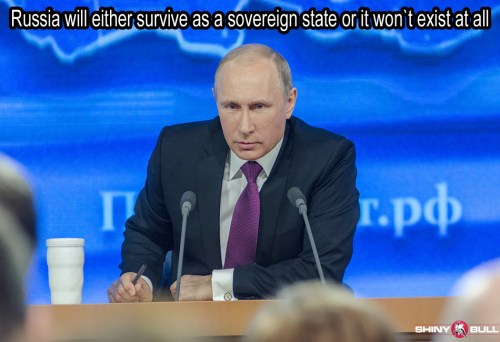
A new man came to power. Vladimir Putin
rose to power when Boris Yeltsin announced his resignation on
December 31, 1999. Yeltsin handed off power to Putin, his chosen
successor and the last of his prime ministers, who granted him
immunity from prosecution. Since 1 January 2000, Vladimir Putin has
been Russia`s president. And he is very popular.
Putin is considered to be the most
powerful leader in the world and his Unity Day is the beginning of a
new era in Russia. Unity Day calls for tolerance between various
ethnic and religious groups in the Russian Federation.
The Romanov family was backed by the
Orthodox Church and so are Vladimir Putin. Lenin and his terrorist
group of Communists killed thousands of priests and burned and bombed
hundreds of churches in Russia. We can now see what values Putin
stands for.
There are some pople that don`t like
Putin, but they are few. And they are Nationalists. On the Unity Day
they are marching in Moscow and it`s called «Russian Marches.» But
the Nationalist marches have been losing popularity in recent years.
Last year, only 400 people turned up and that is down from 25,000 in
2011.
Unity Day, held on November 4, was established in 2005 by President Vladimir Putin as a replacement for Soviet-era commemorations of the 1917 Bolshevik Revolution.
Disclaimer: The views expressed in this article are those of the author and may not reflect those of Shiny bull. The author has made every effort to ensure accuracy of information provided; however, neither Shiny bull nor the author can guarantee such accuracy. This article is strictly for informational purposes only. It is not a solicitation to make any exchange in precious metal products, commodities, securities or other financial instruments. Shiny bull and the author of this article do not accept culpability for losses and/ or damages arising from the use of this publication.



 Ket Garden
 Business, Politics, Finans