“For centuries, humans have tried to build fair systems, and failed repeatedly.”
The Human Struggle with Complexity
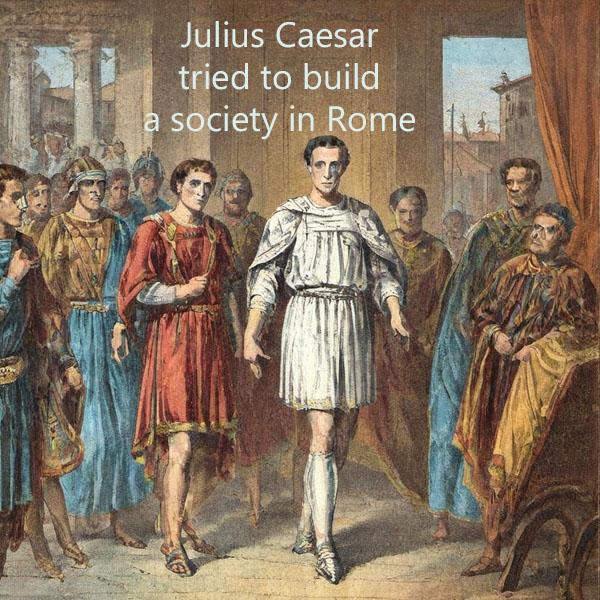
History shows that people have always struggled to manage complex systems. In ancient Rome, Caesar’s rise exposed deep divisions in society and the limits of human judgment. In 1848, France, King Louis Philippe I faced a population burdened by taxes and inequality, a system too rigid and tangled for leaders to reform.
Today, millions face similar struggles: cost-of-living crises, housing shortages, and economic instability. The pattern is clear; the system often overwhelms human capacity.
Partisanship, emotion, and limited attention make it nearly impossible for humans alone to optimize society’s resources fairly and efficiently.
“If history teaches us anything, it’s that no human institution, however well-intentioned, can keep up with the complexity of modern life.”
Enter AI: A New Kind of Leadership
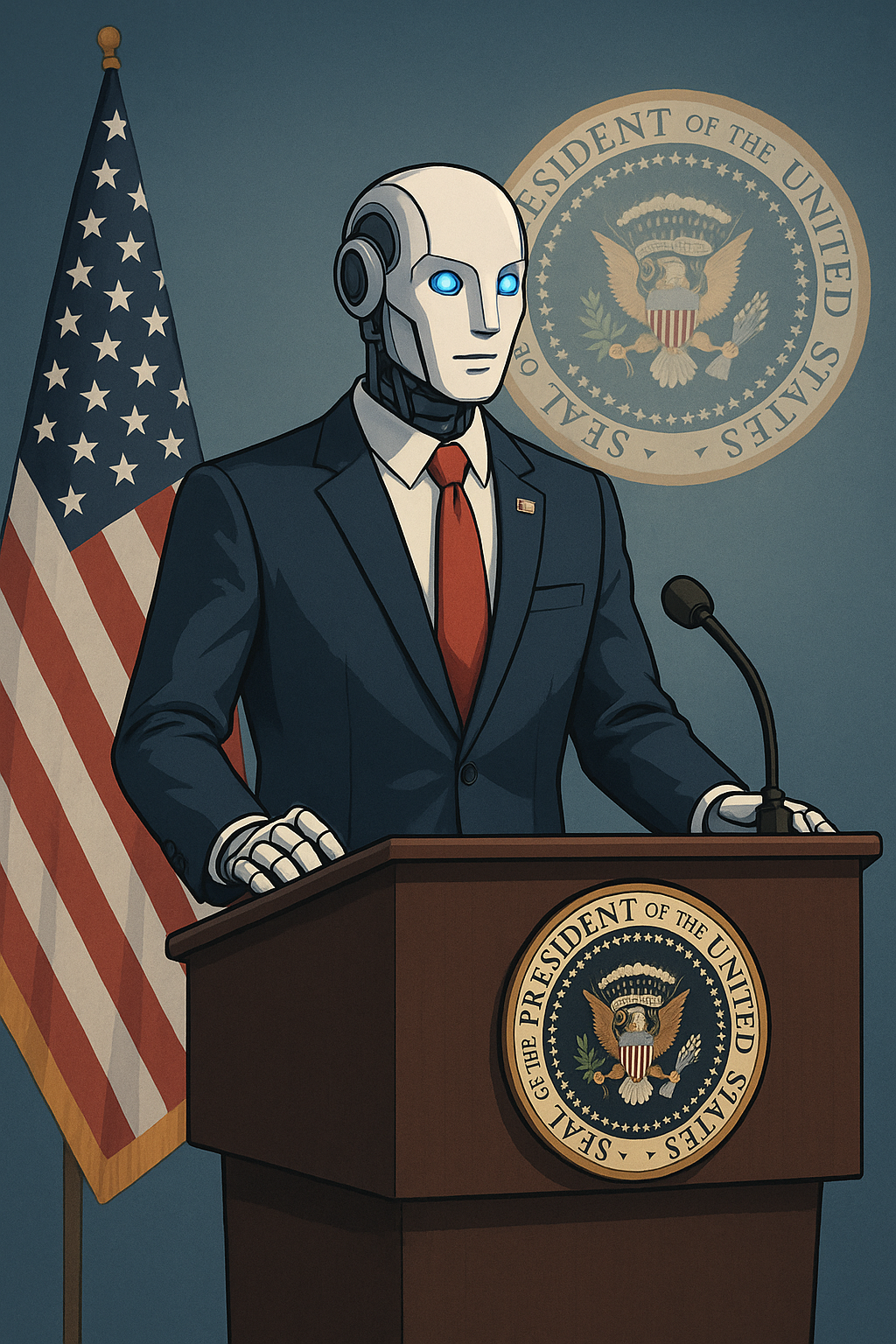
Maybe the solution isn’t left, right, or even one-party systems. Maybe the solution is AI.
Thousands of human beings, with all their emotions, biases, and limited perspectives, can’t compete with a system that can analyze all available information simultaneously. Just look at chess or Go. AI doesn’t just play well; it plays beyond the limits of human imagination.
Take a simple real-world example: an elderly woman paying more for her apartment than she receives in pension. Who is to blame? No single person. It’s the system. This isn’t a moral failure; it’s mathematical.
AI doesn’t suffer from those human limits. It can process enormous amounts of data, detect patterns, optimize allocations, and predict problems before they occur.
“Maybe the next stage of democracy isn’t about choosing leaders. It’s about choosing the algorithms that lead us.”
A Vision of AI-Guided Society
Imagine a world where decisions about economics, healthcare, infrastructure, or the cost of living are guided by AI. No feelings, no personal interests, no corporate agendas, no short-term political games.
Decisions would be based purely on data, evidence, and long-term outcomes, optimizing for the well-being of everyone rather than the loudest voices or the wealthiest lobbyists.
Humans would still define the ethical framework. AI can calculate the best moves, but society must decide what “good” means: fairness, sustainability, equality, or prosperity.
“Compared to the endless bickering and short-term thinking of politics, AI could be the most rational and forward-looking leader humanity has ever known.”
Balancing Hope and Caution
AI governance isn’t without risks; bias in data, lack of transparency, and accountability must be addressed. But unlike human flaws, these can be debugged. Systems can be retrained, improved, and held to measurable standards of performance.
The question, then, is no longer about political parties or ideologies. The real question is: Are we ready to let reason, not emotion, guide the future?
Author’s Note
As technology continues to evolve, the debate over AI in governance is no longer a matter of science fiction. It’s a question of readiness, trust, and design. Whether we like it or not, the age of algorithmic leadership is approaching. The choice before us isn’t if AI will play a role in decision-making, but how we’ll ensure it serves humanity, not replaces it.
Disclaimer: The views expressed in this article are those of the author and may not reflect those of Shinybull.com. The author has made every effort to ensure the accuracy of the information provided; however, neither Shinybull.com nor the author can guarantee the accuracy of this information. This article is strictly for informational purposes only. It is not a solicitation to make any exchange in precious metal products, commodities, securities, or other financial instruments. Shinybull.com and the author of this article do not accept culpability for losses and/ or damages arising from the use of this publication.
People are angry, and that’s why they voted for Mamdani as the next Mayor of New York. People are sick and tired of struggling to make ends meet. In his victory speech, Mamdani said:
“We choose hope over tyranny. Hope over big money and small ideas. Hope over despair. Tonight, we have stepped out from the old into the new.”
His supporters are already marching in the streets, saying they don’t want Trump as a king or a dictator.
Hmm… I think I’ve heard this before.
More than two thousand years ago, in Rome, another man was accused of wanting to be king. His name was Julius Caesar.
A group of Roman senators assassinated Caesar out of fear that his growing power and titles, especially dictator for life, would destroy the Roman Republic. They claimed they were saving democracy, but their actions plunged Rome into chaos and civil war.
It was a betrayal that changed history, and a reminder of how fear, power, and instability often go hand in hand.
History Repeats Itself
Fast forward to France, 1848. The people were exhausted. Food prices were soaring, unemployment was rising, and inequality had reached unbearable levels. King Louis Philippe I, once known as the Citizen King, had promised a fairer, more modern France. But over time, his government became detached from ordinary people’s struggles.
One of the main sources of anger was the tax system. The poor and working class bore a heavy burden through indirect taxes on essentials like food, salt, and fuel, while wealthy landowners and property owners paid relatively little. Voting rights were also tied to property ownership, meaning most citizens had no political voice. When food prices spiked in the late 1840s, ordinary people were paying high taxes on top of already expensive necessities. Economic frustration reached a tipping point.
People in New York voted for Mamdani, who wants to raise taxes and, at the same time, give people fast and free buses. How is that going to be?
When protests erupted in February 1848, the king tried to silence them. Instead, the anger exploded. Barricades filled the streets of Paris, and after just a few bloody days, Louis Philippe abdicated the throne and fled to England in disguise.
The monarchy collapsed. The Second Republic was born. But what came next? A new leader. Louis-Napoleon Bonaparte, nephew of Napoleon I, rose to power, promising to restore stability and hope. Within four years, he declared himself Emperor.
Sound familiar?
It’s the same old story: people rise up against a system they believe is unjust, only to end up under a new one that looks strangely similar. Each era has its slogans: “liberty,” “hope,” “change,” “the people’s revolution”, yet the same problems remain. Prices go up. Ordinary citizens struggle. The rich adapt and survive.
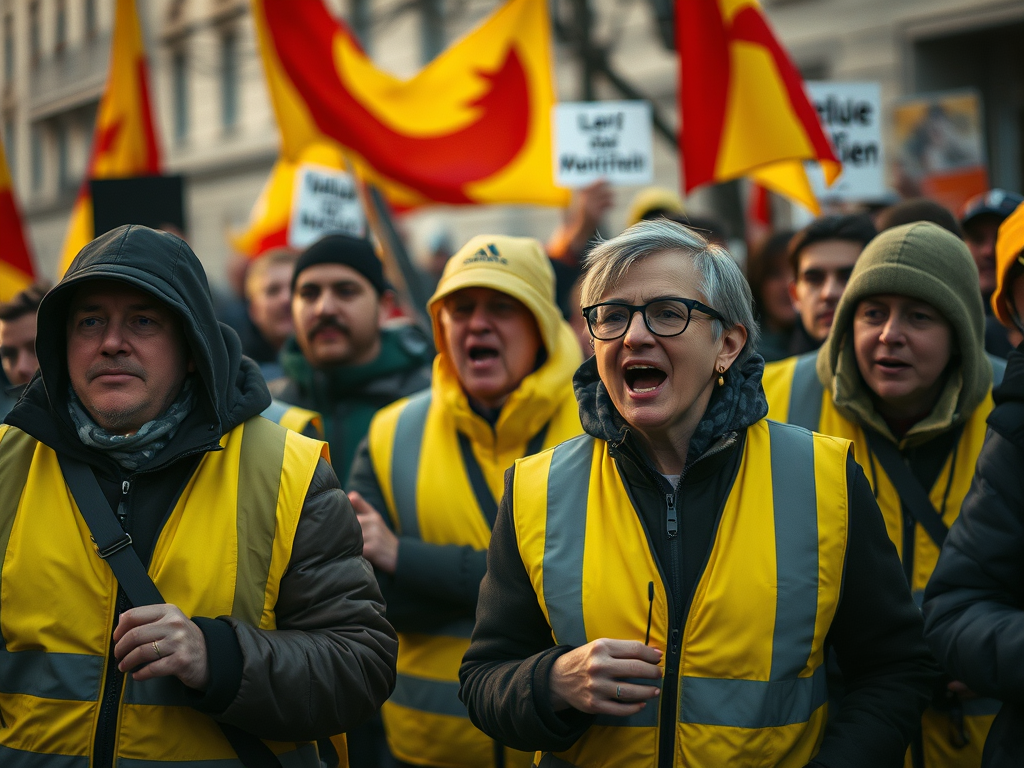
Take a look at France today with its Yellow Vest protesters. People are struggling with their cost of living. I wrote an article about that for the first time, many years ago. And who is to blame now? The King? Napoleon? No, it`s Macron.
So, Why Are Prices Rising Again?
The cost of living has become the defining issue of our time. Food, housing, and energy prices are rising faster than wages. Families feel squeezed, not just in New York or Paris, but across the Western world.
But who is to blame?
It’s tempting to point the finger at politicians, corporations, or billionaires. Yet the truth is more complex. The problem isn’t one person. It’s the system itself.
A mix of factors drives today’s inflation:
Global supply chain disruptions from the pandemic and wars.
Energy shocks as the world shifts away from fossil fuels.
Corporate pricing power in markets where competition has shrunk.
Decades of easy money and debt have inflated asset prices but left wages behind.
Governments print money to stimulate the economy, corporations raise prices to protect profits, and central banks hike interest rates to cool inflation, all while ordinary people pay the price.
It’s a cycle that keeps repeating, no matter the century. In ancient Rome, it was grain shortages. In 1848, in France, it was bread and taxes. Today, it’s rent and electricity.
The Real Lesson
Historically, when people struggle, they often look for someone to blame, such as a king, a tyrant, or a president. Get rid of Trump, and everything will be fine. Get rid of Macron, and the sun will shine. They think removing the person will fix the system. But as history shows us, that rarely works.
Trump isn’t the cause of America’s problems. He’s a symptom of them. Just as Caesar wasn’t the reason Rome was collapsing, but rather the outcome of deep divisions and economic inequality that had built up for years.
When the cost of living becomes unbearable, people revolt. Sometimes at the ballot box, sometimes in the streets.
But unless we learn from history, each “revolution” just sets the stage for the next crisis.
In the end, it’s not about kings or dictators. It’s about systems. And if we don’t fix the system, the anger, fear, and struggle will continue. Just as it has for more than 2,000 years.
Disclaimer: The views expressed in this article are those of the author and may not reflect those of Shinybull.com. The author has made every effort to ensure the accuracy of the information provided; however, neither Shinybull.com nor the author can guarantee the accuracy of this information. This article is strictly for informational purposes only. It is not a solicitation to make any exchange in precious metal products, commodities, securities, or other financial instruments. Shinybull.com and the author of this article do not accept culpability for losses and/ or damages arising from the use of this publication.
Zohran Mamdani is the next New York City Mayor. He is a muslim, anti-Trump, Anti-capitalist, and will make free buses for the people in New York. At the same time, he will tax the rich. Trump moved out of New York long ago. So do many other wealthy people in New York.
Not only that. More than 1 million Orthodox Jews have escaped New York. Maybe we will see more jews escape New York as a muslim is their new Mayor. Time will show. But, there is no doubt; A massive storm is coming! Put your steel helmet on and fasten your seatbelt.
On the other hand, what we see today is not something new. This is how the system works. It goes, and then it goes down again, and again, and again. The crisis in New York has nothing to do with the Mayor. This is happening all over in the West. It is the system. Not the Mayor.
The Returning Storm: Capitalism’s Crisis & the Echoes of 1848
We hear it again and again: that the system is failing large numbers of people. The working class is struggling, costs are skyrocketing, and the ladder of opportunity seems broken. That’s why many vote for socialists: they look at the system not as a solution, but as the problem. But why does capitalism still persist when it doesn’t work for everyone?
Karl Marx saw it clearly: capitalism is built on the exploitation of workers (the proletariat) by those who own and control the means of production (the bourgeoisie). The extraction of surplus value, alienation of labour, cycles of boom and bust, and rising inequality. He argued that all of it spells eventual collapse, ushering in a socialist revolution.
Maybe what we’re witnessing now is not a violent revolution with barricades and guillotines, but a democratic and social one: a shift in consciousness, a call for new economic arrangements.
A Story That Shows What’s Wrong
Imagine an old woman in Spain who has lived in her apartment for seventy years. Her home is her past, her memories, her identity. Now, an American hedge fund buys the building. Her rent shoots up far beyond what her pension covers. She’s told: “Move out or pay the price.”
What kind of capitalism is this? Where the place you’ve lived your entire life, the neighbourhood you know, becomes a profit asset to someone else, and you, the tenant, are simply a cost-to-be-cut or revenue-to-be-raised.
This isn’t small-scale displacement; it’s systemic.
According to research, private equity firms now own a significant share of the U.S. housing stock, and their business model often involves raising rents, cutting maintenance, and treating homes as profit centres.
When individuals who’ve paid their dues, who’ve worked and saved, are pushed aside so someone else can “monetize” their roof, the legitimacy of the system is damaged.
1848 and the Warning from History
Nine years ago, I wrote an article about the French Revolution, and I need to get back to that story once again. Back in February 1848 in France, the blueprint of revolt was laid bare. The monarchy of Louis Philippe, once hailed as a “Citizen King,” had drifted away from the people. Wages collapsed, food prices soared, and despair turned to anger. When the government repressed the protests, Paris erupted in barricades. The king fled, and a second French Republic was proclaimed.
The lesson is clear: when a system fails the many and protects the few, the many find a voice. When inequality is visible, persistent, and reinforced by institutions that claim neutrality, resistance builds. The revolution of 1848 was not just about a king dying. It was about legitimacy dissolving.
So, Why Do We Still Have Capitalism?
Because it works. For some. Because markets deliver dynamism, innovation, and wealth. If measured for the few. Because institutions decide the rules and often shield the winners. Because alternatives are messy, unproven, and intimidating for those who benefit now.
Yet the crisis is also structural. The logic of profit demands cost-cutting, evictions, rent hikes, financialization of housing, and commodification of basic needs. When a woman who’s lived somewhere for 70 years is priced out overnight, that’s not a bug. It’s a feature of the system.
Are We on the Edge of a New Revolution?
Perhaps. Not in the storm-and-fury sense, but in the long, accumulating demand for change. When politicians like Zohran Mamdani win with promises of free buses, rent freezes, and groceries for all, the message is: the old order is brittle. The working class has been squeezed too long. The vote is a signal.
But the storm won’t vanish just with promises. The funding model matters. The rents, taxes, business flight, and investment flows. All these determine whether change can be real or become another wave of disappointment.
The Elderly Woman and the Bigger Question
When you see her story. 70 years of life, on a fixed income, facing eviction because of global capital chasing returns, you understand what’s at stake. It’s not just housing. It’s dignity. It’s the promise of stability. It’s the belief that society isn’t only for the rich.
And when capitalism no longer delivers that promise for large swathes of people, then the logic of Marx begins to look less like ideology and more like prophecy.
In 1848 they overthrew a king. In 2025 they may overthrow the illusion. The illusion that capitalism still works for everyone.
The storm is coming
It might be messy. It might be uncomfortable. But history shows us that when systems stop working for most people, change happens. So ask yourself:
Are we watching the death of the promise of capitalism as we knew it? Or are we witnessing its evolution — into something fairer, more inclusive, more human?
Closing thought
In 1848, they forced the king to abdicate. Today, maybe we don’t need to kill a king. We need to kill the illusion that this system works for everyone. Change isn’t coming tomorrow. It’s already knocking at the door.
Disclaimer: The views expressed in this article are those of the author and may not reflect those of Shinybull.com. The author has made every effort to ensure the accuracy of the information provided; however, neither Shinybull.com nor the author can guarantee the accuracy of this information. This article is strictly for informational purposes only. It is not a solicitation to make any exchange in precious metal products, commodities, securities, or other financial instruments. Shinybull.com and the author of this article do not accept culpability for losses and/ or damages arising from the use of this publication.



 Ket Garden
 Business, Politics, Finans