Davos, Switzerland — January 19, 2026 The annual World Economic Forum (WEF) gathering in the Swiss Alps begins this Monday under the theme “A Spirit of Dialogue.” Leaders from governments, business, civil society and science will convene through January 23 to confront what organizers call the most pressing global challenges of our time: geopolitical instability, economic fragmentation, technological disruption and climate change.
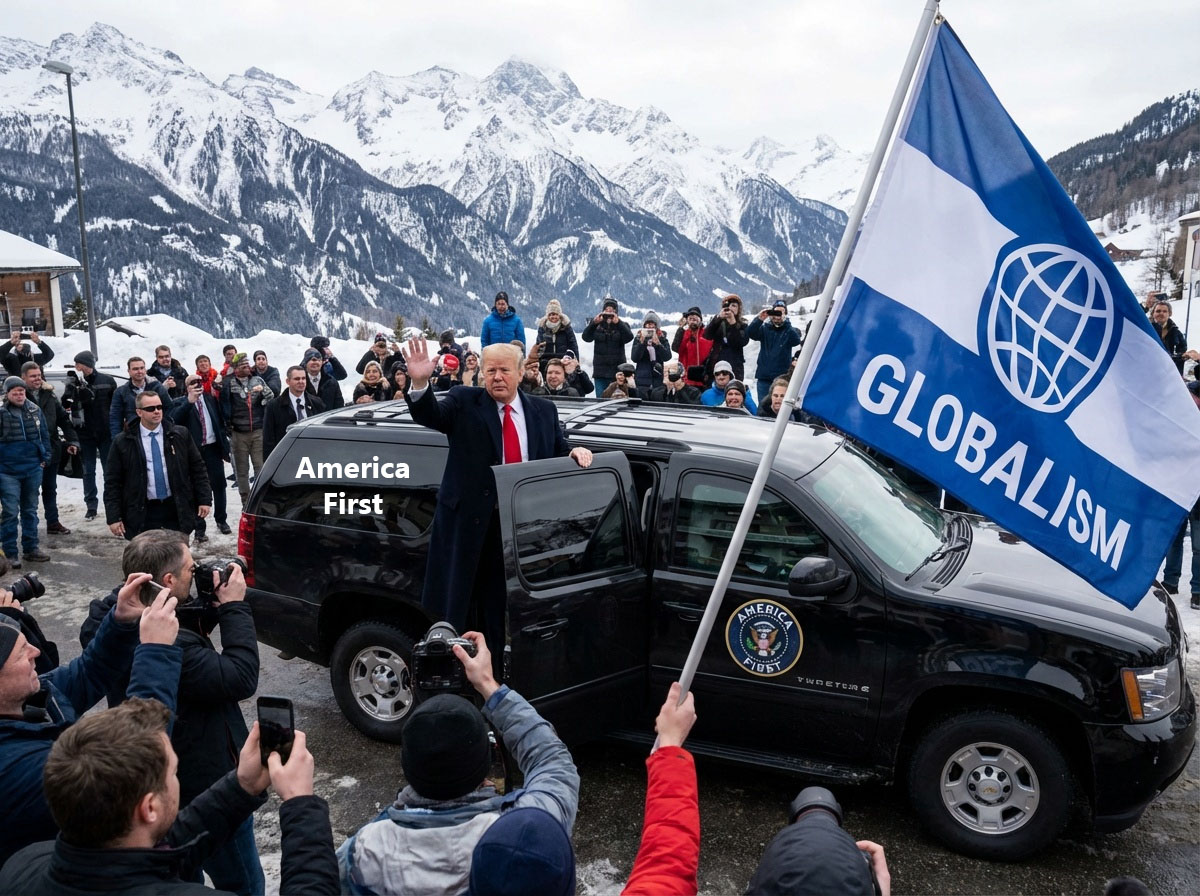
This year’s meeting is poised to be one of the most unpredictable yet — largely because U.S. President Donald Trump is attending in person and will lead the largest-ever American delegation to Davos.
Trump Returns to Davos with a Big Team
Trump’s presence is notable not only for its scale but also for its political symbolism. His administration will be accompanied by several Cabinet members and senior officials — including the Secretary of State, Treasury Secretary, Commerce Secretary, trade representatives, and top White House aides — marking a record-size U.S. contingent.
Last time Trump engaged with the forum, his participation was virtual and aired amid controversy. This year’s in-person return is expected to attract rock-star style attention and intense scrutiny from global leaders, the media and activists.
A “Spirit of Dialogue” Amid Global Tensions
The forum’s theme emphasizes cooperation and conversation in a world marked by deepening geopolitical fault lines. Amid economic competition, rising tariffs and shifting alliances, WEF organizers are pushing dialogue as essential for progress.
But Trump’s trademark slogan, “America First,” poses a direct challenge to the forum’s ethos of multilateral cooperation. Allies and competitors alike will be watching to see how — and if — Trump’s policies can align with broader global ambitions for cooperation, especially on trade, security and technology.
Key Issues on the Agenda
While WEF is traditionally focused on economic strategy and global collaboration, this year’s agenda is exceptionally crowded:
Geopolitical and security challenges: Ukraine remains a central topic, with talks planned involving U.S. officials and Ukrainian representatives about peace frameworks and reconstruction support.
Economic fragmentation: A recent WEF risk survey found that economic confrontation — including tariffs and trade tensions — has overtaken armed conflict as a top risk to global stability.
Artificial Intelligence: Discussions about how to govern and deploy AI responsibly are expected to be key, with tech leaders from companies such as Microsoft and Nvidia attending.
Business and innovation: With roughly 3,000 participants and about 850 CEOs from top global companies, business and investment outlooks will be central to many discussions.
Trump’s Global Footprint Heading into Davos
Trump’s foreign policy moves over the past year — from threats of tariffs over Greenland to confrontations with Iran and Venezuela — have reshaped parts of the international agenda. European leaders are preparing for high-stakes talks with the U.S., including possible retaliatory measures tied to trade tensions that are already threatening transatlantic unity.
Although climate and “woke” cultural topics were reportedly de-emphasized in programming after negotiations with U.S. officials, the core business of the forum — economic cooperation and innovation — remains indispensable.
A Pivotal Moment for Global Order
This year’s Davos is widely perceived as a test of whether global leaders can adapt the old world order to 21st-century challenges — or whether a fundamentally new framework for cooperation will emerge. With Trump’s America firmly in the spotlight and AI and economic confrontation rising as cross-cutting issues, the balance between national interests and collective global action will be under intense scrutiny.
As the world’s eyes turn to the Swiss Alps, the question is no longer whether dialogue will take place — but whether it can translate into real solutions.
Disclaimer: The views expressed in this article are those of the author and may not reflect those of Shinybull.com. The author has made every effort to ensure the accuracy of the information provided; however, neither Shinybull.com nor the author can guarantee the accuracy of this information. This article is strictly for informational purposes only. It is not a solicitation to make any exchange in precious metal products, commodities, securities, or other financial instruments. Shinybull.com and the author of this article do not accept culpability for losses and/ or damages arising from the use of this publication.
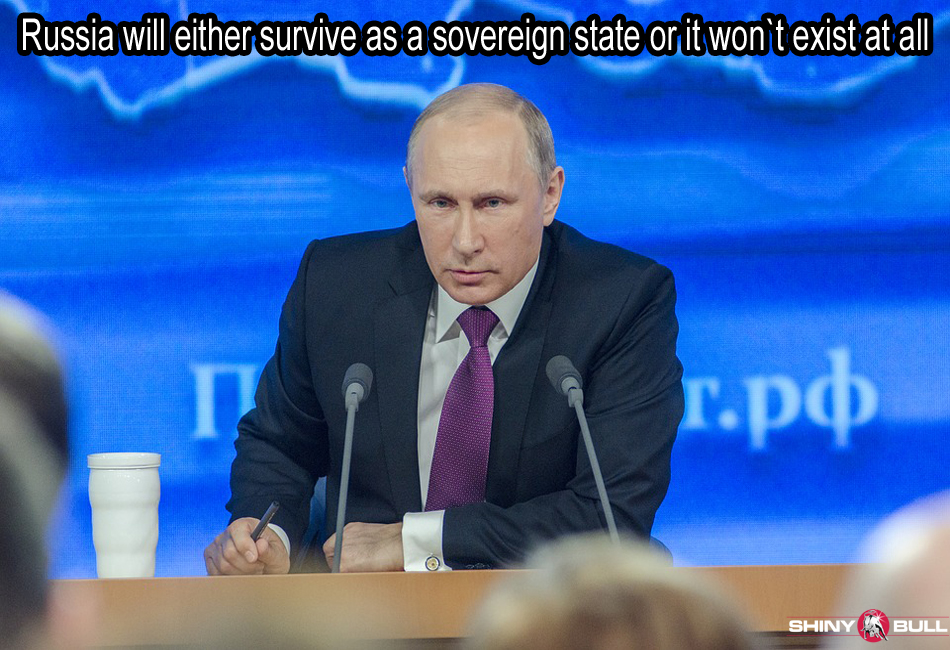
This is not speculation. This is not a conspiracy theory. It`s the truth. Former Fox News host Tucker Carlson is in Russia today. He`s in Moscow, and he plans to interview Russian President Vladimir Putin. Wow!
This will be the first conversation between Russia and Western Media since the war in Ukraine started about two years ago.
Tucker Carlson has been very critical to the war in Ukraine, including U.S. military aid to Ukraine. He also believes that most people in the West don`t really know what’s happening in Ukraine. Americans, and most people in the West are not informed, but Carlson wants to change that.
It`s time for the truth.
The war in Ukraine is a human disaster, and it has depopulated the largest country in Europe. The war has left hundreds of thousands of people dead. An entire generation of young Ukrainians, but the long-term effects are even more profound.
This has utterly reshaped the global military, and trade alliances, and the sanctions that followed have as well. In total, they have upended the world economy.
The post-Wold War II economic order (the system that guaranteed prosperity in the West for more than 80 years), is coming apart very fast. And along with it, the dominance of the U.S. dollar.
These are not small changes. They are history-altering developments.
They will define the lives of our grandchildren. Most of the world understands this perfectly well. They can see it. Ask anyone in Asia or the Middle East what the future looks like. And yet the populations of the English-speaking countries seem mostly unaware. They think that nothing has really changed.
They think that because no one has told them the truth. Their media outlets are corrupt.
They lie to their readers and viewers, and they do that mostly by omission. For example, since the day the war in Ukraine began, American media outlets have spoken to scores of people from Ukraine, and they`ve done scores of interviews with Ukrainian President Zelenskyy.
Most Americans have no idea what Putin invaded Ukraine, or what his goals are now. They`ve never heard his voice, and that is Wrong. Americans have a right to know all they can about a war they`re implicated in, and we have the right to tell them about it because we are Americans too, Tucker Carlson said on YouTube Tuesday.
Freedom of speech is our birthright. We are born with the right to say what we believe. That right cannot be taken away no matter who is in the White House. But, they`re trying anyway.
Tucker Carlson is not in Moscow because he loves Vladimir Putin. He`s in Moscow because he loves the United States of America.
The interview will be posted on tuckercarlson.com, X, and YouTube. But, Carlson said that the Western governments will certainly do their best to censor this video on other less-principled platforms because that`s what they do.
They are afraid of information they can’t control.
But you have no reason to be afraid of it. We are not encouraging you to agree with what Putin may say in this interview. But we are urging you to watch it.
You should know as much as you can. And then, like a free citizen, and not a slave, you can decide for yourself.
Disclaimer: The views expressed in this article are those of the author and may not reflect those of Shinybull.com. The author has made every effort to ensure the accuracy of the information provided; however, neither Shinybull.com nor the author can guarantee such accuracy. This article is strictly for informational purposes only. It is not a solicitation to make any exchange in precious metal products, commodities, securities, or other financial instruments. Shinybull.com and the author of this article do not accept culpability for losses and/ or damages arising from the use of this publication.
The world is changing very fast, and we are facing a massive shift in the global markets. A New World Order. And President Vladimir Putin talked about it in his speech at the second Eurasian Economic Forum in Moscow, Russia, on May 24, 2023.
The Eurasian Economic Union (EAEU) supports pairing with China`s Belt and Road Initiative (BRI) to achieve the Greater Eurasian Partnership, Putin said in his speech at the second Eurasian Economic Forum of the EAEU on Wednesday.
EAEU is an economic union of countries located in Eurasia, consisting of five member states: Russia, Belarus, Kazakhstan, Kyrgyzstan, and Armenia.
50 different countries attended the economic forum in Moscow under this motto: «Eurasian Integration in a multipolar world.»
The forum is designed to look at ways in which BRICS, the EAEU, and the Shanghai Cooperation Organization (SCO) can be expanded, and possibly integrated.
Putin said the EAEU supports initiatives committed to developing the Eurasian region and will continue to work with China to promote the docking of the EAEU`s development with China`s BRI.
Putin also said that the world is experiencing revolutionary changes and that more countries are seeking to build a new architecture of international economic relations that is fairer, and based on mutual respect and mutual benefit.
The speech was interesting, and Putin added that the U.S. economic policy is «shooting itself in the foot» by reinforcing a trend that undermines its own development. In this regard, he said Russia and its partners in the EAEU are interested in «honest, productive, and pragmatic cooperation,» noting that anyone acting otherwise «damages the global economy.»
Putin talked a lot about the economy, and he argued that the global economic system will only benefit from the formation of a decentralized international financial system and that it`s important to coordinate efforts to form such a global system.
Echoing Putin`s call for a decentralized international financial system, Belarusian First Deputy Prime Minister Nikolai Snopkov said on Wednesday that Belarus plans to completely move away from the U.S dollar, and the euro in trade with Russia, and other EAEU countries by 2023.
But Belarus is not alone to do that. A few days ago, the Iraqi Ministry of Interior imposed a ban on the use of US dollars in personal, and commercial transactions in Iraq, according to Iraq News.
The ban, which came into force a few days ago, aims to promote the use of the local currency, the Iraqi dinar and limited the use of the US dollar in Iraq.
The De-Dollarisation wave continues………
Disclaimer: The views expressed in this article are those of the author and may not reflect those of Shinybull.com. The author has made every effort to ensure the accuracy of the information provided; however, neither Shinybull.com nor the author can guarantee such accuracy. This article is strictly for informational purposes only. It is not a solicitation to make any exchange in precious metal products, commodities, securities, or other financial instruments. Shinybull.com and the author of this article do not accept culpability for losses and/ or damages arising from the use of this publication.
Xi Jinping visited Vladimir Putin today, and they both called each other «dear friends.» Xi says China is ready with Russia to stand guard over world order based on international law, on Moscow visit earlier today. Xi added that with Russia, China was ready to defend the UN-centric international system.
Xi pushes China to play a more dominant role in managing global affairs. China`s New World Order is on the way.
This is what the war in Ukraine is about: the new world order. The war in Ukraine is set to fundamentally transform the International order, and some people call it the world`s «de-Westernization».
A World Order is an impressive work that focuses on the geopolitical distribution of power, Henry Kissinger wrote in his book World Order.
During the 20th century, political figures such as Woodrow Wilson and Winston Churchill used the term «new world order» to refer to a new period of history characterized by a dramatic change in world political thought and in the global balance of power after World War I and World War II.
The interwar and post-World War II periods were seen as opportunities to implement idealistic proposals for global governance by collective efforts to address worldwide problems that go beyond the capacity of individual nation-states to resolve while nevertheless respecting the right of nations to self-determination.
Such collective initiatives manifested in the formation of intergovernmental organizations such as the League of Nations in 1920, the United Nations (UN) in 1945, and the North Atlantic Treaty Organization (NATO) in 1949, along with international regimes such as the Bretton Woods system and the General Agreement on Tariffs and Trade (GATT), implemented to maintain a cooperative balance of power and facilitate reconciliation between nations to prevent the prospect of another global conflict.
After World War II, they all said; «Never again», and the winners, led by America, drafted conventions that defined unpardonable crimes against humanity, and sought to impose costs on those committing them.
Recalling the economic disasters and human miseries that paved the way to world war, the framers of this order built the UN and other international institutions to promote cooperation and development.
Progressives welcomed international organizations and regimes such as the United Nations in the aftermath of the two World Wars but argued that these initiatives suffered from a democratic deficit and were therefore inadequate not only to prevent another world war but to foster global justice, as the UN was chartered to be a free association of sovereign nation-states rather than a transition to democratic world government.
British writer and futurist H.G. Wells went further than progressives in the 1940s by appropriating and redefining the term «new world order» as a synonym for the establishment of a technocratic world state, and of a planned economy, garnering popularity in state socialist circles.
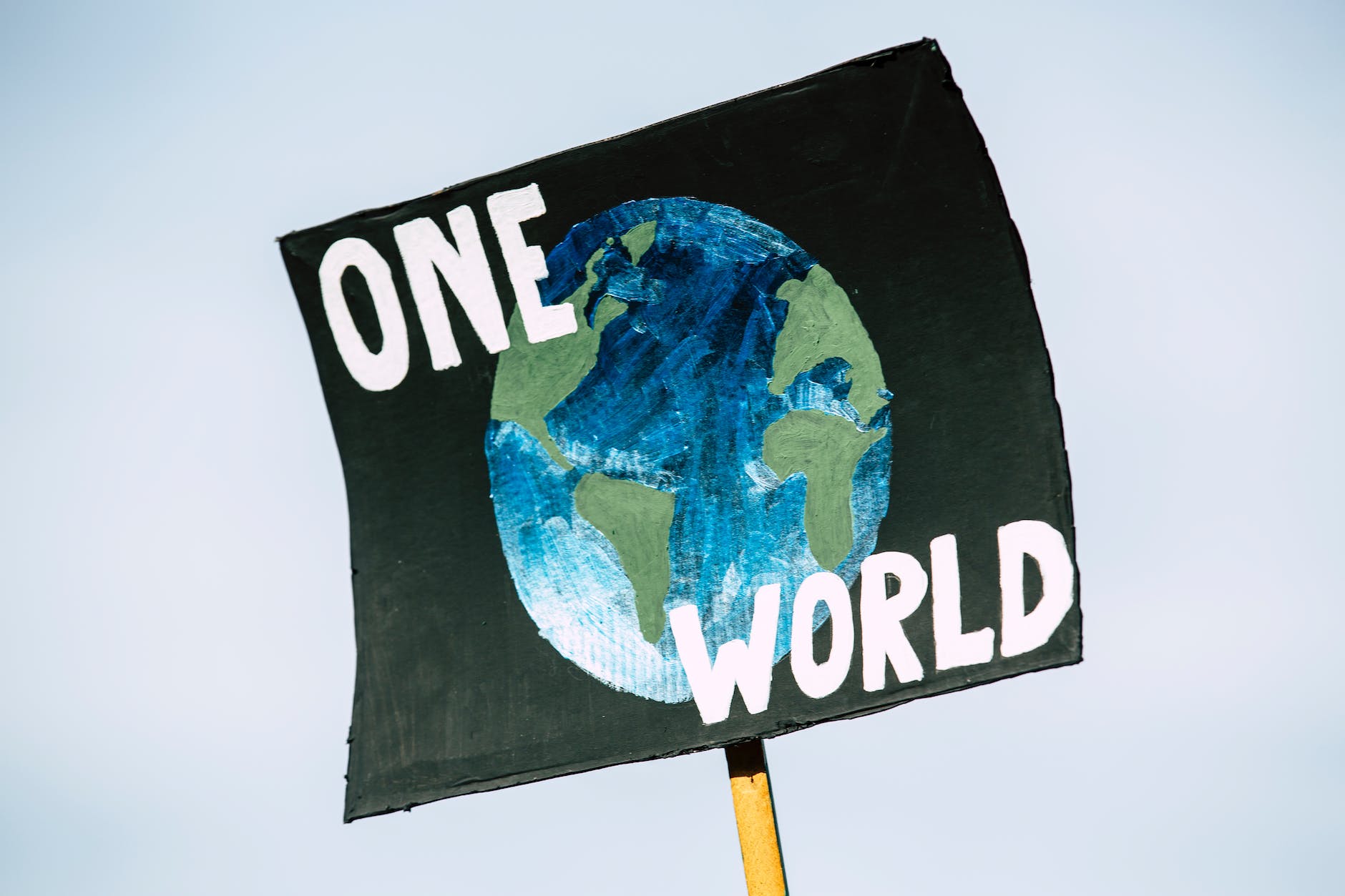
Right-wing populist John Birch Society claimed in the 1960s that the governments of both the United States and the Soviet Union were controlled by a cabal of corporate internationalists, «greedy» bankers, and corrupt politicians who were intent on using the UN as the vehicle to create a «One World Government».
This anti-globalist conspiracism fueled the campaign for U.S. withdrawal from the UN.
In his speech, Toward a New World Order, delivered on 11 September 1990 during a joint session of the US Congress, President George H.W. Bush described his objectives for post-Cold War global governance in cooperation with post-Soviet states. He stated:
«Until now, the world we`ve known has been a world divided – a world of barbed wire and concrete block, conflict, and the cold war. Now, we can see a new world coming into view. A world in which there is the genuine prospect of new world order.
In the words of Winston Churchill, a «world order» in which «the principles of justice and fair play …. protect the weak against the strong…..»A world where the United Nations, freed from cold war stalemate, is poised to fulfill the historic vision of its founders. A world in which freedom and respect for human rights find a home among all nations.»
The New York Times observed that progressives were denouncing this new world order as a rationalization of American imperial ambitions in the Middle East at the time.
And now, everything has changed. Again. China`s New World Order is coming.
We are moving from a Unipolar world to a Multipolar world where Europe and the U.S. are less influential. The war in Ukraine is dividing opinions between people in Western nations, and those in countries like China, India, and Turkey, a new poll suggests.
The war in Ukraine has laid bare the «sharp geographical divides in global attitudes» on «conceptions of democracy, and the composition of the future international order,» according to a new survey from the European Council on Foreign Relations (ECFR).
While Western allies have «regained their sense of purpose on the global stage,» the gulf between their perspective and the «rest» has grown wider, the ECFR added.
There are different views about the general role the West will play in the future world order. Some people expect a new bipolar world of two blocks led by the U.S. and China, whereas there were signs that most people in major non-Western countries see the future in more multipolar terms.
China has always been in front. The silk road is known for all the roads from China to Europe, and nobody knows how old it is, but it can be as old as ten thousand years. The silk road was popular because the Chinese sold silk to Europe.
Today, China is still in front as they are considered to be the factory of the world. But this is probably not a surprise for people in China. Why?
For more than two millennia, nomarchs who ruled China proper saw their country as one of the dominant actors in the world. The concept of Zhongguo (the Middle Kingdom, as China, calls itself), is not simply geographic.
It implies that China is the cultural, political, and economic center of the world.
This Sino-centrist worldview has in many ways shaped China`s outlook on global governance. The rules, norms, and institutions that regulate international cooperation. The decline and collapse of imperial China in the 1800s and early 1900s, however, diminished Chinese influence on the global stage for more than a century.
But China is back. China has reemerged as a major power in the past two decades, with the world`s second-largest economy and a world-class military. It increasingly asserts itself, seeking to regain its centrality in the international system, and over global governance institutions.
These institutions, created mostly by Western powers after World War II, include the World Bank, which provides loans and grants to developing states, the International Monetary Fund, which works to secure the stability of the global monetary system; and the United Nations, among others.
President Xi Jinping, the most powerful Chinese leader since Mao Zedong, has called for China to «lead the reform of the global governance system,» transforming institutions and norms in ways that will reflect Beijing`s values and priorities.
For over two thousand years, beginning with the Qin dynasty (221-226 BCE) and ending with the collapse of the Qing (1636-1911 BCE), monarchs who ruled China proper invoked a mandate of heaven to legitimate their own rule and rhetorically assert their own centrality to global order, even though they never built a truly global empire.
Even when China`s influence collapsed in the nineteenth and twentieth centuries, Chinese elites dreamed of regaining global influence.
At the end of World War II, China became an initial member of the United Nations and seemed poised to play a larger role in the new international order. But after the Communist Party won the civil war and took power in 1949, China rejected the international system and tried to help create an alternative global governance order.
Frustrated with the existing international system, the Republic of China (Taiwan) remained seated on the UN Security Council, instead of the People`s Republic of China, Beijing promoted alternative values and institutions.
In 1953, Premier Zhou Enlai enunciated «The Five Principles of Peaceful Coexistence», mutual respect for sovereignty, territorial integrity, mutual nonaggression, noninterference in each other`s international affairs, equality, mutual benefit, and peaceful coexistence.
Endorsed by leaders of many newly independent former colonies, these principles formed a basis for the nonaligned movement (NAM) of the 1960s. NAM became a counterweight to Western-dominated global governance.
China returned to the international system in the early 1970s and rebuilt its ties with the United States. It accepted a weaker international role and sought to participate in the institutions and rules set up after World War II.
After the end of the Mao era, China opened up in the 1980s and 1990s, reformed its economy, and increased its role in global governance, including by cooperating with international institutions. During this time, China adapted many domestic laws to conform to those of other countries.
Deng Xiaoping, who ultimately succeeded Mao, oversaw major economic reforms in the late 1970s and early 1980s, which launched China`s growth and ultimately increased its global reach. Deng introduced market reforms, and encouraged inflows of foreign capital and technology, among other steps.
During this period, China also joined more global financial and trade institutions, including the International Monetary Fund (IMF), the World Intellectual Property Organization, and the Asian Development Bank.
In 1989, the Chinese government violently cracked down on democracy protestors in Beijing`s Tiananmen Square, and elsewhere in the country, which resulted in widespread international condemnation.
To help rebuild its reputation and ties with other countries, beginning in the early 1990s, Beijing increasingly embraced multilateralism and integration with global governance institutions. Beijing signed multilateral agreements it had previously been reluctant to join.
In the first decade of the twenty-first century, China often proved willing to play by international rules and norms. As its economy grew, however, Beijing assumed a more active role in global governance, signaling its potential to lead and challenge existing institutions and norms.
The country boosted its power in four ways; it took on a bigger role in international institutions, advertised its increasing influence, laid the groundwork to create some of its own organizations, and sometimes subverted global governance rules.
In 2010, China surpassed Japan to become the world`s second-biggest economy and earned the third-greatest percentage of votes in the World Bank, and the International Monetary Fund (IMF). It also created its own Multilateral Organizations.
China started to create its own Beijing-dominated institutions. A process that would expand in the 2010s. In the previous decade, Beijing had established the Shanghai Cooperation Organization (SCO), which built on the earlier Shanghai 5 group, and brought together China, Russia, and Central Asian states.
In the 2010s, the SCO would become a vehicle for China to challenge existing global norms, such as pushing its idea of closed internet controlled by governments, rather than one global, open internet.
Under President Bush and Obama, Washington generally accepted that Beijing would increasingly support global governance norms and institutions. In 2005, U.S. Deputy Secretary of State Robert Zoellick publicly urged China to become a «responsible stakeholder» in the international system.
The Donald J. Trump administration, by contrast, has expressed greater concern over Chinese efforts to subvert existing norms and has pushed back against Beijing`s efforts to use international institutions to promote Chinese foreign policies and programs like the Belt and Road Initiatives.
But China challenges International norms and rules. Under Jiang Zemin`s successor Hu Jintao, China more openly challenged international norms. Beijing asserted that its sovereignty over disputed areas of the South China Sea was a «core interest,» and «non-negotiable, « despite participating in negotiations with other claimants.
Beijing also expanded its footprint in the South China Sea; it built military facilities on disputed islands and artificial features. And it expanded its aid around the world.
Since the early 2010s, as China`s economic and military power has grown, so too has its ambition and capability to reform the global governance system to reflect Beijing`s priorities and values.
Some of the priorities Beijing promotes in global governance are defensive in nature and reflect long-standing. Chinese aims: preventing criticism of China`s human rights practices, keeping Taiwan from assuming an independent role in international institutions, and protecting Beijing from compromises to its sovereignty.
Yet China also now seeks to shape the global governance system more offensively, to advance its model of political and economic development. This development model reflects extensive state control over politics and society and a mix of both market-based practices and statism in core sectors of the economy.
Xi Jinping has called for more shared control of global governance. He has declared that China needs to «lead the reform of the global governance system with the concepts of fairness and justice».
The terms fairness and justice signal a call for a more multipolar world, one potentially with a smaller U.S. role in setting international rules. The Donald J. Trump administration`s retreat from global leadership has added to China`s opportunity to fill the void and promote multipolar global governance.
China is now pushing for a bigger role in International agencies. Chinese officials lead four of the fifteen UN specialized agencies. They are also creating alternative institutions. Beijing is building its own, China-centered institutions.
In 2013, Beijing launched the Belt and Road Initiatives. A vast plan to use Chinese assistance to fund infrastructure, and boost ties with, other countries, like their neighbor Russia. Beijing`s more proactive global strategy serves the Xi administration`s dream of returning China to its past glory.
China`s evolving global governance strategy is most apparent in four major issues; global health, internet governance, climate change, and development finance.
China seeks to become a leader in global internet governance and to promote the idea of «cyber sovereignty». That a state should exert control over the internet within its borders. In October 2017, Xi Jinping unveiled his plans to make China a «cyber superpower.»
Globally, Beijing promotes its domestic cyber sovereignty approach to internet governance, which hinges on Communist Party control and censorship. Xi`s administration uses increasingly advanced technology to dominate the domestic internet and social media, blocking global search engines, and social media sites, and promoting domestic versions.
China`s domestic internet offers an alternative to existing, freer models of internet governance, and Beijing also uses its influence at the United Nations, and other forums to push countries to adopt a more closed internet.
Meanwhile, Chinese corporations such as Huawei, and CloudWalk have supplied repressive governments in Venezuela and Zimbabwe with surveillance tools like facial recognition technology.
And the Belt and Road Initiative (BRI) contains a «Digital Silk Road Initiative» that includes inviting foreign officials to participate in workshops on information technology policy, including controlling the internet.
If China and Russia can set the standards for internet governance, they could pave the way for other countries to embrace cyber sovereignty, sparking a divided world with two internets. One is generally open, and the other is closed and favored by autocracies.
The world has become less democratic in recent years. Democracy is in decline. The number of people that have democratic rights has recently plummeted: between 2016 and 2022, this number fell from 3,9 billion to 2,3 billion people.
The world underwent phases of autocratization in the 1930s and again in the 1960s and 1970s. Back then, people fought to turn the tide and pushed democratic rights to unprecedented heights. But what now? Can we do the same again?
A new Chinese world order is coming, and they are not democratic.
Disclaimer: The views expressed in this article are those of the author and may not reflect those of Shinybull.com. The author has made every effort to ensure the accuracy of the information provided; however, neither Shinybull.com nor the author can guarantee such accuracy. This article is strictly for informational purposes only. It is not a solicitation to make any exchange in precious metal products, commodities, securities, or other financial instruments. Shinybull.com and the author of this article do not accept culpability for losses and/ or damages arising from the use of this publication.
The world economy is in bad shape and it can be worse. Professor Roubini predict a Great depression, not only for 2020, but for the decade of the 2020`s. What does this crisis we`re in really mean? For someone out there it means a great opportunity. It means a great reset.
«The Great Reset» will be the theme of a unique twin summit to be convened by the World Economic Forum in January 2021. In-person and virtual dialogues will address the need for a more fair, sustainable and resilient future, and a new social contract centred on human dignity, social justice and where societal progress does not fall behind economic development.
Founder and Executive Chairman of WEF, Klaus Schwab wrote in his article called «The time for a great reset» that there is a good reason to worry: a sharp economic downturn has already begun, and we could be facing the worst depression since the 1930`s.
But, while this outcome is likely, it is not unavoidable.
Furthermore, Claus wrote this; to achieve a better outcome, the world must act jointly and swiftly to rewamp all aspects of our societies and economies, from education to social contracts and working conditions.
Every country, from the United States to China, must participate, and every industry, from oil and gas to tech, must be transformed. In short, we need a «Great Reset» of capitalism.
The crisis we`re in, together with COVID-19, will deepen and leave the world even less sustainable, less equal, and more fragile. Incremental measures and ad hoc fixes will not suffice to prevent this scenario. We must build entirely new foundations for our economic and social systems.
Managing Director at IMF, Kristalina Georgieva also had the headline «The Great Reset» a few weeks ago. My thanks to His Royal Highness the Prince of Wales and th Professor Schwab for bringing us together, she wrote in the opening.
Furthermore, she wrote this in her article: Now is the time to think of what history would say about this crisis. And now is the time for all of us to define our own role. Will historians look back and say this was the moment of a Great Reversal? Today, we see very worrying signs.
One hundred and seventy countries are going to finish this year with a smaller economy than at the start of the year, and we already project that there will be more debt, bigger deficits, and more unemployment. And there is a very high risk of more inequality and more poverty.
Unless we act.
So, what would it take for historians to look back at this crisis as the moment of Great Reset?
From the persepective of the IMF, we have seen a massive injection of fiscal stimulus to help countries deal with this crisis, and to shift gears for growth to return. It is of paramount important that this growth should lead to a greener, smarter, fairer world in the future, Kristalina Georgieva wrote.
IMF and WEF see some tremendous opportunities. Heh… It seems like a New World Order is on the way…..
Disclaimer: The views expressed in this article are those of the author and may not reflect those of Shiny bull. The author has made every effort to ensure accuracy of information provided; however, neither Shiny bull nor the author can guarantee such accuracy. This article is strictly for informational purposes only. It is not a solicitation to make any exchange in precious metal products, commodities, securities or other financial instruments. Shiny bull and the author of this article do not accept culpability for losses and/ or damages arising from the use of this publication.



 Ket Garden
 Business, Politics, Finans