Tag Archives: Liberty

The cost of living and the blame game

People are angry, and that’s why they voted for Mamdani as the next Mayor of New York.
People are sick and tired of struggling to make ends meet. In his victory speech, Mamdani said:

“We choose hope over tyranny. Hope over big money and small ideas. Hope over despair. Tonight, we have stepped out from the old into the new.”

His supporters are already marching in the streets, saying they don’t want Trump as a king or a dictator.

Hmm… I think I’ve heard this before.

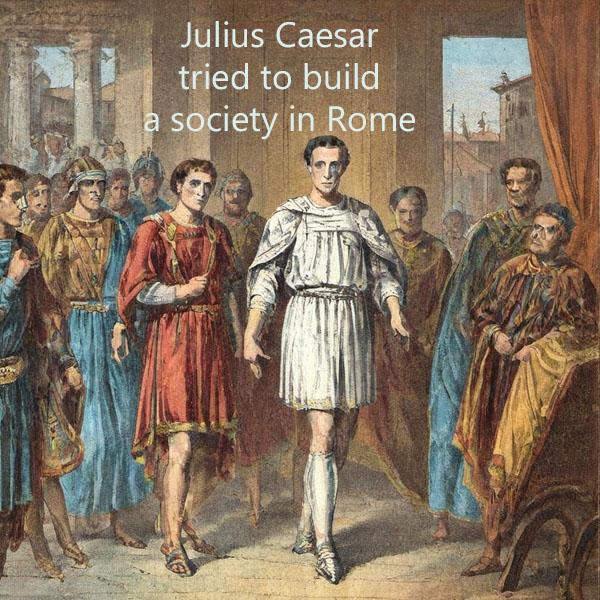
More than two thousand years ago, in Rome, another man was accused of wanting to be king.
His name was Julius Caesar.

A group of Roman senators assassinated Caesar out of fear that his growing power and titles, especially dictator for life, would destroy the Roman Republic.
They claimed they were saving democracy, but their actions plunged Rome into chaos and civil war.

It was a betrayal that changed history, and a reminder of how fear, power, and instability often go hand in hand.

History Repeats Itself

Fast forward to France, 1848. The people were exhausted. Food prices were soaring, unemployment was rising, and inequality had reached unbearable levels.
King Louis Philippe I, once known as the Citizen King, had promised a fairer, more modern France. But over time, his government became detached from ordinary people’s struggles.

One of the main sources of anger was the tax system. The poor and working class bore a heavy burden through indirect taxes on essentials like food, salt, and fuel, while wealthy landowners and property owners paid relatively little. Voting rights were also tied to property ownership, meaning most citizens had no political voice. When food prices spiked in the late 1840s, ordinary people were paying high taxes on top of already expensive necessities. Economic frustration reached a tipping point.

People in New York voted for Mamdani, who wants to raise taxes and, at the same time, give people fast and free buses. How is that going to be?

When protests erupted in February 1848, the king tried to silence them. Instead, the anger exploded.
Barricades filled the streets of Paris, and after just a few bloody days, Louis Philippe abdicated the throne and fled to England in disguise.

The monarchy collapsed. The Second Republic was born.
But what came next? A new leader. Louis-Napoleon Bonaparte, nephew of Napoleon I, rose to power, promising to restore stability and hope. Within four years, he declared himself Emperor.

Sound familiar?

It’s the same old story: people rise up against a system they believe is unjust, only to end up under a new one that looks strangely similar.
Each era has its slogans: “liberty,” “hope,” “change,” “the people’s revolution”, yet the same problems remain. Prices go up. Ordinary citizens struggle. The rich adapt and survive.

Take a look at France today with its Yellow Vest protesters. People are struggling with their cost of living. I wrote an article about that for the first time, many years ago. And who is to blame now? The King? Napoleon? No, it`s Macron.

So, Why Are Prices Rising Again?

The cost of living has become the defining issue of our time. Food, housing, and energy prices are rising faster than wages. Families feel squeezed, not just in New York or Paris, but across the Western world.

But who is to blame?

It’s tempting to point the finger at politicians, corporations, or billionaires. Yet the truth is more complex. The problem isn’t one person. It’s the system itself.

A mix of factors drives today’s inflation:

  • Global supply chain disruptions from the pandemic and wars.
  • Energy shocks as the world shifts away from fossil fuels.
  • Corporate pricing power in markets where competition has shrunk.
  • Decades of easy money and debt have inflated asset prices but left wages behind.

Governments print money to stimulate the economy, corporations raise prices to protect profits, and central banks hike interest rates to cool inflation, all while ordinary people pay the price.

It’s a cycle that keeps repeating, no matter the century. In ancient Rome, it was grain shortages. In 1848, in France, it was bread and taxes. Today, it’s rent and electricity.

The Real Lesson

Historically, when people struggle, they often look for someone to blame, such as a king, a tyrant, or a president. Get rid of Trump, and everything will be fine. Get rid of Macron, and the sun will shine. They think removing the person will fix the system. But as history shows us, that rarely works.

Trump isn’t the cause of America’s problems. He’s a symptom of them.
Just as Caesar wasn’t the reason Rome was collapsing, but rather the outcome of deep divisions and economic inequality that had built up for years.

When the cost of living becomes unbearable, people revolt. Sometimes at the ballot box, sometimes in the streets.

But unless we learn from history, each “revolution” just sets the stage for the next crisis.

In the end, it’s not about kings or dictators. It’s about systems.
And if we don’t fix the system, the anger, fear, and struggle will continue. Just as it has for more than 2,000 years.

Disclaimer: The views expressed in this article are those of the author and may not reflect those of Shinybull.com. The author has made every effort to ensure the accuracy of the information provided; however, neither Shinybull.com nor the author can guarantee the accuracy of this information. This article is strictly for informational purposes only. It is not a solicitation to make any exchange in precious metal products, commodities, securities, or other financial instruments. Shinybull.com and the author of this article do not accept culpability for losses and/ or damages arising from the use of this publication.

Leave a comment

Filed under Politics

Strong and emotional speech from President Trump at 75th D-Day anniversary in Normandy

Another strong speech by President Trump at 75th D-Day anniversary in Normandy on Thursday. A very emotional speech and not at least; historic. I remember Bill Clinton and George Bush`s speeches but this one was very special. Not to say magic.

I have repeated myself for decades; Its all about the good people and the bad people. Thats it. The Nazi regime was a terrible terrorist regime and their goal was to take Europe, but they failed. The turning point was in Normandy in France and we can thank America for that.

They saved Europe from tyranny and gave Europe Freedom and liberty. “We pledge that our nations will for ever be strong and united,” Trump said in the speech.

This year, it is 30 years since the Tinananmen Square massacre in China were the Communist party killed its own citizens. This year, it is 75 years since the battle in Normandy in France were the people won against the terrorists.

“When governments fear the people, there is liberty. When the people fear the government, there is tyranny.” What some elite people don`t understand is that the federal government is our servant, not our master!»

Disclaimer: The views expressed in this article are those of the author and may not reflect those of Shiny bull. The author has made every effort to ensure accuracy of information provided; however, neither Shiny bull nor the author can guarantee such accuracy. This article is strictly for informational purposes only. It is not a solicitation to make any exchange in precious metal products, commodities, securities or other financial instruments. Shiny bull and the author of this article do not accept culpability for losses and/ or damages arising from the use of this publication.

 

Leave a comment

Filed under Politics

American conservatism defend Western culture from the perceived threats posed by socialism and authoritarianism

The unemployment rate for the black people in America is at a historic low, and this is happening under President Donald Trump. The big loser in this game seems to be the Democratic Party. According to Candace Owens, the Democratic party will see a major exit by black voters leading up to the 2020 presidential election.

Candace Owens is an American conservative commentator and activist. She is known for her pro-Trump commentary, and criticism of Black Lives Matter and the Democratic Party. Conservative in the U.S is not the same as we know it in Europe and Asia. So, what is it?

First of all; the man who is best known for being conservative in the Republican Party is Ronald Reagan. He spoke from the Oval Office, outlining his plan for tax reduction in July 1981. Now, Mr Trump is doing exactly the same.

But the word conservative is often used very different from the way it is used in Europe and Asia. Following the American Revolution, Americans rejected the core ideals of European conservatism; those ideas were based on the landed aristocracy, established churches, and powerful armies.

American conservatism is a broad system of political beliefs in the United States that is characterized by respect for American traditions, republicanism, support for Judeo-Christian values, moral absolutism, and a defence of Western culture from the perceived threats posed by socialism, authoritarianism, and moral relativism.

Liberty, economic freedom, social conservatism, and promotion of Judeo-Christian ideals are core beliefs, with a particular emphasis on strengthening the free market, limiting the size and scope of government in the economy, and opposition to high taxes and government or labor union encroachment on the entrepreneur.

American conservatives consider individual liberty, within the bounds of conformity to American values, as the fundamental trait of democracy, which contrasts with modern American liberals, who generally place a greater value on equality and social justice.

American conservatism originates from republicanism, which rejected aristocratic and monarchical government based on the principles of the Declaration of Independence of 1776, which stated that

“All men are created equal, that they are endowed by their Creator with certain unalienable Rights, that among these are Life, Liberty and the Pursuit of Happiness.”

In 1789, the Constitution of United States established a Federal Republic under the rule of law. All major American political parties are based on these two documents. Conservative activists to this day occasionally dress in costumes from the Revolutionary era and celebrate revolutionary episodes such as the Boston Tea Party.

Conservative philosophy also has continuity to the classical liberal tradition of the 18th and 19th centuries, which advocated for laissez-faire economics, also called economic freedom and deregulation.

The conservative movement of the 1950`s attempted to bring together these divergent strands, stressing the need for unity to prevent the spread of “godless communism.”

Through much of the 20th century, a primary force uniting the varied strands of conservatism, and uniting conservatives with liberals and socialists, was opposition to communism, which was seen not only as an enemy of the traditional order, but also the enemy of Western freedom and democracy.

Thus it was the British Labour government, which embraced socialism, that pushed the Truman administration in 1945-1947 to take a strong stand against Soviet Communism.

In the 21th century United States has different types of conservatism, which is first of all; Christian conservatism. They are primarily interested in family values. Fiscal conservatism focuses on low taxes and restrained government spending.

Neoconservative is a modern form of conservatism that supports a more assertive, interventionist foreign policy, aimed at promoting democracy abroad. It is tolerant of an activist government at home, but is focused mostly on international affairs.

The 1980`s and beyond became known as the «Reagan Era.» Typically, conservative politics and spokesmen in the 21st century proclaim their devotion to Reagan`s ideals and policies on most social, economic and foreign policy issues.

Now, we are living in a “Trump Era.” Some say it is Populism, but I will rather call it “Trumpism.”

Disclaimer: The views expressed in this article are those of the author and may not reflect those of Shiny bull. The author has made every effort to ensure accuracy of information provided; however, neither Shiny bull nor the author can guarantee such accuracy. This article is strictly for informational purposes only. It is not a solicitation to make any exchange in precious metal products, commodities, securities or other financial instruments. Shiny bull and the author of this article do not accept culpability for losses and/ or damages arising from the use of this publication.

Leave a comment

Filed under Politics