In recent remarks, U.S. Senator Marco Rubio addressed what the White House and the State Department have described as “civilizational erase”—a term used to express concern about long-term pressures facing the Western alliance. The argument is not primarily about military strength or immediate security threats, but about the cultural and civilizational foundations that bind the United States and Europe together.
According to Rubio, the West is more than a network of states linked by defense treaties such as NATO. It is a civilization shaped by a shared history, a shared legacy, shared values, and shared priorities. These include commitments to individual liberty, human rights, democratic self-governance, and the rule of law. If these common foundations are weakened or dismissed, the alliance risks being reduced to a purely technical defense arrangement—functional, but fragile.
Rubio emphasizes that the American political system did not emerge in isolation. Many of its core ideas were inherited from Europe and from Western civilization more broadly. Concepts such as liberty, the value of the individual, and self-governance trace their origins to classical antiquity. Greek reflections on democracy and citizenship, combined with Roman legal and political thought, formed the intellectual groundwork for later European institutions and, ultimately, the founding principles of the United States.
Roman ideas such as libertas—the understanding that citizens possess rights protected by law—along with notions of civic duty, constitutional order, and legal equality, were central to this inheritance. These ideas were refined over centuries and carried forward into modern Western political culture. In this sense, freedom and liberty are not merely contemporary political slogans, but the result of a long civilizational development stretching back to Greece and Rome.
The concern Rubio raises is that if this shared cultural and historical understanding is eroded or denied, the transatlantic relationship could weaken over time. Discussions within NATO, he notes, increasingly extend beyond military coordination to broader questions of societal cohesion, mass migration, and cultural continuity. Some leaders address these issues openly, while others acknowledge them more privately. Either way, Rubio argues they represent a factor that cannot be ignored if the alliance is to remain durable.
From this perspective, the idea of “civilizational erase” is not about exclusion, but about memory. It is about whether the West continues to recognize the principles that gave rise to its institutions in the first place. Rubio contends that the United States—explicitly founded on Western principles such as liberty, individual rights, and self-governance—should be unapologetic in acknowledging and defending this shared inheritance.
If that inheritance is reduced to something secondary or optional, the alliance risks losing its deeper rationale. What would remain, Rubio suggests, is a defense agreement without a civilizational core. In the long run, that would place the ties between the United States and Europe under strain, not because of external enemies alone, but because of an internal loss of shared meaning.
Disclaimer: The views expressed in this article are those of the author and may not reflect those of Shinybull.com. The author has made every effort to ensure the accuracy of the information provided; however, neither Shinybull.com nor the author can guarantee the accuracy of this information. This article is strictly for informational purposes only. It is not a solicitation to make any exchange in precious metal products, commodities, securities, or other financial instruments. Shinybull.com and the author of this article do not accept culpability for losses and/ or damages arising from the use of this publication.
“Every war begins with the illusion of victory. Every peace begins with the courage of dialogue. Which will we choose?”
History has already shown us the price of arrogance. Twice in the last century, the world descended into total war because nations believed they had no choice but to fight and that they had to win. Today, as leaders repeat the same words, we stand once again at the edge of disaster.
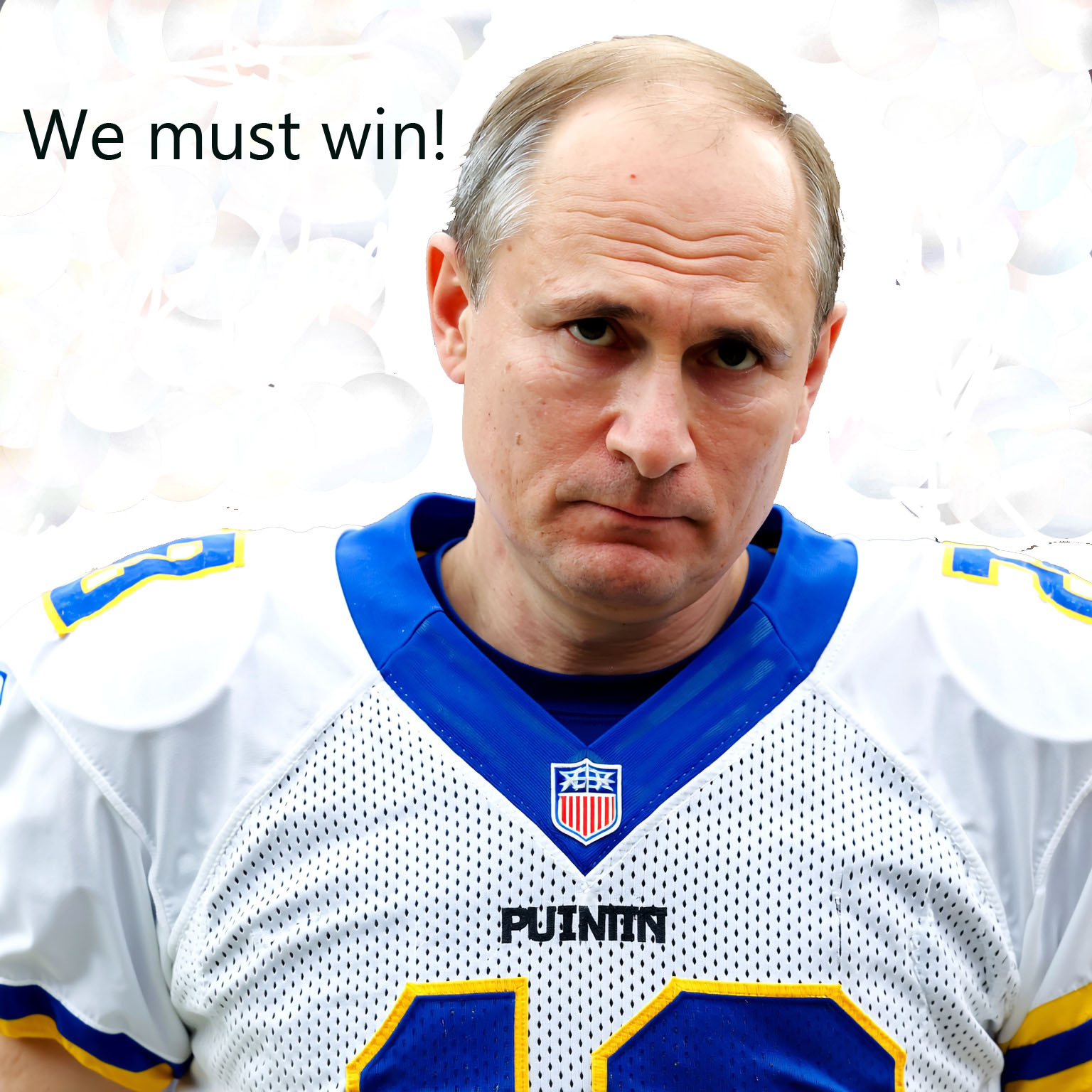
The world has already witnessed two devastating global conflicts — the First and Second World Wars. Now, many fear that we stand on the brink of a Third. The war in Ukraine rages on, while violence flares in Israel and Gaza. What is striking is that leaders on all sides declare that they must win. Even NATO’s former Secretary General Jens Stoltenberg has insisted that “weapons are the way to peace.”
But have we truly learned nothing from history?
After the First World War, nations attempted to chart a new course. The Treaty of Versailles of 1919 and the creation of the League of Nations were intended to establish an international order in which diplomacy, rather than war, would resolve conflicts. The idea was collective security: dialogue, negotiation, and the prevention of another catastrophic war.
And yet, within two decades, the world was plunged into an even deadlier conflict. The League of Nations failed because nationalism, greed, and great-power rivalry proved stronger than the will to compromise. Diplomacy was drowned out by ambition, unresolved grievances, and economic instability.
It feels eerily similar today. We see frozen conflicts, festering grievances, and leaders proclaiming that victory — and only victory — is the only acceptable outcome. But as history shows, not everyone can win.
Think of a football match: two teams, both determined to be victorious. Only one side can claim the win after 90 minutes. But wars do not have a clock. Wars end only when destruction, exhaustion, or overwhelming force brings them to a halt. In the past, that sometimes meant entire armies fighting to the last man. In the 20th century, it meant the atomic bomb. It was not diplomacy that ended the Second World War — it was unprecedented violence.
This raises an unsettling truth: humans often respond more to fear than to reason. Diplomacy, without urgency, is easily dismissed. But when fear peaks — when cities are destroyed, when civilians suffer, when nuclear annihilation looms — only then do leaders suddenly discover the language of negotiation.
If history repeats itself, then humanity may once again stumble toward self-destruction. The tragic irony is that while weapons may bring silence to the battlefield, they rarely bring true peace. Peace, lasting peace, requires the courage to pursue diplomacy before fear takes control.
Because if “weapons are the way to peace,” we may find that peace comes only after there is nothing left to save.
Fear, it seems, is the actual driver of humanity. Diplomacy is too often dismissed until it is too late. And when diplomacy fails, fear and destruction rule.
History is clear: bombs may end wars, but they do not prevent them from happening. Dialogue does.
Diplomacy is not a sign of weakness – it is a sign of wisdom. If history teaches us anything, it is this: bombs can end wars, but only dialogue can prevent them. The choice is ours, and the clock is ticking.
Disclaimer: The views expressed in this article are those of the author and may not reflect those of Shinybull.com. The author has made every effort to ensure the accuracy of the information provided; however, neither Shinybull.com nor the author can guarantee the accuracy of this information. This article is strictly for informational purposes only. It is not a solicitation to make any exchange in precious metal products, commodities, securities, or other financial instruments. Shinybull.com and the author of this article do not accept culpability for losses and/ or damages arising from the use of this publication.
This is not speculation. This is not a conspiracy theory. It`s the truth. Former Fox News host Tucker Carlson is in Russia today. He`s in Moscow, and he plans to interview Russian President Vladimir Putin. Wow!
This will be the first conversation between Russia and Western Media since the war in Ukraine started about two years ago.
Tucker Carlson has been very critical to the war in Ukraine, including U.S. military aid to Ukraine. He also believes that most people in the West don`t really know what’s happening in Ukraine. Americans, and most people in the West are not informed, but Carlson wants to change that.
It`s time for the truth.
The war in Ukraine is a human disaster, and it has depopulated the largest country in Europe. The war has left hundreds of thousands of people dead. An entire generation of young Ukrainians, but the long-term effects are even more profound.
This has utterly reshaped the global military, and trade alliances, and the sanctions that followed have as well. In total, they have upended the world economy.
The post-Wold War II economic order (the system that guaranteed prosperity in the West for more than 80 years), is coming apart very fast. And along with it, the dominance of the U.S. dollar.
These are not small changes. They are history-altering developments.
They will define the lives of our grandchildren. Most of the world understands this perfectly well. They can see it. Ask anyone in Asia or the Middle East what the future looks like. And yet the populations of the English-speaking countries seem mostly unaware. They think that nothing has really changed.
They think that because no one has told them the truth. Their media outlets are corrupt.
They lie to their readers and viewers, and they do that mostly by omission. For example, since the day the war in Ukraine began, American media outlets have spoken to scores of people from Ukraine, and they`ve done scores of interviews with Ukrainian President Zelenskyy.
Most Americans have no idea what Putin invaded Ukraine, or what his goals are now. They`ve never heard his voice, and that is Wrong. Americans have a right to know all they can about a war they`re implicated in, and we have the right to tell them about it because we are Americans too, Tucker Carlson said on YouTube Tuesday.
Freedom of speech is our birthright. We are born with the right to say what we believe. That right cannot be taken away no matter who is in the White House. But, they`re trying anyway.
Tucker Carlson is not in Moscow because he loves Vladimir Putin. He`s in Moscow because he loves the United States of America.
The interview will be posted on tuckercarlson.com, X, and YouTube. But, Carlson said that the Western governments will certainly do their best to censor this video on other less-principled platforms because that`s what they do.
They are afraid of information they can’t control.
But you have no reason to be afraid of it. We are not encouraging you to agree with what Putin may say in this interview. But we are urging you to watch it.
You should know as much as you can. And then, like a free citizen, and not a slave, you can decide for yourself.
Disclaimer: The views expressed in this article are those of the author and may not reflect those of Shinybull.com. The author has made every effort to ensure the accuracy of the information provided; however, neither Shinybull.com nor the author can guarantee such accuracy. This article is strictly for informational purposes only. It is not a solicitation to make any exchange in precious metal products, commodities, securities, or other financial instruments. Shinybull.com and the author of this article do not accept culpability for losses and/ or damages arising from the use of this publication.
Xi Jinping visited Vladimir Putin today, and they both called each other «dear friends.» Xi says China is ready with Russia to stand guard over world order based on international law, on Moscow visit earlier today. Xi added that with Russia, China was ready to defend the UN-centric international system.
Xi pushes China to play a more dominant role in managing global affairs. China`s New World Order is on the way.
This is what the war in Ukraine is about: the new world order. The war in Ukraine is set to fundamentally transform the International order, and some people call it the world`s «de-Westernization».
A World Order is an impressive work that focuses on the geopolitical distribution of power, Henry Kissinger wrote in his book World Order.
During the 20th century, political figures such as Woodrow Wilson and Winston Churchill used the term «new world order» to refer to a new period of history characterized by a dramatic change in world political thought and in the global balance of power after World War I and World War II.
The interwar and post-World War II periods were seen as opportunities to implement idealistic proposals for global governance by collective efforts to address worldwide problems that go beyond the capacity of individual nation-states to resolve while nevertheless respecting the right of nations to self-determination.
Such collective initiatives manifested in the formation of intergovernmental organizations such as the League of Nations in 1920, the United Nations (UN) in 1945, and the North Atlantic Treaty Organization (NATO) in 1949, along with international regimes such as the Bretton Woods system and the General Agreement on Tariffs and Trade (GATT), implemented to maintain a cooperative balance of power and facilitate reconciliation between nations to prevent the prospect of another global conflict.
After World War II, they all said; «Never again», and the winners, led by America, drafted conventions that defined unpardonable crimes against humanity, and sought to impose costs on those committing them.
Recalling the economic disasters and human miseries that paved the way to world war, the framers of this order built the UN and other international institutions to promote cooperation and development.
Progressives welcomed international organizations and regimes such as the United Nations in the aftermath of the two World Wars but argued that these initiatives suffered from a democratic deficit and were therefore inadequate not only to prevent another world war but to foster global justice, as the UN was chartered to be a free association of sovereign nation-states rather than a transition to democratic world government.
British writer and futurist H.G. Wells went further than progressives in the 1940s by appropriating and redefining the term «new world order» as a synonym for the establishment of a technocratic world state, and of a planned economy, garnering popularity in state socialist circles.
Right-wing populist John Birch Society claimed in the 1960s that the governments of both the United States and the Soviet Union were controlled by a cabal of corporate internationalists, «greedy» bankers, and corrupt politicians who were intent on using the UN as the vehicle to create a «One World Government».
This anti-globalist conspiracism fueled the campaign for U.S. withdrawal from the UN.
In his speech, Toward a New World Order, delivered on 11 September 1990 during a joint session of the US Congress, President George H.W. Bush described his objectives for post-Cold War global governance in cooperation with post-Soviet states. He stated:
«Until now, the world we`ve known has been a world divided – a world of barbed wire and concrete block, conflict, and the cold war. Now, we can see a new world coming into view. A world in which there is the genuine prospect of new world order.
In the words of Winston Churchill, a «world order» in which «the principles of justice and fair play …. protect the weak against the strong…..»A world where the United Nations, freed from cold war stalemate, is poised to fulfill the historic vision of its founders. A world in which freedom and respect for human rights find a home among all nations.»
The New York Times observed that progressives were denouncing this new world order as a rationalization of American imperial ambitions in the Middle East at the time.
And now, everything has changed. Again. China`s New World Order is coming.
We are moving from a Unipolar world to a Multipolar world where Europe and the U.S. are less influential. The war in Ukraine is dividing opinions between people in Western nations, and those in countries like China, India, and Turkey, a new poll suggests.
The war in Ukraine has laid bare the «sharp geographical divides in global attitudes» on «conceptions of democracy, and the composition of the future international order,» according to a new survey from the European Council on Foreign Relations (ECFR).
While Western allies have «regained their sense of purpose on the global stage,» the gulf between their perspective and the «rest» has grown wider, the ECFR added.
There are different views about the general role the West will play in the future world order. Some people expect a new bipolar world of two blocks led by the U.S. and China, whereas there were signs that most people in major non-Western countries see the future in more multipolar terms.
China has always been in front. The silk road is known for all the roads from China to Europe, and nobody knows how old it is, but it can be as old as ten thousand years. The silk road was popular because the Chinese sold silk to Europe.
Today, China is still in front as they are considered to be the factory of the world. But this is probably not a surprise for people in China. Why?
For more than two millennia, nomarchs who ruled China proper saw their country as one of the dominant actors in the world. The concept of Zhongguo (the Middle Kingdom, as China, calls itself), is not simply geographic.
It implies that China is the cultural, political, and economic center of the world.
This Sino-centrist worldview has in many ways shaped China`s outlook on global governance. The rules, norms, and institutions that regulate international cooperation. The decline and collapse of imperial China in the 1800s and early 1900s, however, diminished Chinese influence on the global stage for more than a century.
But China is back. China has reemerged as a major power in the past two decades, with the world`s second-largest economy and a world-class military. It increasingly asserts itself, seeking to regain its centrality in the international system, and over global governance institutions.
These institutions, created mostly by Western powers after World War II, include the World Bank, which provides loans and grants to developing states, the International Monetary Fund, which works to secure the stability of the global monetary system; and the United Nations, among others.
President Xi Jinping, the most powerful Chinese leader since Mao Zedong, has called for China to «lead the reform of the global governance system,» transforming institutions and norms in ways that will reflect Beijing`s values and priorities.
For over two thousand years, beginning with the Qin dynasty (221-226 BCE) and ending with the collapse of the Qing (1636-1911 BCE), monarchs who ruled China proper invoked a mandate of heaven to legitimate their own rule and rhetorically assert their own centrality to global order, even though they never built a truly global empire.
Even when China`s influence collapsed in the nineteenth and twentieth centuries, Chinese elites dreamed of regaining global influence.
At the end of World War II, China became an initial member of the United Nations and seemed poised to play a larger role in the new international order. But after the Communist Party won the civil war and took power in 1949, China rejected the international system and tried to help create an alternative global governance order.
Frustrated with the existing international system, the Republic of China (Taiwan) remained seated on the UN Security Council, instead of the People`s Republic of China, Beijing promoted alternative values and institutions.
In 1953, Premier Zhou Enlai enunciated «The Five Principles of Peaceful Coexistence», mutual respect for sovereignty, territorial integrity, mutual nonaggression, noninterference in each other`s international affairs, equality, mutual benefit, and peaceful coexistence.
Endorsed by leaders of many newly independent former colonies, these principles formed a basis for the nonaligned movement (NAM) of the 1960s. NAM became a counterweight to Western-dominated global governance.
China returned to the international system in the early 1970s and rebuilt its ties with the United States. It accepted a weaker international role and sought to participate in the institutions and rules set up after World War II.
After the end of the Mao era, China opened up in the 1980s and 1990s, reformed its economy, and increased its role in global governance, including by cooperating with international institutions. During this time, China adapted many domestic laws to conform to those of other countries.
Deng Xiaoping, who ultimately succeeded Mao, oversaw major economic reforms in the late 1970s and early 1980s, which launched China`s growth and ultimately increased its global reach. Deng introduced market reforms, and encouraged inflows of foreign capital and technology, among other steps.
During this period, China also joined more global financial and trade institutions, including the International Monetary Fund (IMF), the World Intellectual Property Organization, and the Asian Development Bank.
In 1989, the Chinese government violently cracked down on democracy protestors in Beijing`s Tiananmen Square, and elsewhere in the country, which resulted in widespread international condemnation.
To help rebuild its reputation and ties with other countries, beginning in the early 1990s, Beijing increasingly embraced multilateralism and integration with global governance institutions. Beijing signed multilateral agreements it had previously been reluctant to join.
In the first decade of the twenty-first century, China often proved willing to play by international rules and norms. As its economy grew, however, Beijing assumed a more active role in global governance, signaling its potential to lead and challenge existing institutions and norms.
The country boosted its power in four ways; it took on a bigger role in international institutions, advertised its increasing influence, laid the groundwork to create some of its own organizations, and sometimes subverted global governance rules.
In 2010, China surpassed Japan to become the world`s second-biggest economy and earned the third-greatest percentage of votes in the World Bank, and the International Monetary Fund (IMF). It also created its own Multilateral Organizations.
China started to create its own Beijing-dominated institutions. A process that would expand in the 2010s. In the previous decade, Beijing had established the Shanghai Cooperation Organization (SCO), which built on the earlier Shanghai 5 group, and brought together China, Russia, and Central Asian states.
In the 2010s, the SCO would become a vehicle for China to challenge existing global norms, such as pushing its idea of closed internet controlled by governments, rather than one global, open internet.
Under President Bush and Obama, Washington generally accepted that Beijing would increasingly support global governance norms and institutions. In 2005, U.S. Deputy Secretary of State Robert Zoellick publicly urged China to become a «responsible stakeholder» in the international system.
The Donald J. Trump administration, by contrast, has expressed greater concern over Chinese efforts to subvert existing norms and has pushed back against Beijing`s efforts to use international institutions to promote Chinese foreign policies and programs like the Belt and Road Initiatives.
But China challenges International norms and rules. Under Jiang Zemin`s successor Hu Jintao, China more openly challenged international norms. Beijing asserted that its sovereignty over disputed areas of the South China Sea was a «core interest,» and «non-negotiable, « despite participating in negotiations with other claimants.
Beijing also expanded its footprint in the South China Sea; it built military facilities on disputed islands and artificial features. And it expanded its aid around the world.
Since the early 2010s, as China`s economic and military power has grown, so too has its ambition and capability to reform the global governance system to reflect Beijing`s priorities and values.
Some of the priorities Beijing promotes in global governance are defensive in nature and reflect long-standing. Chinese aims: preventing criticism of China`s human rights practices, keeping Taiwan from assuming an independent role in international institutions, and protecting Beijing from compromises to its sovereignty.
Yet China also now seeks to shape the global governance system more offensively, to advance its model of political and economic development. This development model reflects extensive state control over politics and society and a mix of both market-based practices and statism in core sectors of the economy.
Xi Jinping has called for more shared control of global governance. He has declared that China needs to «lead the reform of the global governance system with the concepts of fairness and justice».
The terms fairness and justice signal a call for a more multipolar world, one potentially with a smaller U.S. role in setting international rules. The Donald J. Trump administration`s retreat from global leadership has added to China`s opportunity to fill the void and promote multipolar global governance.
China is now pushing for a bigger role in International agencies. Chinese officials lead four of the fifteen UN specialized agencies. They are also creating alternative institutions. Beijing is building its own, China-centered institutions.
In 2013, Beijing launched the Belt and Road Initiatives. A vast plan to use Chinese assistance to fund infrastructure, and boost ties with, other countries, like their neighbor Russia. Beijing`s more proactive global strategy serves the Xi administration`s dream of returning China to its past glory.
China`s evolving global governance strategy is most apparent in four major issues; global health, internet governance, climate change, and development finance.
China seeks to become a leader in global internet governance and to promote the idea of «cyber sovereignty». That a state should exert control over the internet within its borders. In October 2017, Xi Jinping unveiled his plans to make China a «cyber superpower.»
Globally, Beijing promotes its domestic cyber sovereignty approach to internet governance, which hinges on Communist Party control and censorship. Xi`s administration uses increasingly advanced technology to dominate the domestic internet and social media, blocking global search engines, and social media sites, and promoting domestic versions.
China`s domestic internet offers an alternative to existing, freer models of internet governance, and Beijing also uses its influence at the United Nations, and other forums to push countries to adopt a more closed internet.
Meanwhile, Chinese corporations such as Huawei, and CloudWalk have supplied repressive governments in Venezuela and Zimbabwe with surveillance tools like facial recognition technology.
And the Belt and Road Initiative (BRI) contains a «Digital Silk Road Initiative» that includes inviting foreign officials to participate in workshops on information technology policy, including controlling the internet.
If China and Russia can set the standards for internet governance, they could pave the way for other countries to embrace cyber sovereignty, sparking a divided world with two internets. One is generally open, and the other is closed and favored by autocracies.
The world has become less democratic in recent years. Democracy is in decline. The number of people that have democratic rights has recently plummeted: between 2016 and 2022, this number fell from 3,9 billion to 2,3 billion people.
The world underwent phases of autocratization in the 1930s and again in the 1960s and 1970s. Back then, people fought to turn the tide and pushed democratic rights to unprecedented heights. But what now? Can we do the same again?
A new Chinese world order is coming, and they are not democratic.
Disclaimer: The views expressed in this article are those of the author and may not reflect those of Shinybull.com. The author has made every effort to ensure the accuracy of the information provided; however, neither Shinybull.com nor the author can guarantee such accuracy. This article is strictly for informational purposes only. It is not a solicitation to make any exchange in precious metal products, commodities, securities, or other financial instruments. Shinybull.com and the author of this article do not accept culpability for losses and/ or damages arising from the use of this publication.
Former president Donald Trump is one of the few presidents in the U.S. that didn`t start a new war. He is also the man who said a war in Iraq is stupid and should be avoided. Now, he slams the «warmongers» and «globalists» in a new social media video message.
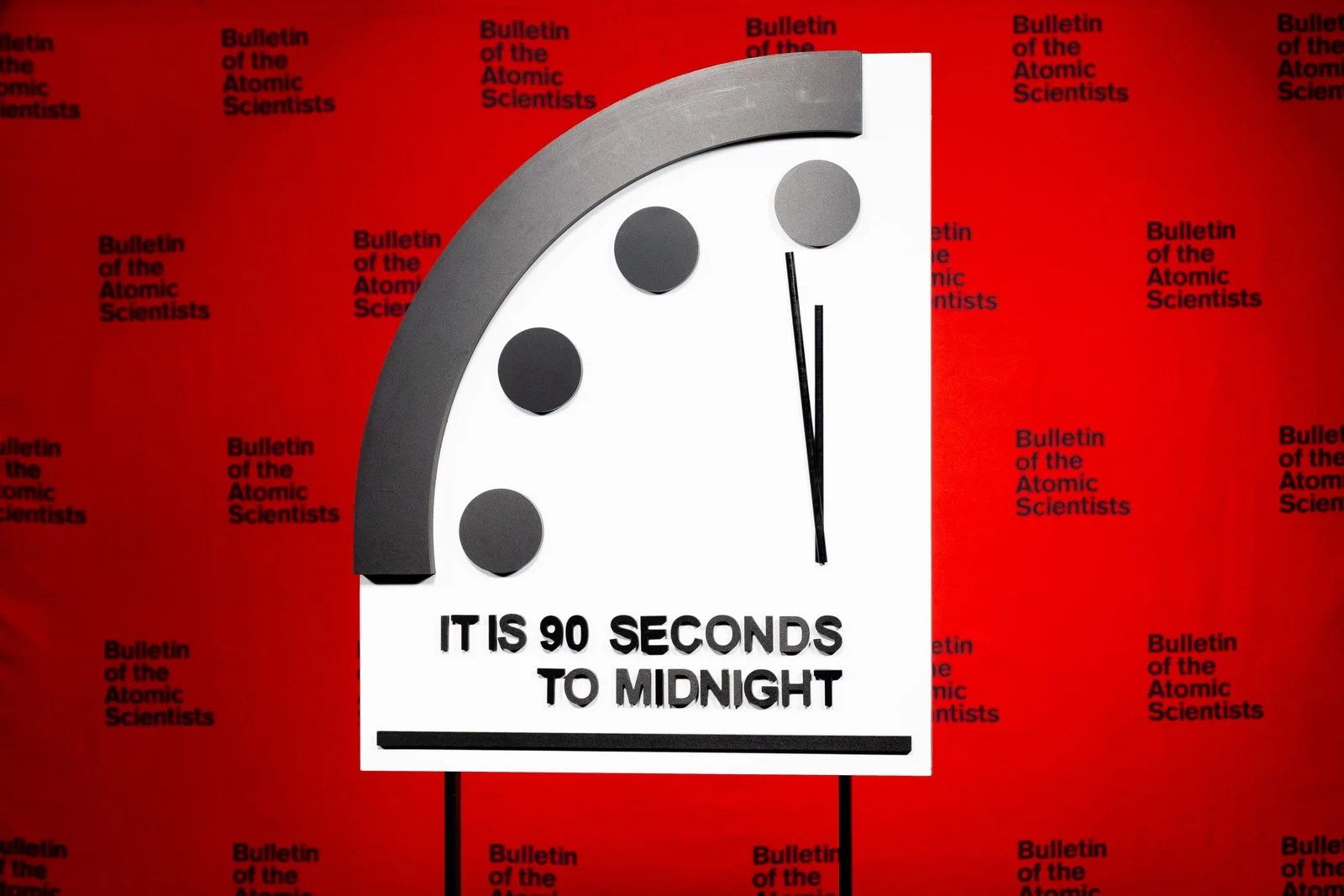
World War III has never been closer than it is right now. And Trump is right. Just take a look at the Doomsday clock. For 2021 and 2022, the clock`s hands were set to 100 seconds to midnight. Since this time-keeping exercise began in 1947, the announcement on Jan 24, 2023, represents the closest the clock has ever been to midnight.
This is a clear wake-up call.
According to Pastor Jimmy Evans, we are only 10 seconds to midnight, and we have never been closer than that. Mr. Evans knows the bible and believes we are at the end times.
The Doomsday Clock, created by the Bulletin of the Atomic Scientists to illustrate how close humanity has come to the world’s end, moved its «time» in 2023 to 90 seconds to midnight. That`s 10 seconds closer than it has been for the past three years.
The Doomsday clock is a symbol that represents the likelihood of a human-made global catastrophe. It is a design that warns the public about how close we are to destroying our world with dangerous technologies of our own making. The clock is telling us how close we are to total annihilation.
The clock is not only about existential threats, but also about difficult scientific topics such as climate change. But the decision to move the clock 10 seconds forward this year is due to Russia`s invasion of Ukraine, and the increased risk of nuclear escalation.
On top of that, we have the breakdown of norms and institutions needed to reduce risks associated with biological threats like Covid-19.
The Doomsday Clock
«We are living in a time of unprecedented danger, and the Doomsday Clock time reflects that reality,» Rachel Bronson, president, and CEO of the Bulletin, said in a new release. «It`s a decision our experts do not take lightly. The US government, its NATO allies, and Ukraine have a multitude of channels for dialogue; we urge leaders to explore all of them to their fullest ability to turn back the Clock.»
Former president Donald Trump said in a new video that he wants to clean the house of all of the «warmongers,» America`s last globalists, the Deep State, the Pentagon, the State Department, and the National Security Industrial Complex.
«One of the reasons I was the only president in a generation who didn`t start a war, is that I was the only president who rejected the catastrophic advice of many of Washinton`s generals, bureaucrats, and the so-called diplomats, who only know how to get us into conflict, but they don`t know how to get us out,» Trump said in his new video.
«We need to get rid of the corrupt globalist establishment that has botched every major foreign policy decision for decades, and that includes President Biden,» Trump said.
Furthermore, Trump says he is the president who delivers peace. Not only that. It is peace through strength. Mr. Trump said America could end the Ukraine conflict in 24 hours with the right leadership. A war Putin and Russia did everything they could to stop, according to Putin`s speech earlier this week.
Putin has warned you all. If the US and NATO continue to expand, Putin will push the button, and that will be the end of us all. World War III has never been closer, and The Doomsday Clock is ticking.
Disclaimer: The views expressed in this article are those of the author and may not reflect those of Shinybull.com. The author has made every effort to ensure the accuracy of the information provided; however, neither Shinybull.com nor the author can guarantee such accuracy. This article is strictly for informational purposes only. It is not a solicitation to make any exchange in precious metal products, commodities, securities, or other financial instruments. Shinybull.com and the author of this article do not accept culpability for losses and/ or damages arising from the use of this publication.


 Ket Garden
 Business, Politics, Finans