The Christians believe that Jesus is coming back this year. They know what they are talking about because they know the bible. The end times are clearly described in the bible, and when we look at everything that is happening in the world right now, there`s a good chance the tribulation could begin this year.
If there`s ever been a time to get ready, this is the time. They believe that Vladimir Putin is sent by God. I`m following Jimmy Evans, and he talks a lot about it. So do Pat Robertson. In my recent article on March 3, I wrote about his tweet saying that Putin «is being compelled by God» to invade Ukraine in preparation for a massive End Times invasion of Israel. You can read that article here.
Mr. Robertson claimed God had his conspiracy that was being implemented via Mr. Putin. Mel Gibson is also planning to release a new film about Christ. The Passion of the Christ 2,0 will be released next year.
«All of those troops there are going to be coming against Israel in the latter days. And God says, «I am going to take care of it.» He also told his viewers on the 700 Club on the Christian Broadcasting Network (CBN), to read the bible because it`s coming to pass.
This is the end times. This is Apocalypse. God is ready to do something amazing, and that will be fulfilled, Mr. Robertson said.
An entity referred to as Gog and Magog descend from the «far north» upon a peaceful, reconstituted Israel, whose people had been «brought out from the nations, and all now dwell securely,» as it is described in Ezekiel.
The resulting war that follows allows a Messiah to swoop in and come to Israel`s rescue. It also ushers at the end of the world as we know it and the establishment of a new and better kingdom of God on earth.
Let`s look at Matthew 24, and what Jesus said: «In the last days, there will be wars and rumors of wars.» There will be plagues and an escalation of such catastrophes as the moment of Jesus` return draws near. In other words, the worse things get, the sooner the Second Coming.
The Bible lists several things to watch for; earthquakes, false Christs, wars, and rumors of wars. The gospel of Luke mentions signs in outer space, the nations of the earth facing problems with no solutions, and abnormally hostile weather (Luke 21:25).
The vast majority of Christians believe the second coming comes in two phases; the rapture, then the actual return of Christ at the end of the Tribulation period.
Watch for signs regarding the Temple in Jerusalem. That`s difficult for some people because The Romans destroyed the Hebrew Temple in Jerusalem in 70 AD.
There are prophetic events yet to happen inside the Temple; therefore, the Temple must be rebuilt. At the midpoint of the Tribulation Period, the Antichrist will walk into the Holy of Holies, located inside the Temple, and proclaims himself as a God.
When Jesus returns at the end of the Tribulation Period, He will walk into the Temple and start His one-thousand-year reign on earth. Neither of these events can occur without the Temple being there.
Next, keep an eye on the saber-rattling surrounding Ukraine. There is a prophecy in Ezekiel 38-39 describing an invasion of Israel. The nations involved in this invasion are Russia (Magog), Iran (Persia), several former Soviet states (Meshech/Tubal), Ukraine (Gomer), Turkey (Togarmah), Ethiopia, and Libya.
Notice Ukraine is on the list. For Ukraine to go to war alongside Russia, either Russia must take over Ukraine or the two become allies.
Jesus is coming back to beat up the bad guys and stomp on their enemies and crush everything under His heel.
Mel Gibson made a film about Jesus Christ in 2004, but now he is planning to release a new one next year. The film Passion of the Christ inspired the imagination in the realm of miracles, celestial beings, good and evil, and the meaning of loyalty, betrayal, and forgiveness.
The next film won’t be worse. According to actor Jim Caviezel who read a recent draft of the script, we`re in store for Mel Gibson`s magnum opus. The Empire Strikes Back of Christianity is apparently a masterpiece and must be seen to be believed.
While there isn`t much known about Gibson`s plans for the sequel (other than the Bible tells us), a release date for an upcoming novel may be evidence of the film`s roundabout premiere near June 16, 2023, for a book called The Gospel According to Mel Gibson; Fact, faith, and fantasy in The Passion of the Christ; Resurrection.
The book is by Helen Bond, a celebrated professor of Christian Origins and the New Testament. While Satan only had a couple of cameos in Passion, it sounds like much of the film will take place in Hell, where we will likely be treated to Gibson`s interpretation of eternal suffering.
We look forward to the film next year, and maybe in the meantime, Jesus is coming back? 41% of Americans believe that Jesus will definitely (23%) or probably (18%) return to Earth by 2050. Anyway, Mr. Robertson said; «read your bibles,» because «it`s going to pass.»
Disclaimer: The views expressed in this article are those of the author and may not reflect those of Shinybull.com. The author has made every effort to ensure the accuracy of the information provided; however, neither Shinybull.com nor the author can guarantee such accuracy. This article is strictly for informational purposes only. It is not a solicitation to make any exchange in precious metal products, commodities, securities, or other financial instruments. Shinybull.com and the author of this article do not accept culpability for losses and/ or damages arising from the use of this publication.
U.S President Joe Biden won the most total votes, and the fewest total counties, of any president-elect. He won the most votes in history. More than Barrack Obama. More than Bill Clinton. Trump, Bush, you name it.
Biden won a record low of 17% of counties, which means he won 477 counties while Obama 2008 won 873. Joe Biden received over 81 million votes, and that`s the most in history.
Yesterday, former President Obama visited the White House. And he stole the show. This is the first time he visited the White House since he left, but there is no doubt about his popularity. The same cannot be said about Biden.
Biden`s approval ratings keep falling, and just 40% of Americans approve of the job that he is doing. It`s the lowest rating Biden has seen in his presidency. A majority of Americans continue to say the U.S is headed in the wrong direction.
The most embarrassing moment for Biden, the Americans, and all the people of the free world was when Biden went off-script to denounce Putin in his Poland speech.
He should be a great cheerleader, but when he spoke to the military personnel, people were looking down. And Biden spoke like it was a funeral. Some seem to be sleeping. It was a very low-energy moment, and it didn`t look good. That`s probably why people are a bit scared now.
Biden went off the script, and these words will always be remembered:
«We will have a different future, a brighter future, rooted in democracy and principle, hope and light of decency and dignity, of freedom and possibilities. For God`s sake, this man cannot remain in power».
Even more embarrassing is that the White House a few minutes later quickly clarified that Biden wasn`t talking about regime change. It was alarming, and it sent some shockwaves. Why did Biden go off-script when he have his pockets full of «cheat sheets» to avoid gaffes?
President Biden said Viktor Orban is a totalitarian thug and wants to remove him from office, but Orban said that this is up to the Hungarian people. Biden also said that Putin cannot remain in power, but I think that is also up to the people in Russia.
Orban won a landslide victory earlier this week, so he is very popular. 83% of the people in Russia like Putin and his job, so he is also very popular. That cannot be said about Biden.
Biden was overshadowed by Obama in the White House yesterday. People were paying so much attention to Obama, where the most powerful man in the United States of America was walking around like a lost puppy. It was a very sad image.
Everybody in the world can see that Biden is in a state of cognitive decline, and it isn`t better to see a vice president that seems to be in a constant nervous breakdown.
Did they set in Obama to lift the energy level to a higher point? Because that`s what he did. He overshadowed the president and the vice president a hundred times. Biden was the best VP in the world, but he should be at home with his dog instead of in the oval office.
We are at war with Russia, but that war would never have started with Trump in the White House. The president and the vice president are weak, and people in the free world can clearly see their failures.
This is very dangerous. Not only for the U.S but for the whole world. And there is no doubt; this cannot continue for two more years. If so, I think people will start to call for the 25th amendment.
Disclaimer: The views expressed in this article are those of the author and may not reflect those of Shinybull.com. The author has made every effort to ensure the accuracy of the information provided; however, neither Shinybull.com nor the author can guarantee such accuracy. This article is strictly for informational purposes only. It is not a solicitation to make any exchange in precious metal products, commodities, securities, or other financial instruments. Shinybull.com and the author of this article do not accept culpability for losses and/ or damages arising from the use of this publication.
Do you remember when Vladimir Putin invited many world leaders to Russia`s annual Victory Day parade in Red Square on May 9, 2015? Do you remember that all the western leaders were boycotting that event because of the crisis in Ukraine?
Vladimir Putin said at that time that the U.S is trying to create a «unipolar world». Putin and Russia have used an address commemorating the 70th anniversary of victory over Nazi Germany to accuse the U.S of attempting to dominate the world.
I wrote an article about it on June 3, 2015, and you can read that article here. Cuba`s Fidel Castro shares Putin`s worldview. He released a new book called «Cold War – A warning for a unipolar world» on September 1, 2003. Castro said; «To endure the global struggle between the superpowers is bad. To live under the total hegemony of one of them is worse».
That`s exactly what the war in Ukraine is about. A world order. World dominance. But Putin stopped this big dream, which means we will go from a Unipolar world to a Multipolar world.
The U.S President, Barack Obama, and Germany`s Angela Merkel didn`t come. Neither did other Western leaders like UK`s Prime Minister David Cameron and French President Francois Hollande. Moscow has increasingly appeared to pivot away from Europe and focus more on developing relations with China, I wrote in the article at that time in 2015.
The Chinese leader, Xi Jinping, was the most high-profile guest on the podium next to Putin. Other presidents in attendance included India`s Pranab Mukherjee, Presiden Abdel Fatah al-Sisi of Egypt, Raul Castro of Cuba, Nicolas Maduro of Venezuela, Robert Mugabe of Zimbabwe, and Jacob Zuma of South Africa.
«The boycott illustrates the depth and breadth of the chasm now separating Russia and the West,» said Dmitri Trenin, head of the Carnegie Moscow Center.
But what is Putin trying to say when he claims that the U.S is trying to create a «Unipolar World?»
Unipolarity in international politics is a distribution of power in which one state exercises most of the cultural, economic, and military influence. Unipolarity is an interstate system and not an Empire. Unipolarity implies the existence of many juridically equal non-states, something that an empire denies.
Unipolarity is anarchical. Anarchy results from the incomplete power preponderance of the Unipole. Kenneth Waltz, argues that great power cannot «exert a positive control everywhere in the world.» Therefore, relatively weaker countries have the freedom to pursue policy preferences independent of the Unipol.
Unipolar systems possess only one great power and face no competition. If a competitor emerges, the international system is no longer unipolar. Kenneth Waltz maintains that the United States is the only «pole» to possess global interests.
So, here we are. We knew at that time that Russia appeared to pivot away from Europe and focus more on developing relations with China.
Russia in bed with China, India, and Africa means a new world order, and that coalition is powerful. Keep in mind that 50% of the world population lives in China and India alone. In terms of business; that is a huge market.
The unipolar world has come to an end.
The modern international order, system, and relations developed after the end of the Thirty Years’ War in 1618 – 1648, and the conclusion of the Westphalia Treaty in 1648. Raymond Aaron studied international relations and he said: «I call the international system a set of political entities that maintain constant relations and can be involved in a large-scale war».
It`s all a part of an evolution, and there are four types of structural organization of the international system: the Westphalian system (1648-1789) as a system of classical European balance, the Vienna system (1814-1914) the system of European concert, the Versailles-Washington system (1919-1939) with the main conquest, the League of Nations and the Yalta-Potsdam system (1945-1991), the crown of which is the creation of the United Nations.
There are three types of world order: unipolar, bipolar, and multipolar. The unipolar world order presupposes the domination of a single super-power that is ahead of all other states by its combined power.
The bipolar world order is transformed into a multipolar one when economic and military power comparable to the power of the two states is reached by other powers. In an equilibrium system, several large states maintain roughly the same influence on the course of the events, restricting each other`s excessive claims.
At the beginning of the twentieth century, the world was multipolar, but by the middle of the century, two World Wars and many smaller conflicts had created a bipolar model.
With the end of the cold war and the collapse of the Soviet Union, bipolarity was replaced by unipolarity. The United States began to play a major role. But that has come to an end.
Recent facts and events show that the United States cannot cope with the role of being the only pole in the current world order. They were unable to balance forces in the Middle East. Neither with their troops nor with the support of groups that tried to seize power. Therefore; the troops withdraw from the war in Afghanistan.
The old world order is gone forever. Now, the world has entered a period of uncertainty and increased risks, exacerbated by the inability of the United States and its allies to solve the global problems of our time.
Former Barack Obama adviser, President of the Council on Foreign Relations Richard Haas introduced the concept of a world without states or a multipolar world in his book «A World in Disarray: America Foreign Policy and the Crisis of the Old Order.»
Nations must be prepared to surrender independence to world structures. The unipolar system has ended, and International relations in the 21st century will determine the situation of polarity. The power would be blurred rather than concentrated, and the importance of nation-States would diminish as non-state actors strengthened.
A multipolar system complicates diplomatic activity. it`s not just that they’re more actors in the polar world. It lacks the predictable fixed structures and systems of relations that characterize unipolar, bipolar, and multipolar structures.
The multipolar system will be difficult and dangerous, and international relations are undergoing a powerful transformation in the 21st century that changes the nature, structure, and essence of the international order.
A formation of a new model of international relations will be very painful and costly, and the entire world order will have to go through an era of turbulence. We had the pandemic. Now, we have a war, but there is more pain to come. There will be more economic and social hardships and it`s time for more world chaos.
The British philosopher and sociologist Sigmund Bauman said: «No one can consider themselves truly indispensable. Even the most privileged status can be temporary and suddenly change».
Disclaimer: The views expressed in this article are those of the author and may not reflect those of Shinybull.com. The author has made every effort to ensure the accuracy of the information provided; however, neither Shinybull.com nor the author can guarantee such accuracy. This article is strictly for informational purposes only. It is not a solicitation to make any exchange in precious metal products, commodities, securities, or other financial instruments. Shinybull.com and the author of this article do not accept culpability for losses and/ or damages arising from the use of this publication.
99% of the votes are counted, and it shows right-wing nationalist Viktor Orban`s party Fidesz won 135 of 199 seats. Peter Marki-Zay`s opposition party was far behind with «only» 56 seats. Orban and his supporters are happy, while the EU is crying.
EU doesn`t like Viktor Orban, because they think he is a totalitarian and authoritarian leader. He is also a nationalist who cares about their borders, like many other right-wing politicians. MSM very often lies about Orban and Hungary and turns things upside down.
EU doesn`t have the same worldview as Hungary, and Orban has had a fraught relationship with the EU, which considers that Fidesz has undermined Hungary`s democratic institutions. Orban said in his victory speech that his «huge victory» could be seen «from the Moon, but certainly from Brussels as well».
«Without wanting to sound overly dramatic, it`s a tragedy. Looks like the end of whatever dreams one might have had of democracy in Hungary,» an EU official quoted by Reuters said.
«We`d have to cut money transfers so that he doesn`t build his own oligarchy with our money».
Orban is a self-styled illiberal democrat and does not agree with the EU when it comes to migration and press freedom. Orban and Hungary, like Poland, have many times clashed with Brussels over the rule of law.
During Orban’s campaign, the opposition`s catchphrase was «Orban or Europe». Orban has been in power for 12 years now, and so far he has rewritten the constitution, filled the top courts with his appointees, and changed the electoral system to his advantage.
Orban criticized Brussels bureaucrats and Ukraine`s President Zelenskyy in his victory speech, calling them «opponents». «We never had so many opponents,» Orban said. «Brussels bureaucrats…. the international mainstream media, and the Ukrainian president.»
Orban`s win is a headache to the EU and we can almost feel the pain they are going thru right now. Orban has a good relationship with Vladimir Putin, and he`s the only EU leader to criticize Ukraine`s President Zelenskyy. He has not vetoed any EU sanctions against Moscow, but he didn`t want to give any weapons to Ukraine.
Europe looks at Orban as «Hungary`s Putin». They share many of the same worldviews. We know that Europe has attacked oligarchs in the U.S. Now, they are attacking oligarchs in Russia. The same people claim this system of patronage has given birth to an elite class of wealthy conservative cronies in Hungary. Europe call them Orban`s oligarchs.
World War I and World War II was both ideology wars, and after World War II, the cold war started. President Ronald Reagan succeeded to tear down the wall in Berlin, and you know who the big winner was.
Freedom house funded by the U.S government, claims Hungary is less free than South Africa. That is a big lie. A country that doesn`t have an army or nuclear weapons. Last year, president Biden called Orban a «thug».
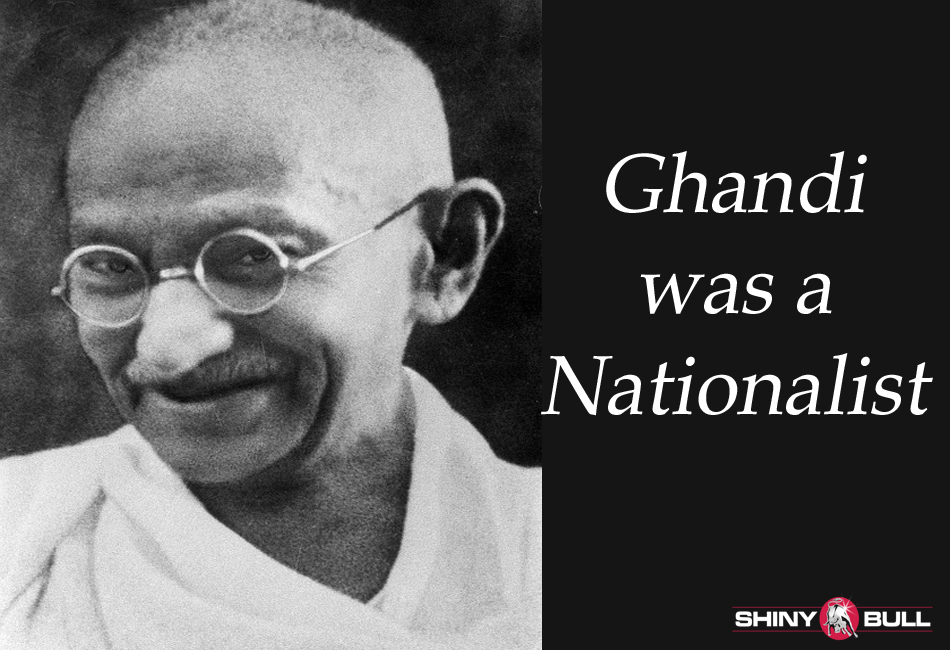
Gandhi was also, like Orban, a nationalist. He wanted an independent Indian nation-state and freedom from British colonial rule. Gandhi was fighting for peasant security of tenure and the freedom to produce the crop of their choosing in the Champaran. In 1917, he began the «Champaran Satyagrah.»
Viktor Orban is an outspoken anti-communist after the fall of the Berlin Wall. Now, he is branding himself as a nostalgic nationalist conservative. EU doesn`t like it at all.
Disclaimer: The views expressed in this article are those of the author and may not reflect those of Shinybull.com. The author has made every effort to ensure the accuracy of the information provided; however, neither Shinybull.com nor the author can guarantee such accuracy. This article is strictly for informational purposes only. It is not a solicitation to make any exchange in precious metal products, commodities, securities, or other financial instruments. Shinybull.com and the author of this article do not accept culpability for losses and/ or damages arising from the use of this publication.
What president or prime minister won`t protect its own country and its own citizens? Most of the countries around the world have their own foreign policy, which is their activities in relation to their interactions with other states, unions, and other political entities.
Diplomacy has been practiced for a very long time. The idea of long-term management of relationships followed the development of professional diplomatic corps that managed diplomacy. Since 1711, the term diplomacy has been taken to mean the art and practice of conducting negotiations between representatives of groups or nations.
In the 18th century, due to extreme turbulence in European diplomacy and ongoing conflicts, the practice of diplomacy was often fragmented by the necessity to deal with isolated issues, termed «affairs».
Organizations such as the Council of Foreign Relations in the United States are sometimes employed by government foreign relations organizations to develop foreign policy proposals as alternatives to an existing policy, or to provide analytical assessments of evolving relationships.
There are several objectives that may motivate a government`s foreign policy. Among other reasons, foreign policy may be directed for defense and security, for economic benefit, or to provide assistance to states that need it.
All foreign policy objectives are interconnected and contribute to a single, comprehensive foreign policy for each state. Unlike domestic policy, foreign policy issues tend to arise suddenly in response to developments and major events in foreign countries.
Foreign policy is often directed for the purpose of ensuring national security.
Governments have historically formed military alliances with foreign states in order to deter and show stronger resistance to attack. Foreign policy also focuses on combating adversarial states through soft power, international isolation, or war.
In the 21st century, defensive foreign policy has expanded to address the threat of global terrorism. Foreign measures such as foreign aid and financial sanctions are believed to decrease terrorist activity, while military intervention and military aid risk increase terrorist activity.
Foreign policy is central to a country`s role within the world economy and international trade. Economic foreign policy issues may include the establishment of trade agreements, the distribution of foreign aid, and the management of imports and exports. The World Trade Organization facilitates the economic foreign policies of most countries.
Superpowers are able to project power and exercise their influence across the world, while great powers and middle powers have moderate influence in global affairs.
Small powers have less ability to exercise influence unilaterally, as they have fewer economic and military resources to leverage. As a result, they are more likely to support international and multilateral organizations.
The diplomatic bureaucracies of smaller states are also smaller, which limits their capacity to engage in complex diplomacy. Smaller states may seek to ally themselves with larger countries for economic and defensive benefits, or they may avoid involvement in international disputes so as to remain on friendly terms with all countries.
The political institutions and forms of government play a role in a country`s foreign policy. In a democracy, public opinion and the methods of political representation both affect a country`s foreign policy.
Democratic countries are also believed to be less likely to resort to military conflict with one another.
Autocratic states are less likely to use legalism in their foreign policies. Under a dictatorship, a state`s foreign policy may depend heavily on the preferences of the dictator. Dictators that interfere significantly with their foreign policy apparatus may be less predictable and more likely to make foreign policy blunders.
The Monroe Doctrine was a United States foreign policy position that opposed European colonialism in the Western Hemisphere. It held that any intervention in the political affairs of the Americas by foreign powers was a potentially hostile act against the U.S.
The doctrine was central to U.S foreign policy for much of the 19th and early 20th centuries.
President James Monroe first articulated the doctrine on December 2, 1823, during his seventh annual State of the Union Address to Congress. At the time, nearly all Spanish colonies in the Americas had either achieved or were close to independence.
Monroe asserted that the New World and the Old World were to remain distinctly separate spheres of influence, and thus further efforts by European powers to control or influence sovereign states in the region would be viewed as a threat to U.S security.
In turn, the U.S would recognize and not interfere with existing European colonies nor meddle in the internal affairs of European countries.
By the end of the 19th century, Monroe`s declaration was seen as a defining moment in the foreign policy of the United States and one of its longest-standing tenets. The intent and effect of the doctrine persisted for over a century, with only small variations, and would be invoked by many U.S statesmen and several U.S presidents, including Ulysses S. Grant, Theodore Roosevelt, John F. Kenndy, and Ronald Reagan.
After 1898, the Monroe Doctrine was reinterpreted by Latin American lawyers and intellectuals as promoting multilateralism (an alliance of multiple countries pursuing a common goal) and non-intervention.
Despite the United States’ beginnings as an isolationist country, the foundation of the Monroe Doctrine was already laid even during George Washington`s presidency. According to S.E. Morison, «as early as 1783, then, the United States adopted the policy of isolation and announced its intention to keep out of Europe.
Alexander Hamilton wanted to establish the United States as a world power and hoped that it would suddenly become strong enough to keep the European powers outside of the Americas, despite the fact that the European countries controlled much more of the Americas than the U.S herself.
Hamilton expected that the United States would become the dominant power in the New World and would, in the future, act as an intermediary between the European powers and any new countries blossoming near the U.S.
Great Britain shared the general objective of the Monroe Doctrine and even wanted to declare a joint statement to keep other European powers from further colonizing the New World.
The U.S government feared the victorious European powers that emerged from the Congress of Vienna (1814 – 1815) would revive monarchical government. France had already agreed to restore the Spanish monarchy in exchange for Cuba.
As the revolutionary Napoleonic Wars (1803 – 1815) ended, Prussia, Austria, and Russia formed the Holy Alliance to defend monarchism. In particular, the Holy Alliance authorized military incursions to re-establish Bourbon rule over Spain and its colonies, which were establishing their independence.
(The Holy Alliance was a coalition linking the monarchist great powers of Austria, Prussia, and Russia. It was created after the final defeat of Napoleon at the behest of Emperor (Tsar) Alexander I of Russia and signed in Paris on 26 September 1815. The alliance aimed to restrain liberalism and secularism in Europe in the wake of the devastating French Revolutionary Wars and the Napoleonic Wars, and it nominally succeeded in this until the Crimean War).
About three months after the Final Act of the Congress of Vianna, the monarchs of Catholic (Austria), Protestant (Prussia), and Orthodox (Russia) confession promised to act on the basis of «justice, love, and peace», both in internal and foreign affairs, for «consolidating human institutions and remedying their imperfections».
The British feared their trade with the New World would be harmed if the other European powers further colonized it. In fact, for many years after the doctrine took effect, Britain, through the Royal Navy, was the sole nation enforcing it, the U.S lacking sufficient naval capability.
The U.S resisted a joint statement because of the recent memory of the War of 1812, however, the immediate provocation was the Russian Ukase of 1821 asserting rights to the Pacific Northwest and forbidding non-Russian ships from approaching the coast.
In 1902, Canadian Prime Minister Wilfrid Laurier acknowledged that the Monroe Doctrine was essential to his country`s protection.
The doctrine provided Canada with a de facto security guarantee by the United States, the US Navy in the Pacific, and the British Navy in the Atlantic, making invading North America almost impossible. Because of the peaceful relations between the two countries, Canada could assist Britain in a European war without having to defend itself at home.
Scholars such as Neil Smith have written that Woodrow Wilson effectively proposed a «Global Monroe Doctrine» expanding US supremacy over the entire world. Some analysts assert that this prerogative for indirect control and sporadic invasions and occupations across the planet has largely come to fruition with the American superpower role since World War II.
Such an expansion of the doctrine is premised on the «normal equality» of independent states. Such superficial equality is often undermined by material inequality, making the US a de facto global empire.
Smith argued that the founding of the United Nations played a role in the establishing of this global protectorate situation.
After World War II began, a majority of Americans supported defending the entire Western Hemisphere against foreign invasion. A 1940 national survey found that 81% supported defending Canada, 75% Mexico and Central America, 69% South America, 66% West Indies, and 59% Greenland.
In 1954, Secretary of State John Foster Dulles invoked the Monroe Doctrine at the 10th Pan-American Conference in Caracas, Venezuela, denouncing the intervention of Soviet Communism in Guatemala. President John F. Kennedy said at an August 29, 1962 news conference:
The Monroe Doctrine means what it has meant since President Monroe and John Quincy Adams enunciated it, and that is that we would oppose a foreign power extending its power to the Western Hemisphere, and that is why we oppose what is happening in Cuba today.
That is why we have cut off our trade. That is why we worked in the OAS (Organization of American States) and in other ways to isolate the Communist menace in Cuba. That is why we will continue to give a good deal of our effort and attention to it.
During the Cold War, the Monroe Doctrine was applied to Latin America by the farmers of US foreign policy. When the Cuban Revolution (1953 – 1959) established a Communist government with ties to the Soviet Union, it was argued that the Monroe Doctrine should be invoked to present the spread of Soviet-backed Communism in Latin America.
Under this rationale, the U.S provided intelligence and military aid to Latin and South American governments that claimed or appeared to be threatened by Communist subversion (as in the case of Operation Condor).
In the Cuban Missile Crisis of 1962, President John F. Kennedy cited the Monroe Doctrine as grounds of the United States’ confrontation with the Soviet Union over the installation of Soviet ballistic on Cuban soil.
The debate over this new interpretation of the Monroe Doctrine burgeoned in reaction to the Iran-Contra affair. It was revealed that the U.S CIA had been covertly training «Contra» guerrilla soldiers in Honduras in an attempt to destabilize and overthrow the Sandinista revolutionary government of Nicaragua and its president, Daniel Ortega.
CIA director Robert Gates vigorously defended the Contra operation in 1984, arguing that eschewing U.S intervention in Nicaragua would be «totally to abandon the Monroe Doctrine».
President Barack Obama`s Secretary of State John Kerry told the OAS in November 2013 that the «era of the Monroe Doctrine is over».
Several commentators have noted that Kerry`s call for a mutual partnership with the other countries in the Americas is more in keeping with Monroe`s intentions than the policies enacted after his death.
President Donald Trump implied potential use of the doctrine in August 2017 when he mentioned the possibility of military intervention in Venezuela after his CIA Director Mike Pompeo declared that the nation`s deterioration was the result of interference from Iranian- and Russian-backed groups.
In February 2018, Secretary of State Rex Tillerson praised the Monroe Doctrine as «clearly…..a success», warning of «imperial» Chinese trade ambitions and touting the United States as the region`s preferred trade partner.
Trump reiterated his commitment to the implementation of the Monroe Doctrine at the 73rd UN General Assembly in 2018. Vasily Nebenzya criticized the US for what the Russian Federation perceives as an implementation of the Monroe Doctrine at the 8452nd emergency meeting of the United Nations Security Council on January 26, 2019.
Venezuela`s representative listed 27 interventions in Latin America that Venezuela considers to be implementations of the Monroe Doctrine, and stated that, in the context of the statements, they consider it «a direct military threat to the Bolivian Republic of Venezuela».
Cuba`s representative formulated a similar opinion, «The current Administration of the United States of America has declared the Monroe Doctrine to be in effect…..».
On March 3, 2019, National Security Advisor John Bolton invoked the Monroe Doctrine in describing the Trump administration`s policy in the Americas, saying «In this administration, we`re not afraid to use the word Monroe Doctrine….. It`s been the objective of American presidents going back to President Ronald Reagan to have a completely democratic hemisphere.
Noam Chomsky argues that in practice the Monroe Doctrine has been used by the U.S government as a declaration of hegemony and a right of unilateral intervention over the Americas.
When we talk about great power politics, rights in the final analysis just don`t matter. Might makes right, according to John Mearsheimer
In international politics, states usually pay attention to international law. They also pay attention to moral precepts as long as they`re in their strategic interests. But if there is a conflict between international law and a country`s strategic interests, the country will always privilege its strategic interests, and international law and human rights will be pushed off the table.
This is why Mearsheimer thinks it`s not very helpful to talk about rights. When you talk about whether Russia has the right to have a buffer state, or Ukraine has the right to have its own foreign policy. These are concepts that get you into all sorts of trouble.
In the international system; «MIGHT MAKES RIGHT».
For example; the United States would never tolerate a situation where Canada or Mexico invited in a legal way, China to bring military forces into Toronto or Mexico City.
The U.S has the Monroe Doctrine which is in the U.S’ strategic interest, and the Monroe Doctrine says; no distant great power is allowed to put military forces in the Western Hemisphere. Period. End of story.
What the Russians are doing is they`re basically articulating their own version of the Monroe Doctrine. They`re saying you cannot turn Ukraine into a Western bastion on our border. That has nothing to do with rights.
It doesn`t matter whether Ukraine has the right to do this or that. Putin and Russia are saying they can`t do it. Just like the U.S is saying that Cuba can`t invite the Soviets to bring military forces into the Western Hemisphere.
Rights just don`t matter. MIGHT MAKES RIGHT.
Those who can`t put themselves in Putin`s shoes have a huge problem.
Disclaimer: The views expressed in this article are those of the author and may not reflect those of Shinybull.com. The author has made every effort to ensure the accuracy of the information provided; however, neither Shinybull.com nor the author can guarantee such accuracy. This article is strictly for informational purposes only. It is not a solicitation to make any exchange in precious metal products, commodities, securities, or other financial instruments. Shinybull.com and the author of this article do not accept culpability for losses and/ or damages arising from the use of this publication.






 Ket Garden
 Business, Politics, Finans