In the wake of the largest protests against the Iranian regime in decades, the world has witnessed a sharp increase in the use of the death penalty in Iran. According to human rights organizations, at least 1,500 people were executed in 2025—an unprecedented level in the history of the Islamic Republic. Many of these executions followed expedited proceedings and lacked what the regime itself would describe as a thorough and fair trial. The death penalty has increasingly been used as a tool to spread fear and crush opposition.
Reports of arrests, mass killings, and brutal reprisals against protesters have been widespread. In some cases, families have been informed that executions were imminent, with only very short notice.
Erfan Soltani – A Symbol of a New Threat
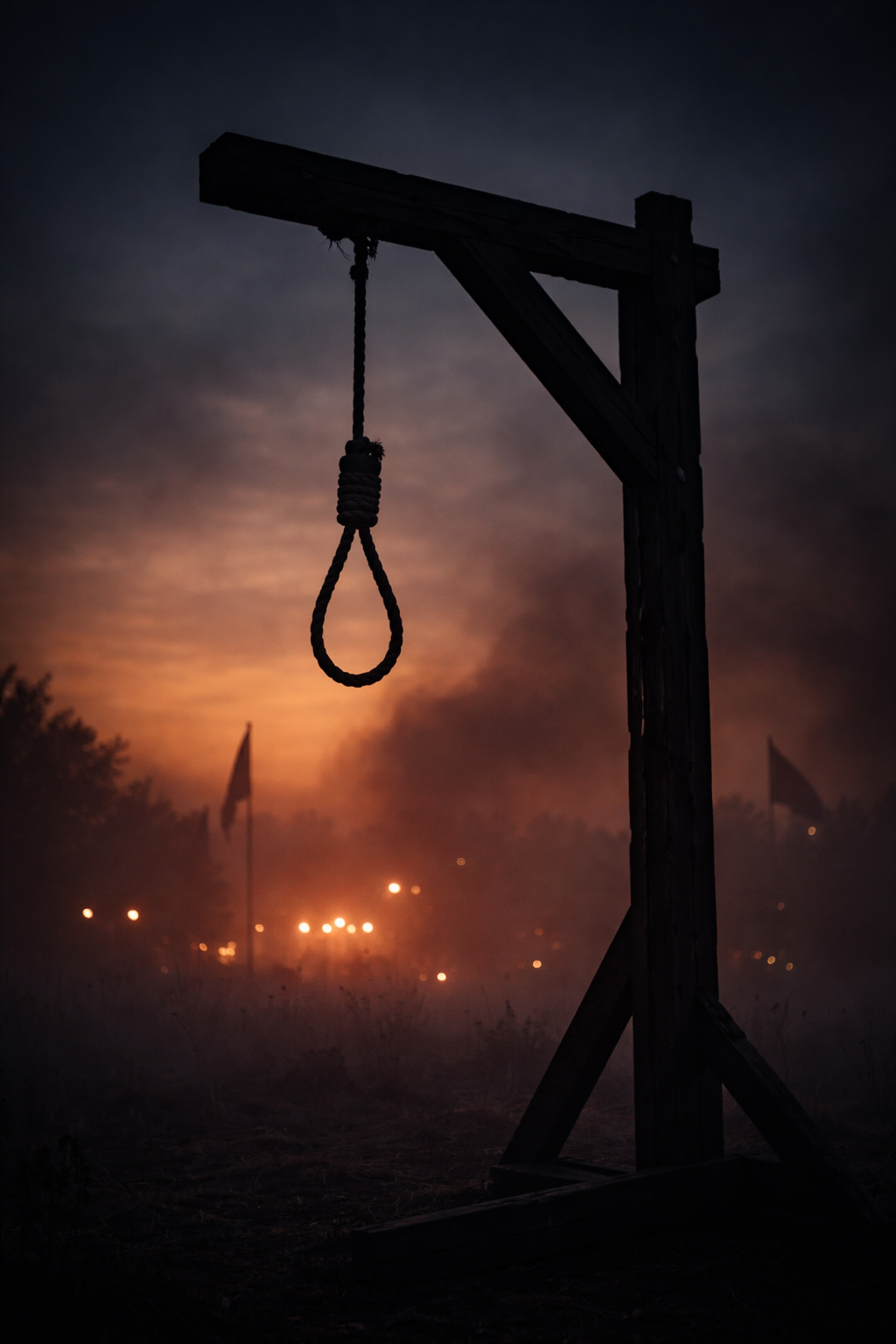
The 26-year-old Iranian protester Erfan Soltani was arrested during the large-scale demonstrations that began in early January 2026. He was quickly sentenced to death on charges of moharebeh—“enmity against God”—a grave accusation frequently used against political opponents in Iran. His family was reportedly given only ten minutes to say goodbye before his planned hanging, triggering international condemnation and warnings from the United States of possible consequences should the execution be carried out.
Following international pressure, including statements from U.S. political leadership, some sources reported that the planned execution may have been postponed or canceled. However, Iran’s judiciary has claimed that parts of the media coverage were “fabricated” and has denied that a death sentence was definitively issued in the case, as reported by some outlets.
Even though the specific outcome of this case remains contested, it nonetheless illustrates a clear pattern: Iranian authorities have made extensive use of the death penalty for years, and protesters have been sentenced after extremely rapid proceedings that human rights groups describe as inadequate and deeply unjust.
A Pattern of Death Sentences Against Opposition
The use of capital punishment in Iran is not new and has long been a recurring element of how the regime responds to protests and dissent. During the demonstrations following the death of Mahsa Amini in 2022, several protesters were sentenced to death and executed on charges such as moharebeh and efsad-e fel-arz (literally “corruption on earth”).
In 2024, the United Nations and human rights organizations reported that at least hundreds of protesters and others had been executed on such charges, often following rushed and highly questionable judicial processes.
What This Means
These developments signal a new phase in Iran’s response to domestic unrest: not only violent crackdowns and mass arrests, but also the threat of capital punishment as a public instrument of intimidation. While some of the most extreme claims circulating online—such as reports of tens of thousands of death sentences—are unsubstantiated or false, there are documented cases of executions and a genuine fear that the death penalty is being used to silence criticism and suppress protest.
Parallels to Afghanistan: Public Terror as a Tool of Power
Developments in Iran also evoke strong parallels to Afghanistan under Taliban rule. There, the regime has employed public executions, hangings from streetlights, and the display of bodies in public spaces as a deliberate strategy to intimidate the population into submission. This is not merely punishment—it is symbolic terror, where death is made visible to crush resistance throughout society.
Human rights organizations have documented how the Taliban have carried out public hangings, often on charges of “treason,” “immorality,” or collaboration with enemies, without fair trials. The objective is the same as what now appears to be emerging in Iran: to make it unmistakably clear that resistance is not merely dangerous, but fatal.
When Iranian authorities now threaten—or signal—the possibility of public executions of protesters, the country moves toward the same form of tyranny. This is no longer about punishing individuals, but about staging fear. A public execution is meant to be seen, shared, and remembered. It is a warning: This could happen to you.
The difference between Iran and Afghanistan is primarily ideological and historical—not methodological. Both regimes use religious justification, vague charges such as “enmity against God,” and extreme violence to retain power. The result is a society in which the rule of law is sidelined and fear replaces justice.
When Evil Comes Back Around
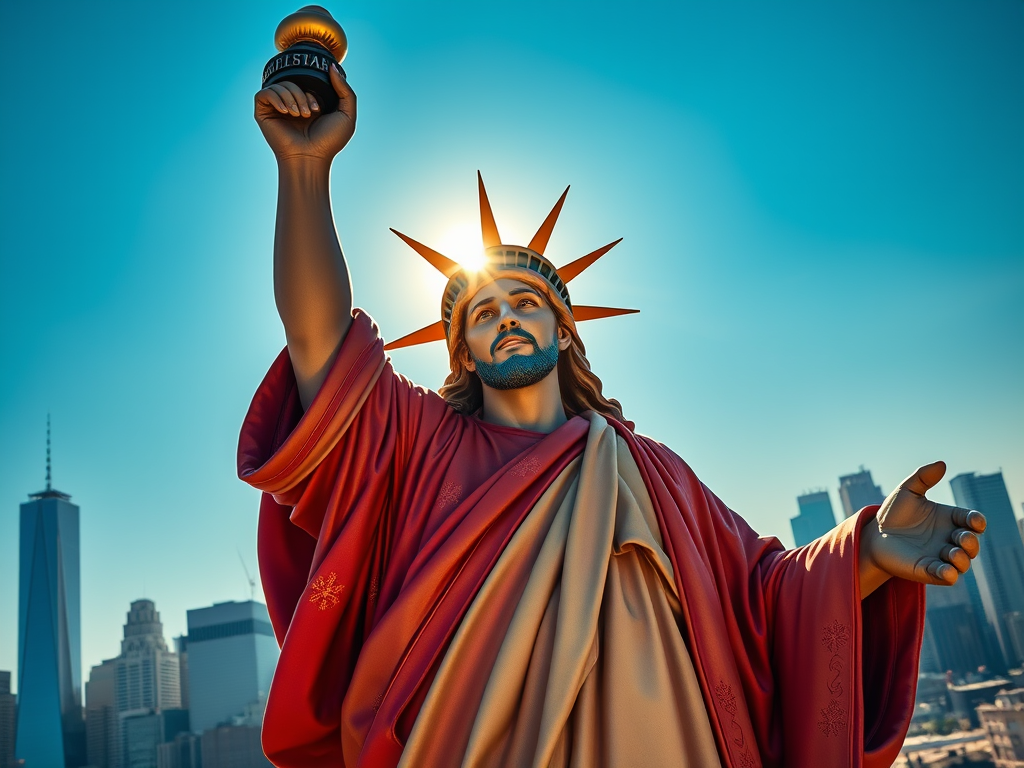
Jesus said that people can read the signs of the heavens and the earth, yet still misunderstand the times they live in. Today, we see how tyrannies that oppress, torture, and kill believe themselves invincible. But history is clear: the evil you spread to others will eventually return—often in ways that shake even the most powerful.
The Nazis fell, and their leaders were held accountable. Tyrannies in Afghanistan, Iran, and elsewhere carry the same seeds of their own destruction. Karma is not a myth; it is an inexorable law: what you sow, you will reap.
For those who protest, who seek truth and freedom, the danger is real—but their courage writes history. For those who tyrannize their people, punishment is unavoidable—not always immediate, but certain. The universe has a way of restoring balance, and history never forgets.
Fear can keep people down for a time. But justice, truth, and karma are ultimately unstoppable.
When Tyrannies Fall: The Judgment of History
History teaches us one thing with brutal clarity: tyrannies never last forever. They may appear strong, terrifying, and invincible in the moment, but they always carry the seeds of their own destruction. Nazi Germany is among the clearest examples. Built on ideology, fear, propaganda, and systematic violence, it ultimately collapsed under the weight of its own crimes.
After World War II came the Nuremberg Trials. For the first time in history, leaders of a regime were held personally accountable for crimes against humanity. It was not revenge. It was the rule of law’s response to barbarism. A clear message to the world: “Following orders” is no excuse when human rights are trampled.
What many ask today is why contemporary theocratic tyrants—such as the clerical regime in Iran—continue to evade the same historical reckoning. A regime that executes its own people, supports terrorist organizations, oppresses women, silences truth, and weaponizes religion commits crimes not only against its own citizens but against humanity as a whole.
If history is to be more than words in textbooks, it must also serve as a moral compass. Just as the Nazis were brought to trial after the war, today’s oppressors deserve legal accountability—not for the sake of vengeance, but for justice. Not only for the people of Iran, but for all who believe in human dignity, freedom, and responsibility.
History does not forget. It only waits.
Disclaimer: The views expressed in this article are those of the author and may not reflect those of Shinybull.com. The author has made every effort to ensure the accuracy of the information provided; however, neither Shinybull.com nor the author can guarantee the accuracy of this information. This article is strictly for informational purposes only. It is not a solicitation to make any exchange in precious metal products, commodities, securities, or other financial instruments. Shinybull.com and the author of this article do not accept culpability for losses and/ or damages arising from the use of this publication.
More than two thousand years after Jesus from Israel warned humanity about moral blindness and abused authority, the same struggle continues. Across the world, authoritarian and theocratic regimes still silence their people in the name of righteousness, while democracies wrestle with the price of freedom. From Tehran to Gaza, from social media censorship to satellite internet, the battle over truth, speech, and human dignity remains the defining conflict of our time.
More than two thousand years ago, Jesus from Israel confronted the leaders of his time with a striking observation: “You know how to interpret the appearance of the sky and the earth, but you cannot interpret the present moment.” His warning was not about astronomy or weather—it was about moral clarity. About the danger of power that loses humility, and authority that speaks of God while denying justice, truth, and human dignity.
That tension remains painfully relevant today.
Authoritarian Power and Moral Inversion
Iran presents one of the clearest modern examples of moral inversion. The country is ruled not by its people, but by a theocratic power structure dominated by clerics loyal to the Supreme Leader. This is not a faith community acting in good conscience, but a closed ruling elite that uses religious language to legitimize repression.
Institutions such as the Islamic Revolutionary Guard Corps (IRGC) function as both internal enforcers and external operators, crushing dissent at home while exporting violence abroad. The regime openly funds and arms groups such as Hezbollah in Lebanon and Hamas in Gaza—organizations that operate outside democratic norms and deliberately target civilians.
The stated goal of this alliance is ideological confrontation, particularly the destruction of Israel. Yet the human cost of this agenda is borne by ordinary people: Israeli civilians living normal lives under constant threat, Palestinians trapped between militant groups and humanitarian collapse, and above all, the Iranian population itself.
Inside Iran, protests are met with internet shutdowns, mass arrests, torture, and executions. Women are beaten or killed for defying dress codes. Journalists disappear. Students are imprisoned. Minorities are silenced. The regime that claims moral authority has shown none toward its own people.
Israel, Self-Defense, and the Collapse of the Narrative
Iran’s clerical leadership routinely labels Israel “the Great Satan.” But when words are weighed against actions, the accusation collapses. Israel, a democratic state, acts primarily in self-defense against groups that openly call for its destruction and have launched decades of rocket attacks, suicide bombings, and kidnappings.
Crucially, Israel is not targeting ordinary Palestinian civilians in Gaza. Its operations are aimed at Hamas and other militant groups responsible for terror attacks. Innocent civilians, while tragically caught in the conflict, are not the objective.
The same principle applies to Iran. If outside powers, such as the United States or Israel, intervene in Iran, their focus would be on the criminal theocratic rulers and their armed networks—the same groups that finance and coordinate terrorist organizations like Hamas and Hezbollah—not the Iranian people themselves, who suffer under the oppressive regime.
Meanwhile, the Iranian regime projects accusations of evil outward while systematically repressing its own citizens, silencing women, journalists, and students, and sponsoring violence abroad. Moral hypocrisy is evident: evil is claimed elsewhere, but practiced at home and through proxies.
Democracy vs. Theocracy
At its core, this is not merely a geopolitical struggle—it is a philosophical one.
Democracy rests on the principle that power flows from the people, that leaders are accountable, and that truth can be debated openly. A theocracy, by contrast, claims divine authority, places rulers beyond question, and treats dissent as heresy. Where democracy depends on free speech and transparency, authoritarian systems survive through censorship, fear, and isolation.
This is why free information is the greatest enemy of such regimes.
Why the Internet Terrifies Tyranny
When the Iranian regime shuts down the internet, it is not a technical decision—it is a political act of survival. Open communication exposes corruption, abuse, and lies. Free speech breaks the illusion of absolute power.
That is why the smuggling of Starlink satellite terminals into Iran matters. Backed by Elon Musk’s satellite network, this technology bypasses state-controlled infrastructure and restores a basic human freedom: connection to the outside world. Information becomes resistance.
Musk’s role here is consistent with his stated philosophy. He bought Twitter to restore what he called a digital public square, reversing bans—including that of a sitting U.S. president—on the grounds that democracy cannot function if political speech is arbitrarily silenced. While social media debates moderation, the Iranian regime cuts off an entire nation from the internet. The contrast could not be clearer. Elon Musk is a freedom champion. So is Trump.
A Timeless Warning
Jesus was not executed for promoting kindness alone. He was killed for challenging power structures that cloaked themselves in divine authority while denying truth and justice. His message threatened those who ruled through fear, hypocrisy, and control.
History keeps repeating the same lesson: regimes that silence truth in the name of righteousness ultimately condemn themselves. Power without humility corrupts. Authority without accountability collapses. And those who fear open speech reveal their own illegitimacy.
Two thousand years later, the struggle continues—but so does the truth.
Disclaimer: The views expressed in this article are those of the author and may not reflect those of Shinybull.com. The author has made every effort to ensure the accuracy of the information provided; however, neither Shinybull.com nor the author can guarantee the accuracy of this information. This article is strictly for informational purposes only. It is not a solicitation to make any exchange in precious metal products, commodities, securities, or other financial instruments. Shinybull.com and the author of this article do not accept culpability for losses and/ or damages arising from the use of this publication.
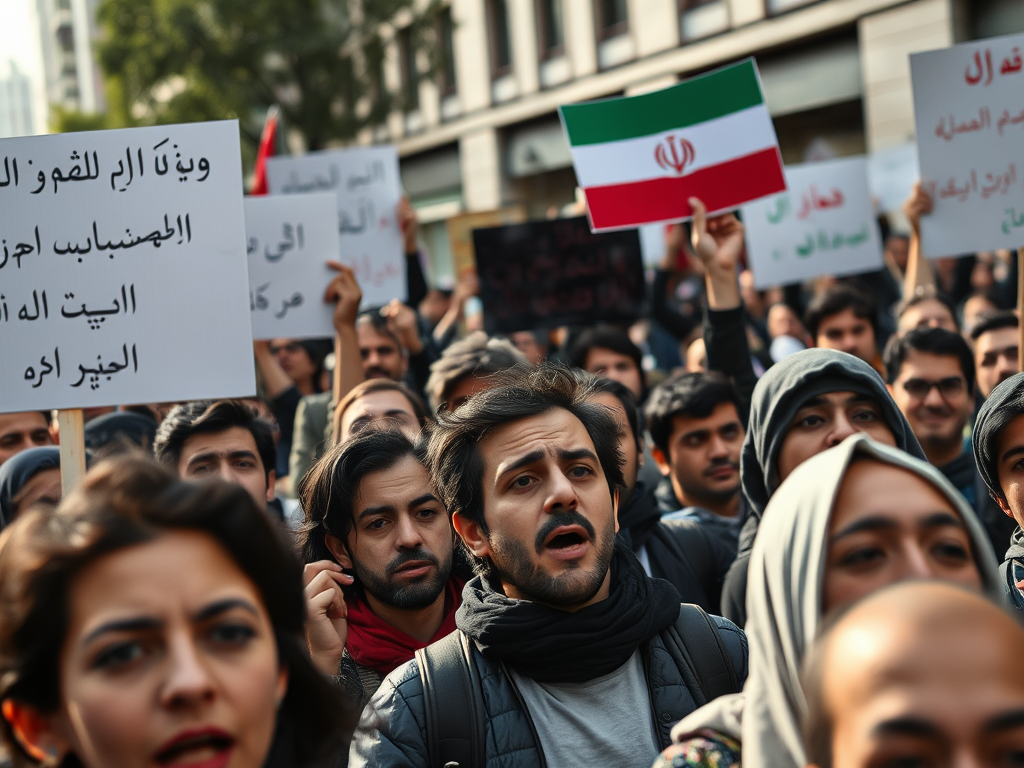
Iran is entering a period of heightened political risk as economic collapse, environmental stress, and elite defection converge in ways not seen for decades. The latest wave of unrest, which began on December 28 in Tehran’s Grand Bazaar, has spread across more than 100 cities, evolving from local economic protest into a broader challenge to the Islamic Republic’s authority.
While demonstrations are not new in Iran, the participation of the bazaar merchant class marks a potentially decisive shift. In Iran’s modern political history, the withdrawal of support by the bazaaris has tended to occur at moments of acute regime vulnerability and has coincided with major political realignments — most notably in 1978–79.
The Bazaar as a Political Barometer
The Grand Bazaar is the backbone of Iran’s domestic economy. Its dense networks of traders, wholesalers and importers connect supply chains, liquidity and social influence across the country. Historically, bazaar merchants have not functioned as a permanent opposition force. Instead, they have acted as pragmatic political actors, aligning themselves with whichever system appeared capable of guaranteeing stability, access and predictability.
In 1979, they withdrew support from the Shah and aligned with the clerical opposition. For more than four decades thereafter, they formed part of the Islamic Republic’s core economic coalition.
That coalition now appears to be fracturing.
When bazaar merchants close their shops, the impact goes far beyond symbolism. Commercial shutdowns disrupt distribution networks, freeze working capital and send a powerful signal that confidence in the state’s economic management has eroded. In Iran’s political system, such signals matter — not because they immediately bring down governments, but because they indicate that the regime’s traditional mechanisms of consent are weakening.
Economic Breakdown as the Catalyst
The immediate driver of unrest is economic collapse.
Over the past year:
The Iranian currency has lost approximately 60 per cent of its value
Food prices have risen by around 72 per cent
Medicine costs have increased by roughly 50 per cent
Inflation is estimated to be near 50 per cent
For many households, life savings have been effectively erased. For merchants dependent on imports, business has become unviable. The government’s decision to abolish subsidised exchange rates, combined with higher taxes, has sharply increased costs while currency volatility has made price-setting nearly impossible.
Compounding the crisis is a breakdown in basic infrastructure. Water reservoirs in several regions are reportedly at critically low levels, electricity supply is unreliable, and public services are deteriorating. The state is increasingly unable to provide core public goods: water, power, food security or employment.
In practical terms, the implicit social contract between state and society has collapsed.
From Economic Stress to Political Exposure
The scale and composition of the protests suggest that this is no longer a narrow economic dispute. Demonstrations now include merchants, workers and middle-class families, while confrontations with security forces have intensified. Dozens have reportedly been killed in clashes with the Revolutionary Guard.
The government’s response has oscillated between repression and improvised economic concessions. One widely reported offer — a small monthly payment to encourage protesters to disperse — was interpreted less as relief than as an admission of fiscal exhaustion.
Externally, the regime also faces heightened geopolitical pressure. Former US president Donald Trump has publicly warned of retaliation should violence against protesters continue. While such statements should be interpreted cautiously, Tehran remains acutely aware of Washington’s capacity to escalate economic and strategic pressure.
Political Realignment and the Search for Alternatives
As confidence in the Islamic Republic erodes, political symbols long considered marginal are resurfacing. Reza Pahlavi, the exiled son of Iran’s last Shah, has declared that the current system is approaching the end of the road and has called 2026 “the year of change”.
There is no clear evidence that monarchist forces are directing the protests. But the re-emergence of such figures reflects a deeper vacuum: a growing search for legitimacy outside the clerical system itself. In moments of systemic stress, Iranian politics has historically gravitated toward realignment rather than reform.
Even within elite circles, unease is evident. Persistent reports of contingency planning by senior figures underscore the perception that the current unrest represents more than a temporary disturbance.
A Regime Under Structural Pressure
The Islamic Republic retains formidable coercive capacity, and regime change is far from inevitable. But the convergence of economic collapse, environmental stress and elite defection suggests that Iran has entered a phase of structural instability.
The withdrawal of bazaar support does not in itself determine political outcomes. Historically, however, it has signalled moments when existing power arrangements were no longer sustainable.
Iran may now be approaching such a moment.
Disclaimer: The views expressed in this article are those of the author and may not reflect those of Shinybull.com. The author has made every effort to ensure the accuracy of the information provided; however, neither Shinybull.com nor the author can guarantee the accuracy of this information. This article is strictly for informational purposes only. It is not a solicitation to make any exchange in precious metal products, commodities, securities, or other financial instruments. Shinybull.com and the author of this article do not accept culpability for losses and/ or damages arising from the use of this publication.
Many people around the world do not want a surveillance society, but the truth is that it has never been easier to follow different people 24/7/365. Many are looking to Communist China, and its tactics and impact on society.
But surveillance isn`t something new. The Nazis did it. So did the Communists in East Germany. The Nazis had Gestapo, while the Communists had Stasi, and Stasi is the official name for Ministerium fur Staatsicherheit (German: «Ministry for State Security»).
Stasi was a secret police agency of the German Democratic Republic (East Germany). Furthermore; the Stasi was one of the most hated and feared institutions of the East German communist government. It all started after World War II: in 1950, and it lasted until the end in 1990 (after the fall of the Berlin wall in 1989).
The difference between Gestapo and Stasi is that Gestapo had 40,000 officials watching a country of 80 million, while the Stasi employed 102,000 to control only 17 million. One might add that the Nazi terror lasted only twelve years, whereas the Stasi had four decades in which to perfect its machinery of oppression, espionage, and international terrorism and subversion.
By at least one estimate, the Stasi maintained greater surveillance over its own people than any secret police force in history.
The Stasi employed one secret policeman for every 166 East Germans. By comparison, the Gestapo deployed one secret policeman per 2,000 people.
Stasi agents infiltrated and undermined West Germany`s government and spy agencies.
The Stasi was much worse than the Gestapo, if you consider only the oppression of its own people, according to Simon Wiesnthal of Vienna, Austria, who has been hunting Nazi criminals for half a century. But, why was the Stasi so extremely good?
Many of the techniques used by the Stasi had actually been pioneered by the Nazis and in particular the Gestapo. They relied heavily on information-gathering and intelligence in order to create an atmosphere of fear and to get citizens to denounce one another. It worked extremely successfully. But, why did they do it? What was the goal of the Stasi?
The goal was to destroy secretly the self-confidence of people, for example by damaging their reputation, organizing failures in their work, and destroying their personal relationships. Considering this, East Germany was a very modern dictatorship. The Stasi didn`t try to arrest every dissident.
They had many different tactics, including questioning, repeated stop, and searches, strange noises on telephone lines, and conspicuous visits to the workplace so that bosses and colleagues were aware of the police interest.
The Stasi steamed open letters, copied them, filed them, and sent them on. They went into homes when people were out and bugged them. They tapped into the phone infrastructure of the building, maintained contacts and occasionally cooperated with West German terrorists.
The Stasi`s function was similar to the KGB, serving as a means of maintaining state authority. This was accomplished primarily through the use of a network of civilian informants. KGB also invited the Stasi to establish operational bases in Moscow and Leningrad to monitor visiting East German tourists.
The Stasi also acted as a proxy for KGB to conduct activities in other Eastern Bloc countries, such as Poland, where the Soviets were despised.
Due to their close ties with Soviet intelligence services, Mielke referred to the Stasi officers as «Chekists». In 1978, Mielke formally granted KGB officers in East Germany the same rights and powers that they enjoyed in the Soviet Union.
Between 1950 and 1989, the Stasi employed a total of 274,000 people in an effort to root out the class enemy. In 1989, the Stasi employed 91,015 people full-time, including 2,000 fully employed unofficial collaborators, 13,073 soldiers and 2,232 officers of the GDR army, along with 173,081 unofficial informants inside GDR, and 1,553 informants in West Germany.
Regular commissioned Stasi officers were recruited from conscripts who had been honorably discharged from their 18 months’ compulsory military service, had been members of the SED, had had a high level of participation in the Party`s youth wing`s activities, and had been Stasi informers during their service in the Military.
The candidates were then made to sit through several tests and exams, which identified their intellectual capacity to be an officer and their political reliability. University graduates who had completed their military service did not need to take these tests and exams.
They then attended a two-year officer training program at the Stasi college (Hochschule) in Potsdam.
By 1995, some 174,000 inoffizielle Mitarbeiter (Ims) Stasi informants had been identified, almost 2,5% of East Germany`s population between the ages of 18 and 60. 10,000 Ims were under 18 years of age.
From the volume of material destroyed in the final days of the regime, the office of the Federal Commissioner for the Stasi Records (BstU) believes that there could have been as many as 500,000 informers.
A former Stasi colonel who served in the counterintelligence directorate estimated that the figure could be as high as 2 million if occasional informants were included.
Full-time officers were posted to all major industrial plants (the extent of any surveillance largely dependent on how valuable a product was to the economy), and one tenant in every apartment building was designed as a watchdog reporting to an area representative of the Volkspolizei (Vopo).
Spies reported every relative or friend who stayed the night at another`s apartment. Tiny holes were drilled in apartment and hotel room walls through which Stasi agents filmed citizens with special video cameras.
Schools, universities, and hospitals were extensively infiltrated.
A large number of Stasi informants were tram conductors, janitors, doctors, nurses, and teachers. Mielke believed that the best informants were those whose jobs entailed frequent contact with the public.
In some cases, spouses even spied on each other.
The roles of informants ranged from those already in some way involved in state security (such as the police and the armed services) to those in the dissident movements (such as in the arts and the Protestant Church).
Information gathered about the latter groups was frequently used to divide or discredit members. Informants were made to feel important, given material or social incentives, and were imbued with a sense of adventure, and only around 7,7%, according to official figures, were coerced into cooperating.
The Stasi had files on everyone. They spied on almost every aspect of East German`s daily lives, and they carried out international espionage. It kept files on about 5,6 million people and amassed an enormous archive. The archive holds 111 kilometers of files in total.
The Stasi was the official state security service of East Germany, the German Democratic-Republican in short the GDR. The Stasi`s motto was «Schild und Schwert der Partei» (Shield and Sword of the Party).
«The Party» was the ruling Socialist Unity Party of Germany.
The Stasi perfected the technique of psychological harassment of perceived enemies known as Zersetzung, which is a term borrowed from chemistry that literally means «decomposition». Chemical decomposition means chemical breakdown.
For example, the stability of a chemical compound is eventually limited when exposed to extreme environmental conditions such as heat, radiation, humidity, or the acidity of a solvent. Because of this chemical decomposition is often an undesired chemical reaction.
The goal was to paralyze people, and it could do so because it had access to so much personal information and to so many institutions.
By the 1970s, the Stasi had decided that the methods of overt persecution that had been employed up to that time, such as arrest and torture, were too crude and obvious. Such forms of oppression were drawing significant international condemnation.
It was realized that psychological harassment was far less likely to be recognized for what it was, so its victims, and their supporters, were less likely to be provoked into active resistance, given that they would often not be aware of the source of their problems, or even its exact nature.
International condemnation could also be avoided.
Zersetzung (decomposition) was designed to side-track and «switch off» perceived enemies so that they would lose the will to continue any «inappropriate» activities.
Anyone who was judged to display politically, culturally or religiously incorrect attitudes could be viewed as a «hostile-negative» force and targeted with Zersetzung methods.
For this reason members of the Church, writers, artists, and members further developed in a «creative and differentiated» manner based upon the specific person being targeted i.e. They were tailored based on the target`s psychology and life situation.
Tactics employed under Zersetzung usually involved the disruption of the victim`s private or family life.
This often included psychological attacks, such as breaking into their home and subtly manipulating the contents, in a form of gaslighting i.e. Moving furniture around, altering the timing of an alarm, removing pictures from walls, or replacing one variety of tea with another, etc.
Other practices include property damage, sabotage of cars, travel bans, career sabotage, administering purposely incorrect medical treatment, smear campaigns which could include subversion, wiretapping, bugging, mysterious phone calls or unnecessary deliveries, even including sending a vibrator to a target`s wife.
Increasing degrees of unemployment and social isolation could and frequently did occur due to the negative psychological, physical, and social ramifications of being targeted.
USUALLY, VICTIMS HAD NO IDEA THAT THE STASI WERE RESPONSIBLE.
The victims didn`t know what was happening. They were confused, and everybody around the target could watch as he or she crumbled under the relentless pressure of state harassment. Zersetzung was designed by the Stasi, and it was a form of psychological harassment to wreak havoc on an individual, without any need to arrest or torture the target.
Many thought that they were losing their minds, and mental breakdowns and suicide were sometimes the results. There is ongoing debate as to the extent if at all, to which weaponized directed energy devices, such as X-ray transmitters, were also used against victims.
A direct-energy weapon (DEW) is a ranged weapon that damages its target with highly focused energy without a solid projectile, including lasers, microwaves, particle beams, and sound beams. Potential applications of this technology include weapons that target personnel, missiles, vehicles, and optical devices.
The main goal was to give the victims a lot of pain because that was much better than putting them in prison and torturing them. One of the symptoms was called the Havana syndrome. It was a syndrome of medical symptoms reported by US personnel in Havana, Cuba, and other locations, suspected by the National Academies of Sciences, Engineering, and Medicine to be caused by microwave energy.
Some common bio-effects of non-lethal electromagnetic weapons include difficulty breathing, disorientation, nausea, pain, vertigo, and other systemic discomfort.
Interference with breathing poses the most significant, potentially lethal results. Light and repetitive visual signals can include epileptic seizures. Bection and motion sickness can also occur.
After German reunification, revelations of the Stati`s international activities were publicized, such as its military training of the West German Red Army Faction. Stasi experts also helped train the secret police organization of Mengistu Haile Mariam in Ethiopia.
They helped Fidel Castro`s regime in Cuba. Stasi officers helped in the initial training and indoctrination of Egyptian State Security organizations under the Nassar regime. They helped to create secret police forces in the People`s Republic of Angola, the People`s Republic of Mozambique, and the People`s Republic of Yemen.
The Stasi organized and extensively trained Syrian intelligence services under the regime of Hafez al-Assad. They also helped to set up Idi Amin`s secret service. They helped the President of Ghana.
Documents in the Stasi archives state that the KGB ordered Bulgarian agents to assassinate Pope John Paul II, who was known for his criticism of human rights in the Eastern Bloc, and the Stasi was asked to help with covering up traces.
The Stasi in 1972, also made plans to assist the Ministry of Public Security (Vietnam) in improving its intelligence work during the Vietnam War.
That was then, but how is it now? We must ask ourselves how our own society is built. The Stasi had a system for monitoring telephone conversations, but if they could do it in the 70s, what can be happening even today? What about social media, emails, smartphones, and computers.
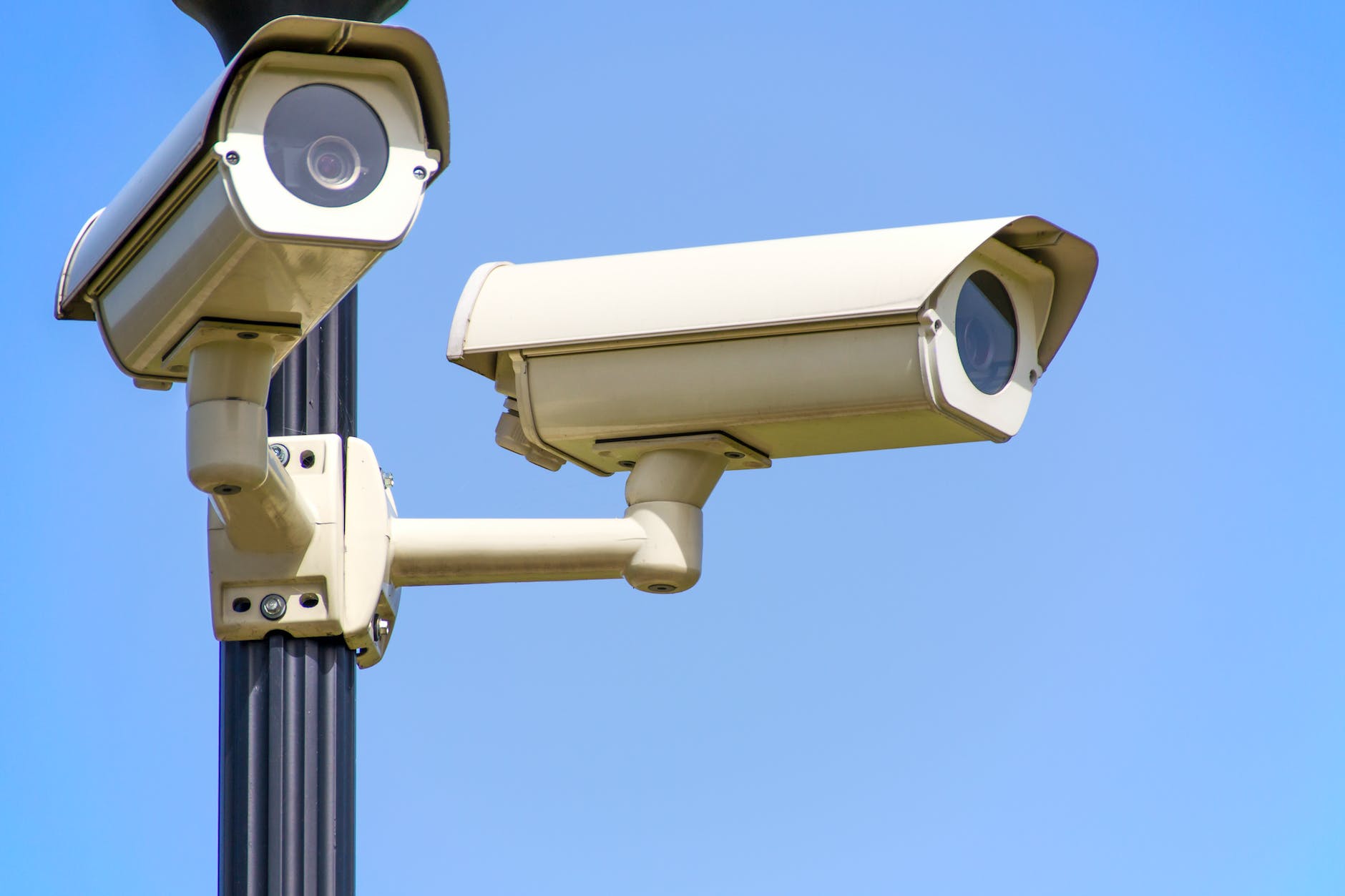
A lot of people believe that China`s social system is scary. But that system is not only about China. It`s in many other countries in Europe and America. They have surveillance cameras, face recognition, and the requirements to always praise the government. It sounds like an Orwellian nightmare come true. Or a Stasi system of surveillance.
China`s social credit system affects freedom of speech, resulting in censorship and self-censorship, ultimately silencing any form of opposition. But this is not only about China. The web itself is a surveillance machine. As it stands today, you are what you click.
Once you`re logged on to your computer and have access to the internet, the system will see what you are doing, and you will be tracked by your browser, by third parties, by cookies, and by almost all the sites you are logging into.
The data you give the third party for free is aggregated and a profile about you is being created. Most of the information you give away for free is being used for targeted advertisements. But it could well be used to create a so-called Social Credit System.
Once all the data is collected, the profile is created, and it can be very difficult to change your own profile. Your profile of yours will lead to real-life consequences.
In addition, China has set up more than 100 so-called overseas police stations across the globe to monitor, harass, and in some cases repatriate Chinese citizens living in exile, using bilateral security arrangements struck with countries in Europe and Africa to gain widespread presence internationally, according to CNN.
The State Security Ministry is the principal civilian intelligence, security, and secret police agency of the People`s Republic of China, responsible for counterintelligence, foreign intelligence, and political security. The MSS is active in industrial espionage and adept at cyber espionage.
A document from the US Department of Justice described the agency as being like a combination of the Central Intelligence Agency (CIA), and the Federal Bureau of Investigation (FBI).
Many foreign analysts describe the Communist «Part-State» and its security agencies as being left without a real ideology, relying only on repression and the stoking of Chinese nationalism, more recent works, however, highlight the increasing importance of Marxism-Leninism in the worldview, internal culture and self-image of the CCP security apparatus; Vladimir Lenin and Mao Zedong remain the central influences, although classical Chinese thinkers such as Sun Tzu are also studied.
1,412 billion live in China. How many agents do they have? Only 87 million live in Iran, and they have its own Islamic Revolutionary Guard Corps to protect the priests at the top. It is a multi-service primary branch of the Iranian Armed Forces. Active personnel last year was 210,000, while 60,000 was paramilitary forces.
According to BBC, the UK is preparing to formally declare that Iran`s Islamic Revolutionary Guard Corps (IRGC) is a terrorist organization. It follows a similar decision made by the US in 2019. After a popular antigovernment protest in Iran, the number of people killed by security forces has increased.
The state of human rights in the Islamic Republic of Iran has been criticized by Iranians and international human rights activists.
The Stasi was one of the most hated and feared institutions of the East German communist government. Nor is CCP so popular. Iran`s Revolutionary Guard is also unpopular. The funniest thing is that they are all funded by «the people».
Disclaimer: The views expressed in this article are those of the author and may not reflect those of Shinybull.com. The author has made every effort to ensure the accuracy of the information provided; however, neither Shinybull.com nor the author can guarantee such accuracy. This article is strictly for informational purposes only. It is not a solicitation to make any exchange in precious metal products, commodities, securities, or other financial instruments. Shinybull.com and the author of this article do not accept culpability for losses and/ or damages arising from the use of this publication.
Afghanistan is a beautiful country, and only a few decades ago, people in Kabul were singing and dancing to live music and had fun. Kabul was probably much better than European countries. So, what in the world went wrong in Afghanistan?
Afghanistan had cinemas, restaurants and hotels, and people who lived in Kabul four decades ago describes it as romantic and better than Europe. They have high mountains and the weather is often sunny. It`s one of the best countries in Asia.
But something happened. Someone took the country.
In the 1960`s the King and the Queen opened up the country to the world after centuries of isolation. They also enabled women to partisipate in public life. They became feminists without even knowing what it was all about.
In 1964, according to the constitution, women also got the right to wote. Everything was fine and there was no segregation between men and women. Kabul was a modern city. People were dressed like Western people. They were listening to Western music and thought the Western style was the right thing for them.
People were poor but very happy, but then a lot of tourists came in to Kabul. And suddenly, it was time for a «hippy» era. Just like the West. Hippy music. Hippy fitness. A hippy style society. Tourists went to historical places to see Buddah.
But then, something happened.
A Western-style protest movement started in Afghanistan. Students began talking about Revolution. They talked about Communism and women`s rights. They said it should be more equality between men and women. Nor should it be discrimination.
Kabul became more and more like the Western world, but some people didn`t like that. And that was people in Pedesaan were 80 percent of the population live. Afghanistan had a conflict going on.
Pedesaan was way ahead of the modern city Kabul, and people didn`t like the changes. People in Pedesaan was more conservative and people were following tribal traditions and the teachings of Islam.
Women were isolated and could be forced to mirrage with someone they didn`t love. The Muslims were worried about the progress in Kabul. The problem at that time is that people were sleeping. They didn`t see the real problem. And the problem was their own «class difference.»
In the early 70`s, the first Islamic organisation was founded. Their goal was to protect their traditional lifestyle. It was the birth of the political Islamism in Afghanistan. This is the era were people in Afghanistan became divided in two groups.
Left and Right.
Communists on the left side, and Islamists on the right side.
The Islamist movement were blaming Communists, and Communists were blaming Islamists and the problems escalated. No one were able to guide the people and a blamegame started istead of keeping the great value of national unity among the people.
To everybody`s surprise; the communists managed to take power. First in 1973. It was a coup and they overthrow the monarchy. And now, the country became a republic with its first ever president.
Mohammed Daoud Khan became a President of Afghanistan from 1973 to 1978. Mohammed was a cusine of the former King, but in 1978, the communists desided that their time has come and seized power for themselves.
In just one night, they killed Daoud Khan and 23 members of his family. The communists called the bloody take over «april revolution.» (this is the same mindset as the Leninist communist in Soviet when they killed the Romanov family in their communist revolution).
The communist party coup took place in Kabul on April 28, 1978.
The new government tried to form the country into a new communist country thru radical reforms. People in Kabul had red flags and the communists took all oppositions. The communists first target were Muslims. (this is similar to the CCP today).
The communists arrested you if you were praying. You would also go to jail. This time was the most brutal time of the history of the country. Thousands of people was taken and all of the disappeared.
The communists took teachers that talked about religion. Many of them were dropped by a plane. Isamic activists started to build activist groups in 1979 and one of them was a group called Mujahideen (fighters of the holy was).
This revolution is an Islamic revolution, Islamist Party Leader Gulbuddin Hekmatyar said. Their goal was to establish a pure Islamic system in Afghanistan. Freedom and liberation of Afghanistan.
In Moscow, former Second Secretary of the Communist Party of the Soviet Union, Leonid Brezhnev was worried. Afghanistan was a nabouring communist state, and a successful Islamic revolution could send a dangerous message to the 50 million Muslims in the USSR.
Brezhnev dicided to send in troops in December 27, 1979. and that was the beginning of a long and expensive war that led to bankruptsy.
10,000 prisoners were released in one day. For some it was hard to find back to their own family members. Afghanistan was under forign occupation.
Afghanistan changed like never before. People were leaving because it was not their country anymore. Others were chanting «allahu akbar» at night, and thousands were protesting on the streets.
The Communists in Soviet Union supported the brutal communist regime in Afghanistan and that wasn`t music for the people. The resistance among the people were growing and they distrubuted papers at night and wrote on the walls; Long live Islam.
In the United States, they were quick to react to the Soviet offensive.
Afghanistan became the new epicenter of the Cold War.
US President Jimmy Carter said in a speech that the Soviet invation was an extremely threat to peace. Carter also said that Soviet now can control much of the world`s oil supply.
Washington started to support Mujahideen with money and weapons.
US National Security Advisor Zbigniew Brezezinski appeared to Afghanistan`s religion pride in 1980 when he visited Pakistan. One day, he said, you will take your country back because God is on your side.
The communists had big problems to fight back against the Mujahideen guerillas. The only place the communist had control was in Kabul. The communist government said no to women education. No freedom for women. So, women was used as a political tool. But people didn`t like it at all.
The Mujahdin used terrorist attacks in Kabul to destabilise the society. It was too dangerous to be there, so 3 million went to Pakistan or Iran to join their Muslim brothers. Peshawar near Islamabad in Pakistan became a hotspot of resistance.
They got the weapons they needed in Pakistan. And a Sudi also set up a camp there. His name was Osama Bin Laden. He recruited and supported all foriegn fighters from all over the Arab world to join the Afghan jihad. Radical Islam spread in the refugee camp. They started to brainwash the children and they are the one who became Taliban.
The countries that were involved trained conservative people and made monsters to get rid of the USSR. But the biggest problems was to know who the civilians and who the enemies was.
The war in Afghanistan was very expensive for the USSR, and in 1986, Mikhail Gorbachev desiced to withraw his troops. He said; «Counterrevolution and imperialism have turned Afghanistan into a bleeding wound.
We should like, in the nearest future, to withdraw the Soviet troops stationed in Afghanistan.» They took the troops out of Afghanistan in 1989.
People in Afghanistan were so happy. Finally, the USSR are going back home. And the people was feeling free. They won the war.
But, a lot of things happened. It wasn`t over.
The communist government still had control over Kabul, and was the final obstacle to become an Islamic republic. In other words; the war was not yet over. On April 24, 1992, The Mujahideen took control over Kabul.
It was a critical moment were the Mujahideen took over the presidential palace. The dream to become an independent Isamist state was on the way to be fulfilled. But instead, other groups of people started to fight against each other to take back the control. A new civil war started. Everybody was fighting against everybody.
Instead of confronting each other, they used civil women and child as tools in a brutal war. The fighters could have killed each other but they killed civilans instead.
Now, Kabul was stigmatized. Isolated from the rest of the world. Deserted by Westerners. The British embassy was closed. The US embassy was closed. The French embassy was also closed.
«My feeling is that the UN and the Western powers were interested in Afghanistan as long as we fought against the USSR. Against communism. It was a common enemy. Then their interest completely disappeared. They abandoned us,» Mujahideen Commander Ahmad Shah Massoud said back then.
Many different groups of people were fighting against each other but nobody knew why they were fighting. It`s between commanders they said. They attacked civilians and especially woman. They raped them and cut of their breasts.
In 1994, a new force emerged; The Taliban. An Arabic name for «students.» many of them came from Quran-schools. The Taliban promised to restore peace, order and morality. They had massive support from Pakistan. Many of them were grown up in refugee camps in Pakistan.
When Taliban came, they were welcomed by the people in Afghanistan. Finally, someone who wants to restore peace, order and morality. People thought that Taliban will take over the country and everything will be fine again. People supported them.
The Taliban took Kabul on September 27, 1996.
The Taliban changed Afghanistan repidly. The banned alcohol, films and all forms for entertainment. They smashed all Televisions on the streets. The Taliban ended the civil war and made peace.
But, they also took people`s freedom. What is peace without freedom?
Women suffered the most. They were fobidden to study or work. Girls were banned from school. They closed all the schools after the Islamic revolution. It was very sad for the kids, because the couldn`t learn to read and write.
The Taliban send people to the mosque and ban people from going out because these all are Islamic laws. They hunted all the women in Afghanistan. Why are you doing this? Why are you doing that? And so on. If someone say it is extremist, so be it, Taliban said.
Afghanistan became a hotpad for Islamic fundamentalism and it was under the Taliban protection that Osama Bin Laden returned to the country after a long war against the USSR. Osama Bin Laden founded the terrorist network Al-Qaeda to carry out a global jihad.
One of the attacks is said to be September 11. President Bush started a new war in Afghanistan. A few weeks after the attack on twin towers, the British and US soldiers attacked Al Quada leaders and their training camps.
The end of the Taliban regime ended on November 13, 2001.
People in Afghanistan was happy. Now, they are free. Taliban is gone and the United States will bring peace and freedom to Kabul and Afghanistan. Finally. People could go back to school again. Women could start to work again. They were free.
On a NATO command, 52 countries were placed in Afghanistan and in 2003, people voted for a new government. They tried to establish a new democracy. They were working hard to develop a new constitution.
December 17, 2003 – Constitutional Convention.
Millions of dollars were sent to Afghanistan to rebuild the country and establish a new democracy. But the money came into the pockets of the war lords who had, once again, returned to power. Rich people built supermarkets and houses like the one in Europe. Poor people remained poor.
Corruption started to emerge and new conflicts was rising. Corruption to access education, health care, jobs and justice. That alone has huge impact on the election and the politics.
Taliban recruited new members and prepared a new comeback. Despite the escalating violence, 2014 saw the withdrawal of most international coalition troops. Many aid organizations likewise left the country.
In February 2020, the US signed a peace agreement with the Taliban and announced the complete withdrawl of its troops within 14 months. But the Taliban have subsequently taken advantage of the resulting vacuum and the fragility of Afghan democracy to overrun the country.
The future and security of Afghanistan and its women is once again in jeoparady.
In August 2021, the Taliban overruns nearly all major Afghan cities in just 10 days. On 15 August, they enter Kabul. The Afghan government hands over power to the Taliban.
Afghanistan is the land of endless wars. They fought against Alexander the Great, Djengis Khan and Britain. Now, they are fighting against Taliban. 80 percent of the population is depressed. They have lost their hope and dreams. Does it stop here, and what is the next chapter?
To contact the author: post@shinybull.com
Disclaimer: The views expressed in this article are those of the author and may not reflect those of Shinybull.com. The author has made every effort to ensure the accuracy of the information provided; however, neither Shinybull.com nor the author can guarantee such accuracy. This article is strictly for informational purposes only. It is not a solicitation to make any exchange in precious metal products, commodities, securities, or other financial instruments. Shinybull.com and the author of this article do not accept culpability for losses and/ or damages arising from the use of this publication.





 Ket Garden
 Business, Politics, Finans