
Tag Archives: Trump

Iran’s Bazaar Revolt Points to a Moment of Acute Regime Vulnerability

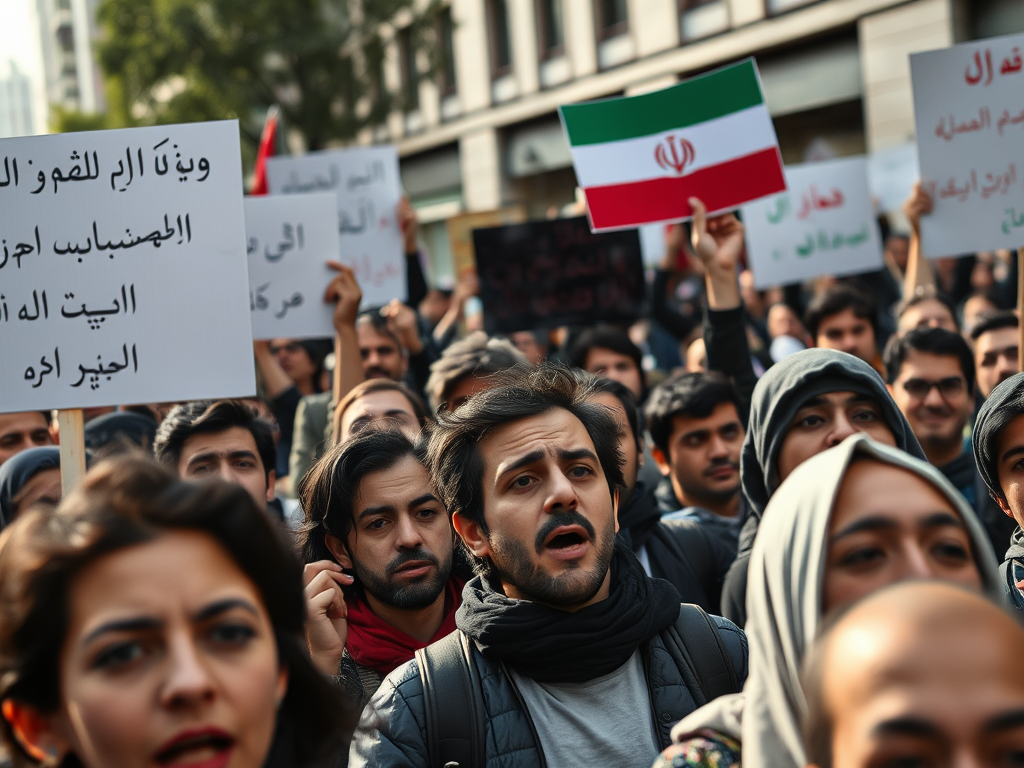
Iran is entering a period of heightened political risk as economic collapse, environmental stress, and elite defection converge in ways not seen for decades. The latest wave of unrest, which began on December 28 in Tehran’s Grand Bazaar, has spread across more than 100 cities, evolving from local economic protest into a broader challenge to the Islamic Republic’s authority.

While demonstrations are not new in Iran, the participation of the bazaar merchant class marks a potentially decisive shift. In Iran’s modern political history, the withdrawal of support by the bazaaris has tended to occur at moments of acute regime vulnerability and has coincided with major political realignments — most notably in 1978–79.

The Bazaar as a Political Barometer

The Grand Bazaar is the backbone of Iran’s domestic economy. Its dense networks of traders, wholesalers and importers connect supply chains, liquidity and social influence across the country. Historically, bazaar merchants have not functioned as a permanent opposition force. Instead, they have acted as pragmatic political actors, aligning themselves with whichever system appeared capable of guaranteeing stability, access and predictability.

In 1979, they withdrew support from the Shah and aligned with the clerical opposition. For more than four decades thereafter, they formed part of the Islamic Republic’s core economic coalition.

That coalition now appears to be fracturing.

When bazaar merchants close their shops, the impact goes far beyond symbolism. Commercial shutdowns disrupt distribution networks, freeze working capital and send a powerful signal that confidence in the state’s economic management has eroded. In Iran’s political system, such signals matter — not because they immediately bring down governments, but because they indicate that the regime’s traditional mechanisms of consent are weakening.

Economic Breakdown as the Catalyst

The immediate driver of unrest is economic collapse.

Over the past year:

  • The Iranian currency has lost approximately 60 per cent of its value
  • Food prices have risen by around 72 per cent
  • Medicine costs have increased by roughly 50 per cent
  • Inflation is estimated to be near 50 per cent

For many households, life savings have been effectively erased. For merchants dependent on imports, business has become unviable. The government’s decision to abolish subsidised exchange rates, combined with higher taxes, has sharply increased costs while currency volatility has made price-setting nearly impossible.

Compounding the crisis is a breakdown in basic infrastructure. Water reservoirs in several regions are reportedly at critically low levels, electricity supply is unreliable, and public services are deteriorating. The state is increasingly unable to provide core public goods: water, power, food security or employment.

In practical terms, the implicit social contract between state and society has collapsed.

From Economic Stress to Political Exposure

The scale and composition of the protests suggest that this is no longer a narrow economic dispute. Demonstrations now include merchants, workers and middle-class families, while confrontations with security forces have intensified. Dozens have reportedly been killed in clashes with the Revolutionary Guard.

The government’s response has oscillated between repression and improvised economic concessions. One widely reported offer — a small monthly payment to encourage protesters to disperse — was interpreted less as relief than as an admission of fiscal exhaustion.

Externally, the regime also faces heightened geopolitical pressure. Former US president Donald Trump has publicly warned of retaliation should violence against protesters continue. While such statements should be interpreted cautiously, Tehran remains acutely aware of Washington’s capacity to escalate economic and strategic pressure.

Political Realignment and the Search for Alternatives

As confidence in the Islamic Republic erodes, political symbols long considered marginal are resurfacing. Reza Pahlavi, the exiled son of Iran’s last Shah, has declared that the current system is approaching the end of the road and has called 2026 “the year of change”.

There is no clear evidence that monarchist forces are directing the protests. But the re-emergence of such figures reflects a deeper vacuum: a growing search for legitimacy outside the clerical system itself. In moments of systemic stress, Iranian politics has historically gravitated toward realignment rather than reform.

Even within elite circles, unease is evident. Persistent reports of contingency planning by senior figures underscore the perception that the current unrest represents more than a temporary disturbance.

A Regime Under Structural Pressure

The Islamic Republic retains formidable coercive capacity, and regime change is far from inevitable. But the convergence of economic collapse, environmental stress and elite defection suggests that Iran has entered a phase of structural instability.

The withdrawal of bazaar support does not in itself determine political outcomes. Historically, however, it has signalled moments when existing power arrangements were no longer sustainable.

Iran may now be approaching such a moment.

Disclaimer: The views expressed in this article are those of the author and may not reflect those of Shinybull.com. The author has made every effort to ensure the accuracy of the information provided; however, neither Shinybull.com nor the author can guarantee the accuracy of this information. This article is strictly for informational purposes only. It is not a solicitation to make any exchange in precious metal products, commodities, securities, or other financial instruments. Shinybull.com and the author of this article do not accept culpability for losses and/ or damages arising from the use of this publication.
Leave a comment

Filed under Politics

The cost of living and the blame game

People are angry, and that’s why they voted for Mamdani as the next Mayor of New York.
People are sick and tired of struggling to make ends meet. In his victory speech, Mamdani said:

“We choose hope over tyranny. Hope over big money and small ideas. Hope over despair. Tonight, we have stepped out from the old into the new.”

His supporters are already marching in the streets, saying they don’t want Trump as a king or a dictator.

Hmm… I think I’ve heard this before.

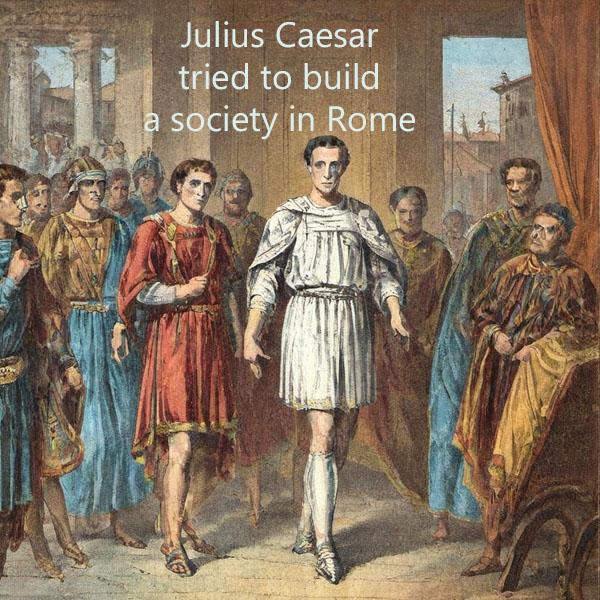
More than two thousand years ago, in Rome, another man was accused of wanting to be king.
His name was Julius Caesar.

A group of Roman senators assassinated Caesar out of fear that his growing power and titles, especially dictator for life, would destroy the Roman Republic.
They claimed they were saving democracy, but their actions plunged Rome into chaos and civil war.

It was a betrayal that changed history, and a reminder of how fear, power, and instability often go hand in hand.

History Repeats Itself

Fast forward to France, 1848. The people were exhausted. Food prices were soaring, unemployment was rising, and inequality had reached unbearable levels.
King Louis Philippe I, once known as the Citizen King, had promised a fairer, more modern France. But over time, his government became detached from ordinary people’s struggles.

One of the main sources of anger was the tax system. The poor and working class bore a heavy burden through indirect taxes on essentials like food, salt, and fuel, while wealthy landowners and property owners paid relatively little. Voting rights were also tied to property ownership, meaning most citizens had no political voice. When food prices spiked in the late 1840s, ordinary people were paying high taxes on top of already expensive necessities. Economic frustration reached a tipping point.

People in New York voted for Mamdani, who wants to raise taxes and, at the same time, give people fast and free buses. How is that going to be?

When protests erupted in February 1848, the king tried to silence them. Instead, the anger exploded.
Barricades filled the streets of Paris, and after just a few bloody days, Louis Philippe abdicated the throne and fled to England in disguise.

The monarchy collapsed. The Second Republic was born.
But what came next? A new leader. Louis-Napoleon Bonaparte, nephew of Napoleon I, rose to power, promising to restore stability and hope. Within four years, he declared himself Emperor.

Sound familiar?

It’s the same old story: people rise up against a system they believe is unjust, only to end up under a new one that looks strangely similar.
Each era has its slogans: “liberty,” “hope,” “change,” “the people’s revolution”, yet the same problems remain. Prices go up. Ordinary citizens struggle. The rich adapt and survive.

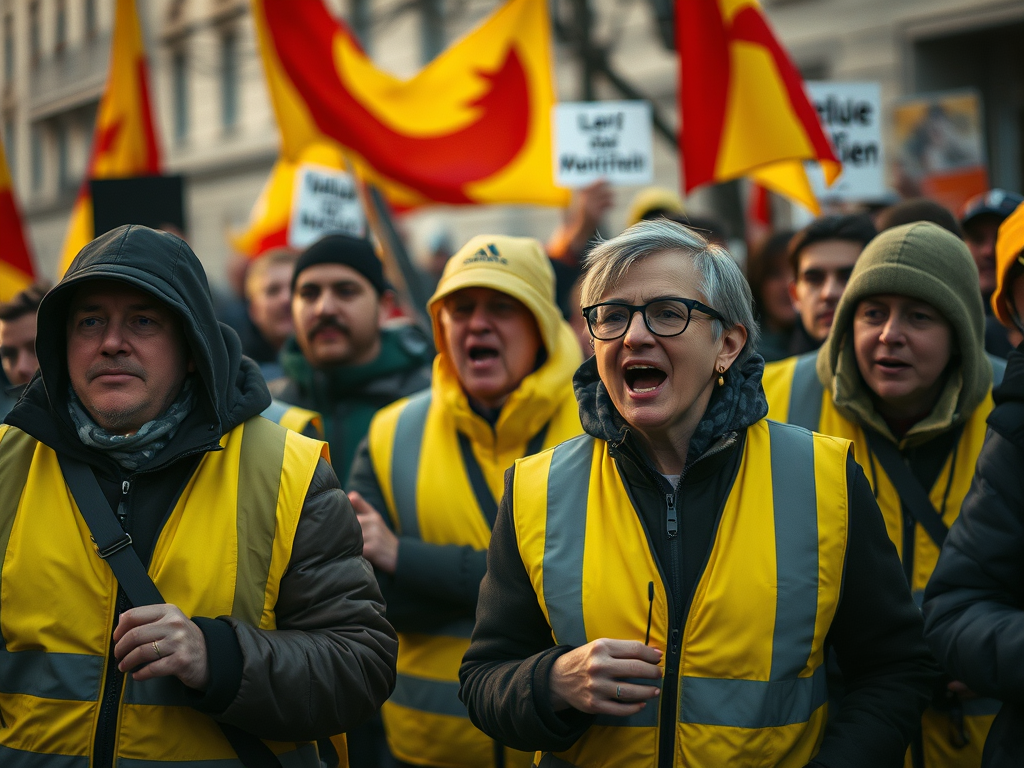
Take a look at France today with its Yellow Vest protesters. People are struggling with their cost of living. I wrote an article about that for the first time, many years ago. And who is to blame now? The King? Napoleon? No, it`s Macron.

So, Why Are Prices Rising Again?

The cost of living has become the defining issue of our time. Food, housing, and energy prices are rising faster than wages. Families feel squeezed, not just in New York or Paris, but across the Western world.

But who is to blame?

It’s tempting to point the finger at politicians, corporations, or billionaires. Yet the truth is more complex. The problem isn’t one person. It’s the system itself.

A mix of factors drives today’s inflation:

  • Global supply chain disruptions from the pandemic and wars.
  • Energy shocks as the world shifts away from fossil fuels.
  • Corporate pricing power in markets where competition has shrunk.
  • Decades of easy money and debt have inflated asset prices but left wages behind.

Governments print money to stimulate the economy, corporations raise prices to protect profits, and central banks hike interest rates to cool inflation, all while ordinary people pay the price.

It’s a cycle that keeps repeating, no matter the century. In ancient Rome, it was grain shortages. In 1848, in France, it was bread and taxes. Today, it’s rent and electricity.

The Real Lesson

Historically, when people struggle, they often look for someone to blame, such as a king, a tyrant, or a president. Get rid of Trump, and everything will be fine. Get rid of Macron, and the sun will shine. They think removing the person will fix the system. But as history shows us, that rarely works.

Trump isn’t the cause of America’s problems. He’s a symptom of them.
Just as Caesar wasn’t the reason Rome was collapsing, but rather the outcome of deep divisions and economic inequality that had built up for years.

When the cost of living becomes unbearable, people revolt. Sometimes at the ballot box, sometimes in the streets.

But unless we learn from history, each “revolution” just sets the stage for the next crisis.

In the end, it’s not about kings or dictators. It’s about systems.
And if we don’t fix the system, the anger, fear, and struggle will continue. Just as it has for more than 2,000 years.

Disclaimer: The views expressed in this article are those of the author and may not reflect those of Shinybull.com. The author has made every effort to ensure the accuracy of the information provided; however, neither Shinybull.com nor the author can guarantee the accuracy of this information. This article is strictly for informational purposes only. It is not a solicitation to make any exchange in precious metal products, commodities, securities, or other financial instruments. Shinybull.com and the author of this article do not accept culpability for losses and/ or damages arising from the use of this publication.
Leave a comment

Filed under Politics

Donald J. Trump and Capitalism won BIG

Donald J. Trump is the next U.S. President. However, the election has significant historical elements, given the polarization and the unique political landscape surrounding both candidates. This election marks the first time a former U.S. President has won a non-consecutive second term since Grover Cleveland in 1892.

This is also the first time since 2004 that a Republican has won the popular vote. The GOP nominee`s stunning political comeback came with a high margin of victory. Not only that. At 78, Trump will also become the oldest person elected to the country`s highest office.

The intense division and high voter turnout are also notable, showing a heightened level of public engagement. 63 million voted for Trump in 2016, but this time, as of writing, more than 70 million voted for him.

Trump won more votes in nearly all of the country, and he got support from Hispanic voters, black voters, working-class heroes, and a lot of young people. This is in line with what we also see in Europe. Young voters reject the leftist policy.

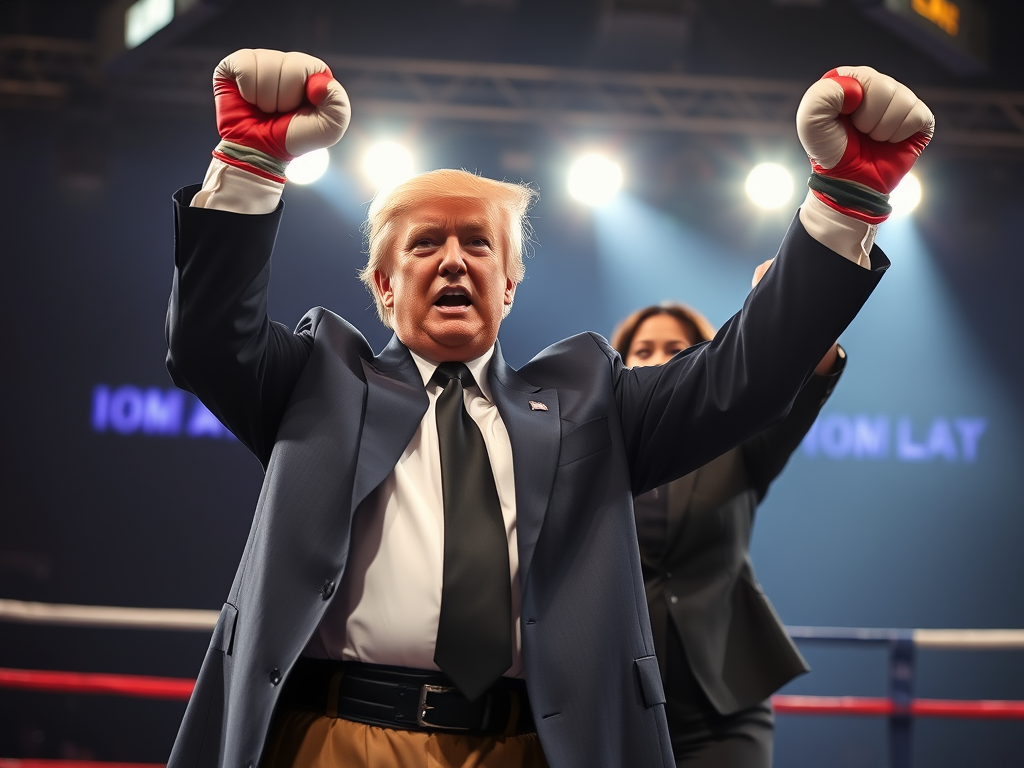
Picture: Fighter Donald Trump won big over Kamala Harris, Fight, fight, fight!

On Wednesday, Kamala Harris gave a speech, and she said that many people in the U.S. feel like the U.S. is entering a dark time. I hope that is not the case, Harris said. The media is also telling us that everything is dark now. Young people want to move to another country, legacy media is telling us.

But, wait a minute. What in the world is going on here? People on the left side, including legacy media are negative and live in darkness. It seems like they don`t believe in the future. But what about the next president? He cannot be in the same camp. Can he? No way.

Trump claimed victory at around 2.30 a.m., pledging to usher in a «golden age» for the United States of America, and «Make America Great Again.» (keep in mind that the stock market and the crypto market went straight up on Wednesday. Investors love Trump! A big win for capitalism).

Not only that. Furthermore, Trump said: «This is a movement like nobody`s ever seen before and, frankly, this was, I believe, the greatest political movement of all time. There`s never been anything like this in the history.»

We must remember that millions of people have rejected the leftists, and there must be a reason for that. This is not only happening in the U.S. but also in Europe. Elon Musk is one of them. He used to be on the left side politically, but now, he is a Republican. And he is not alone.

What makes me so angry is all the BS we hear from the leftists and the legacy media. Let`s take a look at Kamala`s speech today. For example, she said:

«A fundamental principle of American democracy is that when we lose an election, we accept the results. That principle, as much as any other, distinguishes democracy from monarchy or tyranny. And anyone who seeks the public trust must honor it.»

Let me remind you all of something nobody is talking about anymore. The Russia collusion. When Donald J. Trump won the election in 2016, the leftists, and the legacy media, claimed Trump and his campaign might have coordinated with Russian efforts to interfere in the U.S. election.

While several individuals associated with Trump`s campaign were investigated for potential ties to Russian operatives, Mueller`s final report did NOT establish sufficient evidence that the Trump campaign knowingly coordinated with Russian interference efforts.

The report did, however, detail numerous contacts between Trump campaign officials and Russian nationals, which raised ethical and legal concerns.

The investigation remains a significant and divisive topic, as its findings impacted U.S. political dynamics, the public’s trust in institutions, and discussions around election security.

We can all see how the leftists and the legacy media are hiding this. They started it all in 2016, and it has had a huge impact on voters. People on the left side are destroying their own party. And this is exactly what we all face now. The Democrats have lost credibility, and need to work hard to come back on track again. Voters can see it, and they are NOT stupid.

On top of that. Many people on the left and certain political figures claimed that Donald J. Trump`s victory in the 2016 election was illegitimate. Can you believe that?

These claims were based primarily on the interference of Russia in the 2016 election, as detailed in the Mueller Report, and the fact that Trump won the Electoral College while losing the popular vote by nearly 3 million votes.

But it doesn`t stop here. We can all see how many people on the left side always attack people on the right side. Right after the U.S. election in 2016, the leftists started a campaign called

#NotMyPresident.

Following the election, many of Trump`s opponents used the hashtag #NotMyPresident, especially among liberal and left-wing groups, to express their rejection of his presidency, arguing that he did not win the election fairly.

But this, time Donald J. Trump won BIG! And that makes it difficult to deny the results. Therefore, Kamala Harris said in the speech on Wednesday: «Now, I know folks are feeling and experiencing a range of emotions right now. I get it. But we must accept the results of this election».

Yes, Kamala Harris. That`s right. More than 70 million voted for Trump and they aren`t stupid.

Let me finish this article by telling you what a democracy is:

Democracy is a system of government in which power is vested in the people, who rule either directly or through freely elected representatives. The core principle is that citizens have the right to participate in decision-making, typically through voting in elections, ensuring that the government reflects the will of the people.

The U.S. is often categorized as a democracy, but the United States is more often accurately defined as a constitutional federal republic. So, the United States is often described as both a democracy and a constitutional federal republic.

The U.S. is a federal republic, which means that it is made up of states that share sovereignty with a central government. The Constitution serves as the foundational legal framework that defines the structure of the government and the rights of the people.

The «Constitutional» part signifies the importance of these legal documents in limiting governmental power and protecting individual rights.

In essence, while the U.S. is a democracy in the sense that people vote and have a role in governance, it is also a constitutional federal republic because of the distribution of power between federal and state governments, and the rule of law established by the Constitution.

Finally, Abraham Lincoln said a democracy is «of the people, by the people, for the people.» The word democracy comes from the Greek words «demos,» meaning people, and «Kratos,» meaning power. So, democracy can be thought of as «the power of the people.»

It is a way of governing that depends on the will of the people. More than 70 million voted for Trump, and this is how a democracy works—it is the will of the people. Congratulations!

Disclaimer: The views expressed in this article are those of the author and may not reflect those of Shinybull.com. The author has made every effort to ensure the accuracy of the information provided; however, neither Shinybull.com nor the author can guarantee such accuracy. This article is strictly for informational purposes only. It is not a solicitation to make any exchange in precious metal products, commodities, securities, or other financial instruments. Shinybull.com and the author of this article do not accept culpability for losses and/ or damages arising from the use of this publication.

Leave a comment

Filed under Politics

The trust in Media is declining and Former Clinton adviser Mark Penn said the debate may have been rigged by ABC News in favor of Harris

Former Clinton adviser Mark Penn has called for an internal investigation into ABC News following the 2024 presidential debate between Donald Trump and Kamala Harris. Penn raised concerns that the debate may have been rigged in favor of Harris.

He cited the moderators` disproportionate fact-checking of Trump while allowing Harris to go unchallenged on multiple occasions, creating an impression of bias.

Penn suggested ABC should hire an independent law firm to review internal communications to determine if there was an intentional effort to manipulate the debate outcome. He emphasized that the network`s moderators fact-checked Trump extensively but failed to scrutinize Harris`s claims, despite allegations that she made several false statements.

Penn also noted Harris`s close personal connections with ABC executives, adding to the suspicion of favoritism.

This criticism has come from both Republicans and some Democrats, and Trump himself said he would not participate in any more debates due to what he perceived as unfair treatment.

So far, there is no credible evidence to suggest that any debate, including one involving Donald Trump and Kamala Harris was rigged by ABC or any other network. Allegations of rigged debates are often raised in highly charged political invironments, but such claims typically lack substantiation, but an investigation could give us an answer.

In the U.S., presidential debates are organized by the Commision of Presidential Debates (CPD), a non-partisan organization. Networks like ABC or others that air these debates follow CPD guidelines, and the debate format, moderators, and rules are agreed upon by the campaigns in advance.

The first presidential debate between Donald Trump and Kamala Harris in 2024 drew 67,1 million viewers in the U.S. Despite the high viewership, the debate was met with significant controversy, particularly due to claims of bias in the moderation.

Viewership for presidential debates has historically fluctuated, with key factors like the candidates involved and the political climate influencing audience size. In comparison, the first debate in 2020 between Donald Trump and Joe Biden drew about 73 million viewers.

This is nothing compared to the most-watched U.S. Presidential debate ever; the debate between Donald Trump and Hillary Clinton on September 26, 2016, which attracted 84 million viewers.

This broke the previous record held by the 1980 debate between Jimmy Carter and Ronald Reagan, which drew around 80,6 million viewers.

The 2016 Trump-Clinton debate`s record viewership was attributed to the high level of interest in the polarizing candidates and the intense political climate. It was broadcast across multiple networks and also streamed online, though the 84 million figure only accounts for traditional TV viewership.

But people can see and hear and make up their own minds, and if they see something unfair, they will react. That`s exactly what people are doing. And this is exactly why the trust in media is declining.

Trust in legacy media has seen a significant decline over the past 20 years. According to Gallup, trust in mass media (newspapers, TV, radio) has dropped from around 55% in 1999 – 2001 to about 32% in 2022.

This decline has been gradual but became more pronounced in the past decade, especially during and after the 2016 U.S. Presidential election, when media credibility was increasingly questioned.

Around 55% of Americans said they trusted the media «A great deal» or «a fair amount,» in 2001. This number fell to 32% in 2016, largely fueled by political polarization. In 2022, trust hit a near-record low at 32%, with trust among Republicans being particularly low (just 14%) and Democrats at 70%.

Pew Research Center also reported a consistent decline in trust, especially among younger audiences and Republicans. They found that in 2021, only 26% of Americans said they trusted national news organizations «a lot» or «somewhat.»

The decline is attributed to factors like increased political polarization, the rise of social media, and widespread perceptions of bias or sensationalism in traditional news outlets. This decline has created a trust gap, where many Americans now turn to alternative media sources or social media for information.

Disclaimer: The views expressed in this article are those of the author and may not reflect those of Shinybull.com. The author has made every effort to ensure the accuracy of the information provided; however, neither Shinybull.com nor the author can guarantee such accuracy. This article is strictly for informational purposes only. It is not a solicitation to make any exchange in precious metal products, commodities, securities, or other financial instruments. Shinybull.com and the author of this article do not accept culpability for losses and/ or damages arising from the use of this publication.
Leave a comment

Filed under Politics

Red tsunami 2024

Donald Trump said November 15 can be one of the most important days in the history of the United States of America. He had a strong speech that night and announced that he is running for president again in 2024.

«In order to make America great and glorious again, I am tonight announcing my candidacy for president of the United States,» Trump said. Trump is the first former president to run again since Theodore Roosevelt and the first since Grover Cleveland to do so after losing reelection.

«America`s comeback starts right now», Trump added on November 15.

If President Trump continues this tone and delivers this message on a consistent basis, he will be hard to beat. «His speech tonight, contrasting his policies and results against the Biden Administration, charts a winning path for him in the primaries and general election,» Lindsay Graham tweeted after Trump`s speech.

Thanksgiving will be much more expensive this year than ever before. The turkey is more expensive. Gasoline is more expensive. The cost to travel and meet family and friends this time is much more expensive under Biden than under Trump during his period in the White House.

A lot of people are already having a difficult time, but it will be much worse, according to Trump. People will feel the pain in a year or two. It will be difficult in 2024 as well. But who is the man to deal with problems like this?

The answer is Donald Trump. Not because of his personality, but because of his experience. He knows what buttons to push. In his speech at his Mar-a-Lago club, he said he is promising that America would become «a great nation again». On Tuesday night, President Joe Biden tweeted from his personal account: «Donald Trump failed America.»

«The decline of America is being forced on us by Joe Biden and the radical left lunatics,» Trump said in his speech. But Biden will continue to underscore his belief that Mr. Trump is a threat to democracy.

He also said that the 2020 election was rigged, beyond suggesting that China somehow meddled in it. Trump insists without evidence that Biden benefited from subterfuge and fraud. Trump renewed his demand for sweeping restrictions on voting, including ending early voting and voting by mail.

«I`ll get that job done, That`s a very personal job for me,» he said on Tuesday. Many people support Trump and his «MAGA»-movement. Donald Trump is often compared to Abraham Lincoln who saved America for the first time.

Lincoln was elected to unite a country, and stop slavery, but Democrats smeared him, went to war against him, and assassinated him. Now, they`re doing the same with Trump.

D`Souza`s film «Death of a nation» indicates that the Democratic Party has similarities to fascist regimes, including the Nazi Party. In the documentary, D`Souza accuses the modern Democratic Party of racism and attempts to demonstrate how Democrats have used accusations of racism, white supremacy, and fascism as a tool to discredit the political right.

He claims that the modern political left is using these types of accusations in attempts to get rid of Trump. It is the same strategy.

D`Souza also claims that fascism is a left-wing, rather than right-wing ideology, and that fascist regimes such as the Nazi Party have historically both praised the Democratic Party and utilized American racial law to inspire their own racial law.

The Nazis were Socialists.

Dinesh D`Souza said his documentary was based on the books Hitler`s American Model: The United States and the making of Nazi Race Law by James Whiteman, and Racism: A short history by George M: Fredrickson.

The Nazis were a bunch of people who wanted to improve society, and many of them were doctors, nurses, and scentists. All of them voted for Hitler in the 30s and 40s, and they played a vital role behind the scenes.

We all have to keep in mind that Ron Desantis won a landslide in Florida. In other words: Florida is a red state. This is interesting because Florida is a multicultural state. More than any other state in America. Why did all of them vote for a right-wing populist? Why would so many minorities do that? Because they are a bunch of Nazis? Why did the same people vote for Trump when he was running?

Many of these people have always been Democrats, but now they have changed. They have all jumped over to the right side. They support Trump`s agenda: «Make America Great Again.» Will Donald Trump save America?

The Republicans have a lot of candidates for 2024. If not Trump, it can be Desantis, Mike Pence, Nicky Haley, or Mike Pompeo. The Republicans didn`t succeed as much as they wanted in the Midterm election, but they can come back stronger than ever. It can be a red tsunami in 2024. Time will show.

Disclaimer: The views expressed in this article are those of the author and may not reflect those of Shinybull.com. The author has made every effort to ensure the accuracy of the information provided; however, neither Shinybull.com nor the author can guarantee such accuracy. This article is strictly for informational purposes only. It is not a solicitation to make any exchange in precious metal products, commodities, securities, or other financial instruments. Shinybull.com and the author of this article do not accept culpability for losses and/ or damages arising from the use of this publication.

Leave a comment

Filed under Politics