
People are angry, and that’s why they voted for Mamdani as the next Mayor of New York.
People are sick and tired of struggling to make ends meet. In his victory speech, Mamdani said:
“We choose hope over tyranny. Hope over big money and small ideas. Hope over despair. Tonight, we have stepped out from the old into the new.”
His supporters are already marching in the streets, saying they don’t want Trump as a king or a dictator.
Hmm… I think I’ve heard this before.
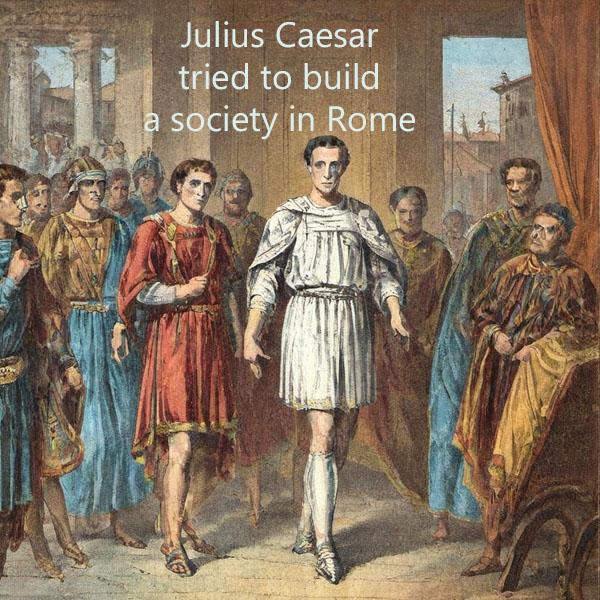
More than two thousand years ago, in Rome, another man was accused of wanting to be king.
His name was Julius Caesar.
A group of Roman senators assassinated Caesar out of fear that his growing power and titles, especially dictator for life, would destroy the Roman Republic.
They claimed they were saving democracy, but their actions plunged Rome into chaos and civil war.
It was a betrayal that changed history, and a reminder of how fear, power, and instability often go hand in hand.
History Repeats Itself
Fast forward to France, 1848. The people were exhausted. Food prices were soaring, unemployment was rising, and inequality had reached unbearable levels.
King Louis Philippe I, once known as the Citizen King, had promised a fairer, more modern France. But over time, his government became detached from ordinary people’s struggles.
One of the main sources of anger was the tax system. The poor and working class bore a heavy burden through indirect taxes on essentials like food, salt, and fuel, while wealthy landowners and property owners paid relatively little. Voting rights were also tied to property ownership, meaning most citizens had no political voice. When food prices spiked in the late 1840s, ordinary people were paying high taxes on top of already expensive necessities. Economic frustration reached a tipping point.
People in New York voted for Mamdani, who wants to raise taxes and, at the same time, give people fast and free buses. How is that going to be?
When protests erupted in February 1848, the king tried to silence them. Instead, the anger exploded.
Barricades filled the streets of Paris, and after just a few bloody days, Louis Philippe abdicated the throne and fled to England in disguise.
The monarchy collapsed. The Second Republic was born.
But what came next? A new leader. Louis-Napoleon Bonaparte, nephew of Napoleon I, rose to power, promising to restore stability and hope. Within four years, he declared himself Emperor.
Sound familiar?
It’s the same old story: people rise up against a system they believe is unjust, only to end up under a new one that looks strangely similar.
Each era has its slogans: “liberty,” “hope,” “change,” “the people’s revolution”, yet the same problems remain. Prices go up. Ordinary citizens struggle. The rich adapt and survive.

Take a look at France today with its Yellow Vest protesters. People are struggling with their cost of living. I wrote an article about that for the first time, many years ago. And who is to blame now? The King? Napoleon? No, it`s Macron.
So, Why Are Prices Rising Again?
The cost of living has become the defining issue of our time. Food, housing, and energy prices are rising faster than wages. Families feel squeezed, not just in New York or Paris, but across the Western world.
But who is to blame?
It’s tempting to point the finger at politicians, corporations, or billionaires. Yet the truth is more complex. The problem isn’t one person. It’s the system itself.
A mix of factors drives today’s inflation:
- Global supply chain disruptions from the pandemic and wars.
- Energy shocks as the world shifts away from fossil fuels.
- Corporate pricing power in markets where competition has shrunk.
- Decades of easy money and debt have inflated asset prices but left wages behind.
Governments print money to stimulate the economy, corporations raise prices to protect profits, and central banks hike interest rates to cool inflation, all while ordinary people pay the price.
It’s a cycle that keeps repeating, no matter the century. In ancient Rome, it was grain shortages. In 1848, in France, it was bread and taxes. Today, it’s rent and electricity.
The Real Lesson
Historically, when people struggle, they often look for someone to blame, such as a king, a tyrant, or a president. Get rid of Trump, and everything will be fine. Get rid of Macron, and the sun will shine. They think removing the person will fix the system. But as history shows us, that rarely works.
Trump isn’t the cause of America’s problems. He’s a symptom of them.
Just as Caesar wasn’t the reason Rome was collapsing, but rather the outcome of deep divisions and economic inequality that had built up for years.
When the cost of living becomes unbearable, people revolt. Sometimes at the ballot box, sometimes in the streets.
But unless we learn from history, each “revolution” just sets the stage for the next crisis.
In the end, it’s not about kings or dictators. It’s about systems.
And if we don’t fix the system, the anger, fear, and struggle will continue. Just as it has for more than 2,000 years.

Disclaimer: The views expressed in this article are those of the author and may not reflect those of Shinybull.com. The author has made every effort to ensure the accuracy of the information provided; however, neither Shinybull.com nor the author can guarantee the accuracy of this information. This article is strictly for informational purposes only. It is not a solicitation to make any exchange in precious metal products, commodities, securities, or other financial instruments. Shinybull.com and the author of this article do not accept culpability for losses and/ or damages arising from the use of this publication.


 Ket Garden
 Business, Politics, Finans