
For decades, the United States has viewed Greenland as a strategically vital territory. Since World War II, American military planners and policymakers have understood its importance for Arctic security, global defense systems, and access to critical resources. What previous administrations discussed quietly behind closed doors, Donald Trump chose to say openly.
Trump said he wanted Greenland.
The reaction from legacy media was immediate and furious. Denmark was outraged. European leaders, including Emmanuel Macron, criticized the idea. Headlines mocked Trump, calling the proposal absurd, imperialistic, even dangerous. Once again, the familiar narrative returned: Trump the dictator, Trump the destabilizer, Trump the man destroying NATO and threatening the world order.
But while the media screamed, Trump stayed calm. Smiling. Stoic.
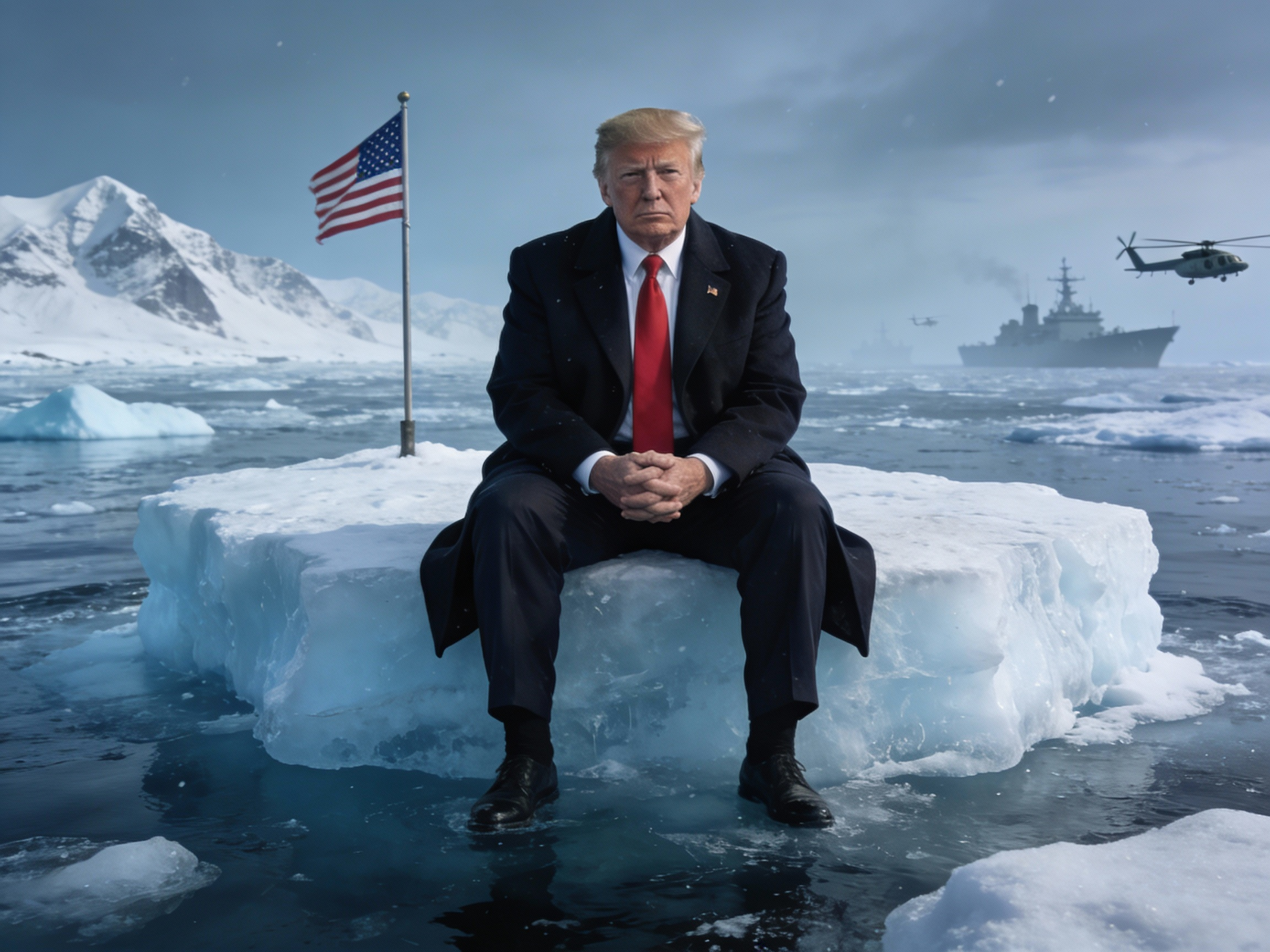
Behind the scenes, something very different was happening.
This week, President Donald Trump arrived in Davos, Switzerland, to attend the World Economic Forum (WEF). Surrounded by the world’s global elites—the very same figures who openly despise him—Trump showed up with a large delegation and a clear agenda: make deals.
And one of the biggest deals was Greenland.
After a high-level meeting with NATO Secretary General Mark Rutte, Trump announced that a framework agreement concerning Greenland—and the wider Arctic region—had been reached. An outcome many in the legacy media had declared impossible.
In a statement released earlier today, Trump wrote:
“Based upon a very productive meeting that I have had with the Secretary General of NATO, Mark Rutte, we have formed the framework of a future deal with respect to Greenland and, in fact, the entire Arctic Region.
This solution, if consummated, will be a great one for the United States of America, and all NATO Nations. Based upon this understanding, I will not be imposing the tariffs that were scheduled to go into effect on February 1st.
Additional discussions are being held concerning the Golden Dome as it pertains to Greenland. Further information will be made available as discussions progress. Vice President JD Vance, Secretary of State Marco Rubio, Special Envoy Steve Witkoff, and others will lead the negotiations and report directly to me.”
In simple terms: Trump made a deal.
Greenland matters because it is one of the most strategic territories on Earth. As Arctic ice melts, new shipping routes open and access to vast mineral reserves becomes possible. China and Russia have both aggressively positioned themselves in the Arctic, seeking influence, infrastructure, and control over rare-earth minerals critical to modern technology, defense systems, and energy.
China already holds a near-monopoly on many of these minerals.
Greenland changes that.
According to Trump, the framework agreement includes mineral rights, defense cooperation, and integration into a broader NATO security architecture—including the proposed “Golden Dome” defense system. With American capital, technology, and expertise, Greenland’s resources can be developed responsibly, reducing Western dependence on China and strengthening collective security across Europe and North America.
This is not just a win for the United States. It is a win for the West.
For years, Europe has depended on American security while criticizing American leadership. Trump reversed that dynamic. He forced allies to negotiate seriously, share responsibility, and think strategically about the future of the Arctic.
The backlash from globalists is predictable. Trump does not speak their language. He does not respect their rituals. He does not submit to unelected institutions or consensus-driven politics. Instead, he negotiates power, territory, resources, and security—openly.
What we are witnessing is not chaos. It is a transition.
The old world order is fading. Globalism as an ideology is losing credibility. In its place, a new era is emerging—what some describe as civilizationism: a worldview that recognizes distinct civilizations, national sovereignty, cultural identity, and strategic self-interest.
Trump’s Greenland deal is not just about land or minerals. It is about redefining power in a multipolar world.
And despite what the legacy media claims, Trump didn’t lose control.
He won Greenland.

Disclaimer: The views expressed in this article are those of the author and may not reflect those of Shinybull.com. The author has made every effort to ensure the accuracy of the information provided; however, neither Shinybull.com nor the author can guarantee the accuracy of this information. This article is strictly for informational purposes only. It is not a solicitation to make any exchange in precious metal products, commodities, securities, or other financial instruments. Shinybull.com and the author of this article do not accept culpability for losses and/ or damages arising from the use of this publication.
 Ket Garden
 Business, Politics, Finans