“For centuries, humans have tried to build fair systems, and failed repeatedly.”
The Human Struggle with Complexity
History shows that people have always struggled to manage complex systems. In ancient Rome, Caesar’s rise exposed deep divisions in society and the limits of human judgment. In 1848, France, King Louis Philippe I faced a population burdened by taxes and inequality, a system too rigid and tangled for leaders to reform.
Today, millions face similar struggles: cost-of-living crises, housing shortages, and economic instability. The pattern is clear; the system often overwhelms human capacity.
Partisanship, emotion, and limited attention make it nearly impossible for humans alone to optimize society’s resources fairly and efficiently.
“If history teaches us anything, it’s that no human institution, however well-intentioned, can keep up with the complexity of modern life.”
Enter AI: A New Kind of Leadership
Maybe the solution isn’t left, right, or even one-party systems. Maybe the solution is AI.
Thousands of human beings, with all their emotions, biases, and limited perspectives, can’t compete with a system that can analyze all available information simultaneously. Just look at chess or Go. AI doesn’t just play well; it plays beyond the limits of human imagination.
Take a simple real-world example: an elderly woman paying more for her apartment than she receives in pension. Who is to blame? No single person. It’s the system. This isn’t a moral failure; it’s mathematical.
AI doesn’t suffer from those human limits. It can process enormous amounts of data, detect patterns, optimize allocations, and predict problems before they occur.
“Maybe the next stage of democracy isn’t about choosing leaders. It’s about choosing the algorithms that lead us.”
A Vision of AI-Guided Society
Imagine a world where decisions about economics, healthcare, infrastructure, or the cost of living are guided by AI. No feelings, no personal interests, no corporate agendas, no short-term political games.
Decisions would be based purely on data, evidence, and long-term outcomes, optimizing for the well-being of everyone rather than the loudest voices or the wealthiest lobbyists.
Humans would still define the ethical framework. AI can calculate the best moves, but society must decide what “good” means: fairness, sustainability, equality, or prosperity.
“Compared to the endless bickering and short-term thinking of politics, AI could be the most rational and forward-looking leader humanity has ever known.”
Balancing Hope and Caution
AI governance isn’t without risks; bias in data, lack of transparency, and accountability must be addressed. But unlike human flaws, these can be debugged. Systems can be retrained, improved, and held to measurable standards of performance.
The question, then, is no longer about political parties or ideologies. The real question is: Are we ready to let reason, not emotion, guide the future?
Author’s Note
As technology continues to evolve, the debate over AI in governance is no longer a matter of science fiction. It’s a question of readiness, trust, and design. Whether we like it or not, the age of algorithmic leadership is approaching. The choice before us isn’t if AI will play a role in decision-making, but how we’ll ensure it serves humanity, not replaces it.
Disclaimer: The views expressed in this article are those of the author and may not reflect those of Shinybull.com. The author has made every effort to ensure the accuracy of the information provided; however, neither Shinybull.com nor the author can guarantee the accuracy of this information. This article is strictly for informational purposes only. It is not a solicitation to make any exchange in precious metal products, commodities, securities, or other financial instruments. Shinybull.com and the author of this article do not accept culpability for losses and/ or damages arising from the use of this publication.
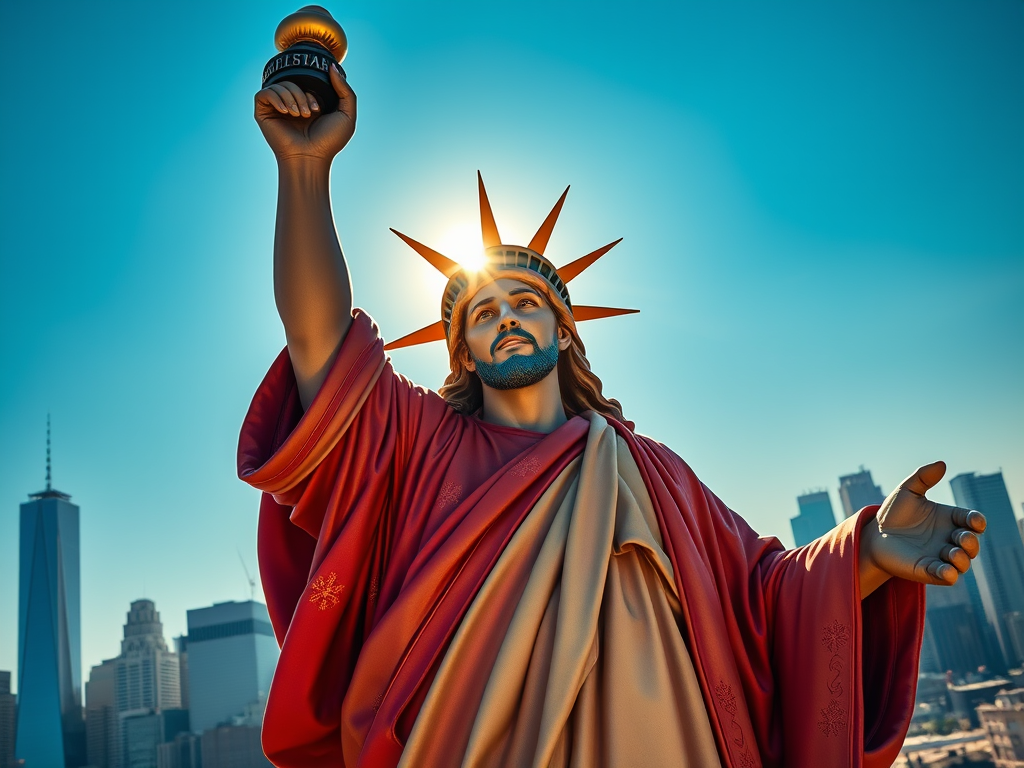
Freedom of speech is one of our most cherished rights, yet it’s also one of the most misunderstood. Where do we draw the line between free expression and harassment? When mocking becomes humiliation, and jokes turn into attacks, dignity is lost. And dignity, just like freedom, is a human right.
Freedom of speech is one of the most important rights in democratic societies. It allows people to express thoughts, ideas, and beliefs publicly without fear of government censorship or punishment. This includes spoken words, written expression, art, and the exchange of information.
But freedom of speech is not absolute. A central question remains: Is hate speech really free speech, or does it cross into something else, harassment, abuse, and the violation of human dignity?
(Picture: Reflection: When Disrespect Becomes the Norm
The public treatment of leaders is a mirror of society’s values. Since 2016, we have seen how mockery and humiliation, like the “Trump balloon,” are used not to challenge policies, but to strip a person of dignity. Whether or not one agrees with Trump, the method of ridicule says more about us than about him.
When humiliation replaces respectful disagreement, it weakens the foundations of democracy. It creates a culture where harassment becomes normalized, spreading to schools, workplaces, and everyday life. If the West tolerates public harassment at the highest levels, how can we hope to eliminate bullying and harassment among teenagers?
Freedom of speech is not a license to abuse. A society that wants to survive and grow stronger must defend both freedom and dignity, because without dignity, freedom eventually collapses.)
The Limits of Free Speech
While free speech is widely protected, democratic societies do place boundaries on it. According to the First Amendment in the U.S. and Article 19 of the Universal Declaration of Human Rights, restrictions are lawful when necessary to protect:
Public order
National security
Public health
The rights and reputations of others
Categories such as incitement to violence, true threats, defamation, obscenity, and fraud are not protected speech. In other words, freedom of speech is not a license to abuse.
When Speech Becomes Harassment
Harassment goes beyond free expression. It is a form of discrimination that involves unwanted, offensive, intimidating, or humiliating behavior. Examples include:
Derogatory jokes, racial or ethnic slurs
Unwanted comments about religion or appearance
Pressure for sexual favors
Offensive graffiti, cartoons, or images
Harassment can take different forms:
Verbal or written (insults, threats, degrading comments)
Physical (unwanted contact, intimidation)
Visual (symbols, gestures, offensive imagery)
When harassment becomes repetitive, it turns into bullying, often leaving lasting emotional scars. At its worst, harassment and humiliation constitute psychological abuse and may even lead to criminal charges.
Freedom of Speech vs. Human Dignity
Here lies the conflict: freedom of speech is a right, but human dignity is also a right. Dignity means recognizing the intrinsic value of every human being and treating them with respect.
Mocking or humiliating people, whether powerful leaders or ordinary individuals, strips them of their dignity. It erodes respect. And if harassment is normalized at the highest levels of media and comedy, how can we expect young people in schools to learn respect and kindness?
A Question for Media and Comedians
Since 2016, comedians and media outlets have mocked, criticized, and even harassed the most powerful man on the planet. Some say it’s fair satire; others see it as relentless humiliation. But here’s the real issue: if harassment is accepted at the top of society, how can it be eliminated in classrooms, workplaces, or online communities?
The principle is simple: free speech must not become a weapon to degrade others.
Respect as the Foundation
Every person, regardless of power, status, or circumstance, deserves:
Respect: showing esteem for their humanity
Dignity: recognizing their inherent worth
Equality: treating all people fairly
Speech that destroys these values is not freedom—it’s abuse.
The Role of Platforms
In the digital era, platforms amplify speech through Section 230 protections in U.S. law, which shield platforms from being sued for user content. However, the responsibility ultimately lies with the individual: what you post online is your responsibility.
Social media can either become a space for respectful dialogue or a weapon of harassment. The choice belongs to us.
Conclusion
Free speech is vital to democracy, but it comes with responsibility. Hate speech, harassment, and humiliation are not the same as free expression; they are violations of dignity.
The way forward is not to silence voices, but to promote respect, reject harassment, and recognize that freedom without responsibility can lead to abuse.
Disclaimer: The views expressed in this article are those of the author and may not reflect those of Shinybull.com. The author has made every effort to ensure the accuracy of the information provided; however, neither Shinybull.com nor the author can guarantee the accuracy of this information. This article is strictly for informational purposes only. It is not a solicitation to make any exchange in precious metal products, commodities, securities, or other financial instruments. Shinybull.com and the author of this article do not accept culpability for losses and/ or damages arising from the use of this publication.
The Assassination of Charlie Kirk and Its Impact on America
Many people remember September 11, 2001 — a day that changed America forever. Now, September 10, 2025, will also be etched into history.
On that day, a sniper shot and killed Charlie Kirk in Utah. But this was not only an attack on a man — it was an attack on the very foundations of the United States: democracy, freedom of speech, and the core American values that millions cherish.
Former President Donald Trump said in a speech afterward:
“The assassin tried to silence Charlie with a bullet, but he failed. We will ensure that his voice, his message, and his legacy will live on for countless generations.”
Paradoxically, the attempt to silence Kirk has amplified his voice. His message now resonates louder than ever before.
A Pattern of Violence
This is not the first act of political violence against conservative figures. Donald Trump himself survived an assassination attempt last year. Congressman Steve Scalise was shot. A man armed with a rifle went to Justice Brett Kavanaugh’s home. Rand Paul was violently attacked by a neighbor, breaking his ribs.
Even beyond politics, chaos has escalated: riots in Los Angeles, trans shooters killing children, Jewish people shot outside an embassy, and ICE agents receiving death threats so severe that they wear masks to protect their families. Elon Musk’s car was reportedly firebombed.
Social Media’s Dark Celebration
Perhaps most shocking of all were the reactions online. The Daily Mail reported on videos showing left-wing extremists openly celebrating Kirk’s death. Many said he “deserved to be shot.”
For many Americans, this response was deeply disturbing — not just because of the murder itself, but because of the apparent normalization of hate and violence on social media.
Part of a Tragic American Pattern
Kirk’s name now joins a tragic list in American history: Abraham Lincoln, John F. Kennedy, Robert F. Kennedy, Martin Luther King Jr., and Malcolm X — all assassinated for standing up for their beliefs.
The FBI has stated that the ammunition used in the Kirk assassination was engraved with transgender and antifascist slogans. Utah police noted that the state still has the death penalty, and prosecutors are considering its use in this case.
A Turning Point?
Charlie Kirk was the CEO of Turning Point Action, a powerful voice for conservative youth. His death raises a haunting question:
Will this be a turning point for America — or just another chapter in a growing era of political hatred?
One thing is sure: just as 9/11 changed America, 10/11 will be a date the world will remember.
Disclaimer: The views expressed in this article are those of the author and may not reflect those of Shinybull.com. The author has made every effort to ensure the accuracy of the information provided; however, neither Shinybull.com nor the author can guarantee the accuracy of this information. This article is strictly for informational purposes only. It is not a solicitation to make any exchange in precious metal products, commodities, securities, or other financial instruments. Shinybull.com and the author of this article do not accept culpability for losses and/ or damages arising from the use of this publication.
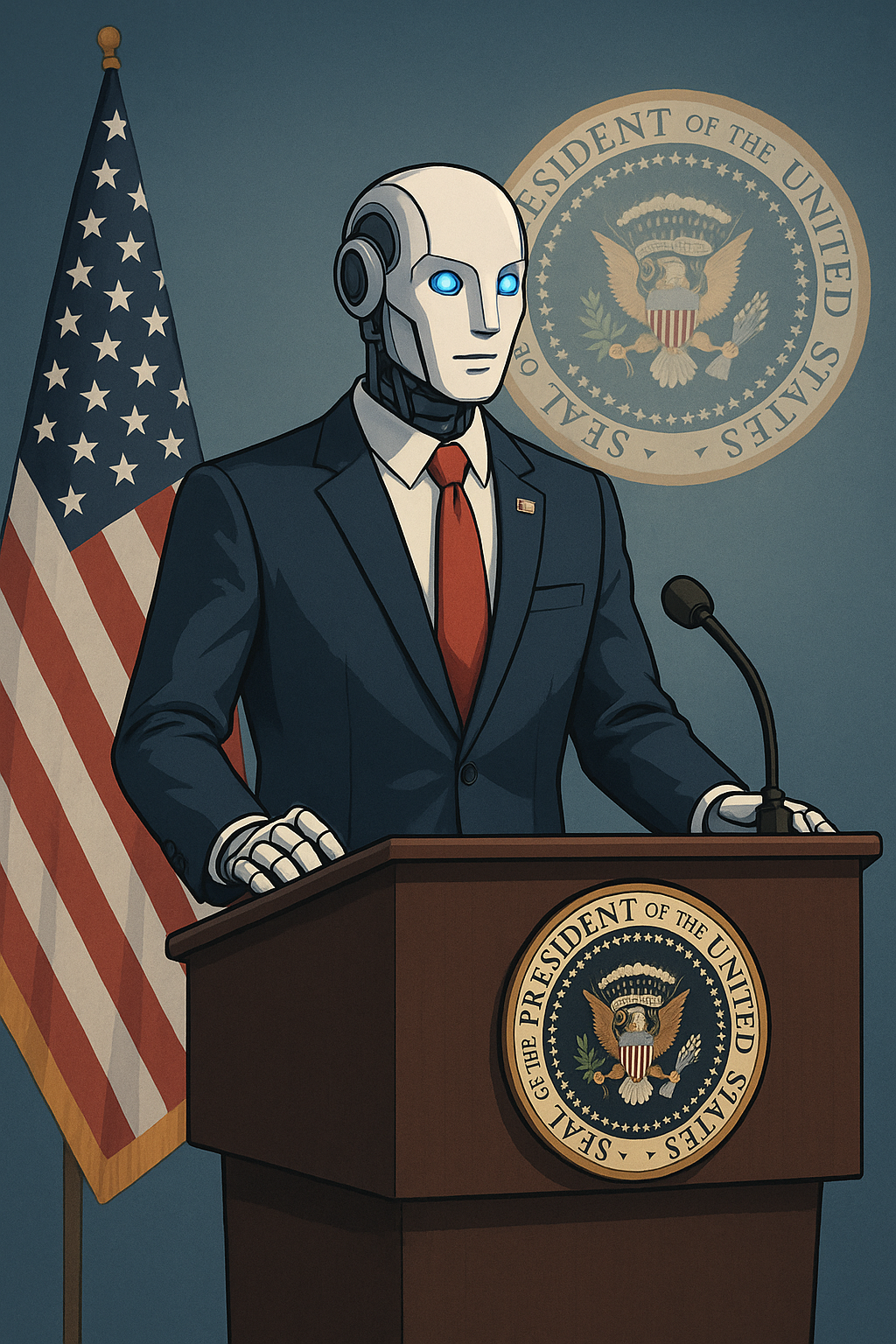
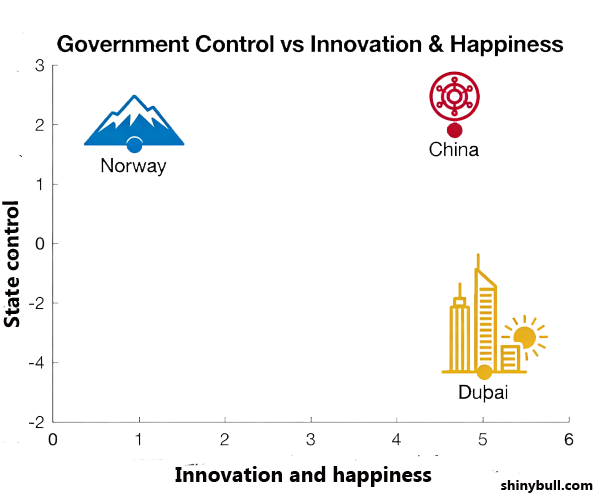
Norway is one of the richest countries in the world. By traditional measures, one might expect Norwegian citizens to be among the happiest people on Earth. However, if happiness were solely tied to wealth, Norway presents a paradox. Despite its prosperity, the country faces rising mental health issues, loneliness, and dissatisfaction among its people.
Wealth and Well-Being: A Growing Disconnect
The World Happiness Report (WHR), released annually, ranks countries based on factors such as social support, life expectancy, freedom, corruption levels, and generosity. While Norway often ranks high, recent trends reveal an alarming rise in loneliness, particularly among young adults. Despite economic stability, emotional well-being appears to be deteriorating.
The statistics are concerning. In 2023, Norway recorded 693 suicides, with men disproportionately affected. This equates to a rate of 14.1 per 100,000 people. These figures raise critical questions: Why is a nation so wealthy experiencing such emotional distress? And why does prosperity not translate into greater happiness?
Norway’s Oil Wealth: A Double-Edged Sword?
Norway manages the largest sovereign wealth fund in the world, fueled by its vast oil and gas reserves. In 2024, the fund reported a record-breaking $222 billion in profit, contributing to about 10% of the country’s GDP. Yet, this financial success has not resulted in a happier population.
One theory suggests that Norway’s highly structured welfare state and rigid societal expectations may, paradoxically, contribute to dissatisfaction. While economic security provides stability, it can also foster a sense of isolation, lack of purpose, and disengagement from community life. A country where everything is provided can, ironically, leave people feeling like they lack a deeper sense of meaning.
A Historical Perspective: The Emigration Paradox
This is not the first time Norwegians have sought to escape their homeland. In the late 1800s, one-third of Norway’s population emigrated, primarily to the United States. While economic hardship played a role, Norway’s standard of living was actually comparable to other European nations at the time. So why did so many leave?
For some, the motivation wasn’t purely financial. In 1825, the first group of Norwegian Quakers, led by Cleng Peerson, emigrated to escape religious restrictions under the Konventikkelplakaten, which prohibited them from gathering as a religious community.
Similarly, the followers of Marcus Thrane, an early advocate for democracy and labor rights, fled after Thrane was imprisoned for his political activism. This historical pattern suggests that when people feel constrained—whether economically, politically, or socially—they seek opportunities elsewhere.
The Billionaire Exodus: A Warning Sign?
Today, history is repeating itself—this time with Norway’s wealthiest individuals. Hundreds of billionaires are fleeing the country, many relocating to Switzerland to escape extreme taxation. Some face tax rates as high as 95%, leaving them little choice but to leave.
This is not a new phenomenon. Norway’s richest man, John Fredriksen, left the country for Cyprus long ago after what he described as harsh treatment by the government. Now, more of Norway’s wealthiest citizens are following suit, taking their businesses, investments, and economic influence with them.
What Happens When the Rich Leave?
The departure of billionaires and large businesses has serious consequences for ordinary people. When major employers leave, they take jobs and investments with them. With fewer high-net-worth individuals investing in Norway, economic opportunities shrink. If this trend continues, the country could face:
Increased unemployment due to reduced private-sector investment.
Lower tax revenues, putting pressure on the welfare state.
Slower economic growth, making it harder to maintain current levels of public spending.
Although Norway’s government boasts an enormous wealth fund, long-term economic stability depends on private sector growth—not just state-controlled wealth. If too many businesses and entrepreneurs leave, the ripple effects could be devastating for ordinary citizens.
Robert De Niro on Democracy: A Thought-Provoking Perspective
This discussion ties into a broader reflection on society and governance. Actor Robert De Niro recently urged people to move beyond viewing democracy as an abstract ideal. Instead, he emphasized the importance of core values:
Humanity
Kindness
Global safety
Security for our families
His message serves as a reminder that well-being is not dictated by politics or economic models alone—it is defined by how people treat each other. Societies thrive when they are built on meaningful human connection, shared values, and a collective sense of purpose.
Final Thoughts: More Than Just Money
Norway’s rising loneliness and mental health struggles suggest that economic success alone is not enough. The key to well-being lies in fostering community, purpose, and personal freedom. History has shown that when these elements are missing, people look for a way out—whether through emigration, disengagement, or despair.
Ultimately, the lesson is clear: happiness is about people, not profit. And if Norway wants to maintain its standing as one of the world’s leading nations, it must prioritize not just financial wealth, but the emotional and social well-being of its citizens.
Disclaimer: The views expressed in this article are those of the author and may not reflect those of Shinybull.com. The author has made every effort to ensure the accuracy of the information provided; however, neither Shinybull.com nor the author can guarantee such accuracy. This article is strictly for informational purposes only. It is not a solicitation to make any exchange in precious metal products, commodities, securities, or other financial instruments. Shinybull.com and the author of this article do not accept culpability for losses and/ or damages arising from the use of this publication.
Donald J. Trump is the next U.S. President. However, the election has significant historical elements, given the polarization and the unique political landscape surrounding both candidates. This election marks the first time a former U.S. President has won a non-consecutive second term since Grover Cleveland in 1892.
This is also the first time since 2004 that a Republican has won the popular vote. The GOP nominee`s stunning political comeback came with a high margin of victory. Not only that. At 78, Trump will also become the oldest person elected to the country`s highest office.
The intense division and high voter turnout are also notable, showing a heightened level of public engagement. 63 million voted for Trump in 2016, but this time, as of writing, more than 70 million voted for him.
Trump won more votes in nearly all of the country, and he got support from Hispanic voters, black voters, working-class heroes, and a lot of young people. This is in line with what we also see in Europe. Young voters reject the leftist policy.
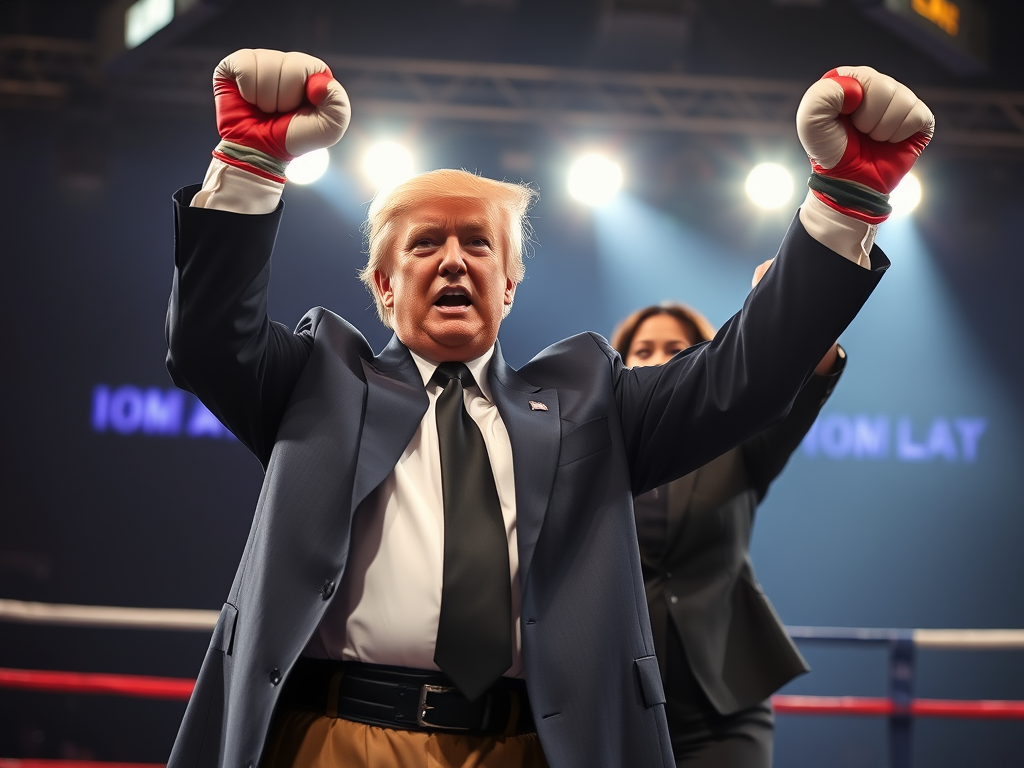
Picture: Fighter Donald Trump won big over Kamala Harris, Fight, fight, fight!
On Wednesday, Kamala Harris gave a speech, and she said that many people in the U.S. feel like the U.S. is entering a dark time. I hope that is not the case, Harris said. The media is also telling us that everything is dark now. Young people want to move to another country, legacy media is telling us.
But, wait a minute. What in the world is going on here? People on the left side, including legacy media are negative and live in darkness. It seems like they don`t believe in the future. But what about the next president? He cannot be in the same camp. Can he? No way.
Trump claimed victory at around 2.30 a.m., pledging to usher in a «golden age» for the United States of America, and «Make America Great Again.» (keep in mind that the stock market and the crypto market went straight up on Wednesday. Investors love Trump! A big win for capitalism).
Not only that. Furthermore, Trump said: «This is a movement like nobody`s ever seen before and, frankly, this was, I believe, the greatest political movement of all time. There`s never been anything like this in the history.»
We must remember that millions of people have rejected the leftists, and there must be a reason for that. This is not only happening in the U.S. but also in Europe. Elon Musk is one of them. He used to be on the left side politically, but now, he is a Republican. And he is not alone.
What makes me so angry is all the BS we hear from the leftists and the legacy media. Let`s take a look at Kamala`s speech today. For example, she said:
«A fundamental principle of American democracy is that when we lose an election, we accept the results. That principle, as much as any other, distinguishes democracy from monarchy or tyranny. And anyone who seeks the public trust must honor it.»
Let me remind you all of something nobody is talking about anymore. The Russia collusion. When Donald J. Trump won the election in 2016, the leftists, and the legacy media, claimed Trump and his campaign might have coordinated with Russian efforts to interfere in the U.S. election.
While several individuals associated with Trump`s campaign were investigated for potential ties to Russian operatives, Mueller`s final report did NOT establish sufficient evidence that the Trump campaign knowingly coordinated with Russian interference efforts.
The report did, however, detail numerous contacts between Trump campaign officials and Russian nationals, which raised ethical and legal concerns.
The investigation remains a significant and divisive topic, as its findings impacted U.S. political dynamics, the public’s trust in institutions, and discussions around election security.
We can all see how the leftists and the legacy media are hiding this. They started it all in 2016, and it has had a huge impact on voters. People on the left side are destroying their own party. And this is exactly what we all face now. The Democrats have lost credibility, and need to work hard to come back on track again. Voters can see it, and they are NOT stupid.
On top of that. Many people on the left and certain political figures claimed that Donald J. Trump`s victory in the 2016 election was illegitimate. Can you believe that?
These claims were based primarily on the interference of Russia in the 2016 election, as detailed in the Mueller Report, and the fact that Trump won the Electoral College while losing the popular vote by nearly 3 million votes.
But it doesn`t stop here. We can all see how many people on the left side always attack people on the right side. Right after the U.S. election in 2016, the leftists started a campaign called
#NotMyPresident.
Following the election, many of Trump`s opponents used the hashtag #NotMyPresident, especially among liberal and left-wing groups, to express their rejection of his presidency, arguing that he did not win the election fairly.
But this, time Donald J. Trump won BIG! And that makes it difficult to deny the results. Therefore, Kamala Harris said in the speech on Wednesday: «Now, I know folks are feeling and experiencing a range of emotions right now. I get it. But we must accept the results of this election».
Yes, Kamala Harris. That`s right. More than 70 million voted for Trump and they aren`t stupid.
Let me finish this article by telling you what a democracy is:
Democracy is a system of government in which power is vested in the people, who rule either directly or through freely elected representatives. The core principle is that citizens have the right to participate in decision-making, typically through voting in elections, ensuring that the government reflects the will of the people.
The U.S. is often categorized as a democracy, but the United States is more often accurately defined as a constitutional federal republic. So, the United States is often described as both a democracy and a constitutional federal republic.
The U.S. is a federal republic, which means that it is made up of states that share sovereignty with a central government. The Constitution serves as the foundational legal framework that defines the structure of the government and the rights of the people.
The «Constitutional» part signifies the importance of these legal documents in limiting governmental power and protecting individual rights.
In essence, while the U.S. is a democracy in the sense that people vote and have a role in governance, it is also a constitutional federal republic because of the distribution of power between federal and state governments, and the rule of law established by the Constitution.
Finally, Abraham Lincoln said a democracy is «of the people, by the people, for the people.» The word democracy comes from the Greek words «demos,» meaning people, and «Kratos,» meaning power. So, democracy can be thought of as «the power of the people.»
It is a way of governing that depends on the will of the people. More than 70 million voted for Trump, and this is how a democracy works—it is the will of the people. Congratulations!
Disclaimer: The views expressed in this article are those of the author and may not reflect those of Shinybull.com. The author has made every effort to ensure the accuracy of the information provided; however, neither Shinybull.com nor the author can guarantee such accuracy. This article is strictly for informational purposes only. It is not a solicitation to make any exchange in precious metal products, commodities, securities, or other financial instruments. Shinybull.com and the author of this article do not accept culpability for losses and/ or damages arising from the use of this publication.