Death by Firing Squad: The Price of Murder

The Tyler Robinson case sends a chilling message to the world — when punishment fades, chaos rises.

Prosecutors are seeking the death penalty for Tyler Robinson, the man accused of assassinating conservative activist Charlie Kirk in Utah. Robinson could face one of the harshest punishments in U.S. law: death by firing squad.

Utah is one of only two U.S. states — along with South Carolina — that still allow this method of execution. The last person to be executed by firing squad in the United States was Ronnie Lee Gardner, who faced the same punishment in Utah in 2010. Robinson could be next.

This case has sharply divided the public. Some are celebrating Kirk’s death, while others are furious and see Robinson as a symbol of evil. The contrast reveals a deep fracture in society — one side applauding the act, the other demanding justice.

Yet beyond politics, this case carries a powerful lesson for the world: if someone chooses to commit a senseless and destructive act, they must pay the price.
In many places, punishments have grown so lenient that they no longer scare anyone. And when people feel they have little to lose, they are more likely to take reckless risks. Weak justice systems can actually make the criminal more criminal, emboldening those who believe they will escape serious consequences.

This is why some argue that punishment must be strong enough to deter, not just to punish. The death penalty, while controversial, is seen by many as a way to send an unmistakable message:

“If you destroy lives, you will lose your own freedom — or your life.”

Whether or not Robinson is ultimately executed, this case has already become more than just a trial — it has become a warning to the world.

Justice must be clear. Consequences must be real.
Because if they aren’t, chaos will grow.

Dr. Hannah Cole, a criminal psychologist, summarized it clearly:

“When punishment becomes uncertain or too soft, high-risk individuals feel they have nothing to lose. That’s when society becomes most dangerous — when people stop fearing consequences. Deterrence isn’t about cruelty. It’s about protecting the innocent.”

And there is evidence supporting that view. Nations such as the United Arab Emirates and Qatar, which maintain strict penalties for violent crimes, have some of the lowest murder rates in the world. Meanwhile, many countries with softer penalties have seen rising violent crime. This contrast highlights a harsh truth: leniency can invite lawlessness, but strong deterrence can preserve peace.

Disclaimer: The views expressed in this article are those of the author and may not reflect those of Shinybull.com. The author has made every effort to ensure the accuracy of the information provided; however, neither Shinybull.com nor the author can guarantee the accuracy of this information. This article is strictly for informational purposes only. It is not a solicitation to make any exchange in precious metal products, commodities, securities, or other financial instruments. Shinybull.com and the author of this article do not accept culpability for losses and/ or damages arising from the use of this publication.
Leave a comment

Filed under Politics

Britain Is Awake: How the Assassination of Charlie Kirk Sparked a Global Uprising

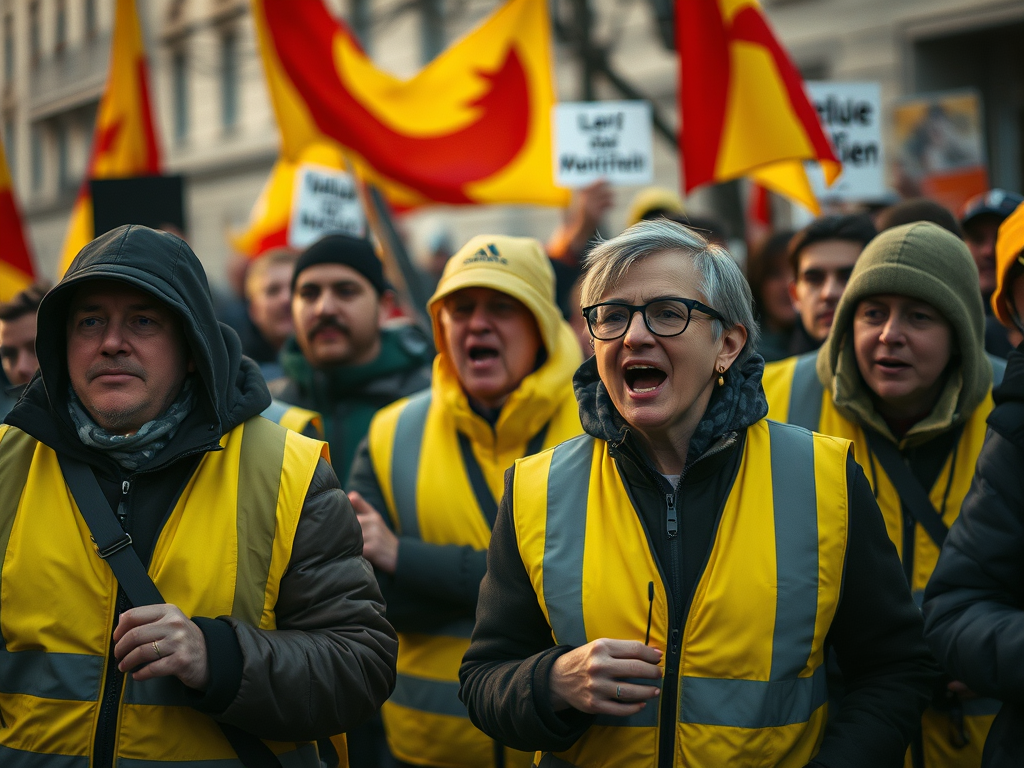
The assassination of Charlie Kirk has sent shockwaves far beyond the United States. What began as a national tragedy is rapidly becoming a global turning point. From Britain to South Korea, millions are taking to the streets — people who say they have been ignored, dismissed, and demonized for decades are now finding their voice.

And the world’s elites are paying attention.

Donald Trump, who has spoken for years about the silent majority, is now seeing those people rally in the open. They see him as their voice, and they refuse to be silenced after Kirk’s death. They march not out of hatred, but out of love — for their own countries, their people, and their futures.

Elon Musk and Tommy Robinson Call Out Britain’s Decline

In a live broadcast, Tommy Robinson spoke on stage while Elon Musk joined via satellite. Musk warned that Britain is experiencing “a slow but rapidly accelerating erosion” driven by mass uncontrolled migration and government failure.

“The government has failed in its fundamental duty to protect its own citizens, including children,” Musk said. “This has to stop. There must be massive government reform, and the people need to be in charge — not an uncaring bureaucracy.”

Robinson questioned Musk about his commitment to free speech. Musk replied that without it, “you can’t get to the truth. Democracy only works when people are free to debate.”

“A Government Against the People”

Both Musk and Robinson argued that Britain’s government no longer represents the interests of its people. “It has become a government against the people — not for the people,” Musk said.

They condemned censorship, political persecution, and the culture of fear that silences citizens. They pointed to how many on the left celebrate violence and openly cheered Kirk’s murder. “Whether you choose violence or not, violence is coming to you,” Musk warned. “You either fight back, or you die.”

The Woke Culture Debate

Robinson also inquired about Musk’s views on the rise of “woke culture” and its impact on innovation. Musk argued that Diversity, Equity, and Inclusion (DEI) policies often reward identity over merit, which he called “super racist, super sexist, and anti-Christian.”

“We should make decisions based on talent, hard work, and integrity,” Musk said. “Not on sex, race, or religion. The woke virus is the opposite of fairness and common sense.”

Media, Migration, and Hidden Agendas

The two went on to accuse Britain’s media of covering up the crisis. “The BBC is complicit in Britain’s destruction,” Musk claimed. “You, the people, are paying for the BBC. And you’re forced to pay for your own destruction.”

They argued that mass migration is used as a political strategy — a way to import new voters to secure left-wing power. Musk called it “a strategy that will succeed if it’s not stopped.”

Technology, Censorship, and the Future

Asked whether platforms like X or AI could give power back to ordinary people, Musk warned that technology alone can’t save democracy. “It depends on the government in charge. A corrupt government will use technology to suppress the people. Britain needs a new government — and it can’t wait four years.”

He called for the dissolution of Parliament and fresh elections. “You have to fight for your future. If not, there won’t be a future,” he said.

Hope Amid Decline

Musk lamented Britain’s decline from a bold, innovative nation into one “stifled by bureaucracy” and regulation. He said leaving the EU was the right move, but Britain has “stayed on EU-style regulations and even made them worse.”

“Civilization is fragile,” Musk concluded. “If the people of Britain take charge and install a government that truly represents them, Britain can have a great future. But we must fight for it.”

“If the people of Britain take charge and ensure there’s a government that represents their interests—and not foreign interests—then Britain has a great future,” Musk said.
“Many British people had lost hope,” Robinson added. “But after today’s scene, you’ve got hope again, Britain. Britain is awake!”

Disclaimer: The views expressed in this article are those of the author and may not reflect those of Shinybull.com. The author has made every effort to ensure the accuracy of the information provided; however, neither Shinybull.com nor the author can guarantee the accuracy of this information. This article is strictly for informational purposes only. It is not a solicitation to make any exchange in precious metal products, commodities, securities, or other financial instruments. Shinybull.com and the author of this article do not accept culpability for losses and/ or damages arising from the use of this publication.

Leave a comment

Filed under Politics

From 9/11 to 10/11

The Assassination of Charlie Kirk and Its Impact on America

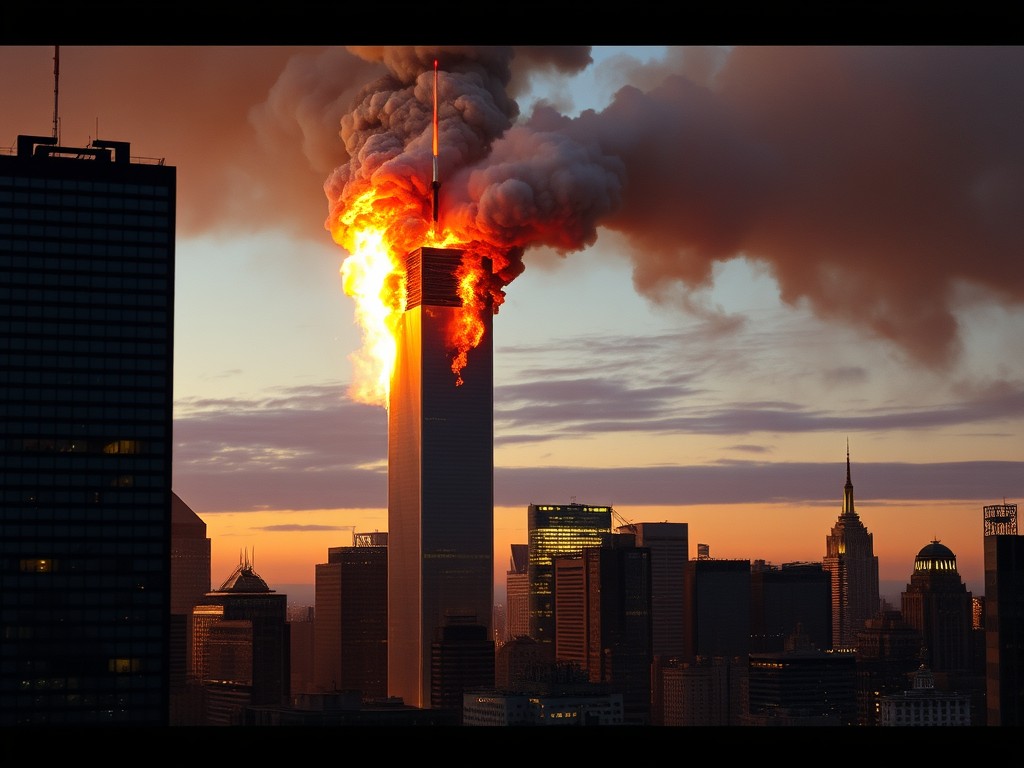
Many people remember September 11, 2001 — a day that changed America forever. Now, September 10, 2025, will also be etched into history.

On that day, a sniper shot and killed Charlie Kirk in Utah. But this was not only an attack on a man — it was an attack on the very foundations of the United States: democracy, freedom of speech, and the core American values that millions cherish.

Former President Donald Trump said in a speech afterward:

“The assassin tried to silence Charlie with a bullet, but he failed. We will ensure that his voice, his message, and his legacy will live on for countless generations.”

Paradoxically, the attempt to silence Kirk has amplified his voice. His message now resonates louder than ever before.

A Pattern of Violence

This is not the first act of political violence against conservative figures.
Donald Trump himself survived an assassination attempt last year. Congressman Steve Scalise was shot. A man armed with a rifle went to Justice Brett Kavanaugh’s home. Rand Paul was violently attacked by a neighbor, breaking his ribs.

Even beyond politics, chaos has escalated: riots in Los Angeles, trans shooters killing children, Jewish people shot outside an embassy, and ICE agents receiving death threats so severe that they wear masks to protect their families. Elon Musk’s car was reportedly firebombed.

Social Media’s Dark Celebration

Perhaps most shocking of all were the reactions online. The Daily Mail reported on videos showing left-wing extremists openly celebrating Kirk’s death. Many said he “deserved to be shot.”

For many Americans, this response was deeply disturbing — not just because of the murder itself, but because of the apparent normalization of hate and violence on social media.

Part of a Tragic American Pattern

Kirk’s name now joins a tragic list in American history: Abraham Lincoln, John F. Kennedy, Robert F. Kennedy, Martin Luther King Jr., and Malcolm X — all assassinated for standing up for their beliefs.

The FBI has stated that the ammunition used in the Kirk assassination was engraved with transgender and antifascist slogans. Utah police noted that the state still has the death penalty, and prosecutors are considering its use in this case.

A Turning Point?

Charlie Kirk was the CEO of Turning Point Action, a powerful voice for conservative youth. His death raises a haunting question:

Will this be a turning point for America — or just another chapter in a growing era of political hatred?

One thing is sure: just as 9/11 changed America, 10/11 will be a date the world will remember.

Disclaimer: The views expressed in this article are those of the author and may not reflect those of Shinybull.com. The author has made every effort to ensure the accuracy of the information provided; however, neither Shinybull.com nor the author can guarantee the accuracy of this information. This article is strictly for informational purposes only. It is not a solicitation to make any exchange in precious metal products, commodities, securities, or other financial instruments. Shinybull.com and the author of this article do not accept culpability for losses and/ or damages arising from the use of this publication.

Leave a comment

Filed under Politics

Óscar Romero: The Voice of the Voiceless

Óscar Arnulfo Romero, the Archbishop of San Salvador, became one of the most important moral voices of the 20th century. Known as “the voice of the voiceless,” he stood against injustice, poverty, and state violence in El Salvador during a time of deep political and social turmoil. His assassination in 1980 shocked the world and transformed him into a global symbol of faith, courage, and human rights.

Early Life and Church Career

Romero was born on August 15, 1917, in Ciudad Barrios, El Salvador. He entered the seminary at an early age and was ordained as a priest in 1942. For decades, Romero was regarded as a conservative and cautious church leader, prioritizing pastoral duties over politics. His appointment as Archbishop of San Salvador in 1977 was welcomed by El Salvador’s ruling elite, who saw him as someone unlikely to challenge the status quo.

Transformation and Advocacy

However, Romero’s outlook changed dramatically after witnessing the growing violence in El Salvador and the suffering of the poor. A pivotal moment came with the assassination of his close friend, Father Rutilio Grande, a Jesuit priest who worked with marginalized rural communities. From then on, Romero became an outspoken critic of human rights abuses, corruption, and the repression carried out by El Salvador’s military-backed government.

Every Sunday, Romero’s sermons were broadcast nationwide by radio. He used them to denounce violence, call for peace, and demand justice for the poor. His words inspired hope among the oppressed but provoked anger among the powerful.

Assassination

On March 24, 1980, Romero was shot and killed while celebrating Mass at a hospital chapel in San Salvador. His assassination, carried out by a death squad linked to the government, marked a turning point in El Salvador’s history. His funeral, attended by hundreds of thousands, was violently disrupted by gunfire and bombs, symbolizing the brutality of the era.

Legacy

Romero’s death did not silence his message. Instead, it amplified it worldwide. He became an enduring symbol of the struggle for justice and human dignity. His example continues to inspire human rights defenders, faith leaders, and activists worldwide.

In 2015, Pope Francis beatified Romero, declaring him a martyr. On October 14, 2018, he was canonized as a saint by the Catholic Church, officially recognized for his commitment to defending the poor and oppressed.

Conclusion

Óscar Arnulfo Romero’s life and death reflect the power of moral courage in the face of oppression. He stood alongside the marginalized when it was most dangerous to do so, and in doing so, became a beacon of hope. More than four decades after his assassination, Romero’s voice still resonates: a call for justice, peace, and unwavering solidarity with the voiceless.

Disclaimer: The views expressed in this article are those of the author and may not reflect those of Shinybull.com. The author has made every effort to ensure the accuracy of the information provided; however, neither Shinybull.com nor the author can guarantee the accuracy of this information. This article is strictly for informational purposes only. It is not a solicitation to make any exchange in precious metal products, commodities, securities, or other financial instruments. Shinybull.com and the author of this article do not accept culpability for losses and/ or damages arising from the use of this publication.

Leave a comment

Filed under Curiosity, Politics

The Global Debt Crisis is an Unseen Time Bomb

When discussions about debt dominate the headlines, the United States is often the central focus. With a debt-to-GDP ratio of 124.3%, it’s easy to understand why. But the U.S. is far from alone in facing a massive fiscal challenge. Other advanced economies are carrying even heavier burdens, and the global implications are both profound and often overlooked.

Japan: The Debt Giant

Japan holds the world’s highest debt-to-GDP ratio at 236.7%. Decades of low growth, heavy public spending, and an aging population have pushed the country into uncharted fiscal waters. While Japan has avoided crisis thanks to strong domestic savings and near-zero interest rates, the sustainability of this model is under constant scrutiny.

Italy: Europe’s Weak Link

Close behind is Italy, with a staggering 135,3% debt-to-GDP ratio. Burdened by structural economic weaknesses, sluggish productivity, and political instability, Italy has long been considered one of the eurozone’s most fragile economies. A sudden shock, whether financial or political, could easily ripple across the European continent.

The United States: A Growing Concern

At 124.3%, U.S. debt levels are higher than at any point since World War II. Unlike Japan, the U.S. relies heavily on international investors to finance its debt. Rising interest rates and political gridlock over fiscal policy only increase the risks. Given the U.S. dollar’s central role in the global financial system, instability in this market could have widespread consequences worldwide.

France and Canada: Silent Strugglers

France, at 113%, and Canada, at 110.8%, are also far above the traditional sustainability threshold (often pegged at around 60% of GDP). Both countries face demographic pressures, high social spending, and the challenge of funding welfare states without stifling economic growth.

Why It’s Unsustainable

High debt levels limit governments’ flexibility. In times of crisis, whether another pandemic, a war, or a financial meltdown, nations with already bloated balance sheets have little room to maneuver. Debt servicing costs also divert resources away from critical areas, such as healthcare, education, and infrastructure.

A Global Time Bomb

The global debt problem isn’t isolated. The IMF warns that mounting debt in advanced economies could spill over into emerging markets, sparking instability across the financial system. With inflation still high and interest rates rising, debt servicing costs are growing rapidly. Unless meaningful reforms are enacted, the world may be heading toward a reckoning.

Conclusion

It’s easy to point fingers at the U.S., but the debt problem is truly a global issue. Japan, Italy, France, and Canada. All highly developed nations are carrying unsustainable debt loads that could destabilize the global economy. For now, markets remain calm, but history has shown that debt crises often strike suddenly and with devastating force. Without coordinated efforts to rein in borrowing and restore fiscal discipline, the next major crisis may already be quietly brewing.

Disclaimer: The views expressed in this article are those of the author and may not reflect those of Shinybull.com. The author has made every effort to ensure the accuracy of the information provided; however, neither Shinybull.com nor the author can guarantee the accuracy of this information. This article is strictly for informational purposes only. It is not a solicitation to make any exchange in precious metal products, commodities, securities, or other financial instruments. Shinybull.com and the author of this article do not accept culpability for losses and/ or damages arising from the use of this publication.

Leave a comment

Filed under Emerging markets, Politics