
Tag Archives: U.S

Germany enjoyed the so-called «Wirtschaftswunder,» (economic miracle) but that has come to an end

For decades, Germany was synonymous with economic strength. Ever since World War II, it enjoyed the so-called «Wirtschaftswunder,» or economic miracle that followed the postwar recovery, which blessed Germany with almost four decades of high growth.

High growth thanks to German engineering, and manufacturing industries. The economic growth eventually slowed down, but Germany had established itself as the industrial heart of Europe, fueled by exports of products with large margins like cars machinery, and chemicals.

Companies like Volkswagen, BMW, Siemens, and BASF became global leaders with German products seen as pinnacles of quality and reliability. As a result of all that, people in Germany enjoyed high salaries, and high quality of life.

Their economic model was built on a few key pillars; strong manufacturing base. A highly skilled workforce, commitment to quality, and very strong exports. But this has come to an end. Last year, Germany was the only G-7 economy to shrink. It`s also the group`s slowest-growing economy with a growth to GDP at -0.1%.

It goes up and down. Down -0,5, up 0,1, down, 0,1, up 0,2, down -0,4, up 0,2, and then down again to -0,1.

Picture: Old economy vs New economies

Germany, long considered the economic engine of Europe, is currently facing significant challenges, leading to concerns that its economy may be stalling or «broken.» What in the world is happening in Germany, and what are the key factors that are affecting their economy right now?

It`s an energy crisis. Germany was dependent on Russian Gas. Germany relied heavily on Russian natural gas before the war in Ukraine. The subsequent sanctions and supply disruptions have led to a severe energy crisis, pushing up prices and harming energy-intensive industries like chemicals, manufacturing, and heavy machinery.

They also have a green transition challenge. Germany is trying to transition to renewable energy, but the shift away from nuclear and coal has left the country vulnerable during this energy crunch. This has increased costs for businesses and households, causing slower growth.

Germany`s economy is heavily reliant on exports, especially in industries like automotive and machinery. Global demand has softened, and supply chain disruptions from the COVID-19 pandemic continue to affect production.

The German auto industry, in particular, has been slow to transition to electric vehicles compared to competitors like Tesla, and Chinese manufacturers. This lag is putting pressure on a key pillar of the country`s economy.

Germany`s economy narrowly avoided recession in early 2023, but growth remains sluggish. High inflation and low consumer spending have contributed to weak economic activity. The combination of rising wages, energy prices, and inflationary pressures has increased production costs, leading to reduced profitability for businesses.

On top of that, you have an aging population. Germany`s population is aging rapidly, and the working-age population is shrinking. This is leading to labor shortages in key sectors and higher social welfare costs, creating long-term economic challenges.

In addition; they have migration struggles. While the country has relied on immigration to fill gaps in the labor market, recent shifts in public sentiment and policy restrictions have made it harder to sustain this approach.

Their biggest companies have been there for about 100 years, but there is a shift in the market. Germany has been criticized for lagging behind in digitalization and innovation, particularly in fields like AI and tech start-ups. This is reducing its competitiveness in the global economy.

Another problem is Germany`s heavily regulated business environment and complex bureaucracy. This can stifle innovation and make it harder for new businesses to scale up.

Like many others, Germany has trade challenges and the global demand is weak. As the global economy faces uncertainty, especially with China`s slowing growth, demand for Germany`s exports has dropped.

Germany`s economic model has long been dependent on strong export markets, so this is a major issue!

At least; EU Tension. Economic divergence within the European Union, especially between northern, and southern European economies, adds another layer of complexity, affecting Germany`s trade relations within the bloc.

It all started in France. Yellow Vest protesters went to the streets for months and years and protested against higher oil prices, electricity bills, and expensive toll stations. Their standard of living was shrinking.

This happened at a time when Donald Trump was cutting taxes and made the best economy in the U.S. ever. People in France asked for a Trump-like figure, but everything has gone straight up since then, and now we see severe problems in Germany and other places.

Picture: Yellow Vest protesters against high oil prices and low standard of living

This is happening at a time were productivity in the U.S. is great. Germany`s productivity is down -0,1%, while the productivity in the U.S. is up 3%. They are the best. They are at the top of the list! Even better than China! And the stock market goes up. Wow!

Germany`s economy is not «broken,» but it is facing severe challenges. Energy costs, inflation, global demand weakness, and structural issues in key industries like manufacturing are causing slower growth.

Long-term concerns like demographic changes and lagging investment in innovation also threaten future competitiveness. While these challenges are significant, Germany has strong economic fundamentals and could recover with strategic reforms and investments.

However, the current climate is tough, and the country is at a critical point in addressing these issues. Germany is in trouble.

Disclaimer: The views expressed in this article are those of the author and may not reflect those of Shinybull.com. The author has made every effort to ensure the accuracy of the information provided; however, neither Shinybull.com nor the author can guarantee such accuracy. This article is strictly for informational purposes only. It is not a solicitation to make any exchange in precious metal products, commodities, securities, or other financial instruments. Shinybull.com and the author of this article do not accept culpability for losses and/ or damages arising from the use of this publication.

Leave a comment

Filed under Politics

Euro Area`s main import partners are the United Kingdom with 10% and China with 12% of total imports

A no-deal Brexit is not only bad for the United Kingdom but also for the Euro Area. They will both loose on it and that`s why a win-win should be a goal for them both. Populist-Italy is already into a recession, and other Euro Area-countries can follow.

Main imports in Euro Area are energy, manufactured goods and machinery. Main import partners are China with 12 percent of total imports and United Kingdom with 10 percent. Imports rose 1,9 percent in December 2018, while exports fell 2,5 percent in the same period.

According to Comtrade`s database, United Kingdom take most of their imports from Germany. 14 percent of their import comes from Germany and a no-deal Brexit means less German cars sold in the U.K. Total value of German imports came in at $89.23B in 2017.

9,5 percent of the import comes from China and 9,4 percent comes from the United States. Both of them outside of the Euro Area. The value of the import from China was 59,78B, and 59,75B from the U.S in 2017.

When it comes to export, the U.K`s biggest trading country is the United States which account for 14 percent. Second is Germany with 11 percent with France on third with 7,6 percent. Total value of exports to the U.S is $59,09B. Germany; $46,64B.

As you can see, the U.K are in balance with the U.S but when it comes to Germany they buy twice as much as the sell to the Germans. In other words they have a trade deficit with Germany. A no-deal Brexit can end up with less BMW and WV cars and more Tesla`s in the U.K.

German factories will lose money and market shares while other brands and countries will prosper. We will face a radical shift in the trade balance.

56 percent of the U.K exports goes to Europe while 40 percent goes to Asia and America. The economy is slowing down and the British economy grew by 0,2 percent on quarter in the three months to December last year. In comparison; the U.S economy advanced an annualized 3,4 percent.

The U.K trade deficit decreased to GBP 0,32 billion in December of 2018. Imports declined 1,6 percent to GBP 55,85 billion and exports fell at a slower 1 percent to GBP 52,62 billion. Balance of trade reached an all time low of -5749 GBP million in October of 2013.

Disclaimer: The views expressed in this article are those of the author and may not reflect those of Shiny bull. The author has made every effort to ensure accuracy of information provided; however, neither Shiny bull nor the author can guarantee such accuracy. This article is strictly for informational purposes only. It is not a solicitation to make any exchange in precious metal products, commodities, securities or other financial instruments. Shiny bull and the author of this article do not accept culpability for losses and/ or damages arising from the use of this publication.
 

Leave a comment

Filed under Politics, Stock market, Stocks

President Emmanual Macron criticized President Donald Trump for being a Nationalist but should take a lesson from him

French President Emmanuel Macron criticized the U.S President Donald Trump a few weeks ago. Macron said Trump was a Nationalist, and Mainstream Media (MSM) followed up to say that Hitler was also a Nationalist. Wow, what a comparison.

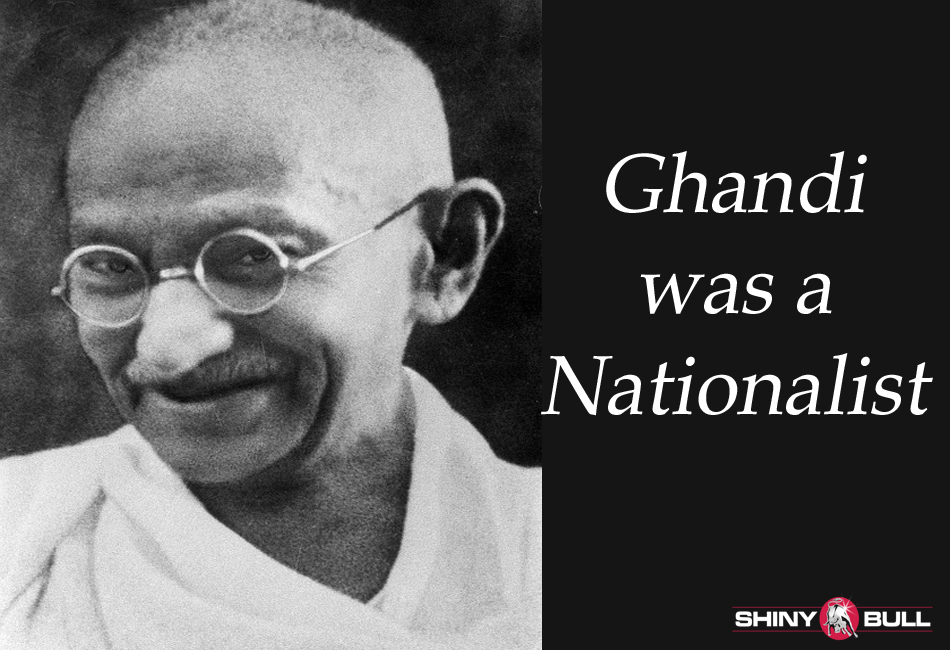
What journalists in the MSM is not telling people is that even Mahatma Ghandi was a Nationalist. The National Movement in India and the role of Mahatma Ghandi and Non-Violence is an example. Employing nonviolent nationalist movements as his weapon, Ghandii stirred Indian men and woman to «fight» for independence without shedding blood. But Ghandi was also a populist. Just like Trump.

Ghandi considered himself one, and his mission was primarily the establishment of a free, independent, culturally distinct Indian nation. He used to say that “nonviolent nationalism is a necessary condition of corporate or civilized life.” (As opposed to violent nationalism).

In the book “Autobigraphy of a Yogi” the writer, Paramahansa Yogananda, quotes Ghandi`s own words on nationalism:

“I call myself a nationalist but my natioanlism is as wide as the universe; it embraces all nations. My nationalism includes the prosperity of all nations. I do not want my India to raise on from the ashes of other nations. I do not want India to ever exploit any human. I want a strong India able to transfuse its strength to other nations.Today, none of the European countries does this; they do not transfer power to other nations.”

Ghandi was also a populist. Who know that? Populist rule is bad for democracy, but despite that, we can see that populists are being voted into office in country after country. Narendra Modi win elections when the institutionalized ties between non-populist parties and voters decay.

But there is a big difference between the populism we see outside of the U.S than inside. Trumps populism is good populism while many of the other populists are bad. Trumps plan is “America First,” and that`s why he is cutting taxes, made a lot of reforms and negotiated better trade deals.

There is no doubt that European Union is important, but at what cost? Take a look at President Macron. The man who talked about Trump`s Nationalism in his speech while MSM followed up with Nazi stories.

But who is in real trouble here? Rebels in Paris blasts Mr Macron for his gas tax hikes. The opposite of what Trump did. He cuted the taxes and the U.S economy is booming. The U.S unemployment is low while it remain high in France.

This is not the fist time I`m writing about the protesters in France. This is something that has been going on for years and decades. France need to do something to make a change, but do Macron have something to learn from Trump? It remains to see.

But it seems like Macron is doing the opposite of Trump who are a Nationalist and a Patriot. Trumpis doing what he can to protect his own citizens. Its all about "America First" and he wants to Make America Great again. Whats wrong with that?

President Macron is a part of the European Union which is driven by faceless bureaucrats. A collaboration the United Kingdom wants to leave. A collaboration that communist Jeremy Corbyn want to join again. Done by a second referendum.

But Paris rioters steal police rifle and torch cars while they are protesting fuel taxes, but the demonstrations are also an indication of growing animosity toward Macron. President Trump is on his own people`s side but President Macron seems to be against his own people with bad decisions.

People in France believe that Macron is serving the interest of the EU and not the French workers. A President should represent the people, “We the People,” but the French protest movement, known as jilets jaunes (yellow vests), are protesting against its own President and the state of France`s economy as well.

President Macrons popularity is low and will be so for quite some time, because he has given no indication he will bend to the peoples demand. This will give Macron`s political competitors like Marine Le Pen a huge advantage.

Disclaimer: The views expressed in this article are those of the author and may not reflect those of Shiny bull. The author has made every effort to ensure accuracy of information provided; however, neither Shiny bull nor the author can guarantee such accuracy. This article is strictly for informational purposes only. It is not a solicitation to make any exchange in precious metal products, commodities, securities or other financial instruments. Shiny bull and the author of this article do not accept culpability for losses and/ or damages arising from the use of this publication.


Leave a comment

Filed under Politics