
Tag Archives: Spotify

When State Overreach Meets Economic Reality: Lessons from Venezuela to Scandinavia

Recently, reports have emerged that former Venezuelan President Nicolás Maduro was captured by the Trump administration. While controversial from an international law perspective, this event highlights a deeper truth: the people of Venezuela were dissatisfied with their leadership, and Maduro’s governance clearly failed to meet the country’s needs.

Venezuela was once one of the richest countries in Latin America, largely due to its oil wealth. In the mid-20th century, Venezuela enjoyed high per capita income, robust infrastructure, and a thriving economy. But over time, the state increasingly intervened in the economy. Hugo Chávez and later Maduro implemented policies that undermined private enterprise, replaced skilled professionals in the oil industry with political appointees, and took control of private businesses.

The result was a collapse in production, hyperinflation, and widespread shortages. Here we see the central lesson: state overreach and mismanagement can destroy even the richest economies if it replaces incentive-driven entrepreneurship with central planning.

A striking historical parallel can be found in Sweden before 1990. Sweden was among the wealthiest countries in the world, but extreme taxes and heavy regulation prompted many successful entrepreneurs, like Ingvar Kamprad of IKEA and H&M’s founders, to relocate abroad. The country faced stagnant productivity and capital flight. By the early 1990s, Sweden was forced to liberalize its economy—cutting taxes, promoting competition, and allowing private enterprise to flourish again. Today, Sweden thrives because it balanced state welfare with market freedom.

This situation is not unique to Sweden. Norway now faces a similar challenge, as many wealthy individuals relocate to countries like Switzerland, seeking lower taxes and more favorable conditions for capital and innovation. The lesson is clear: overburdening taxes and excessive state control can drive away the very people and resources that sustain growth.

Beyond Scandinavia, China illustrates a different form of state intervention. While nominally communist, China has prospered because it maintained market incentives and became the “factory of the world.” Similarly, East Germany under the Cold War lacked both natural resources and market-driven productivity. Even with state support from the Soviet Union, the system could not generate sustainable wealth. Had East Germany possessed major natural resources or been a manufacturing powerhouse, it might have prolonged stability, but the lack of institutional and economic freedom would still have limited growth.

The pattern is consistent across history: states cannot create wealth—only individuals and businesses can. The state can protect property, enforce contracts, and provide social safety nets, but replacing entrepreneurship and market signals with centralized control often leads to stagnation, collapse, or both. A striking modern example is Spotify, a private, market-driven company founded in 2006.

By 2024, Spotify generated over €15.6 billion in revenue and reached profitability for the first time, with more than 675 million active users worldwide. Impressively, Spotify’s market capitalization has topped €100 billion — rivaling the valuation of Equinor, Norway’s state-owned energy giant. This contrast highlights a central economic truth: value creation tends to emerge where innovation and market forces are free to operate, not solely where the state dominates. Sweden’s reform after 1990, China’s pragmatic blend of central authority and market incentives, and Venezuela’s tragedy all confirm this principle.

As the world grapples with economic uncertainty, demographic changes, and resource limitations, the key takeaway is simple: growth and innovation thrive when incentives are clear, markets function, and the state sets the rules rather than dictates the outcomes. Heavy-handed state intervention may appear morally satisfying, but history demonstrates that it usually comes at the cost of long-term prosperity.

Disclaimer: The views expressed in this article are those of the author and may not reflect those of Shinybull.com. The author has made every effort to ensure the accuracy of the information provided; however, neither Shinybull.com nor the author can guarantee the accuracy of this information. This article is strictly for informational purposes only. It is not a solicitation to make any exchange in precious metal products, commodities, securities, or other financial instruments. Shinybull.com and the author of this article do not accept culpability for losses and/ or damages arising from the use of this publication.

Leave a comment

Filed under Politics

On February 28th 2018, Spotify filed for direct listing on the New York Stock Exchange

Spotify is a music-streaming service that changed the music industry. The Swedish company was founded in April 2006, and on 7 October this year, the company has been on the market in ten years. It is developed by startup Spotify AB in Stockholm and now they want to sell shares to investors.

According to Spotify`s filing yesterday, the opening public price of its ordinary shares on the NYSE will be determined by buy and sell orders collected on the day of the listing. CEO Daniel Ek owns 9 percent of the company. Martin Lorentzon has 12 percent, but they will have full control over the company. Together they have 80 percent of the voting rights.

Spotify has so far been a bad business, but they changed the music industry with its new business model, and the industry`s revenue are growing for the first time since the CD was their «milk cow.» Spotify have 140 million users and 70 million are paying for their service.

Their revenue in 2015 was $2,18 billion. According to the filing, Spotify paid about 88 cents for every dollar in revenue in fees to record labels in 2015. It seems like it goes in the right direction for the company as those costs has declined to about 79 cents.

On top of that, Spotify has stopped burning cash and their free cash-flow margin is 2,7 percent. At the end of last year, the company had about 1,5 billion Euros in cash, cash equivalents and short-term investments.

Spotify as a company doesnt sell stocks in the non-IPO, but their stockholders will try to sell their shares to the public stockholders. According to Spotifys not-an-IPO filing, their value was as low as about $6 billion and as high as $23 billion in private stock transactions since the start of 2017.

You can ask yourself why they are doing it this way instead of raising money from a conventional IPO. Spotify`s existing shareholders can sell their shares to public stockholders, and it would be a win-win if record labels could buy a stake in the company. They will help each other.

Spotify operates under a freemium business model which means basic services are free, while additional features aer offered via paid subscriptions. Spotify makes its revenues by selling premium steaming subscriptions to users and advertising placements to third parties.

In 2013, the company launched a new website called «Spotify for Artists,» and they pay copyright holders royalties for streamed music. Spotify for Artists states that the company does not have a fixed per-play rate, instead considers factors such as the users home country and the individual artists royalty rate.

Rights holders received an average per-play payout between $.006 and $.0084. Spotify encourages people to pay for music, and their subscriptions are their main revenue source.

Disclaimer: The views expressed in this article are those of the author and may not reflect those of Shiny bull. The author has made every effort to ensure accuracy of information provided; however, neither Shiny bull nor the author can guarantee such accuracy. This article is strictly for informational purposes only. It is not a solicitation to make any exchange in precious metal products, commodities, securities or other financial instruments. Shiny bull and the author of this article do not accept culpability for losses and/ or damages arising from the use of this publication.

———————————————–advertisement——————————————————-

Polo Shirt

High quality Polo shirt with Shinybull logo. This version is made from breathable 100% cotton. Short sleeves and ribbed armbands.

$125.00

Polo Shirt

High quality Polo shirt with Shinybull logo. This version is made from breathable 100% cotton. Short sleeves and ribbed armbands.

$125.00

Leave a comment

Filed under Stocks

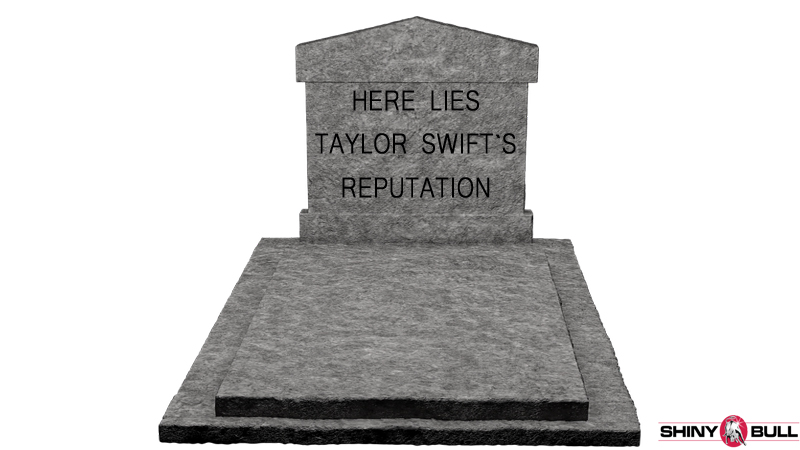
Taylor Swift is out with a new album called “Reputation”, but it won`t be available on Spotify or Apple Music

Taylor Swift is out with a new album called «Reputation», but it won`t be available on Spotify or Apple Music. Not so far. This is the long-awaited sixth album with singles like «Look what you made me do», «Gorgeous» and «Ready for it.»

So, what are fans gonna do if they want the new album? The new album will be available at Walmart, Target, iTunes store and her own official store. Streaming will be possible at the iHeart Radio All Access Powered by Napster app.

Taylor Swift is not only a great artist, but also a smart business woman. She had previously pulled her own music from streaming services like Spotify in protest against low royalty payments.

She protested before the release of the new Apple Music streaming service in 2015, when she threatened to withhold her music from the service unless artist were paid fairly for their own music.

Adele did the same when she released her album «25». She waited for about seven months to release it to streaming services, and she can afford to do it like that. So can Taylor Swift. They are both famous enough to do it.

Spotify is probably years away from profitability. Last month they reported better deals with music labels with a 40% growth in revenue but they are still losing money. Investors estimate the value of Spotify to be about $16 billion, which is up from $13 billion earlier this year.

Spotify`s revenue for the first six months of the year is $2,2 billion. Gross margin is 22%, which is up from 15% in all of 2016. Operating loss is between 100 million and 200 million euros ($118,4 million and $236,8 million), according to the Information.

Spotify has about 140 million active users and more than 50 million are paid subscribers.

Taylor Swift`s new songs can all be found at YouTube. Not only the music but also the videos.

Disclaimer: The views expressed in this article are those of the author and may not reflect those of Shiny bull. The author has made every effort to ensure accuracy of information provided; however, neither Shiny bull nor the author can guarantee such accuracy. This article is strictly for informational purposes only. It is not a solicitation to make any exchange in precious metal products, commodities, securities or other financial instruments. Shiny bull and the author of this article do not accept culpability for losses and/ or damages arising from the use of this publication.

———————————————–advertisement——————————————————-

Polo Shirt

High quality Polo shirt with Shinybull logo. This version is made from breathable 100% cotton. Short sleeves and ribbed armbands.

$125.00

Polo Shirt

High quality Polo shirt with Shinybull logo. This version is made from breathable 100% cotton. Short sleeves and ribbed armbands.

$125.00

Leave a comment

Filed under Uncategorized

Apple Music appeared to set a goal of 100 million paying customers

Apple Music has been growing fast in a very short period of time, but they are far away from its biggest competitor Spotify. This summer, Apple has been on the market in only two years, and have about 20 million subscribers.

This is pretty impressive and it makes Apple Music the second-largest on-demand streaming music site in the world right now. Competitors like Napster, Tidal and Deezer are far away from both Apple Music and Spotify.


Earlier this month, Spotify announced that it has reached a new milestone, which is a total of 50 million paying subscribers. That`s up 10 million since September last year.

This is actually not the whole picture right now, because the Swedish Streaming firm has over 100 million users were many of them are listening to the ad-supported free tier which is not possible at Apple Music.

The competition is hard and Spotify and Apple Music is far ahead of a handful of other competitors in a very difficult industry. Apple Music`s tactic using exclusives to lure new customers has not been “music in the ears” for Spotify, and they are both testing new features and subscription models to get new customers.

Apple Music plans to use original TV programming to entice subscribers, debuting shows like Carpool Karaoke on Apple Music.

Spotify has started testing a lossless version of its streaming service to attract audiophiles.

The popularity of streaming is growing and so are the number of users in the streaming music space. Apple Music appeared to set a goal of 100 million paying customers. Spotify need to double its user-base to reach that goal and will probably hit that milestone faster than Apple Music.


Disclaimer: The views expressed in this article are those of the author and may not reflect those of Shiny bull. The author has made every effort to ensure accuracy of information provided; however, neither Shiny bull nor the author can guarantee such accuracy. This article is strictly for informational purposes only. It is not a solicitation to make any exchange in precious metal products, commodities, securities or other financial instruments. Shiny bull and the author of this article do not accept culpability for losses and/ or damages arising from the use of this publication.

Leave a comment

Filed under Uncategorized

Facebook are dealing with the music industry

Facebook has a lot of DAU`s and more and more people spend time watching videos. Facebook is a young company and so far they already have billions of video views. But Mark Zuckerberg want to prosper from this industry.

There is no doubt that YouTube is the most popular video-sharing company in the world. Many artist has started their carriere at YouTube and one of them is Justin Bieber. In 2016, YouTube gave the music industry $1 billion in ad revenue, and Facebook wants to join.


ftv


Streaming was a game changer on how media is bought. It changed how it`s consumed. It also changed who profits from it, and of course how much they all made in this industry. For the first time in 20 years, the music industry saw significant revenue growth in 2015.

The revenue from streaming is $2,9 billion world-wide, and revenue from video on demand rose almost 9% in 2015, and music clips can move about $50 – $70 billion from TV industry.

Facebook has nearly 2 billion users and still a growing advertising business, and a deal with the music industry can be a win-win agreement, which means billions in revenue from new sales for the music industry.

The interest in videos is growing and Facebook want to prosper from that, and that’s why they are so interested in music rights. Facebook moved billions in ad revenue from print and now many online firms have targeted TV.

Facebook are not alone on the market and they need to share some of the market with Twitter and Snapchat, but the biggest of them all is YouTube which is Faecbooks main rival. Googles YouTube channel said music is one of the most popular types of videos on their on-demand service.

TV networks and News organizations are experimenting with Facebook, just like they did with YouTube and this will continue. This is interesting because Facebook is big.

Thanks to streaming, the music industry is growing again and that is because of the paid streaming services from Apple and Spotify.

Facebook will probaby sign a deal with the music industry before the summer this year.


trump100_b


Disclaimer: The views expressed in this article are those of the author and may not reflect those of Shiny bull. The author has made every effort to ensure accuracy of information provided; however, neither Shiny bull nor the author can guarantee such accuracy. This article is strictly for informational purposes only. It is not a solicitation to make any exchange in precious metal products, commodities, securities or other financial instruments. Shiny bull and the author of this article do not accept culpability for losses and/ or damages arising from the use of this publication.
Leave a comment

Filed under Stocks