Tag Archives: Russia

Diplomacy or Weapons as the Way to Peace?

“Every war begins with the illusion of victory. Every peace begins with the courage of dialogue. Which will we choose?”

History has already shown us the price of arrogance. Twice in the last century, the world descended into total war because nations believed they had no choice but to fight and that they had to win. Today, as leaders repeat the same words, we stand once again at the edge of disaster.

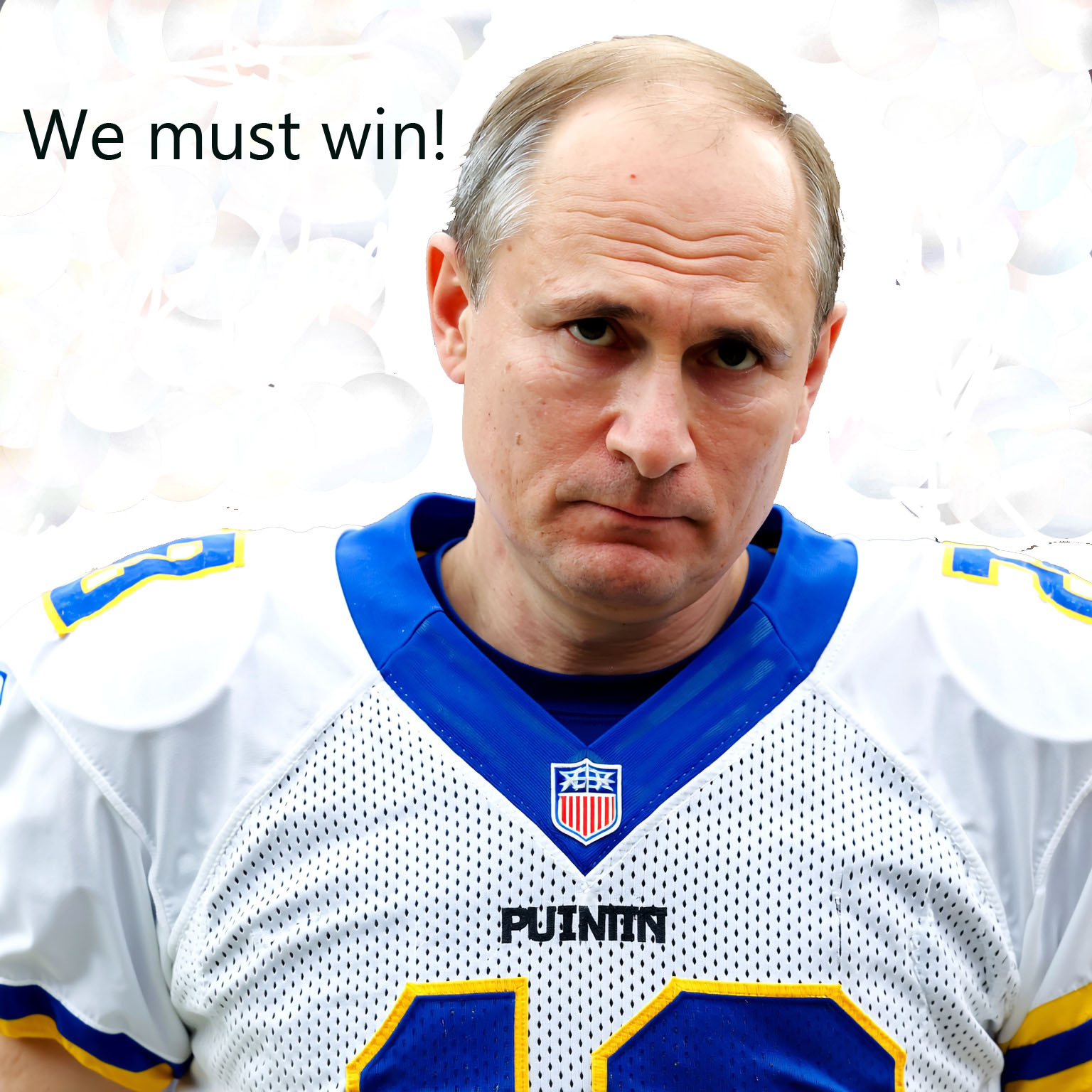
The world has already witnessed two devastating global conflicts — the First and Second World Wars. Now, many fear that we stand on the brink of a Third. The war in Ukraine rages on, while violence flares in Israel and Gaza. What is striking is that leaders on all sides declare that they must win. Even NATO’s former Secretary General Jens Stoltenberg has insisted that “weapons are the way to peace.”

But have we truly learned nothing from history?

After the First World War, nations attempted to chart a new course. The Treaty of Versailles of 1919 and the creation of the League of Nations were intended to establish an international order in which diplomacy, rather than war, would resolve conflicts. The idea was collective security: dialogue, negotiation, and the prevention of another catastrophic war.

And yet, within two decades, the world was plunged into an even deadlier conflict. The League of Nations failed because nationalism, greed, and great-power rivalry proved stronger than the will to compromise. Diplomacy was drowned out by ambition, unresolved grievances, and economic instability.

It feels eerily similar today. We see frozen conflicts, festering grievances, and leaders proclaiming that victory — and only victory — is the only acceptable outcome. But as history shows, not everyone can win.

Think of a football match: two teams, both determined to be victorious. Only one side can claim the win after 90 minutes. But wars do not have a clock. Wars end only when destruction, exhaustion, or overwhelming force brings them to a halt. In the past, that sometimes meant entire armies fighting to the last man. In the 20th century, it meant the atomic bomb. It was not diplomacy that ended the Second World War — it was unprecedented violence.

This raises an unsettling truth: humans often respond more to fear than to reason. Diplomacy, without urgency, is easily dismissed. But when fear peaks — when cities are destroyed, when civilians suffer, when nuclear annihilation looms — only then do leaders suddenly discover the language of negotiation.

If history repeats itself, then humanity may once again stumble toward self-destruction. The tragic irony is that while weapons may bring silence to the battlefield, they rarely bring true peace. Peace, lasting peace, requires the courage to pursue diplomacy before fear takes control.

Because if “weapons are the way to peace,” we may find that peace comes only after there is nothing left to save.

Fear, it seems, is the actual driver of humanity. Diplomacy is too often dismissed until it is too late. And when diplomacy fails, fear and destruction rule.

History is clear: bombs may end wars, but they do not prevent them from happening. Dialogue does.

Diplomacy is not a sign of weakness – it is a sign of wisdom. If history teaches us anything, it is this: bombs can end wars, but only dialogue can prevent them. The choice is ours, and the clock is ticking.

Disclaimer: The views expressed in this article are those of the author and may not reflect those of Shinybull.com. The author has made every effort to ensure the accuracy of the information provided; however, neither Shinybull.com nor the author can guarantee the accuracy of this information. This article is strictly for informational purposes only. It is not a solicitation to make any exchange in precious metal products, commodities, securities, or other financial instruments. Shinybull.com and the author of this article do not accept culpability for losses and/ or damages arising from the use of this publication.

Leave a comment

Filed under Politics

Vladimir Putin`s 80th Anniversary Victory Day Speech

President of Russia, Supreme Commander-in-Chief, Vladimir Putin, attended a military parade marking the 80th anniversary of Victory in the Great Patriotic War of 1941-1945.

Before the parade, the President welcomed the leaders of foreign countries to the Kremlin, who had come to Moscow for the Victory Day celebrations.

The parade began with a march of the banner group bringing the national flag of Russia and the Victory Banner into Red Square.

The marching column on Red Square included 55 ceremonial units of over 11,500 service personnel, including over 1,500 personnel involved in the special military operation. Military contingents from Azerbaijan, Belarus, Kazakhstan, Kyrgyzstan, Tajikistan, Turkmenistan, Uzbekistan, Vietnam, Egypt, China, Laos, Mongolia, and Myanmar also took part in the Victory Parade.

The parade concluded with the renowned Kubinka Diamond formation of Su-30 and MiG-29 fighter jets from the Russkiye Vityazi (Russian Knights) and Strizhi (Swifts) aerobatic teams. Closing the flyover, Su-25 attack aircraft painted the sky in the colours of the Russian national flag.

Here is the speech Vladimir Putin had today:

President of Russia Vladimir Putin: Citizens of Russia,

Veterans, guests,

Comrade soldiers and sailors, sergeants and sergeant majors, midshipmen and warrant officers,

Comrade officers, generals and admirals,

I congratulate you on the 80th anniversary of Victory in the Great Patriotic War!

Today, we are all united by the feelings of joy and grief, pride and gratitude, and admiration for the generation that crushed Nazism and won freedom and peace for all humanity at the cost of millions of lives.

We faithfully preserve the memory of those historic, glorious events. As the heirs of the victors, today we celebrate Victory Day as the most important holiday for the country, which the entire nation, each family, each of us holds dear.

Our fathers, grandfathers and great-grandfathers saved the Fatherland. And they bequeathed us to defend the Motherland, to stay united and firmly defend our national interests, our thousand-year history, culture and traditional values – everything that is dear to us, that is sacred to us.

We remember the lessons of World War II and will never agree with the distortion of those events or attempts to justify the murderers and slander the true victors.

Our duty is to defend the honour of the Red Army soldiers and commanders, and the heroism of fighters of different ethnic backgrounds who will forever remain Russian soldiers in world history.

Russia has been and will continue to be an indestructible obstacle to Nazism, Russophobia and anti-Semitism, and will stand in the way of the violence perpetrated by the champions of these aggressive and destructive ideas.

Truth and justice are on our side. The whole of Russia, our society and all people support the participants in the special military operation. We are proud of their courage and spirit, and their steely determination that has always brought us victory.

Friends,

The Soviet Union bore the brunt of the enemy’s most savage and relentless assaults. Millions of people, once devoted solely to peaceful labour, took up arms and stood firm to the death on every hill, bridgehead, and defensive line. The outcome of the Second World War was determined by decisive victories in major battles of Moscow and Stalingrad, on the Kursk Bulge and the Dnieper River, by the courage of the defenders of Belarus, who were the first to face the invader, by staunch resistance at the Brest Fortress and in Mogilev, Odessa, Sevastopol, Murmansk, Tula and Smolensk, by the heroism of the residents of besieged Leningrad, by the bravery of all those who fought on the front lines, in partisan units, and in the underground resistance, as well as by the selfless efforts of those who evacuated plants and factories under enemy fire, and who worked on the home front, giving everything they had, working to the limits of their ability.

The Nazis’ plans to conquer the Soviet Union were shattered by the unshakable unity of the nation. The heroism of the Soviet people was common, and every republic shouldered the shared, immense burden of war.

The contribution of the peoples of Central Asia and the South Caucasus was immense. From these regions came a steady flow of trains delivering everything the front needed. Hospitals were established, and hundreds of thousands of evacuees found a second home there. They were offered shelter, food, and heartfelt compassion.

We honour every veteran of the Great Patriotic War and bow our heads in remembrance of all who gave their lives for Victory, the sons and daughters, fathers and mothers, grandfathers and great-grandfathers, husbands and wives, brothers and sisters, loved ones, and friends.

We bow our heads before our fallen comrades-in-arms who laid down their lives as heroes in a righteous battle for Russia.

Let us now observe a moment of silence.

(A moment of silence.)

Friends,

Nearly 80 percent of the world’s population was drawn into the fiery orbit of World War II.

The complete defeat of Nazi Germany, militarist Japan and their satellites around the world was achieved through the combined efforts of the Allied Nations.

We will never forget that the opening of the Second Front in Europe, which took place after the decisive battles in the territory of the Soviet Union, hastened Victory. We highly appreciate the contribution made to our common struggle by the Allied armies, members of the Resistance, the courageous people of China, and all those who fought for a peaceful future.

Friends,

We will continue to look up to our veterans, taking example from their wholehearted love of the Motherland and commitment to defending our homeland and the values of humanism and justice. We will give these traditions and this great heritage the biggest place in our hearts and will pass them on to future generations.

We will always rely on our unity in battle and in peaceful endeavours, in striving for strategic goals and tackling problems for the benefit of Russia and its greatness and prosperity.

Glory to the victorious nation!

Happy holiday!

Happy Victory Day!

Hurrah!

Disclaimer: The views expressed in this article are those of the author and may not reflect those of Shinybull.com. The author has made every effort to ensure the accuracy of the information provided; however, neither Shinybull.com nor the author can guarantee such accuracy. This article is strictly for informational purposes only. It is not a solicitation to make any exchange in precious metal products, commodities, securities, or other financial instruments. Shinybull.com and the author of this article do not accept culpability for losses and/ or damages arising from the use of this publication.
Leave a comment

Filed under Politics

EU, NATO, and PESCO: Allies or Competitors?

Some people love Trump, and some people hate him. 75 million voted for Trump and they are satisfied. Trump and his supporters believe a «golden era» is coming. But people on the other side are scared as hell. They believe that Trump will take the U.S. out of NATO. That doesn`t make sense. What in the world is going on here?

I`m sick and tired of the blame game we see. Legacy Media is blaming Trump for all the wrong things that are going on. And some people believe in it. Europe is building its own defense system, and don`t blame Trump for that.

It can be a huge problem, but it can also be great. But are we friends or foes?

EU, NATO, and PESCO

The European Union’s push to develop its own defense capabilities through initiatives like PESCO (Permanent Structured Cooperation) has sparked discussion over its future relationship with NATO and the United States. While NATO has been the backbone of European security since its founding in 1949, Europe’s focus on an independent military framework reflects a changing security landscape. Although the U.S. and EU share foundational values of freedom and peace, recent defense dynamics raise questions about the stability of this historic alliance.

NATO and the Trump Era: Increased Accountability

During his presidency, Donald Trump pressed NATO members to meet the alliance’s defense spending guideline of 2% of GDP, arguing that the U.S. bore too much of the financial burden for European security. This pressure led to significant increases in European defense budgets and served as a catalyst for Europe’s own defense initiatives. Contrary to fears of Trump wanting to leave NATO, his administration actually reinforced the alliance by pushing members to fulfill their financial commitments. As a result, Europe began preparing for a future where it could play a larger role in its own security.

The Emergence of PESCO: Europe’s Bid for Strategic Autonomy

PESCO represents the EU’s efforts to streamline its defense policies and collaborate more closely on security issues. Established in 2017, PESCO involves 25 EU member states who have agreed to invest, plan, develop, and operate defense capabilities collaboratively. The initiative seeks to address European security needs in a manner complementary to NATO, ensuring that Europe can act independently if required while supporting NATO’s broader objectives.

While some interpret PESCO as a step toward a “European army,” EU leaders have emphasized that the initiative is not intended to replace NATO but to strengthen Europe’s defense posture. The goal of “strategic autonomy” remains complex, as Europe’s leaders debate how to balance independence with their commitment to the NATO alliance.

Complex Relations Between Allies: NATO, PESCO, and the U.S.

The relationship between the EU and the U.S. is marked by shared interests but also significant challenges. Traditionally, both have aligned on security matters through NATO, yet the EU’s pursuit of PESCO hints at a desire for more independent decision-making. In scenarios where U.S. priorities shift toward the Indo-Pacific, Europe’s stronger defense mechanisms could offer the flexibility to address regional security concerns independently, such as issues in North Africa and Eastern Europe.

At the same time, a divergence in priorities, such as differing views on China or the Middle East, could test NATO’s cohesion. NATO’s structure requires a consensus, meaning that conflicting EU and U.S. agendas might hinder unified responses to global crises. Europe’s need for strategic autonomy may strengthen its regional security, but risks duplicating NATO’s efforts without close alignment, raising concerns about potential inefficiencies and gaps in defense.

Russia, Ukraine, and NATO’s Role

The Russian invasion of Ukraine underscored NATO’s role in European security. NATO’s support for Ukraine demonstrates the alliance’s commitment to European stability and its role in deterring aggression on the continent. However, NATO members have been cautious about allowing Ukraine to join as a full member due to the potential escalation with Russia. This ongoing conflict has prompted European nations to reconsider their dependence on U.S. security support, highlighting the importance of a robust European defense capability within PESCO while maintaining NATO’s strategic unity.

Challenges and Opportunities for NATO and EU Cooperation

In an ideal scenario, NATO and PESCO would complement each other, with Europe taking on more regional security responsibilities to balance the alliance. A stronger European defense framework could allow the U.S. to address global priorities while ensuring Europe’s security. However, if cooperation between the EU and NATO falters, their overlapping efforts could result in competition rather than synergy, impacting collective peace and stability.

The rise of cyber threats, climate change, and global health crises underscores the need for close transatlantic coordination. NATO’s historical role has been to unify Western democracies under a shared vision of freedom and peace. As the EU strengthens its defense mechanisms, NATO’s role may evolve, necessitating a recalibrated approach that respects Europe’s pursuit of autonomy while preserving shared security interests.

Conclusion: A Balanced Path Forward

The EU’s defense initiatives through PESCO represent a logical evolution in Europe’s security landscape, reflecting both its commitment to NATO and its desire for greater self-reliance. This development could reinforce NATO by sharing the security burden more equitably. However, maintaining cohesion and avoiding unnecessary duplication is essential. The EU and the U.S. must prioritize open dialogue and collaboration to ensure that NATO and PESCO complement each other, creating a resilient security framework for the modern world.

Disclaimer: The views expressed in this article are those of the author and may not reflect those of Shinybull.com. The author has made every effort to ensure the accuracy of the information provided; however, neither Shinybull.com nor the author can guarantee such accuracy. This article is strictly for informational purposes only. It is not a solicitation to make any exchange in precious metal products, commodities, securities, or other financial instruments. Shinybull.com and the author of this article do not accept culpability for losses and/ or damages arising from the use of this publication.

Leave a comment

Filed under Politics

Germany enjoyed the so-called «Wirtschaftswunder,» (economic miracle) but that has come to an end

For decades, Germany was synonymous with economic strength. Ever since World War II, it enjoyed the so-called «Wirtschaftswunder,» or economic miracle that followed the postwar recovery, which blessed Germany with almost four decades of high growth.

High growth thanks to German engineering, and manufacturing industries. The economic growth eventually slowed down, but Germany had established itself as the industrial heart of Europe, fueled by exports of products with large margins like cars machinery, and chemicals.

Companies like Volkswagen, BMW, Siemens, and BASF became global leaders with German products seen as pinnacles of quality and reliability. As a result of all that, people in Germany enjoyed high salaries, and high quality of life.

Their economic model was built on a few key pillars; strong manufacturing base. A highly skilled workforce, commitment to quality, and very strong exports. But this has come to an end. Last year, Germany was the only G-7 economy to shrink. It`s also the group`s slowest-growing economy with a growth to GDP at -0.1%.

It goes up and down. Down -0,5, up 0,1, down, 0,1, up 0,2, down -0,4, up 0,2, and then down again to -0,1.

Picture: Old economy vs New economies

Germany, long considered the economic engine of Europe, is currently facing significant challenges, leading to concerns that its economy may be stalling or «broken.» What in the world is happening in Germany, and what are the key factors that are affecting their economy right now?

It`s an energy crisis. Germany was dependent on Russian Gas. Germany relied heavily on Russian natural gas before the war in Ukraine. The subsequent sanctions and supply disruptions have led to a severe energy crisis, pushing up prices and harming energy-intensive industries like chemicals, manufacturing, and heavy machinery.

They also have a green transition challenge. Germany is trying to transition to renewable energy, but the shift away from nuclear and coal has left the country vulnerable during this energy crunch. This has increased costs for businesses and households, causing slower growth.

Germany`s economy is heavily reliant on exports, especially in industries like automotive and machinery. Global demand has softened, and supply chain disruptions from the COVID-19 pandemic continue to affect production.

The German auto industry, in particular, has been slow to transition to electric vehicles compared to competitors like Tesla, and Chinese manufacturers. This lag is putting pressure on a key pillar of the country`s economy.

Germany`s economy narrowly avoided recession in early 2023, but growth remains sluggish. High inflation and low consumer spending have contributed to weak economic activity. The combination of rising wages, energy prices, and inflationary pressures has increased production costs, leading to reduced profitability for businesses.

On top of that, you have an aging population. Germany`s population is aging rapidly, and the working-age population is shrinking. This is leading to labor shortages in key sectors and higher social welfare costs, creating long-term economic challenges.

In addition; they have migration struggles. While the country has relied on immigration to fill gaps in the labor market, recent shifts in public sentiment and policy restrictions have made it harder to sustain this approach.

Their biggest companies have been there for about 100 years, but there is a shift in the market. Germany has been criticized for lagging behind in digitalization and innovation, particularly in fields like AI and tech start-ups. This is reducing its competitiveness in the global economy.

Another problem is Germany`s heavily regulated business environment and complex bureaucracy. This can stifle innovation and make it harder for new businesses to scale up.

Like many others, Germany has trade challenges and the global demand is weak. As the global economy faces uncertainty, especially with China`s slowing growth, demand for Germany`s exports has dropped.

Germany`s economic model has long been dependent on strong export markets, so this is a major issue!

At least; EU Tension. Economic divergence within the European Union, especially between northern, and southern European economies, adds another layer of complexity, affecting Germany`s trade relations within the bloc.

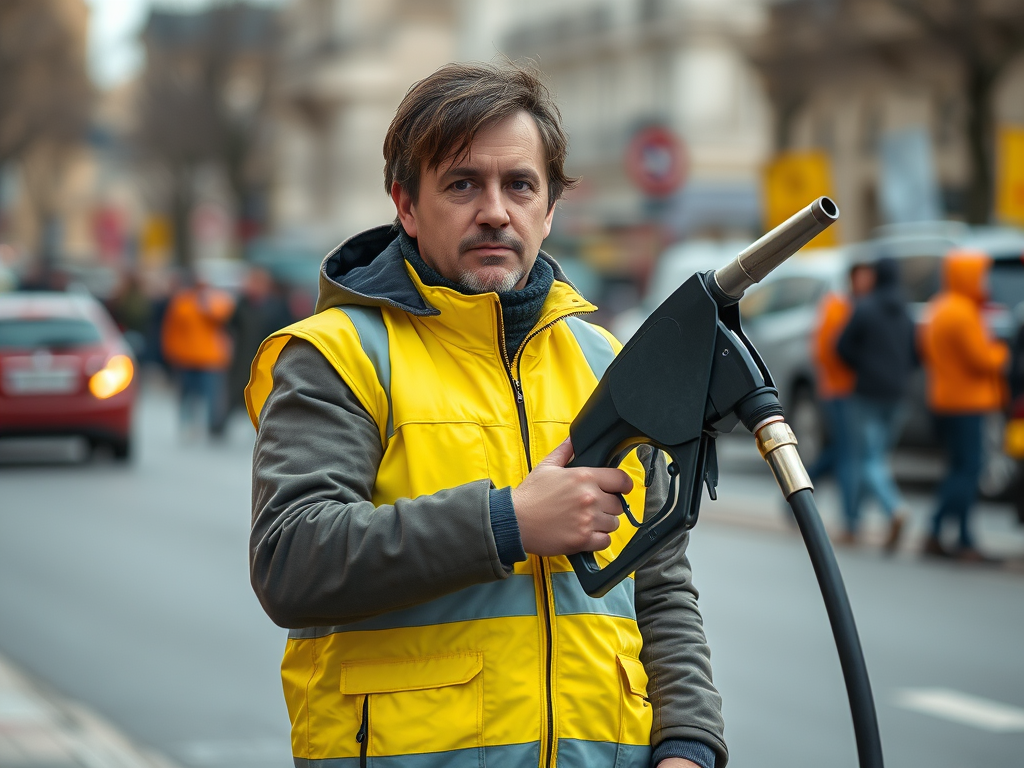
It all started in France. Yellow Vest protesters went to the streets for months and years and protested against higher oil prices, electricity bills, and expensive toll stations. Their standard of living was shrinking.

This happened at a time when Donald Trump was cutting taxes and made the best economy in the U.S. ever. People in France asked for a Trump-like figure, but everything has gone straight up since then, and now we see severe problems in Germany and other places.

Picture: Yellow Vest protesters against high oil prices and low standard of living

This is happening at a time were productivity in the U.S. is great. Germany`s productivity is down -0,1%, while the productivity in the U.S. is up 3%. They are the best. They are at the top of the list! Even better than China! And the stock market goes up. Wow!

Germany`s economy is not «broken,» but it is facing severe challenges. Energy costs, inflation, global demand weakness, and structural issues in key industries like manufacturing are causing slower growth.

Long-term concerns like demographic changes and lagging investment in innovation also threaten future competitiveness. While these challenges are significant, Germany has strong economic fundamentals and could recover with strategic reforms and investments.

However, the current climate is tough, and the country is at a critical point in addressing these issues. Germany is in trouble.

Disclaimer: The views expressed in this article are those of the author and may not reflect those of Shinybull.com. The author has made every effort to ensure the accuracy of the information provided; however, neither Shinybull.com nor the author can guarantee such accuracy. This article is strictly for informational purposes only. It is not a solicitation to make any exchange in precious metal products, commodities, securities, or other financial instruments. Shinybull.com and the author of this article do not accept culpability for losses and/ or damages arising from the use of this publication.

Leave a comment

Filed under Politics

The West is declining and a nuclear war with Russia is the end of our civilization

Russia`s President Vladimir Putin gave a speech today. He delivered his Address to the Federal Assembly. The ceremony took place in Gostiny Dvor in Moscow.

«The so-called West, with its colonial practices, and penchant for inciting ethnic conflicts around the world, not only seeks to impede our progress, but also envisions a Russia that is a dependent, declining, and dying space where they can do as they please.

In fact, they want to replicate in Russia what they have done in numerous other countries, including Ukraine: sowing discord in our home, and weakening us from within. But they were wrong, which has become abundantly clear now that they ran up against the firm resolve, and determination of our multi-ethnic people», Putin said in the speech.

«Together, as citizens of Russia, we will stand united in defense of our freedom, and our right to a peaceful, and dignified existence», Putin added.

Furthermore, Putin said; «We were not the ones who started the war in Donbas, but as I have already said many times, we will do everything to put an end to it, eradicate Nazism, and fulfill all the objectives of the special military operation, as well as defend sovereignty, and ensure that our people are safe».

«Here is a good example of their hypocrisy. They have recently made unfounded allegations, in particular against Russia, regarding plans to deploy nuclear weapons in space. Such fake narratives and this story is unequivocally false, are designed to involve us in negotiations on their conditions, which will only benefit the United States,» he said.

«There are reasons to suspect that the current US administration`s professed interest in discussing strategic stability with us is merely demagoguery.

They simply want to show to their citizens, and the world, especially in the lead-up to the presidential election that they continue to rule the world, that they would talk with the Russians when it will benefit them, and that there is nothing to talk about, and they will try to inflict defeat on us otherwise. Business as usual, as they say.»

«But this is unacceptable, of course. Our position is clear: if you want to discuss security and stability issues that are critical for the entire planet, this must be done as a package including, of course, all aspects that have to do with our national interests, and have a direct bearing on the security of our country, the security of Russia,» Putin said.

Putin also talked about a potential nuclear war, which would be the end of our civilization. He also said that the West is declining. This is what he said:

«We are also aware of the Western attempts to draw us into an arms race, thereby exhausting us, mirroring the strategy they successfully employed with the Soviet Union in the 1980s.

Let me remind you that in 1981 – 1988, the Soviet Union`s military spending amounted to 13 percent of GDP.

We need to shore up the forces in the Western strategic theatre in order to counteract the threats posed by NATO’s further eastward expansion, with Sweden, and Finland joining the alliance.

The West has provoked conflicts in Ukraine, the Middle East, and other regions around the world while consistently propagating falsehoods. Now they have the audacity to say that Russia harbors intentions of attacking Europe.

Can you believe it?

We all know that their claims are utterly baseless.

And at the same time, they are selecting targets to strike on our territory, and contemplating the most efficient means of destruction. Now they have started talking about the possibility of deploying NATO military contingents to Ukraine.»

«But we remember what happened to those who sent their contingents to the territory of our country once before. Today, any potential aggressors will face far graver consequences.»

«Everything they are inventing now, spooking the world with the threat of a conflict involving nuclear weapons, which potentially means the end of our civilization. Don`t they realize this?

«Indeed, just like any other ideology promoting racism, national superiority, or exceptionalism, Russophobia is blinding, and stupefying.

The United States and its satellites have, in fact, dismantled the European security system which has created risks for everyone.»

«Clearly, a new equal, and indivisible security framework must be created in Eurasia in the foreseeable future. We are ready for a substantive discussion on this subject with all countries, and associations that may be interested in it.

What Putin said next is very important to understand. He talked about Russia as a sovereign country. That is very different from a Russia controlled by the EU. What Putin talks about is very similar to what President Najib Bukele in El Salvador talks about.

It is their own sovereignty and freedom. Bukele said that globalization in El Salvador is dead. They want to rule their own country and have their own freedom. Out with the globalists, he said.

Putin talks about the same, but when it comes to Russia, he talks about the «balance of Power.» If the EU takes over Russia, it can fall into a gigantic dictatorship, and everyone in Europe will end up like slaves and losers. This is what Putin said in his speech:

«At the same time, I would like to reiterate (I think this is important for everyone) that no enduring international order is possible without a strong, and sovereign Russia.»

«We strive to unite the global majority`s efforts to respond to international challenges, such as the turbulent transformation of the world economy, trade, finance, and technology markets, when former monopolies, and stereotypes associated with them are collapsing.»

Europe has throughout history tried to take control of other countries, and they have earned a lot of money on it. But that era is coming to an end. Now, it is different. Europe is declining, and Putin talked about it in his speech today. He said:

«For example, in 2028, the BRICS countries with account taken of the new members will create about 37 percent of global GDP, while the G7 numbers will fall below 28 percent.

These figures are quite telling because the situation was completely different just 10 or 15 years ago. You have heard me say it publicly before. These are the trends, you see.

Look, the G7 countries’ share in global GDP in terms of PPP stood at 45,7 percent in 1992, while the BRICS countries (this association did not exist in 1992) accounted for only 16,5 percent.

In 2022, though, the G7 accounted for 30.3 percent, while BRICS had 31,5 percent.

By 2028, the percentage will shift even more in favor of BRICS, with 36,6 percent, and the projected figure for the G7 is 27,8 percent.

(Editor: The Group of Seven is an intergovernmental political and economic forum consisting of Canada, France, Germany, Italy, Japan, the United Kingdom, and the United States; additionally, the European Union is a “non-enumerated member).

There is no getting away from this objective reality, and it will remain that way no matter what happens next, including even in Ukraine,» Putin said.

Disclaimer: The views expressed in this article are those of the author and may not reflect those of Shinybull.com. The author has made every effort to ensure the accuracy of the information provided; however, neither Shinybull.com nor the author can guarantee such accuracy. This article is strictly for informational purposes only. It is not a solicitation to make any exchange in precious metal products, commodities, securities, or other financial instruments. Shinybull.com and the author of this article do not accept culpability for losses and/ or damages arising from the use of this publication.
Leave a comment

Filed under Politics