“Every war begins with the illusion of victory. Every peace begins with the courage of dialogue. Which will we choose?”
History has already shown us the price of arrogance. Twice in the last century, the world descended into total war because nations believed they had no choice but to fight and that they had to win. Today, as leaders repeat the same words, we stand once again at the edge of disaster.
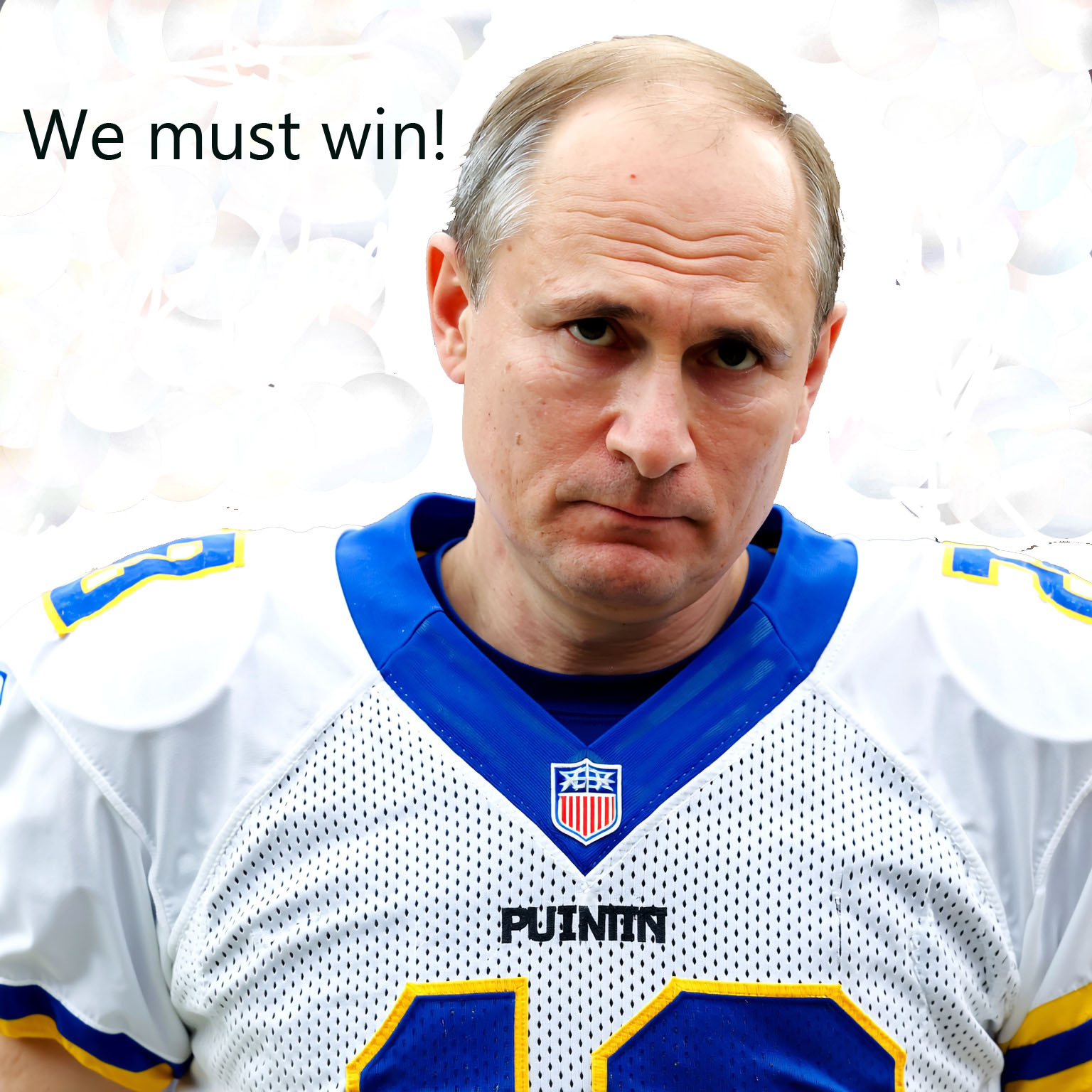
The world has already witnessed two devastating global conflicts — the First and Second World Wars. Now, many fear that we stand on the brink of a Third. The war in Ukraine rages on, while violence flares in Israel and Gaza. What is striking is that leaders on all sides declare that they must win. Even NATO’s former Secretary General Jens Stoltenberg has insisted that “weapons are the way to peace.”
But have we truly learned nothing from history?
After the First World War, nations attempted to chart a new course. The Treaty of Versailles of 1919 and the creation of the League of Nations were intended to establish an international order in which diplomacy, rather than war, would resolve conflicts. The idea was collective security: dialogue, negotiation, and the prevention of another catastrophic war.
And yet, within two decades, the world was plunged into an even deadlier conflict. The League of Nations failed because nationalism, greed, and great-power rivalry proved stronger than the will to compromise. Diplomacy was drowned out by ambition, unresolved grievances, and economic instability.
It feels eerily similar today. We see frozen conflicts, festering grievances, and leaders proclaiming that victory — and only victory — is the only acceptable outcome. But as history shows, not everyone can win.
Think of a football match: two teams, both determined to be victorious. Only one side can claim the win after 90 minutes. But wars do not have a clock. Wars end only when destruction, exhaustion, or overwhelming force brings them to a halt. In the past, that sometimes meant entire armies fighting to the last man. In the 20th century, it meant the atomic bomb. It was not diplomacy that ended the Second World War — it was unprecedented violence.
This raises an unsettling truth: humans often respond more to fear than to reason. Diplomacy, without urgency, is easily dismissed. But when fear peaks — when cities are destroyed, when civilians suffer, when nuclear annihilation looms — only then do leaders suddenly discover the language of negotiation.
If history repeats itself, then humanity may once again stumble toward self-destruction. The tragic irony is that while weapons may bring silence to the battlefield, they rarely bring true peace. Peace, lasting peace, requires the courage to pursue diplomacy before fear takes control.
Because if “weapons are the way to peace,” we may find that peace comes only after there is nothing left to save.
Fear, it seems, is the actual driver of humanity. Diplomacy is too often dismissed until it is too late. And when diplomacy fails, fear and destruction rule.
History is clear: bombs may end wars, but they do not prevent them from happening. Dialogue does.
Diplomacy is not a sign of weakness – it is a sign of wisdom. If history teaches us anything, it is this: bombs can end wars, but only dialogue can prevent them. The choice is ours, and the clock is ticking.
Disclaimer: The views expressed in this article are those of the author and may not reflect those of Shinybull.com. The author has made every effort to ensure the accuracy of the information provided; however, neither Shinybull.com nor the author can guarantee the accuracy of this information. This article is strictly for informational purposes only. It is not a solicitation to make any exchange in precious metal products, commodities, securities, or other financial instruments. Shinybull.com and the author of this article do not accept culpability for losses and/ or damages arising from the use of this publication.
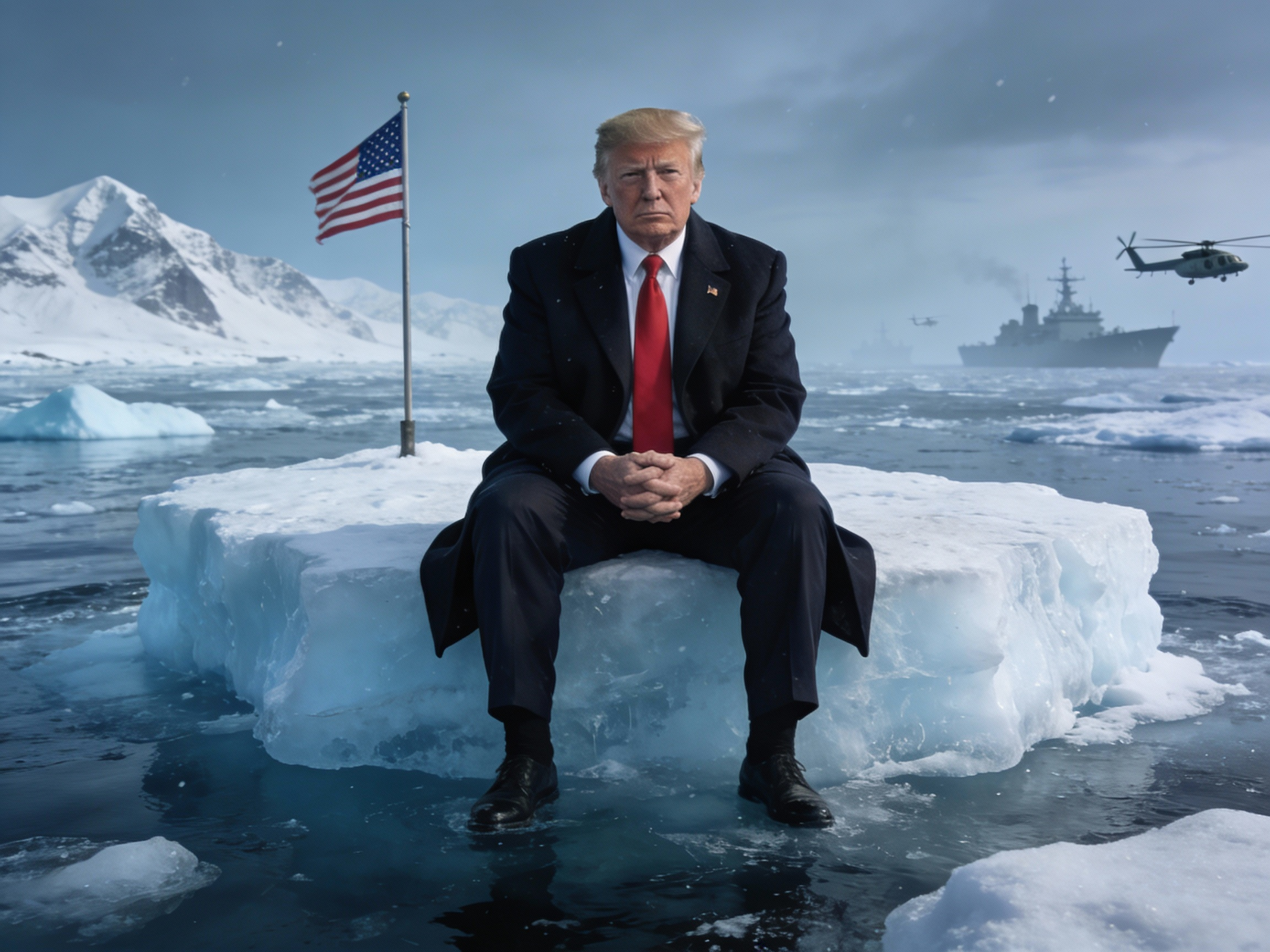
Some people love Trump, and some people hate him. 75 million voted for Trump and they are satisfied. Trump and his supporters believe a «golden era» is coming. But people on the other side are scared as hell. They believe that Trump will take the U.S. out of NATO. That doesn`t make sense. What in the world is going on here?
I`m sick and tired of the blame game we see. Legacy Media is blaming Trump for all the wrong things that are going on. And some people believe in it. Europe is building its own defense system, and don`t blame Trump for that.
It can be a huge problem, but it can also be great. But are we friends or foes?
EU, NATO, and PESCO
The European Union’s push to develop its own defense capabilities through initiatives like PESCO (Permanent Structured Cooperation) has sparked discussion over its future relationship with NATO and the United States. While NATO has been the backbone of European security since its founding in 1949, Europe’s focus on an independent military framework reflects a changing security landscape. Although the U.S. and EU share foundational values of freedom and peace, recent defense dynamics raise questions about the stability of this historic alliance.
NATO and the Trump Era: Increased Accountability
During his presidency, Donald Trump pressed NATO members to meet the alliance’s defense spending guideline of 2% of GDP, arguing that the U.S. bore too much of the financial burden for European security. This pressure led to significant increases in European defense budgets and served as a catalyst for Europe’s own defense initiatives. Contrary to fears of Trump wanting to leave NATO, his administration actually reinforced the alliance by pushing members to fulfill their financial commitments. As a result, Europe began preparing for a future where it could play a larger role in its own security.
The Emergence of PESCO: Europe’s Bid for Strategic Autonomy
PESCO represents the EU’s efforts to streamline its defense policies and collaborate more closely on security issues. Established in 2017, PESCO involves 25 EU member states who have agreed to invest, plan, develop, and operate defense capabilities collaboratively. The initiative seeks to address European security needs in a manner complementary to NATO, ensuring that Europe can act independently if required while supporting NATO’s broader objectives.
While some interpret PESCO as a step toward a “European army,” EU leaders have emphasized that the initiative is not intended to replace NATO but to strengthen Europe’s defense posture. The goal of “strategic autonomy” remains complex, as Europe’s leaders debate how to balance independence with their commitment to the NATO alliance.
Complex Relations Between Allies: NATO, PESCO, and the U.S.
The relationship between the EU and the U.S. is marked by shared interests but also significant challenges. Traditionally, both have aligned on security matters through NATO, yet the EU’s pursuit of PESCO hints at a desire for more independent decision-making. In scenarios where U.S. priorities shift toward the Indo-Pacific, Europe’s stronger defense mechanisms could offer the flexibility to address regional security concerns independently, such as issues in North Africa and Eastern Europe.
At the same time, a divergence in priorities, such as differing views on China or the Middle East, could test NATO’s cohesion. NATO’s structure requires a consensus, meaning that conflicting EU and U.S. agendas might hinder unified responses to global crises. Europe’s need for strategic autonomy may strengthen its regional security, but risks duplicating NATO’s efforts without close alignment, raising concerns about potential inefficiencies and gaps in defense.
Russia, Ukraine, and NATO’s Role
The Russian invasion of Ukraine underscored NATO’s role in European security. NATO’s support for Ukraine demonstrates the alliance’s commitment to European stability and its role in deterring aggression on the continent. However, NATO members have been cautious about allowing Ukraine to join as a full member due to the potential escalation with Russia. This ongoing conflict has prompted European nations to reconsider their dependence on U.S. security support, highlighting the importance of a robust European defense capability within PESCO while maintaining NATO’s strategic unity.
Challenges and Opportunities for NATO and EU Cooperation
In an ideal scenario, NATO and PESCO would complement each other, with Europe taking on more regional security responsibilities to balance the alliance. A stronger European defense framework could allow the U.S. to address global priorities while ensuring Europe’s security. However, if cooperation between the EU and NATO falters, their overlapping efforts could result in competition rather than synergy, impacting collective peace and stability.
The rise of cyber threats, climate change, and global health crises underscores the need for close transatlantic coordination. NATO’s historical role has been to unify Western democracies under a shared vision of freedom and peace. As the EU strengthens its defense mechanisms, NATO’s role may evolve, necessitating a recalibrated approach that respects Europe’s pursuit of autonomy while preserving shared security interests.
Conclusion: A Balanced Path Forward
The EU’s defense initiatives through PESCO represent a logical evolution in Europe’s security landscape, reflecting both its commitment to NATO and its desire for greater self-reliance. This development could reinforce NATO by sharing the security burden more equitably. However, maintaining cohesion and avoiding unnecessary duplication is essential. The EU and the U.S. must prioritize open dialogue and collaboration to ensure that NATO and PESCO complement each other, creating a resilient security framework for the modern world.
Disclaimer: The views expressed in this article are those of the author and may not reflect those of Shinybull.com. The author has made every effort to ensure the accuracy of the information provided; however, neither Shinybull.com nor the author can guarantee such accuracy. This article is strictly for informational purposes only. It is not a solicitation to make any exchange in precious metal products, commodities, securities, or other financial instruments. Shinybull.com and the author of this article do not accept culpability for losses and/ or damages arising from the use of this publication.
Kamala Harris made a speech at the DNC convention party this week, and she warned about the chaos in the White House if Trump is elected. The consequences will be serious, she said. And Michelle Obama mocked Trump`s «black jobs» remark.
What planet are they living on? And who in the world believed all this BS? Trumps Tax cut and Jobs Act of 2017 lowered the corporate tax rate from 35% and stimulated business investments, and economic growth. This also included tax cuts for individuals.
Kamala Harris and Joe Biden did the opposite. They increased the taxes. Increased the cost of living, and the inflation skyrocketed. People today, say they had a better life under Trump than they have under Biden and Harris today.
The tax cuts had a huge impact on the society. The U.S. saw significant job growth, with unemployment reaching a 50-year low of 3,5% in February 2020. This included record-low unemployment rates for African Americans, Hispanics, and women.
As a result of all that Trump has done, the stock market saw substantial gains, with the Dow Jones Industrial Average and S&P 500 reacting record-highs during his term, which benefited investors and retirement accounts.
Trump stands for Peace and Prosperity, and Trump is the only president in many decades that haven`t started a war. The Trump administration brokered the Abraham Accords, which led to normalization agreements between Israel and several Arab nations.
Not only that. Trump is also the man who pushed for NATO allies to increase their defense spending arguing that the U.S was bearing too much of the financial burden. By the end of his term, several NATO countries had increased their contribution.
Not only that. Trump is a businessman, and he knows how things are working in the business-world. He renegotiated NAFTA, leading to the United States-Mexico-Canada Agreement (USMCA), which aimed to create more balanced trade terms for the U.S.
He also implemented tariffs and took a tough stance on China to address trade imbalances and protect American industries. This only a few things Trump did only because he wants to «Make America Great Again».
But Kamala Harris is not a businessman. Nor a businesswoman. She`s a lawyer. And in her speech, she was talking more about Trump than her own policies. Kamala Harris has made statements suggesting that Donald Trump acts primarily in his own self-interest. (Can you believe that?).
During her campaign as Joe Biden`s running mate in 2020, Harris frequently criticized Trump`s leadership and policies. In one of her statements, she said: «Donald Trump has been doing everything to benefit himself and his wealthy friends,» reflecting her view that Trump`s actions as president were motivated by personal gain rather than the broader interest of the American people.
The critique was part of her broader argument that Trump`s administration favored the wealthy and powerful at the expense of working-class Americans and marginalized communities. Harris and Biden both campaigned on the promise of more inclusive and equitable leadership, contrasting their approach with what they described as Trump`s self-serving tendencies.
This is extremely embarrassing because the Democrats have controlled the U.S. in 12 years out of 16. Trump controlled it for 4 years. But what`s strange to me is that Kamala Harris and the Democrats are blaming Trump for all the problems they have in the U.S. This is unbelievable.
As a Vice President, Kamala Harris could have done something about all the problems she is blaming Trump for, but she has been invisible. Most people in the U.S. do not know who she is and what she stands for.
Blaming Trump for all the problems is not a good sign, and the question of whether Kamala Harris would be the right person to serve as President of the United States is subjective and depends on one`s political views, priorities, and perspectives on leadership qualities.
Harris`s approval rating has been mixed, and she has faced criticism from both sides of the political spectrum. Some voters question her effectiveness as Vice President and her ability to lead the nation.
Some critics have pointed out that Harris`s communication style can be perceived as unclear or overly caoutious, leading to questions about her ability to effectively convey her message and rally public support.
Kamala Harris has made statements that have been subject to public scrutiny and criticism. Some of these statements have been characterized by critics as confusing, awkward, or «stupid.» Here is a statement that has been discussed or mocked:
«WE MUST, TOGETHER, WORK TOGETHER TO SEE WHERE WE ARE, WHERE WE ARE HEADED, WHERE WE ARE GOING, AND OUR VISION FOR WHERE WE SHOULD BE, BUT ALSO SEE IT AS A MOMENT, YES, TO TOGETHER ADDRESS THE CHALLENGES AND TO WORK ON THE OPPORTUNITIES.»
This statement, made during a speech in 2022, was criticized for its redundancy and lack of clarity. Here is another one:
«Ukraine is a country in Europe. It exists next to another country called Russia. Russia is a bigger country. Russia is a powerful country. Russia decided to invade a smaller country called Ukraine. So, basically, that`s wrong.»
What about this one:
«We are the United States of America because we are united…….because we are states.»
This comment, made during a public appearance, was mocked for stating the obvious in an awkward manner. What about this one:
«I think that there can be no higher priority than what we have been clear is our highest priority.»
Kamala Harris has a huge communication problem as she lacks Obama`s skills. The Democrats have a huge problem if this is an «Operation Female Obama project,»
Joe Biden`s farewell speech at the DNC on August 19, 2024, received mixed reviews as well. Some critics felt the speech lacked a clear vision for the future, especially in comparison to the forward-looking speeches typically expected at such events. This was seen as a missed opportunity to rally the party around a successor or new ideas.
Normally, the polls should make a huge bump by at least 10 points after a meeting with speeches like that, but not this time. Trump is still leading the polls, but Rasmussen Report says it`s going to be a close race.
Disclaimer: The views expressed in this article are those of the author and may not reflect those of Shinybull.com. The author has made every effort to ensure the accuracy of the information provided; however, neither Shinybull.com nor the author can guarantee such accuracy. This article is strictly for informational purposes only. It is not a solicitation to make any exchange in precious metal products, commodities, securities, or other financial instruments. Shinybull.com and the author of this article do not accept culpability for losses and/ or damages arising from the use of this publication.
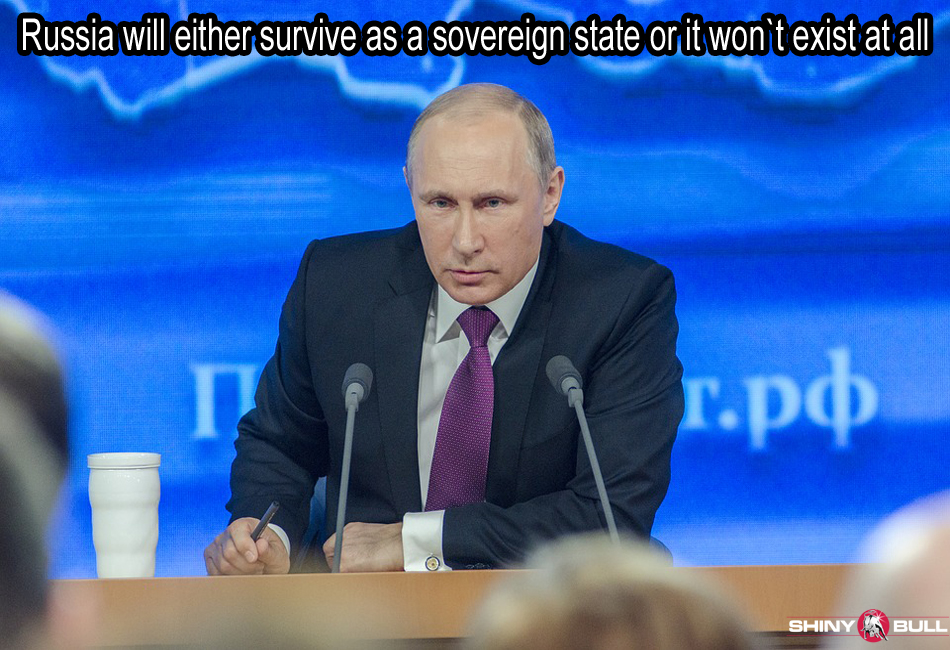
Russia`s President Vladimir Putin gave a speech today. He delivered his Address to the Federal Assembly. The ceremony took place in Gostiny Dvor in Moscow.
«The so-called West, with its colonial practices, and penchant for inciting ethnic conflicts around the world, not only seeks to impede our progress, but also envisions a Russia that is a dependent, declining, and dying space where they can do as they please.
In fact, they want to replicate in Russia what they have done in numerous other countries, including Ukraine: sowing discord in our home, and weakening us from within. But they were wrong, which has become abundantly clear now that they ran up against the firm resolve, and determination of our multi-ethnic people», Putin said in the speech.
«Together, as citizens of Russia, we will stand united in defense of our freedom, and our right to a peaceful, and dignified existence», Putin added.
Furthermore, Putin said; «We were not the ones who started the war in Donbas, but as I have already said many times, we will do everything to put an end to it, eradicate Nazism, and fulfill all the objectives of the special military operation, as well as defend sovereignty, and ensure that our people are safe».
«Here is a good example of their hypocrisy. They have recently made unfounded allegations, in particular against Russia, regarding plans to deploy nuclear weapons in space. Such fake narratives and this story is unequivocally false, are designed to involve us in negotiations on their conditions, which will only benefit the United States,» he said.
«There are reasons to suspect that the current US administration`s professed interest in discussing strategic stability with us is merely demagoguery.
They simply want to show to their citizens, and the world, especially in the lead-up to the presidential election that they continue to rule the world, that they would talk with the Russians when it will benefit them, and that there is nothing to talk about, and they will try to inflict defeat on us otherwise. Business as usual, as they say.»
«But this is unacceptable, of course. Our position is clear: if you want to discuss security and stability issues that are critical for the entire planet, this must be done as a package including, of course, all aspects that have to do with our national interests, and have a direct bearing on the security of our country, the security of Russia,» Putin said.
Putin also talked about a potential nuclear war, which would be the end of our civilization. He also said that the West is declining. This is what he said:
«We are also aware of the Western attempts to draw us into an arms race, thereby exhausting us, mirroring the strategy they successfully employed with the Soviet Union in the 1980s.
Let me remind you that in 1981 – 1988, the Soviet Union`s military spending amounted to 13 percent of GDP.
We need to shore up the forces in the Western strategic theatre in order to counteract the threats posed by NATO’s further eastward expansion, with Sweden, and Finland joining the alliance.
The West has provoked conflicts in Ukraine, the Middle East, and other regions around the world while consistently propagating falsehoods. Now they have the audacity to say that Russia harbors intentions of attacking Europe.
Can you believe it?
We all know that their claims are utterly baseless.
And at the same time, they are selecting targets to strike on our territory, and contemplating the most efficient means of destruction. Now they have started talking about the possibility of deploying NATO military contingents to Ukraine.»
«But we remember what happened to those who sent their contingents to the territory of our country once before. Today, any potential aggressors will face far graver consequences.»
«Everything they are inventing now, spooking the world with the threat of a conflict involving nuclear weapons, which potentially means the end of our civilization. Don`t they realize this?
«Indeed, just like any other ideology promoting racism, national superiority, or exceptionalism, Russophobia is blinding, and stupefying.
The United States and its satellites have, in fact, dismantled the European security system which has created risks for everyone.»
«Clearly, a new equal, and indivisible security framework must be created in Eurasia in the foreseeable future. We are ready for a substantive discussion on this subject with all countries, and associations that may be interested in it.
What Putin said next is very important to understand. He talked about Russia as a sovereign country. That is very different from a Russia controlled by the EU. What Putin talks about is very similar to what President Najib Bukele in El Salvador talks about.
It is their own sovereignty and freedom. Bukele said that globalization in El Salvador is dead. They want to rule their own country and have their own freedom. Out with the globalists, he said.
Putin talks about the same, but when it comes to Russia, he talks about the «balance of Power.» If the EU takes over Russia, it can fall into a gigantic dictatorship, and everyone in Europe will end up like slaves and losers. This is what Putin said in his speech:
«At the same time, I would like to reiterate (I think this is important for everyone) that no enduring international order is possible without a strong, and sovereign Russia.»
«We strive to unite the global majority`s efforts to respond to international challenges, such as the turbulent transformation of the world economy, trade, finance, and technology markets, when former monopolies, and stereotypes associated with them are collapsing.»
Europe has throughout history tried to take control of other countries, and they have earned a lot of money on it. But that era is coming to an end. Now, it is different. Europe is declining, and Putin talked about it in his speech today. He said:
«For example, in 2028, the BRICS countries with account taken of the new members will create about 37 percent of global GDP, while the G7 numbers will fall below 28 percent.
These figures are quite telling because the situation was completely different just 10 or 15 years ago. You have heard me say it publicly before. These are the trends, you see.
Look, the G7 countries’ share in global GDP in terms of PPP stood at 45,7 percent in 1992, while the BRICS countries (this association did not exist in 1992) accounted for only 16,5 percent.
In 2022, though, the G7 accounted for 30.3 percent, while BRICS had 31,5 percent.
By 2028, the percentage will shift even more in favor of BRICS, with 36,6 percent, and the projected figure for the G7 is 27,8 percent.
(Editor: The Group of Seven is an intergovernmental political and economic forum consisting of Canada, France, Germany, Italy, Japan, the United Kingdom, and the United States; additionally, the European Union is a “non-enumerated member).
There is no getting away from this objective reality, and it will remain that way no matter what happens next, including even in Ukraine,» Putin said.
Disclaimer: The views expressed in this article are those of the author and may not reflect those of Shinybull.com. The author has made every effort to ensure the accuracy of the information provided; however, neither Shinybull.com nor the author can guarantee such accuracy. This article is strictly for informational purposes only. It is not a solicitation to make any exchange in precious metal products, commodities, securities, or other financial instruments. Shinybull.com and the author of this article do not accept culpability for losses and/ or damages arising from the use of this publication.
Xi Jinping visited Vladimir Putin today, and they both called each other «dear friends.» Xi says China is ready with Russia to stand guard over world order based on international law, on Moscow visit earlier today. Xi added that with Russia, China was ready to defend the UN-centric international system.
Xi pushes China to play a more dominant role in managing global affairs. China`s New World Order is on the way.
This is what the war in Ukraine is about: the new world order. The war in Ukraine is set to fundamentally transform the International order, and some people call it the world`s «de-Westernization».
A World Order is an impressive work that focuses on the geopolitical distribution of power, Henry Kissinger wrote in his book World Order.
During the 20th century, political figures such as Woodrow Wilson and Winston Churchill used the term «new world order» to refer to a new period of history characterized by a dramatic change in world political thought and in the global balance of power after World War I and World War II.
The interwar and post-World War II periods were seen as opportunities to implement idealistic proposals for global governance by collective efforts to address worldwide problems that go beyond the capacity of individual nation-states to resolve while nevertheless respecting the right of nations to self-determination.
Such collective initiatives manifested in the formation of intergovernmental organizations such as the League of Nations in 1920, the United Nations (UN) in 1945, and the North Atlantic Treaty Organization (NATO) in 1949, along with international regimes such as the Bretton Woods system and the General Agreement on Tariffs and Trade (GATT), implemented to maintain a cooperative balance of power and facilitate reconciliation between nations to prevent the prospect of another global conflict.
After World War II, they all said; «Never again», and the winners, led by America, drafted conventions that defined unpardonable crimes against humanity, and sought to impose costs on those committing them.
Recalling the economic disasters and human miseries that paved the way to world war, the framers of this order built the UN and other international institutions to promote cooperation and development.
Progressives welcomed international organizations and regimes such as the United Nations in the aftermath of the two World Wars but argued that these initiatives suffered from a democratic deficit and were therefore inadequate not only to prevent another world war but to foster global justice, as the UN was chartered to be a free association of sovereign nation-states rather than a transition to democratic world government.
British writer and futurist H.G. Wells went further than progressives in the 1940s by appropriating and redefining the term «new world order» as a synonym for the establishment of a technocratic world state, and of a planned economy, garnering popularity in state socialist circles.
Right-wing populist John Birch Society claimed in the 1960s that the governments of both the United States and the Soviet Union were controlled by a cabal of corporate internationalists, «greedy» bankers, and corrupt politicians who were intent on using the UN as the vehicle to create a «One World Government».
This anti-globalist conspiracism fueled the campaign for U.S. withdrawal from the UN.
In his speech, Toward a New World Order, delivered on 11 September 1990 during a joint session of the US Congress, President George H.W. Bush described his objectives for post-Cold War global governance in cooperation with post-Soviet states. He stated:
«Until now, the world we`ve known has been a world divided – a world of barbed wire and concrete block, conflict, and the cold war. Now, we can see a new world coming into view. A world in which there is the genuine prospect of new world order.
In the words of Winston Churchill, a «world order» in which «the principles of justice and fair play …. protect the weak against the strong…..»A world where the United Nations, freed from cold war stalemate, is poised to fulfill the historic vision of its founders. A world in which freedom and respect for human rights find a home among all nations.»
The New York Times observed that progressives were denouncing this new world order as a rationalization of American imperial ambitions in the Middle East at the time.
And now, everything has changed. Again. China`s New World Order is coming.
We are moving from a Unipolar world to a Multipolar world where Europe and the U.S. are less influential. The war in Ukraine is dividing opinions between people in Western nations, and those in countries like China, India, and Turkey, a new poll suggests.
The war in Ukraine has laid bare the «sharp geographical divides in global attitudes» on «conceptions of democracy, and the composition of the future international order,» according to a new survey from the European Council on Foreign Relations (ECFR).
While Western allies have «regained their sense of purpose on the global stage,» the gulf between their perspective and the «rest» has grown wider, the ECFR added.
There are different views about the general role the West will play in the future world order. Some people expect a new bipolar world of two blocks led by the U.S. and China, whereas there were signs that most people in major non-Western countries see the future in more multipolar terms.
China has always been in front. The silk road is known for all the roads from China to Europe, and nobody knows how old it is, but it can be as old as ten thousand years. The silk road was popular because the Chinese sold silk to Europe.
Today, China is still in front as they are considered to be the factory of the world. But this is probably not a surprise for people in China. Why?
For more than two millennia, nomarchs who ruled China proper saw their country as one of the dominant actors in the world. The concept of Zhongguo (the Middle Kingdom, as China, calls itself), is not simply geographic.
It implies that China is the cultural, political, and economic center of the world.
This Sino-centrist worldview has in many ways shaped China`s outlook on global governance. The rules, norms, and institutions that regulate international cooperation. The decline and collapse of imperial China in the 1800s and early 1900s, however, diminished Chinese influence on the global stage for more than a century.
But China is back. China has reemerged as a major power in the past two decades, with the world`s second-largest economy and a world-class military. It increasingly asserts itself, seeking to regain its centrality in the international system, and over global governance institutions.
These institutions, created mostly by Western powers after World War II, include the World Bank, which provides loans and grants to developing states, the International Monetary Fund, which works to secure the stability of the global monetary system; and the United Nations, among others.
President Xi Jinping, the most powerful Chinese leader since Mao Zedong, has called for China to «lead the reform of the global governance system,» transforming institutions and norms in ways that will reflect Beijing`s values and priorities.
For over two thousand years, beginning with the Qin dynasty (221-226 BCE) and ending with the collapse of the Qing (1636-1911 BCE), monarchs who ruled China proper invoked a mandate of heaven to legitimate their own rule and rhetorically assert their own centrality to global order, even though they never built a truly global empire.
Even when China`s influence collapsed in the nineteenth and twentieth centuries, Chinese elites dreamed of regaining global influence.
At the end of World War II, China became an initial member of the United Nations and seemed poised to play a larger role in the new international order. But after the Communist Party won the civil war and took power in 1949, China rejected the international system and tried to help create an alternative global governance order.
Frustrated with the existing international system, the Republic of China (Taiwan) remained seated on the UN Security Council, instead of the People`s Republic of China, Beijing promoted alternative values and institutions.
In 1953, Premier Zhou Enlai enunciated «The Five Principles of Peaceful Coexistence», mutual respect for sovereignty, territorial integrity, mutual nonaggression, noninterference in each other`s international affairs, equality, mutual benefit, and peaceful coexistence.
Endorsed by leaders of many newly independent former colonies, these principles formed a basis for the nonaligned movement (NAM) of the 1960s. NAM became a counterweight to Western-dominated global governance.
China returned to the international system in the early 1970s and rebuilt its ties with the United States. It accepted a weaker international role and sought to participate in the institutions and rules set up after World War II.
After the end of the Mao era, China opened up in the 1980s and 1990s, reformed its economy, and increased its role in global governance, including by cooperating with international institutions. During this time, China adapted many domestic laws to conform to those of other countries.
Deng Xiaoping, who ultimately succeeded Mao, oversaw major economic reforms in the late 1970s and early 1980s, which launched China`s growth and ultimately increased its global reach. Deng introduced market reforms, and encouraged inflows of foreign capital and technology, among other steps.
During this period, China also joined more global financial and trade institutions, including the International Monetary Fund (IMF), the World Intellectual Property Organization, and the Asian Development Bank.
In 1989, the Chinese government violently cracked down on democracy protestors in Beijing`s Tiananmen Square, and elsewhere in the country, which resulted in widespread international condemnation.
To help rebuild its reputation and ties with other countries, beginning in the early 1990s, Beijing increasingly embraced multilateralism and integration with global governance institutions. Beijing signed multilateral agreements it had previously been reluctant to join.
In the first decade of the twenty-first century, China often proved willing to play by international rules and norms. As its economy grew, however, Beijing assumed a more active role in global governance, signaling its potential to lead and challenge existing institutions and norms.
The country boosted its power in four ways; it took on a bigger role in international institutions, advertised its increasing influence, laid the groundwork to create some of its own organizations, and sometimes subverted global governance rules.
In 2010, China surpassed Japan to become the world`s second-biggest economy and earned the third-greatest percentage of votes in the World Bank, and the International Monetary Fund (IMF). It also created its own Multilateral Organizations.
China started to create its own Beijing-dominated institutions. A process that would expand in the 2010s. In the previous decade, Beijing had established the Shanghai Cooperation Organization (SCO), which built on the earlier Shanghai 5 group, and brought together China, Russia, and Central Asian states.
In the 2010s, the SCO would become a vehicle for China to challenge existing global norms, such as pushing its idea of closed internet controlled by governments, rather than one global, open internet.
Under President Bush and Obama, Washington generally accepted that Beijing would increasingly support global governance norms and institutions. In 2005, U.S. Deputy Secretary of State Robert Zoellick publicly urged China to become a «responsible stakeholder» in the international system.
The Donald J. Trump administration, by contrast, has expressed greater concern over Chinese efforts to subvert existing norms and has pushed back against Beijing`s efforts to use international institutions to promote Chinese foreign policies and programs like the Belt and Road Initiatives.
But China challenges International norms and rules. Under Jiang Zemin`s successor Hu Jintao, China more openly challenged international norms. Beijing asserted that its sovereignty over disputed areas of the South China Sea was a «core interest,» and «non-negotiable, « despite participating in negotiations with other claimants.
Beijing also expanded its footprint in the South China Sea; it built military facilities on disputed islands and artificial features. And it expanded its aid around the world.
Since the early 2010s, as China`s economic and military power has grown, so too has its ambition and capability to reform the global governance system to reflect Beijing`s priorities and values.
Some of the priorities Beijing promotes in global governance are defensive in nature and reflect long-standing. Chinese aims: preventing criticism of China`s human rights practices, keeping Taiwan from assuming an independent role in international institutions, and protecting Beijing from compromises to its sovereignty.
Yet China also now seeks to shape the global governance system more offensively, to advance its model of political and economic development. This development model reflects extensive state control over politics and society and a mix of both market-based practices and statism in core sectors of the economy.
Xi Jinping has called for more shared control of global governance. He has declared that China needs to «lead the reform of the global governance system with the concepts of fairness and justice».
The terms fairness and justice signal a call for a more multipolar world, one potentially with a smaller U.S. role in setting international rules. The Donald J. Trump administration`s retreat from global leadership has added to China`s opportunity to fill the void and promote multipolar global governance.
China is now pushing for a bigger role in International agencies. Chinese officials lead four of the fifteen UN specialized agencies. They are also creating alternative institutions. Beijing is building its own, China-centered institutions.
In 2013, Beijing launched the Belt and Road Initiatives. A vast plan to use Chinese assistance to fund infrastructure, and boost ties with, other countries, like their neighbor Russia. Beijing`s more proactive global strategy serves the Xi administration`s dream of returning China to its past glory.
China`s evolving global governance strategy is most apparent in four major issues; global health, internet governance, climate change, and development finance.
China seeks to become a leader in global internet governance and to promote the idea of «cyber sovereignty». That a state should exert control over the internet within its borders. In October 2017, Xi Jinping unveiled his plans to make China a «cyber superpower.»
Globally, Beijing promotes its domestic cyber sovereignty approach to internet governance, which hinges on Communist Party control and censorship. Xi`s administration uses increasingly advanced technology to dominate the domestic internet and social media, blocking global search engines, and social media sites, and promoting domestic versions.
China`s domestic internet offers an alternative to existing, freer models of internet governance, and Beijing also uses its influence at the United Nations, and other forums to push countries to adopt a more closed internet.
Meanwhile, Chinese corporations such as Huawei, and CloudWalk have supplied repressive governments in Venezuela and Zimbabwe with surveillance tools like facial recognition technology.
And the Belt and Road Initiative (BRI) contains a «Digital Silk Road Initiative» that includes inviting foreign officials to participate in workshops on information technology policy, including controlling the internet.
If China and Russia can set the standards for internet governance, they could pave the way for other countries to embrace cyber sovereignty, sparking a divided world with two internets. One is generally open, and the other is closed and favored by autocracies.
The world has become less democratic in recent years. Democracy is in decline. The number of people that have democratic rights has recently plummeted: between 2016 and 2022, this number fell from 3,9 billion to 2,3 billion people.
The world underwent phases of autocratization in the 1930s and again in the 1960s and 1970s. Back then, people fought to turn the tide and pushed democratic rights to unprecedented heights. But what now? Can we do the same again?
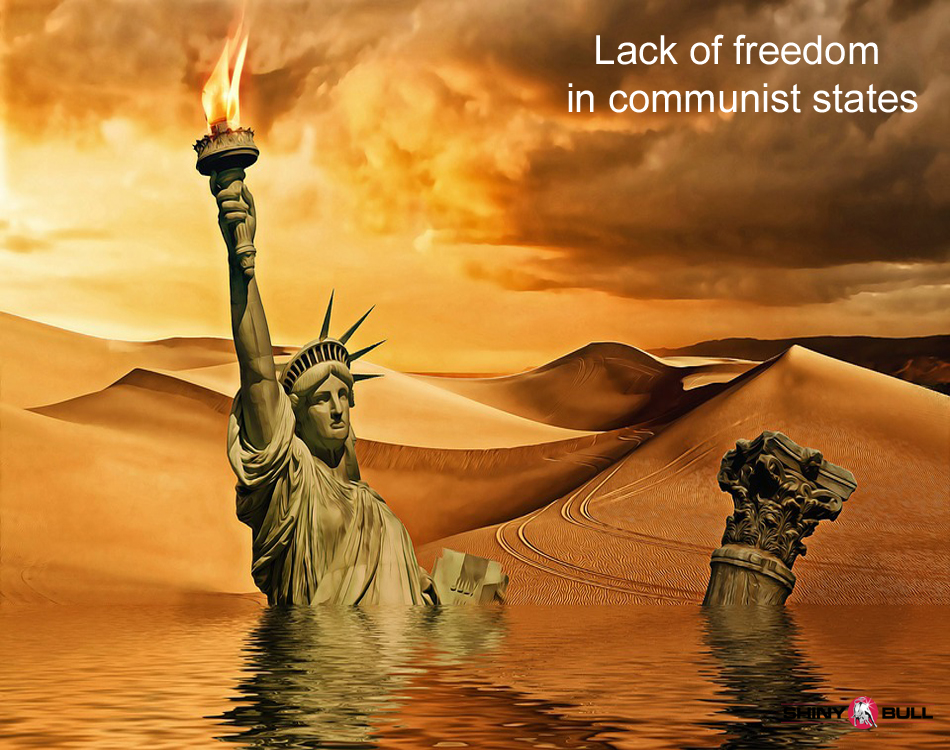
A new Chinese world order is coming, and they are not democratic.
Disclaimer: The views expressed in this article are those of the author and may not reflect those of Shinybull.com. The author has made every effort to ensure the accuracy of the information provided; however, neither Shinybull.com nor the author can guarantee such accuracy. This article is strictly for informational purposes only. It is not a solicitation to make any exchange in precious metal products, commodities, securities, or other financial instruments. Shinybull.com and the author of this article do not accept culpability for losses and/ or damages arising from the use of this publication.