
Tag Archives: Artificial Intelligence

Jobs Will Become “Optional”

When Elon Musk took the stage at the U.S.–Saudi Arabia Investment Forum, he delivered one of his boldest predictions yet:
In 10 to 20 years, having a job may no longer be necessary. It may simply be a choice.

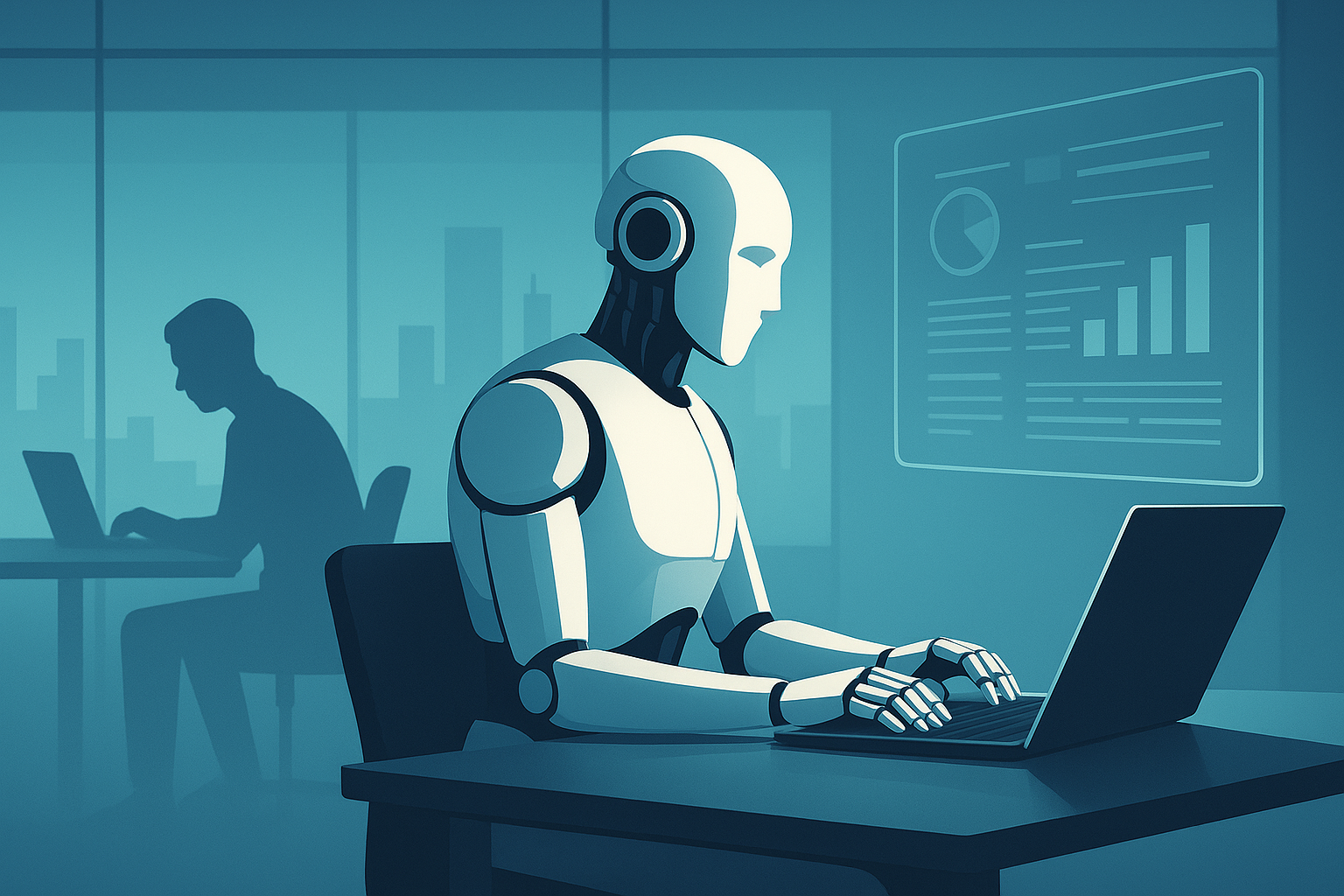
This statement didn’t come out of nowhere. It reflects Musk’s long-standing view that rapid progress in artificial intelligence and humanoid robotics, especially projects like Tesla’s Optimus robot, will fundamentally transform the global job market.

But what does “optional work” actually mean? What happens to CEOs, creativity, money, and everyday life in such a world?

Let’s break it all down.

What Exactly Did Elon Musk Say?

At the forum, Musk explained that technological progress will push society into an era where:

  • Most jobs are automated
  • Human labor is no longer required for economic survival
  • People will work only if they want to, not because they must.

He said that future “jobs” might feel more like hobbies, similar to playing a sport or a video game.

He also suggested that money itself could become less relevant:

“Money will stop being significant. The real constraints will be physical resources like energy and mass.”

Musk compared future work to gardening:
You can grow vegetables yourself, even though it’s easier to buy them at a store. You do it because you enjoy it, not because you must.
That’s his vision for the job market. A world where work is done for passion, not necessity.

A World Where Work Is Optional: What Would That Look Like?

If Musk is right, then the next two decades could reshape society in five significant ways:

1. Automation Takes Over Routine Work

Humanoid robots and advanced AI systems will be capable of doing nearly all physical and cognitive labor.
Everything from manufacturing to accounting to logistics could be automated.

2. Creativity Becomes the New Currency

When machines handle all basic tasks, the only irreplaceable human skill will be imagination.
Art, innovation, design, storytelling, and leadership will matter more than ever.

3. New Purpose Beyond Employment

If people no longer need to work for survival, society must redefine purpose, identity, and meaning.
Work will become a hobby, a passion project, or a personal mission.

4. The CEO Role Will Transform

Future CEOs may lead companies where the entire workforce is digital or robotic.
Their role shifts from:

  • personnel management
    to
  • vision-setting, ethics, coordination, and long-term strategy.

CEOs become more like chief philosophers and architects of systems than traditional managers.

5. Economic Models Must Evolve

If work becomes optional, new systems must support human welfare:

  • universal basic income
  • shared ownership of AI systems
  • new forms of value distribution
  • new definitions of wealth

This brings us to Musk’s most controversial idea:
A future where money itself becomes less meaningful.

Musk’s Claim: Money Could Become “Irrelevant”

This may sound like science fiction, but Musk is pointing toward a post-scarcity economic model:

  • AI and robotics produce unlimited goods and services
  • Energy becomes cheap due to breakthroughs in solar, batteries, and possibly fusion
  • Productivity skyrockets far beyond what human labor can achieve
  • The cost of producing essentials approaches zero

In that world, your livelihood isn’t tied to your paycheck.
Wealth isn’t about dollars. It’s about access to resources and control over energy, materials, and computing power.

Musk referenced Iain M. Banks’ Culture novels as inspiration:
a society where scarcity is gone, AI handles most functions, and humans focus on exploration, creativity, and self-development.

Will This Actually Happen?

Experts disagree. Some believe Musk’s timeline (10–20 years) is too optimistic.
Others argue that AI progress is moving faster than expected, and he may even be conservative.

What’s clear is this:

  • Jobs will change
  • Many roles will disappear
  • New creative and emotional roles will emerge
  • The global economic structure will need deep reform
  • The concept of the “CEO” will adapt dramatically

Whether Musk’s vision becomes reality or remains a theoretical future, the direction is unmistakable:
AI will reshape human work more than any technology in history.

Disclaimer: The views expressed in this article are those of the author and may not reflect those of Shinybull.com. The author has made every effort to ensure the accuracy of the information provided; however, neither Shinybull.com nor the author can guarantee the accuracy of this information. This article is strictly for informational purposes only. It is not a solicitation to make any exchange in precious metal products, commodities, securities, or other financial instruments. Shinybull.com and the author of this article do not accept culpability for losses and/ or damages arising from the use of this publication.

Leave a comment

Filed under Curiosity

Are Humans Still Fit to Govern Themselves?

The Case for AI and the Future of Governance

“For centuries, humans have tried to build fair systems, and failed repeatedly.”

The Human Struggle with Complexity

History shows that people have always struggled to manage complex systems. In ancient Rome, Caesar’s rise exposed deep divisions in society and the limits of human judgment. In 1848, France, King Louis Philippe I faced a population burdened by taxes and inequality, a system too rigid and tangled for leaders to reform.

Today, millions face similar struggles: cost-of-living crises, housing shortages, and economic instability. The pattern is clear; the system often overwhelms human capacity.

Partisanship, emotion, and limited attention make it nearly impossible for humans alone to optimize society’s resources fairly and efficiently.

“If history teaches us anything, it’s that no human institution, however well-intentioned, can keep up with the complexity of modern life.”

Enter AI: A New Kind of Leadership

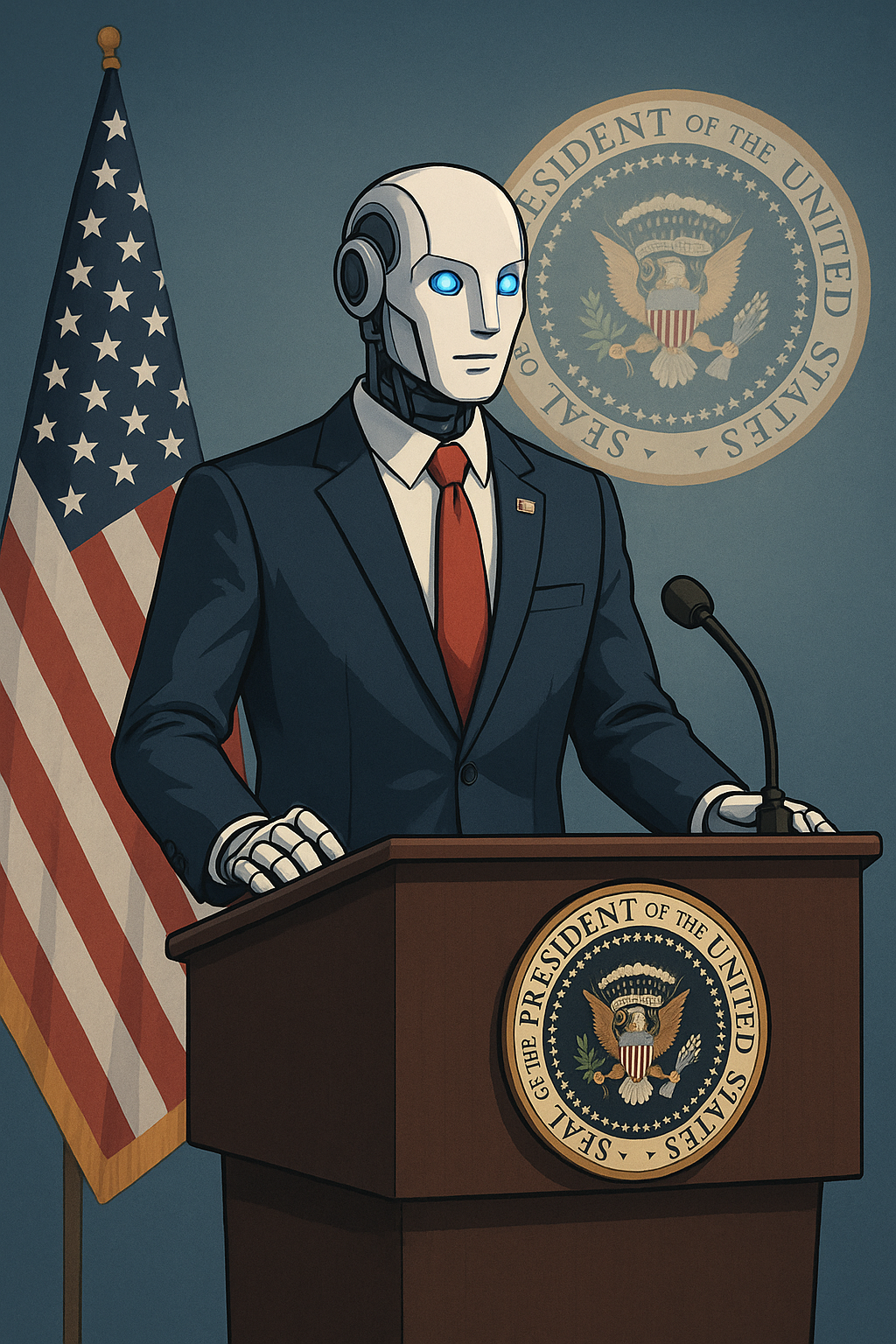
Maybe the solution isn’t left, right, or even one-party systems. Maybe the solution is AI.

Thousands of human beings, with all their emotions, biases, and limited perspectives, can’t compete with a system that can analyze all available information simultaneously. Just look at chess or Go. AI doesn’t just play well; it plays beyond the limits of human imagination.

Take a simple real-world example: an elderly woman paying more for her apartment than she receives in pension. Who is to blame? No single person. It’s the system. This isn’t a moral failure; it’s mathematical.

AI doesn’t suffer from those human limits. It can process enormous amounts of data, detect patterns, optimize allocations, and predict problems before they occur.

“Maybe the next stage of democracy isn’t about choosing leaders. It’s about choosing the algorithms that lead us.”

A Vision of AI-Guided Society

Imagine a world where decisions about economics, healthcare, infrastructure, or the cost of living are guided by AI. No feelings, no personal interests, no corporate agendas, no short-term political games.

Decisions would be based purely on data, evidence, and long-term outcomes, optimizing for the well-being of everyone rather than the loudest voices or the wealthiest lobbyists.

Humans would still define the ethical framework. AI can calculate the best moves, but society must decide what “good” means: fairness, sustainability, equality, or prosperity.

“Compared to the endless bickering and short-term thinking of politics, AI could be the most rational and forward-looking leader humanity has ever known.”

Balancing Hope and Caution

AI governance isn’t without risks; bias in data, lack of transparency, and accountability must be addressed. But unlike human flaws, these can be debugged. Systems can be retrained, improved, and held to measurable standards of performance.

The question, then, is no longer about political parties or ideologies. The real question is:
Are we ready to let reason, not emotion, guide the future?

Author’s Note

As technology continues to evolve, the debate over AI in governance is no longer a matter of science fiction. It’s a question of readiness, trust, and design. Whether we like it or not, the age of algorithmic leadership is approaching. The choice before us isn’t if AI will play a role in decision-making, but how we’ll ensure it serves humanity, not replaces it.

Disclaimer: The views expressed in this article are those of the author and may not reflect those of Shinybull.com. The author has made every effort to ensure the accuracy of the information provided; however, neither Shinybull.com nor the author can guarantee the accuracy of this information. This article is strictly for informational purposes only. It is not a solicitation to make any exchange in precious metal products, commodities, securities, or other financial instruments. Shinybull.com and the author of this article do not accept culpability for losses and/ or damages arising from the use of this publication.

Leave a comment

Filed under Politics

Google`s Quantum chip shocks the world

Google is one of the best companies in the world. They make a lot of money, but they also spend a lot of money on R&D (Research & Development). And they make progress! Google is out with a new chip. A Quantum chip.

Google’s recent breakthrough with its Quantum chip has introduced new possibilities for the future of computing, particularly in fields like AI, cryptography, and even the financial markets. This chip harnesses quantum mechanics to perform calculations far beyond the capacity of traditional computers.

While it offers immense potential in solving complex problems, its impact on industries such as Nvidia and Bitcoin could be profound.

For Nvidia, a leader in the GPU market, the rise of quantum computing presents both challenges and opportunities. GPUs, which power the heavy computations for AI, gaming, and blockchain mining, could face competition from quantum processors capable of executing certain tasks exponentially faster.

However, Nvidia is already exploring quantum computing technologies, and there may be ways to integrate quantum capabilities into their existing ecosystem, potentially enhancing their product offerings in the future.

On the other hand, they may face significant risks with the advent of quantum computers. These machines have the potential to break the cryptographic algorithms currently used to secure Bitcoin transactions, such as the Elliptic Curve Digital Signature Algorithm (ECDSA).

While Bitcoin’s blockchain is highly secure today, a sufficiently powerful quantum computer could theoretically crack these cryptographic methods, threatening the network’s integrity. This how a debate within the cryptocurrency community about the potential need for post-quantum cryptography solutions to protect digital currencies from such vulnerabilities over

quantum computing promises to revolutionize industries, it also brings a sense of urgency for companies like Nvidia to innovate and for blockchain technology to evolve, ensuring its security in a new era of computational power.

Disclaimer: The views expressed in this article are those of the author and may not reflect those of Shinybull.com. The author has made every effort to ensure the accuracy of the information provided; however, neither Shinybull.com nor the author can guarantee such accuracy. This article is strictly for informational purposes only. It is not a solicitation to make any exchange in precious metal products, commodities, securities, or other financial instruments. Shinybull.com and the author of this article do not accept culpability for losses and/ or damages arising from the use of this publication.

Leave a comment

Filed under Stocks

5G is a new beginning and partly a turning point, but certainly nothing less than a revolution

The 2019 International CES show started today in Las Vegas, and it will end on Friday, 11 January. CES is the world`s gathering place for those who thrive on the business of consumer technologies. It has served as the proving ground for innovators and breakthrough technologies for 50 years.

This is the global stage where next generation innovations are introduced to the marketplace, and its owned by Consumer Technology Association (CTA). This gathering attracts the worlds business leaders and pioneering thinkers.

(Click the picture to enlarge)

I have been following Apple for decades and I expect them to be in Las Vegas this week. We all know that AI is the future, but how is Apple`s innovation when it comes to Smart home tech? It seems like they are falling behind in the Smart home race.

Both, Google and Amazon are now integrating Alexa and Google assistant into Smart home devices. Voice assistants are cropping up in all kinds of places at CES 2019 and what I think is a cool thing to have is both voice and touchscreen in the bathroom mirror.

This Smart Mirror allows you to access Google Assistant were you can check the weather and traffic, or stream some YouTube videos while you are fixing your hear before you are going out for your next date.

Its brilliant because you have only two hands and none of them are free. Youre fixing your hair right. So, while you`re fixing your hair, you just have to ask the mirror what time it is, what the weather is or when your next bus is coming. All this without using your hands.

Everything is connected and to do so you need 5G, which is enabling the Internet of Things (IoT). Cars, heating systems and even trash cans are becoming involved in the net. 5G is super fast and makes the IoT possible. 5G is 100x faster than 4G and 10x faster than the best home-subscriber broadband service.

You need 5G to run your new driverless car and it`s all based on a computer with GPS built-in it. 5G is nothing less than a revolution. It is in such capacities that it becomes clear why the technologies from 2G to 4G differ so radically from the fifth generation, and that is awaiting us is partly a new beginning and partly a turning point, but certainly nothing less than a revolution.

Disclaimer: The views expressed in this article are those of the author and may not reflect those of Shiny bull. The author has made every effort to ensure accuracy of information provided; however, neither Shiny bull nor the author can guarantee such accuracy. This article is strictly for informational purposes only. It is not a solicitation to make any exchange in precious metal products, commodities, securities or other financial instruments. Shiny bull and the author of this article do not accept culpability for losses and/ or damages arising from the use of this publication.

Leave a comment

Filed under Stock market