
Taco vs Burger

McDonald`s have underperformed for some time now, and the chain have also had some problems lately. Some of the critics have been that their menu is expansive and confusing. The employees at McDonald`s say their menu is too long which is leading to slower turnover times and longer lines resulting in lost business during meal rushes.

The latest problem is racism. Some black people were fired at McDonald`s being told that there were too many black people at work, lawsuit claims. A previous manager at McDonald`s said she was fired because she was black. She said one of her supervisors would regularly make inflammatory comments to her, such as “We need to get the ghetto out of the store.”

Another problem they have is people sitting there for hours. It could be unemployed people or poor people paying for their cheap burgers, and all this is not good news for McDonald`s Corporation. In addition; people tend to think that McDonald`s do have unhealthy food.

The company has seen declining company wide sales since the summer last year. Last month McDonald`s announced a menu overhaul to address its lackluster performance. The fast food joint also launched a massive marketing campaign to enhance its image.

U.S comparable sales were down 4,6% YoY in November and in October U.S comps dropped by 1% YOY. The past few monthly sales numbers have led to lower estimates for the upcoming quarter.

As the demand for McDonald`s is declining others are rising, and McDonald`s saw that many years ago. That`s why they bought shares at Chipotle Mexican Grill. Folks are flocking to the restaurant with their mexican taco food on the menu.

CMG 2015

As you can see on the chart above, the stock price has skyrocketed. I can understand why McDonald`s bought shares in that company. CMG`s stock price was $40 in 2008, and now it is $719,21. Up about 1000% in a few years.

People tend to think that Sushi is healthy food, but it isn`t. It is too much rice and sugar and that will make you fat. Rice and sugar are «No-food». Mexican food is «Yes-food». People want healthy food and that`s why they like CMG. That`s also why McDonald`s started to sell salad. Among the best thing you can eat on this planet, but McDonald`s is not a salad chain. Do they have an image problem?

CMG will report FQ4 results in Feb 03, and the conference call is scheduled to begin at 04:30 pm ET. Consensus view is EPS of $3,77 on revenue of $1,07B.

Disclaimer: The views expressed in this article are those of the author and may not reflect those of Shiny bull. The author has made every effort to ensure accuracy of information provided; however, neither Shiny bull nor the author can guarantee such accuracy. This article is strictly for informational purposes only. It is not a solicitation to make any exchange in precious metal products, commodities, securities or other financial instruments. Shiny bull and the author of this article do not accept culpability for losses and/ or damages arising from the use of this publication.
 

Leave a comment

Filed under Stocks

Mario`s Bazooka!

Europe is in trouble and the problem (one of them) is deflation. From December 2013 to December 2014 the inflation was -0,2%. ECB`s goal is like the FED`s; about 2%. The European Central Bank announced today that it will fight against deflation and recession by «printing more money».

Many people don`t know that the Central Banks are not printing money like they use to think; printing paper money. But others say «printing money» to make ordinary people understand what they are talking about.

ECB

Central banks have a tool to control growth and that is lowering or raising the interest rate. When the interest rate is low, people will spend more money which is good for the economy. Spending is also better than saving.

When interest rate is as low as it right now, the central banks need to do something. The tools they use is to «print more money», and that is quantitative easing QE. But does it help the economy? According to Obama in a speech yesterday; it does.

The banks use this money to buy bonds from investors such as pension funds and private investors that will use this «new» money. This again will increase the amount of money in the financial system, which is encouraging financial institutions to lend more to businesses and individuals. The goal is to allow them to invest and spend more and that will hopefully increase the growth.

QE makes the prices of government bonds to go up and reduces the yield paid out to investors, which means investors have to pay more to get the same income. This is why some pension scheme deficits have increased sharply in resent years.

It is Greek elections on Sunday, and ECB bond-buying could support confidence in troubled Euro zone members and prevent any fallout from Greek politics affecting other countries. Some said the Greeks are poised to reject the EU-imposed cost-cutting and vote for Syriza, which rejects the fiscal crackdown. The ECB will buy bonds from Italy and Germany and that will prevent them from selling their bonds if the economic situation in Greece worsens. Draghi said today that they can continue to print money the next 30 years. No one knows that this program will work.

QE was first used by the Bank of Japan (BOJ) to fight domestic deflation. BOJ had for many years claimed that QE is not effective and rejected its use for monetary policy. BOJ hade maintained short-term interest rates at close to zero since 1999.

During their QE, the BOJ flooded commercial banks with excess liquidity to promote private lending, leaving them with large stocks of excess reserves and therefore little risk of a liquidity shortage. The BOJ accomplished this by buying more government bonds than would be required to set the interest rate to zero. It later also bought asset-backet securities and equities and extended the terms of its commercial paper-purchasing operation.

Since the financial crises of 2007-2008, similar policies have been used by the United States, the United Kingdom and the Euro zone. QE was used by these countries because their risk-free short-term nominal interest rate were either at or close to zero.

ECB will start their € 1,1 trillion QE program in march. They will start buying 60bn euros of chiefly government debt each month. That includes rebundled private debt, asset-backet (public and privaate) securities and covered bonds worth about 10 billion euros on top of the roughly 50 billion euros in state bonds.

They will spend (as they signalled in 2009) € 60bn euroes each month until September next year. The Euro dropped down to an 11 year low against the strong dollar. The pair is now trading at $1,14.

Mario Draghi has delivered a bigger bazooka than investors were expecting, and the stock market in Europe, Asia and U.S skyrocketed today. Bull!

By the way; Denmark`s Central Bank followed the ECB today by cutting its main deposit rate again. This time to negative -0,35%. They had already lowered that rate to negative -0,2% from negative -0,05% on Monday this week.


Disclaimer: The views expressed in this article are those of the author and may not reflect those of Shiny bull. The author has made every effort to ensure accuracy of information provided; however, neither Shiny bull nor the author can guarantee such accuracy. This article is strictly for informational purposes only. It is not a solicitation to make any exchange in precious metal products, commodities, securities or other financial instruments. Shiny bull and the author of this article do not accept culpability for losses and/ or damages arising from the use of this publication.
Leave a comment

Filed under Quantitative Easing

Apple to acquire Sementric

Apple purchases a British startup company named Semetric, which is an analytic company that tracks the way people consume music across the internet. Sementric can give Apple vital information about the consumers to create a music service that gives artists better opportunities to interact with their fans.

This is a big deal for the UK`s cluster of music technology startups. Shazam is another London company that raised a new funding of $30 million, which values the company at $1 billion. I think it is party in London tonight. This is great for the British music industry.

Apple bought Beats for $3 billion last year, and nothing have happened since then. They didn`t buy Beats because of their headphones? If so, Beats headphones are this planets most expensive headphones. I think they are working on their new music streaming platform to vipe out Spotify.

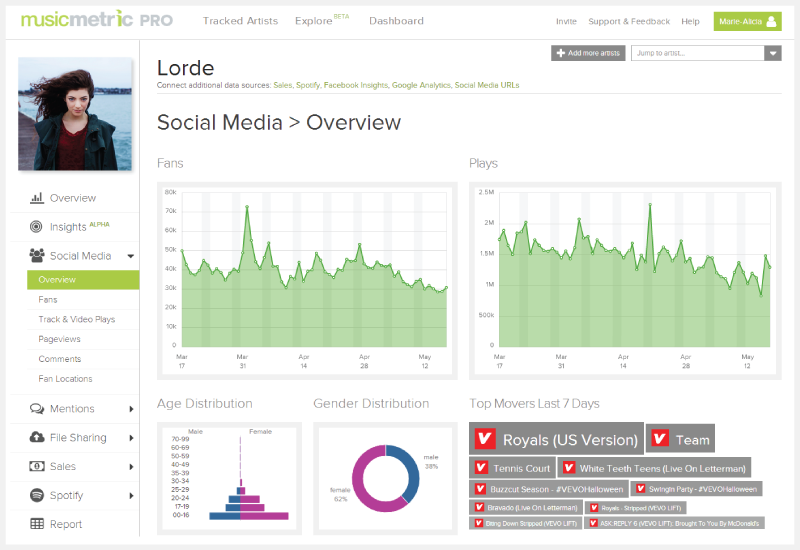
musicmetric

As you may know, iTunes has seen a steep declines in music sales because consumers don`t want to buy music. They want to stream the music and as the iTunes sales are plummeting, people are flocking to steaming platforms like Spotify, Deezer and YouTube.

Apple bought Semetric behind Musicmetric which runs an analytics tool that help record labels, artists and others track the digital consumption of their music. It tracks the consumers behavior on YouTube, BitTorrent downloads, sales on iTunes and streams on Spotify.

Musicmetric is a six-year-old company which is well established, and they raised about $5 million (inkluding a $4,7 million round) in 2013. The deal is much like Spotify`s acquisition of Echo Nest in 2014. Spotify bought Echo Nest for $100 million.

It`s not clear to me whether Apple will close the brand Beats and roll it into iTunes. They were early on the market with iTunes, but not with their new streaming service. So, why should people change the streaming service?

Apple have a huge market out there and some of their opportunities can be first of all their platform. They need to come up with a new and innovative platform. They will also integrate Beats Music directly into the next version of their iOS mobile operating system, according to New York Times. In addition; they may drop the price of the subscription music service from the industry-wide standard of $10 per month.

The tool is also for TV-shows, films, e-books and links to social media, so Apple may have other plans than just their music streaming, because this is vital information for marketers. The tools are turning big data into big opportunities, and they can tell you all you need to know.


Disclaimer: The views expressed in this article are those of the author and may not reflect those of Shiny bull. The author has made every effort to ensure accuracy of information provided; however, neither Shiny bull nor the author can guarantee such accuracy. This article is strictly for informational purposes only. It is not a solicitation to make any exchange in precious metal products, commodities, securities or other financial instruments. Shiny bull and the author of this article do not accept culpability for losses and/ or damages arising from the use of this publication.

Leave a comment

Filed under Stocks

1% of the world’s population will own more wealth than the other 99% by next year

Did you say financial crisis? What crisis? Since the financial crisis the number of billionaires has more than doubled, according to Oxfam International. They has calculated that in 2014 the richest 85 people on the planet owned as much as the poorest half of humanity.

Last year the richest 85 people saw their wealth increase by half a million dollars every minute, and seven out of ten people live in countries where the gap between the rich and poor is worse than thirty years ago.

wef

Today there are 16 billionaires in sub-Saharan Africa, alongside the 358 million people living in extreme poverty. Every year, 100 million people are pushed into poverty because they have to pay for health care.

The executive Director of Oxfam International, Winnie Byanyima released the new report «Richest 1% will own more than all the rest by 2016» yesterday, and she says;

Extreme inequality isn`t just a moral wrong. We know that it hampers economic growth and it threatens the private sector`s bottom line.

The combined wealth of the richest 1 percent will overtake that of the other 99 percent of people next year unless the current trend of rising inequality is checked. Oxfam warned today ahead of the annual World Economic Forum meeting in Davos.

Byanyima will use her position at Davos to call for urgent action to stem this rising tide of inequality, starting with a crackdown on tax dodging by corporations, and to push for progress towards a global deal on climate change.

Wealth; Having it all and wanting more; a research paper published yesterday by Oxfam, shows that the richest 1 percent have seen their share of global wealth increase from 44 percent in 2009 to 48 percent in 2014 and at this rate will be more than 50 percent in 2016. Members of this global elite had an average wealth of $2.7 million per adult in 2014.

Of the remaining 52 percent of global wealth, almost all (46 percent) is owned by the rest of the richest fifth of the world’s population. The other 80 percent share just 5.5 percent and had an average wealth of $3,851 per adult – that’s 1/700th of the average wealth of the 1 percent.

Winnie Byanyima, Executive Director of Oxfam International, said: “Do we really want to live in a world where the one percent own more than the rest of us combined?

Twenty percent of billionaires have interests in the financial and insurance sectors, a group which saw their cash wealth increase by 11 percent in the 12 months to March 2014. These sectors spent $550 million lobbying policy makers in Washington and Brussels during 2013. During the 2012 US election cycle alone, the financial sector provided $571 million in campaign contributions.
Billionaires listed as having interests in the pharmaceutical and healthcare sectors saw their collective net worth increase by 47 percent. During 2013, they spent more than $500 million lobbying policy makers in Washington and Brussels.
Oxfam is concerned that the lobbying power of these sectors is a major barrier in the way of reforming the global tax system and of ensuring intellectual property rules do not lead to the world’s poorest being denied life saving medicines.

Pope Francis and Christine Lagarde (IMF) are among those warning that rising inequality will damage the world economy if left unchecked, while the theme of Thomas Piketty`s best selling book «Capital» was the drift back towards late 19th century levels of wealth concentration.

Oxfam made headlines at Davos last year with the revelation that the 85 richest people on the planet have the same wealth as the poorest 50 percent (3.5 billion people). That figure is now 80 – a dramatic fall from 388 people in 2010. The wealth of the richest 80 doubled in cash terms between 2009-14.

It`s not easy to be rich. Like Jack Ma (Alibaba) said; If you own 1 million you are the luckiest man in the world. If you own 100 million you got headache. If you own 1 billion you have a huge responsibility for the society. Most of the rich end up being philanthropists.

World Economic forum in Davos starts tomorrow.


Disclaimer: The views expressed in this article are those of the author and may not reflect those of Shiny bull. The author has made every effort to ensure accuracy of information provided; however, neither Shiny bull nor the author can guarantee such accuracy. This article is strictly for informational purposes only. It is not a solicitation to make any exchange in precious metal products, commodities, securities or other financial instruments. Shiny bull and the author of this article do not accept culpability for losses and/ or damages arising from the use of this publication.

Leave a comment

Filed under Uncategorized

Cautious Stock Market Investors

U.S markets will be closed today in observance of the Martin Luther King Jr holiday. Some markets will be open like futures, but I will stay away from the market today because of the lack of volume and liquidity.

I will follow oil and gold prices and all the commodity traders should keep in mind that Crude Oil inventories will be released on Thursday at 11:00am, instead of the normal Wednesday 10:30 am release due to Monday`s holiday.

Gold is on the move and can go up about 25%, and the precious metal is the best performing asset class so far this year. It`s golden days for day traders. Take a look at the oil price. It`s like roller coaster, jumping up and down, and oil had the biggest gain in 2 1/2 years, ending the trading session of friday 5,82% higher.

The reason why the stock market didn`t follow the oil price on friday can be the disappointing retail sales report in early trading on friday. Retail sales dropped 0,9% vs a 2% forecast. The S&P ended Friday with a 27 point gain, and ended the week 25 points lower. That`s down 1,24% for the week.

The Dow saw triple digit profits on Friday with a 191 point gain, and it closed at 17511,57, wrapping up the week with a 226 point loss. Friday`s Preliminary Consumer Confidence report was a beacon of hope for the bulls. The report not only beat expectations. That`s the highest level in 11 years!

A number of questions marks seem to have investors leaning back on their heals this year. This is; plummeting oil prices, geopolitical turmoil and continued divergence between the world`s major economies like Japan, China, U.S and the Euro zone.

All the investors eyes are on the world`s central banks. The Davos meeting later on this week will be interesting, and the ECB is expected to deliver a stimulus package later this month. Investors will wait for definitive word from the ECB regarding its widely anticipated stimulus plan.

Bond market rose across the board as interest rates dropped lower, with the 10-year Treasury rate falling below 2%. The downtrend in rates is not good, and is a symptom of deflationary pressures which is worse than inflation. Plummeting energy prices are adding fuel to the fire.

The U.S dollar continued its bullish climb last week, putting downward pressure on the commodity sector as a whole. This trend can last awhile longer.

Investors are cautions and it seems everyone is a bit hesitant to commit to new, bullish positions until some questions are resolved. I will wait for a clearer trend to emerge and 1,200 in small-cap stocks need to break before I call the bullish trend in equities alive.


Disclaimer: The views expressed in this article are those of the author and may not reflect those of Shiny bull. The author has made every effort to ensure accuracy of information provided; however, neither Shiny bull nor the author can guarantee such accuracy. This article is strictly for informational purposes only. It is not a solicitation to make any exchange in precious metal products, commodities, securities or other financial instruments. Shiny bull and the author of this article do not accept culpability for losses and/ or damages arising from the use of this publication.

Leave a comment

Filed under Commodities, Quantitative Easing, Stock market