
In the early 1930`s, more people emigrated from the United States than to it

I looked up at the sky yesterday and saw a flock of birds coming in to our country as they usually do every year. Bird migration is the regular seasonal movement and has been recorded as much as 3,000 years by Ancient Greek authors like Aristotle and Homer.

The primary motivation for migration appears to be food and they are free to go were they want to hunt. The birds are welcome and they are not doing something illegal. How can a bird be illegal? Human activities have threatened many migratory bird species and that is a huge problem.

People are also moving from one country to another and that is called Immigration. Just ask the indians.


immigrant


Immigrants are motivated to leave their former countries of citizenship, or habitual residence, for a variety of reasons, including a lack of local access to resources, a desire for economic prosperity, to find or engage in paid work, to better their standard of living, family reunification, retirement, climate change or environmentally induced migration, exile, escape from prejudice, conflict or natural disaster, or simply the wish to change one`s quality of life.

Many people claim they are threatened by a bunch of immigrants that are refusing to assimilate to their culture and their way of life. They claim they are illegal aliens, but that is not true because a human being can never be illegal.

Killing is illegal.

Columbus returned to America in 1493, but this time he was not alone. He brought a force of 17 ships. He began to implement slavery and mass-extermination of the Taino population of the Caribbean.

The Europeans took indians lands and saw themselves as the superior culture bringing civilization to an inferior culture. The colonial world view split reality into popular parts; good and evil, body and spirit, man and nature, head and hear, European and primitive.

The world view which converted bare economic self-interest into noble, even moral, motives was a notion of Christianity as the one redemptive religion which demands fealty from all cultures. In this remaking of the American Indians the impetus drove the conquistador`s invading wars not exploration, but the drive to expand an empire, not discovery of new land, but the drive to accumulate treasure, land and cheap labor.

We are billions of people on this planet with so many different cultures which is the expression of people`s creativity. Everything they make which is distinctively theirs like: language, art, music, healing, religion, cooking, agriculture, style and the institutions governing social life.

It all boils down to one thing: Respect!


respect2


In 2013, the United Nations estimated that there were 231, 522, 215 immigrants in the world which is 3,25 percent of the world population. The United Arab Emirates has the largest proportion of immigrants in the world, followed by Qatar.

London has become multiethnic as a result of immigration. In 2008, Black British and British Asian children outnumbered white British children by about 3 to 2 in government-run schools.

American immigration history can be viewed in four epochs: the colonial period, the mid-19th century, the start of the 20th century, and post-1965. Each period brought distinct national groups, races and ethnicities to the United States.

During the 17th century, approximately 400,000 English people migrated to Colonial America. Over half of all European immigrants to Colonial America during the 17th and 17th centuries arrived as indentured servants.

The mid-19th century saw mainly an influx from northern Europe; the early 20th-century mainly from Southern and Eastern Europe; post-1965 mostly from Latin America and Asia.

Historians estimate that fewer than 1 million immigrants came to the United States from Europe between 1600 and 1799. The 1790 Act limited naturalization to «free white persons».

It was expanded to include blacks in the 1860s and Asians in the 1950s. In the early years of the United States, immigration was fewer than 8,000 people a year, including French refugees from the slave revolt in Haiti.

After 1820, immigration gradually increased. From 1836 to 1914, over 30 million migrated to the United States. The death rate on these transatlantic voyages was high, during which one in seven travelers dies.

In 1875, the nation passed its first immigration law, the Page Act of 1875.

After an initial wave of immigration from China following the California Gold Rush, Congress passed a series of laws culmination in the Chinese Exclusion Act of 1882, banning virtually all immigration from China until the laws repeal in 1943. In the late 1800s, immigration from other Asian countries, especially to the West Coast, became more common.

The peak year of European immigration was in 1907, when 1,285,349 persons entered the country. By 1910, 13,5 million immigrants were living in the United States.

Immigration patterns of the 1930`s were dominated by the Great Depression. In 1929, there were 279,678 immigrants recorded, but in 1933, only 23,068 came to the U.S.

In the early 1930`s, more people emigrated from the United States than to it.

Immigrants is positive for the economy and makes the average American better off. Immigrants contribute more than $10 billion a year to the economy. The Kauffman Foundation index of entrepreneurial activity is nearly 40% higher for immigrants than for natives.

Immigrants were involved in the founding of many prominent American high-tech companies, such as Google, Yahoo, YouTube, Sun Microsystems, and eBay.

All Americans are immigrants, and Arnold Schwarzenegger is one of them. He moved to the United States in September 1968 at the age of 21, speaking little English. He became the biggest movie star in the world in the 1990`s and are the most famous immigrant in America.

What gave him the opportunities and were he is today is the open arms of Americans. He said; «I have been adopted by America.

Schwarzenegger is born in Thal, Styria, Austria, and his father was the local chief of police, and served in World War II as a Hauptfeldwebel after voluntarily joining the Nazi Party and SA in 1938. According to Arnold, both his parents were very strict.

He grew up in a Roman Catholic family, and in an interview with Fortune in 2004, he told how he suffered what «would now be called child abuse» at the hands of his father: «My hair was pulled, and I was hit with belts. So was the kid next door. Many of the children I`ve seen were broken by their parents, which was the German-Austrian mentality.

They didnt want to create an individual. It was about conforming. I was one who did not conform, and whose will could not be broken. Therefore, I became a rebel. Every time I got hit, and every time someone said, «you cant do this», I said;

“this is not going to be for much longer, because I`m going to move out of here. I want to be rich. I want to be somebody.”

Schwarzenegger served two terms as the 38th Governor of California from 2003 until 2011.

 

sb-wall5


Disclaimer: The views expressed in this article are those of the author and may not reflect those of Shiny bull. The author has made every effort to ensure accuracy of information provided; however, neither Shiny bull nor the author can guarantee such accuracy. This article is strictly for informational purposes only. It is not a solicitation to make any exchange in precious metal products, commodities, securities or other financial instruments. Shiny bull and the author of this article do not accept culpability for losses and/ or damages arising from the use of this publication.
Leave a comment

Filed under Uncategorized

China goes down and Africa up

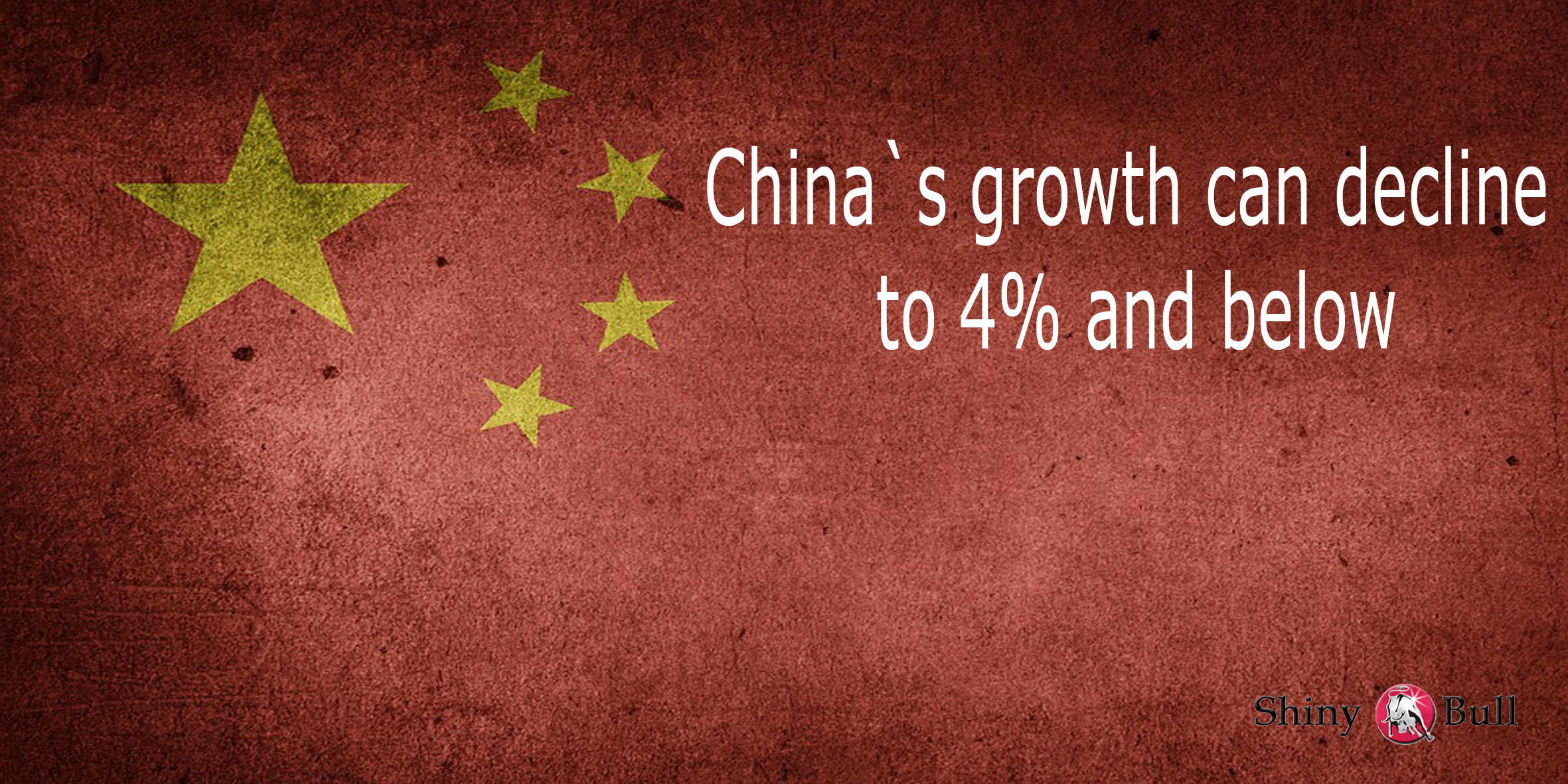
Chinas GDP is still high, but its falling and it can go below 4%. The Chinese economy grew an annual 6,8 percent in the fourth quarter of 2015 which is the weakest since first quarter of 2009. For the full year of 2015, GDP expanded by 6,9 percent which is the weakest growth in 25 years.

China`s GDP annual growth rate came in at 3,80 percent in the fourth quarter of 1990, and peaked at an all-time high of 15,40 percent in the first quarter of 1993. GDP annual growth rate in China averaged 9,88 percent from 1989 until 2015.


China


Consumer prices in China rose 2,3 percent YoY in February of 2016 which is up from 1,8 percent in January. This is the highest inflation rate since July 2014. Inflation rate in China reached a record low of -2,20 percent in April of 1999, and an all-time high of 28,40 percent in February of 1989. Inflation rate in China averaged 5,51 percent from 1986 until 2016.

The most important components of the CPI basket in China, are Food with a 31,8 percent of total weight and Residence at 17,2 percent. Consumer prices rose 2,3 percent in February this year and that is the highest inflation rate since July 2014, as politically sensitive food prices surged 7,3 percent over the Lunar New Year holiday and cold weather.

Africa is another growth story. A quick look at the chart tell us a new fx bull market is imminent. Rand looks great vs pound.


Kenya


South Sudan is the youngest nation in the world and they are officially recognised as a country in July 2011. Despite taking about 75 percent of old Sudan`s oil reserves, it is one of the poorest regions in Africa and government revenues are still dependent of foreign aid.

They had massive growth in 2014. South Sudan expanded 15,90 percent in 2014 which is an all-time high, but it`s a young nation and keep in mind that they reached a record low of -46,10 percent in 2012.

Kenya has been experiencing steady growth for some years now. The World Bank predicted a growth rate of 6,6 percent in 2016 and 7 percent next year. How are they doing it? The growth comes from massive investments in infrastructure and jobs, and they are taking steps to improve the business climate, and a boost in exports.

This can be risky.

The threat of terrorist attacks from Al-Shabaab cause security concerns. Kenyas tourism industry is one of the countrys key sectors and Al-Shabaab has a negative impact on that industry. Their manufacturing sector has also been stagnant for some years. In addition, there is a lack of competition and minimal production.

Kenya is still highly dependent on agriculture and the sector made a significant 26 percent of the countrys GDP annually, and another 25 percent indirectly. The sector accounts for 65 percent of Kenyas total export.

Manufacturing is also important for Kenya`s growth. Investment opportunities include manufacturing of fertilizer, agro-processing, machine tools and machinery, garments, and engineering products for both domestic and export markets.


sb-wall5


Disclaimer: The views expressed in this article are those of the author and may not reflect those of Shiny bull. The author has made every effort to ensure accuracy of information provided; however, neither Shiny bull nor the author can guarantee such accuracy. This article is strictly for informational purposes only. It is not a solicitation to make any exchange in precious metal products, commodities, securities or other financial instruments. Shiny bull and the author of this article do not accept culpability for losses and/ or damages arising from the use of this publication.
1 Comment

Filed under Emerging markets

French music industry declined by 7% but streaming increased by 47% in 2015

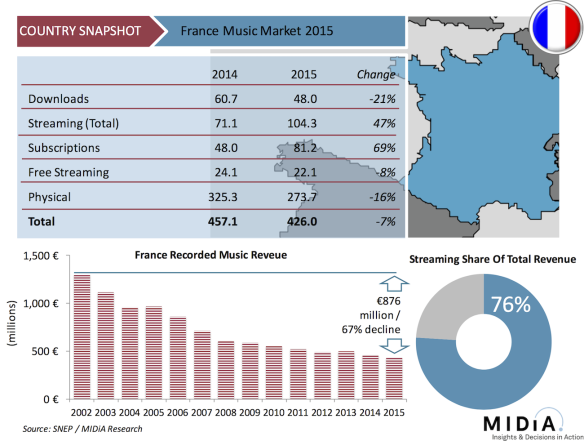
Take a look at the chart below. It shows that the French music streaming has increased by a whopping 47% last year. At the same time you can see from the chart that downloads and Physical are both declining by -21% and -16%.

Subscriptions is up by 69% which is pretty impressive. Free streaming is also up, but only by 8%. All in all you can see from the chart that the French recorded music market registered a whopping 7% decline last year.


france-decline1


French music had another 7% decline in 2014, and the result is that France`s recorded music market is 67% smaller that it was in 2000. We are talking about €876 million and this is heart breaking. Streaming goes straight up, while the revenue goes straight down.

We know that 99% of the French people listen to music, on average 2 hours and 25 minutes per day, and 3 out of 4 French people could not live without it. So, streaming should continue to rise in the future.

Streaming is very important, but is still a minority player in France, increasing its market share from 16% in 2014 to 24% last year. Downloads declined and lost revenue of €12,7 million which is half the amount that streaming grew by €33,2.

If you add the decline in downloads sales and physical sales together, you find that the amount is double what streaming added. Download and physical sales declined by €64,3 million, so revenue from streaming in France has to double to fill that gap.

I belive that many of the consumers in the streaming market are the same in the download and physical market. What we see is a shift from a sales model to an access model. You can imagine how easy it is to be a DeeJay now as you can pay only $9,99 for 30 million songs instead of buying each and one of them.

According to the French government, the music industry represents about 241,000 jobs in France, and one of the French export champions is the 48-year-old DeeJay David Guetta who have sold 9 million albums and 30 million singles worldwide.

David Guetta`s father is of Moroccan Jewish descent, and in 2013, Billboard crowned his hit «When love takes over» as the number one dance-pop collaboration of all time. The unemployment rate is extremely high in France, but David Guetta is not in that category.

The France unemployment rate is 10,3% (near all-time high of 10,7% in 1997). This is the number of people looking for a job as a percent of the labour force. The France youth unemployment rate is even more shocking at 25,9% (near all-time high of 26,2% in 2012).

France has a huge social problem and the suburb residents are mostly Arab or African, often Muslim and poor. One out of three live below the poverty line. The suburbs are zones of separation. Those outside Paris are set apart from the capital by pèriphèrique, a roaring eight-lane road that encircles the city.

On one side is success, culture, and wealth (Modern France). On the other is the banlieue (a place Parisians never go). Some 7,5% of French live in this «other France».

France claims the greatest social equality in the world and officially bans ethnic and religious identification, and Marine Le Pen`s far-right party is growing. Their campaign target minorities, implying they were unwanted and un-French.

Not only the suburbs of Frances cities are home to the countrys poor. People living in rural areas are «descending into poverty», and many of them can feel socially excluded.

They are all potentially streaming consumers.


sb-wall5


Disclaimer: The views expressed in this article are those of the author and may not reflect those of Shiny bull. The author has made every effort to ensure accuracy of information provided; however, neither Shiny bull nor the author can guarantee such accuracy. This article is strictly for informational purposes only. It is not a solicitation to make any exchange in precious metal products, commodities, securities or other financial instruments. Shiny bull and the author of this article do not accept culpability for losses and/ or damages arising from the use of this publication.

Leave a comment

Filed under Uncategorized

Music Streaming increased in 2015

2015 was a milestone year for streaming music in the United States. For the first time, streaming was the largest component of industry revenues, comprising 34,3% of the market, just slightly higher than digital downloads, according to RIAA.

All parts of the streaming music market grew in 2015, and total streaming revenue exceeded $2 billion for the first time ever. Combining all categories of streaming music like subscription, ad-supported on-demand, and SoundExchange distributions, revenue grew 29% to $2,4 billion.

The number of paid subscriptions grew 40% to an average of 10,8 million for the full year.


RIAA


Apple Inc launched its Apple Music last summer and I think that helped the streaming category a lot. Subscription and streaming went straight up. The streaming category includes revenue from subscription services such as paid versions of Spotify, Deezer and Apple Music to name a few.

It also comes from streaming radio services that are distributed by SoundExchange like Pandora, SiriusXM, and other internet radios. On top of that you have YouTube, Vevo and ad-supported Spotify.

This is all good for the artists and music industry, but for the distributors it can be different because they are all selling the same $9,99 product. They all have the same 30 million tracks and their target is the same group of consumers.

The rise of music streaming is clear. Streaming accounts for $2,4 million in 2015. Up from $1,9 in 2014. Downloads is down from $2,5 to $2,3 million in 2015, while physical is down from $2,2 to $2,0 million in 2015.

This data tells us that the music industry had the most balanced revenue mix in recent history were 1/3 of revenue coming from each of the major platform categories; streaming, permanent downloads and physical sales.

Streaming continue to increase its market share, but it is a big surprise for someone to see that Vinyl LPs were up 32% by value versus the prior year, and at $416 million Vinyl LPs were at their highest level since 1988.


phonogram


Phonogram is a patent by Ritter P Winne. A citizen of the United States, residing at Brooklyn, in the country of Kings and State of New York. The patent is from 4 December 1906 which means that the phonogram is celebrating 100 year on December 4, 2016.

Some people still print their news on dead paper. Some people still print their music on dead vinyl, and some people still use horses. But the majority prefer cars.


sb-wall5


Disclaimer: The views expressed in this article are those of the author and may not reflect those of Shiny bull. The author has made every effort to ensure accuracy of information provided; however, neither Shiny bull nor the author can guarantee such accuracy. This article is strictly for informational purposes only. It is not a solicitation to make any exchange in precious metal products, commodities, securities or other financial instruments. Shiny bull and the author of this article do not accept culpability for losses and/ or damages arising from the use of this publication.

Leave a comment

Filed under Uncategorized

Sell your shares in Zimbabwe before April 1

Chinas GDP growth were 14% a few years ago, but now the worlds second-largest economy is lowering the growth target to about 6,5% – 7% in 2016. 7% is still very good, but the economy is slowing down faster than expected.

The economic growth is slowing while China`s Central government budget deficit as a percentage of GDP is growing. The target is 3% in 2016, and China will continue to be a global economic engine. But what is the next China?

It can be Africa which is a hot commodity, but some investors are in doubt. They think it is unstable and unsafe. Some claims it is so much violence in Kenya, but the infrastructure in Kenya makes it a worthy long-term investment.

Africa

Africa is a growing economy with a huge and young population. It has so far been a daunting place to start and run a company there. Very often, it is expensive to start a new business in Africa.

Bank loans come with double-digit interest rates. The electricity grid is sub-par and diesel generators cost a fortune, but many thing are getting better according to the World Bank.

There is a lot of reform happening in Africa right now.

The World Bank publishes a parallel ranking of the countries that have pushed through the most business-friendly reforms. Five African countries are on the top-10 list, which is Kenya, Mauritania, Senegal, Benin and Uganda.

Botswana is the least corrupt country in Africa which is an important factor for entrepreneurs and their investors. This is a country that rely heavily on revenues from the diamond trade to fuel its growth.

Rwanda is an economic success story. Many years of reforms have made it much more easy to open and run a business, and it is far easier to get credit there. Only one country is better and that is Mauritius.

It has commercial links to India, China and the east coast of Africa. Mauritius is often on top of the ranking list for competitiveness and ease of doing business due to its liberal approach to regulation and taxation. What about Zimbabwe?

Zimbabwe

Zimbabwe had rough days, particularly between 2005 and 2008, were hyperinflation decimated the economy. The Central Bank issued currency with expiration dates of six months, effectively longer than the actual life of the currency.

The American dollar replaced the Zimbabwean dollar as the country`s main currency, and now Zimbabwe has started to retiring it’s almost worthless local currency in favor of the U.S dollar.

35 quadrillion Zimbabwean dollars are equal to US $1.

Monthly inflation rate hit 3,5 million percent eight years ago, and prices doubled every 25 hours. Zimbabwe has the second-worst hyperinflation in history, behind post-war Hungary.

It all started in 2000, when Mugabe changed his economic policy and implemented land reform. Mugabe granted farmland owned by white citizens to indigenous black Zimbabweans. They turned from an agriculture exporter to an importer, which resulted  in 94 percent unemployment rate and hyperinflation.

Zimbabwe is known for its mineral resources. It has the world`s second largest deposit of chrome and platinum after South Africa, and President Robert Mugabe wants to take over all diamond operations.

Zimbabwes leader since 1987, Robert Mugabe eager to nationalize Zimbabwes diamond industry, and news from Zimbabwe leaves little to be desired about the small former British colony.

He says the country`s wealth had been looted by the existing miners.

“The state will now own all the diamonds in the country. Companies that have been mining diamonds have robbed us of our wealth. That is why we have now said the state must have a monopoly,” said Mugabe in an interview with the state broadcaster earlier this month.

Foreign investor also need to hurry up and sell their shares to blacks or close before April 1st.

Companies owned by foreigners face closure unless they sell or give up 51% of their shares to black Zimbabweans by April 1, said indigenization Minister Patrick Zhuwao.

“Comply by that date or close shop, comply by that date or face the full wrath of the law,” Bloomberg quotes Zhuwao, who is also President Robert Mugabe`s nephew.

IMF asked the Mugabe administration to clarify Zimbabwe`s policy on black empowerment. Zimbabwe has agreed to major reforms including compensation for evicted white farmers.

President Mugabe is known for evicting white farmers. In 2010, the Guardian reported that Mugabe used land reforms to reward his allies rather than ordinary black Zimbabweans. The newspaper`s sources reported Mugabe and his supporters owned about 40% of the land seized from white farmers.

The white farmers received no compensations after being evicted.

«If white settlers just took the land from us without paying for it, we can, in a similar way, just take it from them without paying for it,» said Mugabe.


sb-star

Disclaimer: The views expressed in this article are those of the author and may not reflect those of Shiny bull. The author has made every effort to ensure accuracy of information provided; however, neither Shiny bull nor the author can guarantee such accuracy. This article is strictly for informational purposes only. It is not a solicitation to make any exchange in precious metal products, commodities, securities or other financial instruments. Shiny bull and the author of this article do not accept culpability for losses and/ or damages arising from the use of this publication.

Leave a comment

Filed under Commodities, Emerging markets, Politics, Stock market