Tag Archives: Politics

Jesus and God: The Anchor in Times of Loss

At Charlie Kirk’s funeral, the atmosphere was heavy with grief, yet also charged with hope. Friends, family, and followers reflected on Kirk’s legacy, weaving together memories of his activism with deep expressions of faith.

What stood out most wasn’t politics or ideology. It was the repeated invocation of Jesus and God as the ultimate source of comfort.

When tens of thousands gathered to honor Charlie Kirk, it quickly became clear that the memorial was not merely about a man. It was about something far greater: faith in Jesus Christ and the eternal hope found in God.

(Picture: A golden sunrise breaking through clouds – symbolizing hope, resurrection, and God’s eternal light after darkness.)

Speakers reminded the congregation that Kirk’s life, though tragically cut short, was not the end of his story. “Charlie is watching from above,” one said, pointing to the Christian belief in eternal life. The message was clear: while death silences the body, the soul remains alive in the presence of God.

This belief is not abstract. The Bible itself reassures the grieving: “He will wipe away every tear from their eyes, and death shall be no more” (Revelation 21:4). Such promises shift the perspective from despair to hope, from loss to continuity.

The funeral also underlined a greater truth. That faith provides resilience when the world seems unbearable. Whether one personally shares this faith or not, the testimony of the mourners demonstrated how belief in God can transform sorrow into strength.

Speakers repeatedly returned to the same truth. Charlie’s life was grounded in the Gospel. His wife, Erika Kirk, delivered words that stunned many: “I forgive him because it is what Christ did, and it is what Charlie would do.” In those few sentences, she reminded the world that forgiveness is not a sign of weakness, but rather a divine strength.

Her words echoed Jesus Himself: “Father, forgive them, for they do not know what they are doing.”

The service emphasized that political ideology is not the ultimate solution for humanity’s struggles. As Tucker Carlson boldly put it, “The real solution is Jesus, not politics.” Senator Marco Rubio also spoke of salvation history, pointing to Christ’s suffering, death, resurrection, and promised return.

These are not abstract ideas. They are the very heartbeat of Christianity. Charlie Kirk’s friends and loved ones testified that his mission was not only to debate culture and politics but also to lead people to Christ.

He wanted to save young men from despair, hatred, and sin, pointing them to a better path in God.

Faith also framed the way people spoke about Charlie’s death. Again and again came the assurance that he is “watching from above.” That his soul is in the hands of God. This belief brought comfort to thousands, serving as a reminder that life is more than what we see.

Ultimately, the memorial turned into a proclamation: Jesus is Lord, God is faithful, and forgiveness is possible even in the darkest hour.

The takeaway is simple but profound: human leaders rise and fall, tragedies strike without warning, but God remains constant. In the words of Christ:

I am the way, the truth, and the life. No one comes to the Father except through me.”

Charlie Kirk’s life and death are now a testimony to that truth.

Many people around the world don’t believe. Many are sceptical, and perhaps the deepest response to skepticism about faith comes not from a preacher, but from psychiatrist Carl Jung himself. He had a lot of clients and saw things ordinary people didn`t see.

When asked if he believed in God, Jung replied: “Believe? I know!”

That certainty. The unshakable conviction that God is real was the foundation of Charlie Kirk’s life and mission. It is also the hope that sustains millions today.

Disclaimer: The views expressed in this article are those of the author and may not reflect those of Shinybull.com. The author has made every effort to ensure the accuracy of the information provided; however, neither Shinybull.com nor the author can guarantee the accuracy of this information. This article is strictly for informational purposes only. It is not a solicitation to make any exchange in precious metal products, commodities, securities, or other financial instruments. Shinybull.com and the author of this article do not accept culpability for losses and/ or damages arising from the use of this publication.

Leave a comment

Filed under Politics

From 9/11 to 10/11

The Assassination of Charlie Kirk and Its Impact on America

Many people remember September 11, 2001 — a day that changed America forever. Now, September 10, 2025, will also be etched into history.

On that day, a sniper shot and killed Charlie Kirk in Utah. But this was not only an attack on a man — it was an attack on the very foundations of the United States: democracy, freedom of speech, and the core American values that millions cherish.

Former President Donald Trump said in a speech afterward:

“The assassin tried to silence Charlie with a bullet, but he failed. We will ensure that his voice, his message, and his legacy will live on for countless generations.”

Paradoxically, the attempt to silence Kirk has amplified his voice. His message now resonates louder than ever before.

A Pattern of Violence

This is not the first act of political violence against conservative figures.
Donald Trump himself survived an assassination attempt last year. Congressman Steve Scalise was shot. A man armed with a rifle went to Justice Brett Kavanaugh’s home. Rand Paul was violently attacked by a neighbor, breaking his ribs.

Even beyond politics, chaos has escalated: riots in Los Angeles, trans shooters killing children, Jewish people shot outside an embassy, and ICE agents receiving death threats so severe that they wear masks to protect their families. Elon Musk’s car was reportedly firebombed.

Social Media’s Dark Celebration

Perhaps most shocking of all were the reactions online. The Daily Mail reported on videos showing left-wing extremists openly celebrating Kirk’s death. Many said he “deserved to be shot.”

For many Americans, this response was deeply disturbing — not just because of the murder itself, but because of the apparent normalization of hate and violence on social media.

Part of a Tragic American Pattern

Kirk’s name now joins a tragic list in American history: Abraham Lincoln, John F. Kennedy, Robert F. Kennedy, Martin Luther King Jr., and Malcolm X — all assassinated for standing up for their beliefs.

The FBI has stated that the ammunition used in the Kirk assassination was engraved with transgender and antifascist slogans. Utah police noted that the state still has the death penalty, and prosecutors are considering its use in this case.

A Turning Point?

Charlie Kirk was the CEO of Turning Point Action, a powerful voice for conservative youth. His death raises a haunting question:

Will this be a turning point for America — or just another chapter in a growing era of political hatred?

One thing is sure: just as 9/11 changed America, 10/11 will be a date the world will remember.

Disclaimer: The views expressed in this article are those of the author and may not reflect those of Shinybull.com. The author has made every effort to ensure the accuracy of the information provided; however, neither Shinybull.com nor the author can guarantee the accuracy of this information. This article is strictly for informational purposes only. It is not a solicitation to make any exchange in precious metal products, commodities, securities, or other financial instruments. Shinybull.com and the author of this article do not accept culpability for losses and/ or damages arising from the use of this publication.

Leave a comment

Filed under Politics

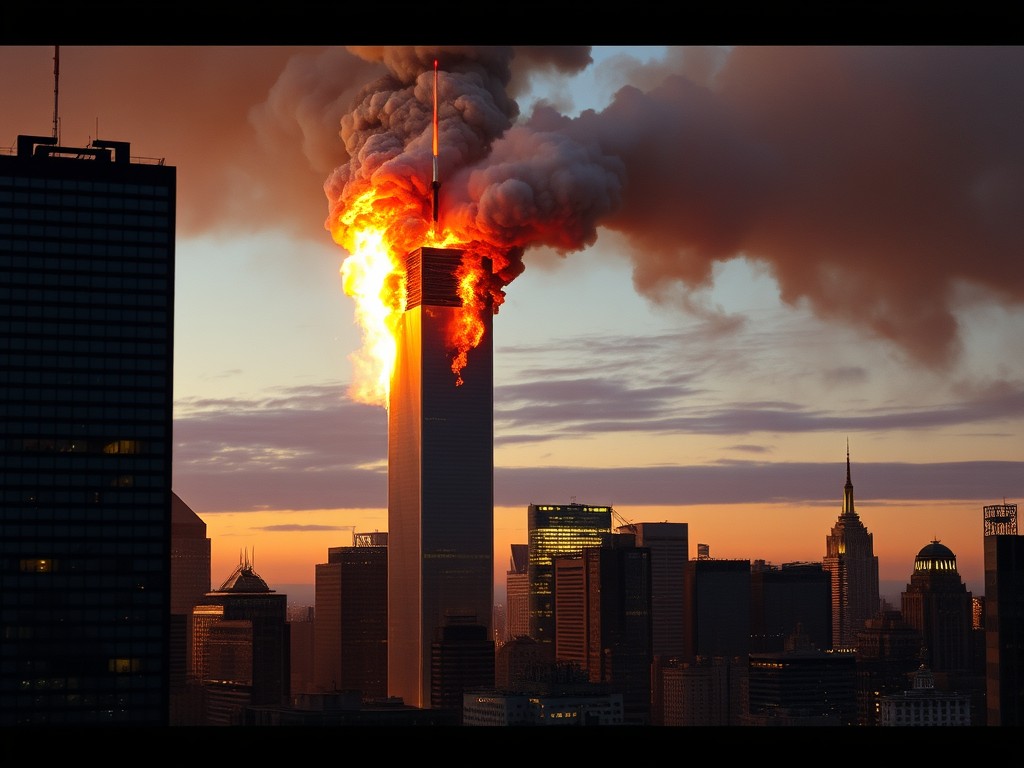
The Global Debt Crisis is an Unseen Time Bomb

When discussions about debt dominate the headlines, the United States is often the central focus. With a debt-to-GDP ratio of 124.3%, it’s easy to understand why. But the U.S. is far from alone in facing a massive fiscal challenge. Other advanced economies are carrying even heavier burdens, and the global implications are both profound and often overlooked.

Japan: The Debt Giant

Japan holds the world’s highest debt-to-GDP ratio at 236.7%. Decades of low growth, heavy public spending, and an aging population have pushed the country into uncharted fiscal waters. While Japan has avoided crisis thanks to strong domestic savings and near-zero interest rates, the sustainability of this model is under constant scrutiny.

Italy: Europe’s Weak Link

Close behind is Italy, with a staggering 135,3% debt-to-GDP ratio. Burdened by structural economic weaknesses, sluggish productivity, and political instability, Italy has long been considered one of the eurozone’s most fragile economies. A sudden shock, whether financial or political, could easily ripple across the European continent.

The United States: A Growing Concern

At 124.3%, U.S. debt levels are higher than at any point since World War II. Unlike Japan, the U.S. relies heavily on international investors to finance its debt. Rising interest rates and political gridlock over fiscal policy only increase the risks. Given the U.S. dollar’s central role in the global financial system, instability in this market could have widespread consequences worldwide.

France and Canada: Silent Strugglers

France, at 113%, and Canada, at 110.8%, are also far above the traditional sustainability threshold (often pegged at around 60% of GDP). Both countries face demographic pressures, high social spending, and the challenge of funding welfare states without stifling economic growth.

Why It’s Unsustainable

High debt levels limit governments’ flexibility. In times of crisis, whether another pandemic, a war, or a financial meltdown, nations with already bloated balance sheets have little room to maneuver. Debt servicing costs also divert resources away from critical areas, such as healthcare, education, and infrastructure.

A Global Time Bomb

The global debt problem isn’t isolated. The IMF warns that mounting debt in advanced economies could spill over into emerging markets, sparking instability across the financial system. With inflation still high and interest rates rising, debt servicing costs are growing rapidly. Unless meaningful reforms are enacted, the world may be heading toward a reckoning.

Conclusion

It’s easy to point fingers at the U.S., but the debt problem is truly a global issue. Japan, Italy, France, and Canada. All highly developed nations are carrying unsustainable debt loads that could destabilize the global economy. For now, markets remain calm, but history has shown that debt crises often strike suddenly and with devastating force. Without coordinated efforts to rein in borrowing and restore fiscal discipline, the next major crisis may already be quietly brewing.

Disclaimer: The views expressed in this article are those of the author and may not reflect those of Shinybull.com. The author has made every effort to ensure the accuracy of the information provided; however, neither Shinybull.com nor the author can guarantee the accuracy of this information. This article is strictly for informational purposes only. It is not a solicitation to make any exchange in precious metal products, commodities, securities, or other financial instruments. Shinybull.com and the author of this article do not accept culpability for losses and/ or damages arising from the use of this publication.
Leave a comment

Filed under Emerging markets, Politics

Human Rights Advocates and the Risks They Face – From Jesus to Modern Times

Throughout history, a clear pattern emerges: those who stand up for justice, freedom, and human dignity often become targets of violence or repression. From religious leaders to political activists, many have paid the ultimate price—or suffered imprisonment—for their message.

Lincoln was shot because he was working on human rights. John F. Kennedy was shot because he was working on human rights. Martin Luther King Jr was shot because he was working on human rights. Olof Palme was shot because he was working on human rights. Lincoln was shot at a theater. So was Olof Palme.

Jesus – The First Great Human Rights Advocate?

Jesus of Nazareth, who lived over 2,000 years ago, can be seen as one of the earliest and most significant champions of human dignity. He taught love, forgiveness, and equality, consistently placing the marginalized and oppressed at the center of his message.

His teachings challenged both religious authorities and the political powers of his time, symbolizing a new understanding of justice and humanity. As a result, he was perceived as a threat—not only to religious leaders but also to the Roman authorities. His fate, crucifixion, demonstrates how power often reacts violently to those who challenge it.

Lincoln, Kennedy, MLK, Gandhi, Palme, Thrane, and Other Advocates

History echoes itself in remarkable ways:

  • Abraham Lincoln abolished slavery in the United States. He was assassinated in 1865 by John Wilkes Booth, who viewed him as a threat to the Southern states.
  • John F. Kennedy, U.S. President and advocate for civil rights, was shot in 1963.
  • Martin Luther King Jr. led the fight for African American rights and was assassinated in 1968.
  • Robert F. Kennedy was killed during the 1968 presidential campaign; he, too, championed equality and justice.
  • Mahatma Gandhi fought for India’s independence and nonviolent resistance, and was assassinated by a Hindu extremist in 1948.
  • Óscar Romero, Archbishop of El Salvador, was murdered in 1980 for defending the poor and oppressed.
  • Olof Palme, Prime Minister of Sweden, was assassinated in 1986 for his outspoken support for human rights, both domestically and internationally. Palme advocated for social welfare, equality, and global justice, and spoke out against oppression worldwide.
  • Marcus Thrane, Norway (1817–1890), was a pioneering labor and social reform leader. He fought for workers’ rights, universal male suffrage, and social equality. Though not assassinated, Thrane was imprisoned for challenging authorities, showing that human rights advocacy often provokes severe repression.

Why These Individuals Were Seen as Threats

Human rights advocates challenge power structures:

  • They question privilege and the status quo.
  • They mobilize people and give a voice to the oppressed.
  • They become symbols—living icons of hope and change.

Extremists or authorities who respond with violence or repression may include:

  • Political extremists who aim to maintain unjust systems.
  • Religious extremists who feel threatened by their beliefs or traditions.
  • Authoritarian regimes are unwilling to tolerate criticism or popular mobilization.

A Timeline of Human Rights Advocates Who Faced Assassination or Repression

YearNameRole / ContributionCircumstances
~30 ADJesus of NazarethAdvocated love, equality, and justiceCrucified in Jerusalem; seen as a threat by religious and political powers
1851Marcus ThraneNorwegian labor and social reformerImprisoned for activism and challenging authorities
1865Abraham LincolnU.S. President; abolished slaveryAssassinated by John Wilkes Booth
1948Mahatma GandhiIndian independence leader; nonviolent resistanceAssassinated by Hindu extremist Nathuram Godse
1963John F. KennedyU.S. President; civil rights supporterAssassinated in Dallas
1965Malcolm XAfrican-American civil rights leaderAssassinated by political/religious extremists
1968Martin Luther King Jr.Civil rights leader; racial equalityAssassinated by James Earl Ray
1968Robert F. KennedyU.S. Senator; civil rights advocateAssassinated by Sirhan Sirhan
1980Óscar RomeroArchbishop; defender of the poorMurdered by military-backed death squad
1986Olof PalmePrime Minister of Sweden; human rights and global justiceAssassinated in Stockholm while walking home

A Pattern Through History

From Jesus to MLK, Gandhi, Palme, and Thrane, a consistent thread is evident: those who dare to fight for human rights place themselves at risk. Assassinations and imprisonments of such individuals are not random; they represent a perceived threat to power and control.

Yet, their deaths or repression often amplify their influence rather than end it. They become symbols inspiring millions, showing that the fight for justice continues even after the heroes are gone.

Conclusion

History teaches us that standing up for justice can be dangerous, but also essential. From the crucifixion of Jesus to modern human rights defenders like Olof Palme and reformers like Marcus Thrane, we see how power and oppression react to threats and how individuals can transform the world through courage and conviction.

Disclaimer: The views expressed in this article are those of the author and may not reflect those of Shinybull.com. The author has made every effort to ensure the accuracy of the information provided; however, neither Shinybull.com nor the author can guarantee the accuracy of this information. This article is strictly for informational purposes only. It is not a solicitation to make any exchange in precious metal products, commodities, securities, or other financial instruments. Shinybull.com and the author of this article do not accept culpability for losses and/ or damages arising from the use of this publication.

Leave a comment

Filed under Curiosity, Politics, Uncategorized

Lincoln and Kennedy: Coincidence or Something More?

For decades, people (including me/the editor) have been fascinated by the strange parallels between Abraham Lincoln and John F. Kennedy. Both were elected to Congress exactly 100 years apart, became president 100 years apart, were assassinated on a Friday, and were succeeded by men named Johnson. Their killers even share oddly similar details in their names.

At first glance, it almost feels supernatural—like history repeating itself in perfect rhythm. But is it really a mystery?

Historians point out that much of the similarity comes from selective perception. Out of the thousands of differences in their lives and presidencies, people naturally highlight the few coincidences that line up neatly. This is a classic example of confirmation bias: our brains are wired to notice patterns, even when they’re random.

Some “coincidences” are also simplified or exaggerated in retellings. For instance, John Wilkes Booth wasn’t really born in 1839 (he was born in 1838), and not every detail lines up perfectly. The myth has grown stronger as the story is passed along, making it sound more mysterious than it actually is.

So why do these parallels feel so compelling? Psychologists say it’s because humans crave meaning. We don’t like to think of history as chaotic or random; we prefer to imagine deeper connections. When two of America’s most famous presidents share some eerie overlaps, it’s easy to weave them into a narrative that feels fated.

Let`s take a closer look at all the coincidences, so we all can make up our own minds. What do you think? Is it a coincidence, and if not, what is it?

Did You Know? The Strange Coincidences Between Lincoln and Kennedy

Did you know that Abraham Lincoln and John F. Kennedy share a series of coincidences that almost sound too incredible to be true?

Lincoln was elected to Congress in 1846, while Kennedy followed exactly one century later, in 1946. Lincoln became president in 1860, and Kennedy in 1960. Both men placed civil rights at the heart of their political agendas.

The parallels don’t stop there. Both presidents were shot in the head, on a Friday, and both were succeeded by men named Johnson—Andrew Johnson (born 1808) after Lincoln, and Lyndon B. Johnson (born 1908) after Kennedy.

Even their assassins show a strange pattern. Lincoln’s killer, John Wilkes Booth, was born in 1838. Kennedy’s assassin, Lee Harvey Oswald, was born in 1939. Each is remembered by all three of their names—and each name contains exactly 15 letters.

The settings are equally eerie: Lincoln was shot in Ford’s Theatre, while Kennedy was shot in a Lincoln car, made by Ford. Booth fled a theater and was captured in a barn. Oswald fired from a warehouse and was captured in a theater.

Coincidence? Maybe. But the uncanny parallels between Lincoln and Kennedy have fascinated historians and the public alike for decades.

If It Isn’t Coincidence: The Mystery of Lincoln and Kennedy

For over half a century, people have wondered: could the eerie parallels between Abraham Lincoln and John F. Kennedy be more than mere coincidence?

If we set aside the skeptics’ explanations of chance and pattern-seeking, a few intriguing possibilities emerge.

Some imagine history as a cycle, repeating itself in hidden rhythms. In this view, Lincoln and Kennedy weren’t just two presidents separated by a century—they were actors cast in the same recurring drama, destined to face similar trials at similar moments in America’s story.

Others lean toward mystical explanations. Perhaps the two men were linked by fate, or even reincarnation: the same soul returning to guide the nation in moments of upheaval. Civil rights, unity, and the fight against division marked both presidencies. Was Kennedy continuing a mission Lincoln began? And what about MLK, who was a Civil rights Champion? Also, he was shot.

There’s also a conspiratorial lens. If powerful forces engineered both assassinations, the similarities might not be accidents at all, but deliberate echoes—details designed to send a chilling message across generations.

And then there’s the possibility of a psychological pattern. Maybe leaders who challenge the status quo—who push too hard on civil rights and equality—are always bound to meet resistance, no matter the century. The echoes we notice could simply be the shadow of power repeating itself.

Whether it’s fate, conspiracy, or the cycles of history, one thing is sure: the Lincoln–Kennedy parallels continue to haunt us, because deep down, we sense that history is never entirely random.

The Lincoln–Kennedy Enigma

Some call it a coincidence. Others whisper of fate.

A century apart, two men rose to lead America. Both spoke of unity, of civil rights, of a brighter tomorrow. Both carried the weight of a divided nation. And both met their end in the same way—on a Friday, by a bullet to the head.

Lincoln and Kennedy. Different centuries, same story. Their successors bore the same name. Their killers mirrored each other, right down to the letters in their names. The pattern is too precise, too elegant, too cruel to dismiss as chance.

So what is it?

Is history caught in a loop, replaying itself like a record that can’t escape the groove? Are Lincoln and Kennedy two faces of the same destiny—one soul returning, unfinished business in hand? Or is it something darker? A hidden hand, weaving events to prove a point: that power never forgets, and those who challenge it will always fall in the same way.

The facts are real. The parallels are undeniable. What they mean… remains a mystery.

Maybe it’s a coincidence.
Maybe it’s fate.
Or maybe… It’s the shadow of history itself.

The Hidden Hand

They call it a coincidence. But in the dark corners of history, whispers tell of something else—the Hidden Hand.

The theory goes like this: whenever a leader rises to challenge the old order, to push too far, too fast, the Hidden Hand intervenes. It doesn’t wear a face. It doesn’t sign its name. It moves quietly, shifting events, nudging fate, until the outcome is sealed.

Lincoln, they say, stood in the way of a fractured nation healing on its own terms. He forced the issue—slavery, equality, the very definition of freedom. The Hand moved. Booth pulled the trigger.

A century later, Kennedy dared to dream of civil rights, peace with enemies, and a future outside the control of those who profited from conflict. Again, the Hand moved. Oswald fired from the window.

But who—or what—is the Hidden Hand?

Some say it is not a who at all, but a network: secret societies, power brokers, the guardians of wealth and order. Others believe it is older than governments, older than money—a force that ensures balance by cutting down those who rise too high.

The evidence is never written in books, never proven in courts. It lives in patterns, in eerie coincidences, in the silence that follows a gunshot.

Perhaps the Hand is real. Perhaps it is only the shape our minds give to chaos. But if it is real, one truth remains: it is still here, waiting, watching… ready to move again.

The Lincoln–Kennedy Code

Some say history is random. Some say it is written. Others… say it is programmed.

In the shadows, beyond the eyes of ordinary citizens, a code runs silently, threading events together like lines of invisible text. Lincoln and Kennedy—they were anomalies in the system. Two points of interference, two glitches in the simulation, pulling at the edges of the Matrix.

Lincoln rose to challenge the rules of his time, daring to rewrite the moral algorithm of a nation. Kennedy, a century later, attempted to push the code even further, to open pathways the system never intended. And in each case, the system corrected itself. A gunshot. A Friday. A succession meant to restore balance.

The Hidden Hand, some theorists whisper, is not human. It is the program itself, self-correcting, adjusting the loops of history to prevent the simulation from destabilizing. Every coincidence—the names, the dates, the letters in assassins’ names—was a sign of the underlying code, a signature left for those who could see.

But the anomaly persists. Those who notice the patterns, who question why history repeats with such precision… they are the exceptions. And exceptions, in the Matrix, are dangerous.

Lincoln. Kennedy. The pattern is unfinished. The code is still running. And somewhere, beyond the veil of what we call reality, the system watches, calculates… and waits.

The Simulation

What if everything we know—history, life, even death—is not real? What if reality itself is a simulation, a construct designed to test, to teach, or simply to observe?

Some patterns seem too precise to be random. Lincoln and Kennedy, separated by a century yet eerily linked by dates, names, and deaths—are they just coincidences, or are they markers in the code? Every anomaly, every “glitch” in history, could be the system correcting itself, nudging events so the simulation stays on course.

Perhaps we are all characters in a program we cannot see, playing roles assigned long before we were born. Some of us notice the glitches: the strange parallels, the déjà vu, the moments when history repeats itself with impossible precision. And those who notice… are awakened, aware that the world is not what it seems.

Lincoln. Kennedy. The patterns are clues. The simulation is still running. And somewhere, unseen, the programmer watches, shaping reality one line of code at a time.

Short summary:

Lincoln–Kennedy Coincidences

  • Lincoln was elected to Congress in 1846.
  • Kennedy was elected to Congress in 1946.
  • Lincoln became president in 1860.
  • Kennedy became president in 1960.
  • Both were strongly concerned with civil rights.
  • Both were shot in the head on a Friday.
  • Both were succeeded by a Johnson:
    • Andrew Johnson (born 1808), after Lincoln
    • Lyndon B. Johnson (born 1908), after Kennedy
  • Both assassins are known by their three names, each with 15 letters:
    • John Wilkes Booth
    • Lee Harvey Oswald
  • Lincoln was shot in Ford’s Theatre.
  • Kennedy was shot in a Lincoln car made by Ford.
  • Booth fled a theater and was caught in a barn.
  • Oswald shot from a warehouse and was caught in a theater.

Disclaimer: The views expressed in this article are those of the author and may not reflect those of Shinybull.com. The author has made every effort to ensure the accuracy of the information provided; however, neither Shinybull.com nor the author can guarantee such accuracy. This article is strictly for informational purposes only. It is not a solicitation to make any exchange in precious metal products, commodities, securities, or other financial instruments. Shinybull.com and the author of this article do not accept culpability for losses and/ or damages arising from the use of this publication.

Leave a comment

Filed under Curiosity, Uncategorized