
Tag Archives: hope

The cost of living and the blame game

People are angry, and that’s why they voted for Mamdani as the next Mayor of New York.
People are sick and tired of struggling to make ends meet. In his victory speech, Mamdani said:

“We choose hope over tyranny. Hope over big money and small ideas. Hope over despair. Tonight, we have stepped out from the old into the new.”

His supporters are already marching in the streets, saying they don’t want Trump as a king or a dictator.

Hmm… I think I’ve heard this before.
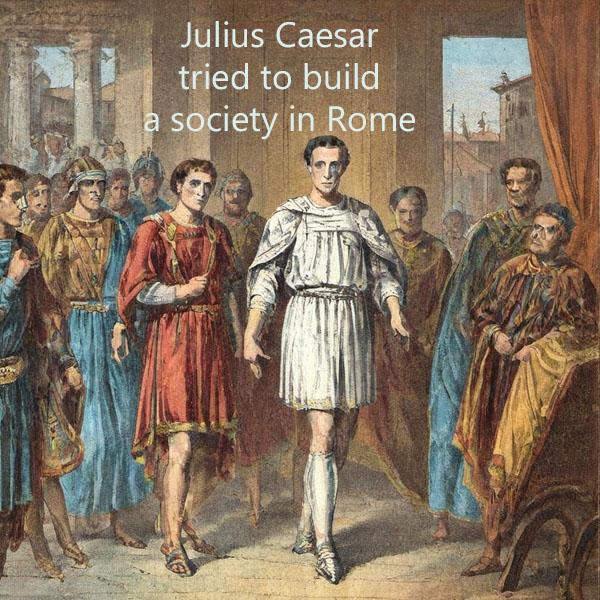
More than two thousand years ago, in Rome, another man was accused of wanting to be king.
His name was Julius Caesar.

A group of Roman senators assassinated Caesar out of fear that his growing power and titles, especially dictator for life, would destroy the Roman Republic.
They claimed they were saving democracy, but their actions plunged Rome into chaos and civil war.

It was a betrayal that changed history, and a reminder of how fear, power, and instability often go hand in hand.

History Repeats Itself

Fast forward to France, 1848. The people were exhausted. Food prices were soaring, unemployment was rising, and inequality had reached unbearable levels.
King Louis Philippe I, once known as the Citizen King, had promised a fairer, more modern France. But over time, his government became detached from ordinary people’s struggles.

One of the main sources of anger was the tax system. The poor and working class bore a heavy burden through indirect taxes on essentials like food, salt, and fuel, while wealthy landowners and property owners paid relatively little. Voting rights were also tied to property ownership, meaning most citizens had no political voice. When food prices spiked in the late 1840s, ordinary people were paying high taxes on top of already expensive necessities. Economic frustration reached a tipping point.

People in New York voted for Mamdani, who wants to raise taxes and, at the same time, give people fast and free buses. How is that going to be?

When protests erupted in February 1848, the king tried to silence them. Instead, the anger exploded.
Barricades filled the streets of Paris, and after just a few bloody days, Louis Philippe abdicated the throne and fled to England in disguise.

The monarchy collapsed. The Second Republic was born.
But what came next? A new leader. Louis-Napoleon Bonaparte, nephew of Napoleon I, rose to power, promising to restore stability and hope. Within four years, he declared himself Emperor.

Sound familiar?

It’s the same old story: people rise up against a system they believe is unjust, only to end up under a new one that looks strangely similar.
Each era has its slogans: “liberty,” “hope,” “change,” “the people’s revolution”, yet the same problems remain. Prices go up. Ordinary citizens struggle. The rich adapt and survive.
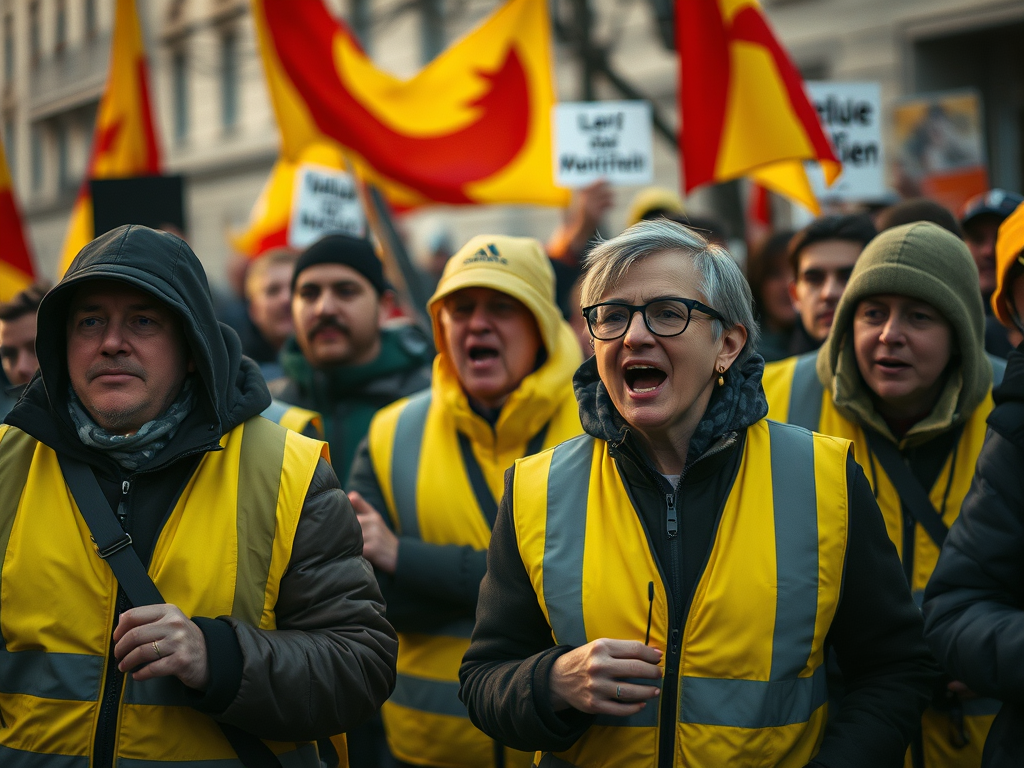
Take a look at France today with its Yellow Vest protesters. People are struggling with their cost of living. I wrote an article about that for the first time, many years ago. And who is to blame now? The King? Napoleon? No, it`s Macron.

So, Why Are Prices Rising Again?

The cost of living has become the defining issue of our time. Food, housing, and energy prices are rising faster than wages. Families feel squeezed, not just in New York or Paris, but across the Western world.

But who is to blame?

It’s tempting to point the finger at politicians, corporations, or billionaires. Yet the truth is more complex. The problem isn’t one person. It’s the system itself.

A mix of factors drives today’s inflation:

  • Global supply chain disruptions from the pandemic and wars.
  • Energy shocks as the world shifts away from fossil fuels.
  • Corporate pricing power in markets where competition has shrunk.
  • Decades of easy money and debt have inflated asset prices but left wages behind.

Governments print money to stimulate the economy, corporations raise prices to protect profits, and central banks hike interest rates to cool inflation, all while ordinary people pay the price.

It’s a cycle that keeps repeating, no matter the century. In ancient Rome, it was grain shortages. In 1848, in France, it was bread and taxes. Today, it’s rent and electricity.

The Real Lesson

Historically, when people struggle, they often look for someone to blame, such as a king, a tyrant, or a president. Get rid of Trump, and everything will be fine. Get rid of Macron, and the sun will shine. They think removing the person will fix the system. But as history shows us, that rarely works.

Trump isn’t the cause of America’s problems. He’s a symptom of them.
Just as Caesar wasn’t the reason Rome was collapsing, but rather the outcome of deep divisions and economic inequality that had built up for years.

When the cost of living becomes unbearable, people revolt. Sometimes at the ballot box, sometimes in the streets.

But unless we learn from history, each “revolution” just sets the stage for the next crisis.

In the end, it’s not about kings or dictators. It’s about systems.
And if we don’t fix the system, the anger, fear, and struggle will continue. Just as it has for more than 2,000 years.

Disclaimer: The views expressed in this article are those of the author and may not reflect those of Shinybull.com. The author has made every effort to ensure the accuracy of the information provided; however, neither Shinybull.com nor the author can guarantee the accuracy of this information. This article is strictly for informational purposes only. It is not a solicitation to make any exchange in precious metal products, commodities, securities, or other financial instruments. Shinybull.com and the author of this article do not accept culpability for losses and/ or damages arising from the use of this publication.


Leave a comment

Filed under Politics

Happy Easter

«The spirit of Easter is all about HOPE, LOVE, AND JOYFUL LIVING».

Leave a comment

Filed under Curiosity

France`s unemployment rate of the population aged 15-64 years stood at 64,7 percent in December last year

People in France are tired of their status-quo and want a change. This is clearly seen in this year’s election where two outsider candidates are in the final. It is the same frustration in France as it is in the U.S. People try to vote for different candidates than ordinary politicians.

They voted for Obama because they wanted a change. People were looking for hope, and Obama must have done something right. Under his administration, the unemployment rate declined from about 10 to today`s 4,5 percent.


Can the next President in France do the same? In my last article I wrote about Macron who said he wants to re-forge France`s politics, culture, and ideology. If Macron is the next President, he has a heavy job to do.

France`s unemployment rate reached an all-time high in the first quarter of 1997. It peaked at 10,70 percent. But the unemployment rate is still very high and fell slightly to 10 percent in December last year.

Frances unemployment rate of the population aged 15-64 years stood at 64,7 percent in December quarter last year. Its even more shocking to see that their record low is 7,20 percent in the first quarter of 2008.

We have seen a lot of demonstrations in France recently, and now we understand why. People are not satisfied and Frances next President have to do something with that. If their record low is 7,20 percent he doesnt need to do much to fix that, but I assume that 7,20 is not good enough. So, what are they suppose to do? Let`s take a look at the French Constitution, article 1;


Its a revolution going on, but France has seen that many times before. The biggest one happened in 1789 until 1799, and Its very interesting to see what the triggers are. Historians widely regard the Revolution at that time as one of the most important events in human history.

The causes of the French Revolution are complex, but following the seven years war and the American Revolution War, the French government was deeply in debt and attempted to restore its financial status through unpopular taxation schemes.

Historians have pointed many events and factors within the Ancien Regime that led to the Revolution. Rising social and economic inequality, new political ideas emerging from the Enlightenment, economic mismanagement, environmental factors leading to agricultural failure, unmanageable national debt, and political mismanagement on the part of King Louis XVI who was executed.

Louis XVI ascended to the throne in the middle of a financial crisis in which the state was faced with a budget deficit and was nearing bankruptcy. This was due in part to France`s costly involvements in the Seven Years War and later the American Revolution.

In May 1776, finance minister Turgot was dismissed, after failing to enact reforms. A year later, Jacques Necker realized that the country`s extremely regressive tax system subjected the lower classes to a heavy burden.

He argued that the country could not be taxed higher; that tax exemptions for the nobility and clergy must be reduced, and proposed that borrowing more money would solve the country`s fiscal shortages.

Exactly the same pattern can be seen now. France has never had so much debt. France`s debt reached an all-time of 96 percent last year.

Demands for change were formulated in terms of Enlightenment ideals and contributed to the convocation of the Estates-General in May 1789. The first year of the Revolution saw members of the Third Estated taking control, the assault on the Bastille in July.

A central event of the first stage was the abolition of feudalism and the old rules and privileges left over from the Ancien Regime.

The outcome of the Revolution was the establishment of a secular and democratic republic that became increasingly authoritarian and militaristic. It was a radical change based on liberalism and other enlightenment principles.

Furthermore, we saw a rise of Napoleon Bonaparte with armed conflicts with other European countries. Napoleon became the hero of the Revolution through his popular military campaigns, went on to establish the Consulate and later the First Empire, setting the stage for a wider array of global conflicts in the Napoleonic Wars.

The dictatorship imposed by the Committee of Public Safety during the Reign of Terror, from 1793 until 1794, established price controls on food and other items, abolished slavery in French colonies abroad, dechristianized society through the creation of a new calendar and the expulsion of religious figures, and secured the borders of the new republic from its enemies.

A fundamental document of the French Revolution and in the history of human and civil rights is the Declaration of the Rights of Man and of the Citizen passed by France`s National Constituent Assembly in August 1789.

The Declaration was directly influenced by Thomas Jefferson, working with General Lafayette, who introduced it.

Influenced also by the doctrine of «natural right», the rights of man are held to be universal; valid at all times and in every place, pertaining to human nature itself. It became the basis for a nation of free individuals protected by the law.

It is included in the preamble of the constitutions of both the Fourth French Republic (1946) and Fifth Republic (1958) and is still current. Inspired in part by the American Revolution, and also by the Enlightenment philosophers, the Declaration was a core statement of the values of the French Revolution and had a major impact on the development of freedom and democracy in Europe and worldwide.

The modern era has unfolded in the shadow of the French Revolution, and the values and institutions of the Revolution dominate French politics to this day. Hundreds of years later, it`s interesting to see the same demand for change and hope.

They executed the King at that time. Now, people are voting for non-politicians, are against the establishment and humiliate modern party politics of left and right. Macron knows that and once said, the system «has ceased to protect those it should protect».

Don`t forget The Declaration`s article II: The goal of any political association is the conservation of the natural and imprescriptible rights of man. These are liberty, property, safety and resistance against oppression.

The role of government is to recognize and secure these rights.


Leave a comment

Filed under Politics