Tag Archives: Globalism

Trump, Tariffs, and the Hidden Tax We Don’t Talk About

Who Pays, Who Profits – and What New Zealand Taught the World

Tariffs have returned to the center of economic debate, largely driven by the resurgence of protectionist thinking in the United States. Under Donald Trump, tariffs were framed as a tool to restore American strength: protect domestic jobs, rebuild industry, and rebalance trade.

And on the surface, the story seems compelling. U.S. growth has outperformed much of Europe in recent years. Employment has remained strong. Manufacturing investment has picked up in selected sectors. To many observers, tariffs appear to “work.”

But economics has a habit of asking an uncomfortable question: who actually pays?
The Hidden Tax on Consumers

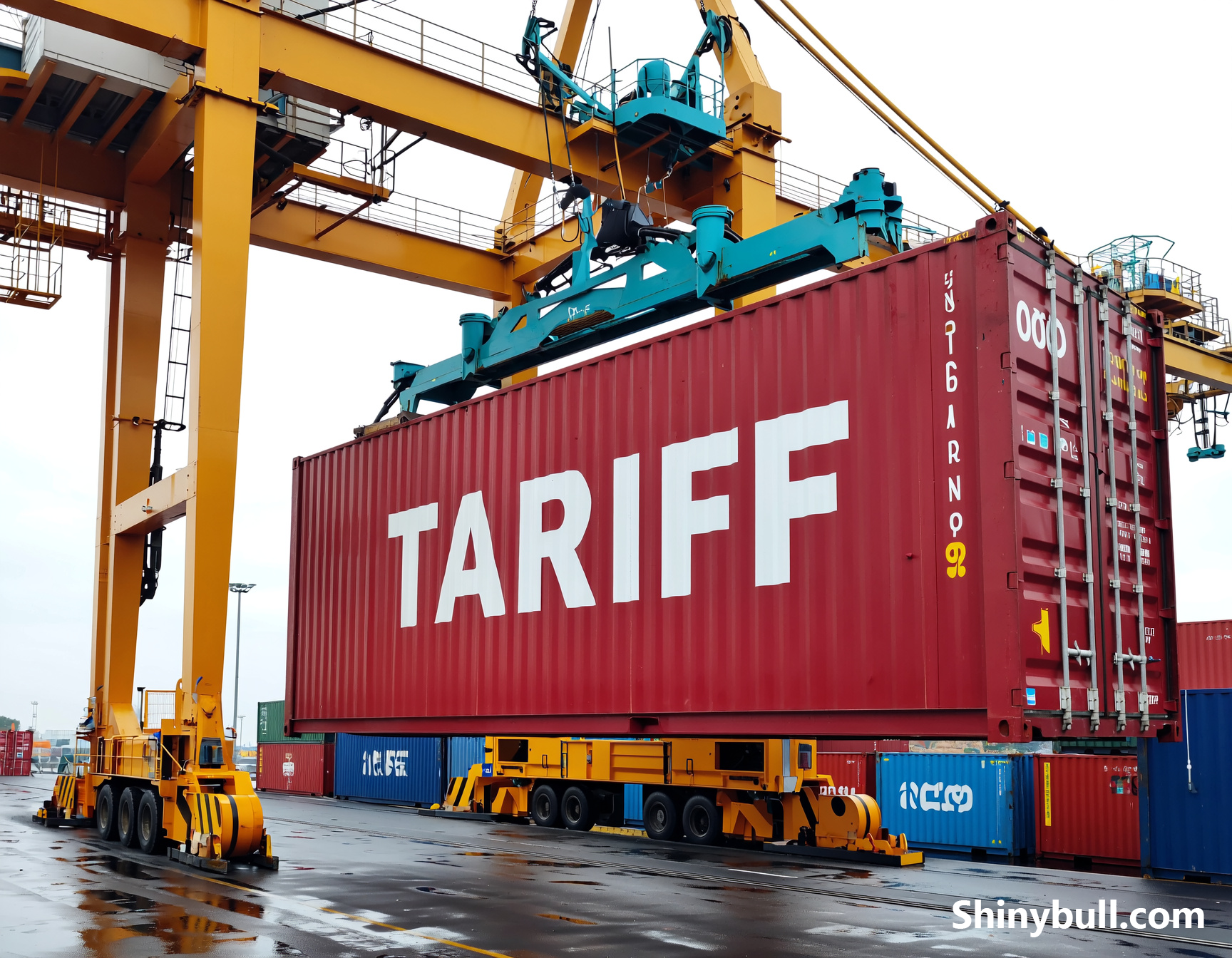
A tariff is often described as a tax on foreign producers. In practice, it is far more accurately described as a consumption tax paid at home.

When the U.S. imposes tariffs, import prices rise. Those costs are passed through supply chains and land, quietly, on consumers. There is no line on the receipt saying “tariff paid,” but the effect is real: higher prices, less choice, reduced purchasing power.

Tariffs are politically attractive precisely because they are invisible. Unlike income tax or VAT, they do not trigger a clear political backlash. Everyone pays a little more, spread across millions of transactions. The burden is diffuse; the beneficiaries are concentrated.

Who Actually Benefits?

Tariffs do not benefit “the economy” in general. They benefit specific, protected groups.

  • Domestic producers shielded from foreign competition.
  • Firms with political influence or strategic importance.
  • Workers in protected industries — at least in the short to medium term.

This is why tariffs persist. The winners know who they are. The losers rarely do.

From a political economy perspective, tariffs function as a solidarity mechanism: many consumers pay slightly higher prices so a smaller group can maintain jobs, income, and market position. In that sense, protectionism is not the opposite of redistribution — it is redistribution, just without calling it that.

One could even argue, somewhat ironically, that Trump’s tariff policy resembles a form of nationalist social democracy: collective sacrifice in the name of domestic stability.

Does It Work?

In the short term, yes — sometimes.

Protection can stabilize industries, preserve employment, and support investment during periods of adjustment or geopolitical stress. The U.S. growth story cannot be dismissed outright.

But the long-term risk is structural. Tariffs reduce competitive pressure. They reward incumbency over innovation. Over time, protected sectors may survive — but become less dynamic, less efficient, and more politically dependent.

History shows that protection rarely remains temporary.

A Natural Experiment: New Zealand

If tariffs and subsidies are a form of hidden solidarity, New Zealand offers a rare counterexample.

In the mid-1980s, New Zealand abruptly removed almost all agricultural subsidies — one of the most radical policy shifts ever attempted in a developed economy. At the time, farming was heavily protected. Many believed the sector would collapse.

The short-term pain was real. Some farms failed. Debt and distress followed. Politically, it was deeply unpopular.

But then something unexpected happened.

Farmers adapted. Productivity rose sharply. Inefficient practices disappeared. Innovation, specialization, and export competitiveness surged. Today, New Zealand’s agricultural sector is among the most efficient in the world — with virtually no subsidies.

The system did not preserve every producer. It preserved the outcome.

The Trade-Off We Rarely Admit

Tariffs and subsidies are not free. They are paid for – quietly – by consumers. They protect jobs, but they also lock in structures. They buy stability today at the cost of flexibility tomorrow.

New Zealand chose volatility and adaptation. Many countries choose protection and continuity. Neither path is costless.

But one lesson stands out:
When markets are shielded too long, the bill does not disappear – it grows.

Final Thought

Tariffs are not an economic mistake. They are a political choice.

They ask many to pay a little so a few can earn a lot. They feel painless — until inflation, stagnation, or fiscal pressure exposes the invoice.

New Zealand showed that removing protection does not destroy an economy. It forces it to grow up.

And in the end, that may be the most expensive lesson of all.

If you want the full picture, deeper analysis, and insights you won’t find in the headlines, Shiny bull is here to guide you. Subscribe and stay ahead of the curve.
Disclaimer: The views expressed in this article are those of the author and may not reflect those of Shinybull.com. The author has made every effort to ensure the accuracy of the information provided; however, neither Shinybull.com nor the author can guarantee the accuracy of this information. This article is strictly for informational purposes only. It is not a solicitation to make any exchange in precious metal products, commodities, securities, or other financial instruments. Shinybull.com and the author of this article do not accept culpability for losses and/ or damages arising from the use of this publication.
Leave a comment

Filed under Politics

Trump and Greenland: The Deal That Changed the Arctic

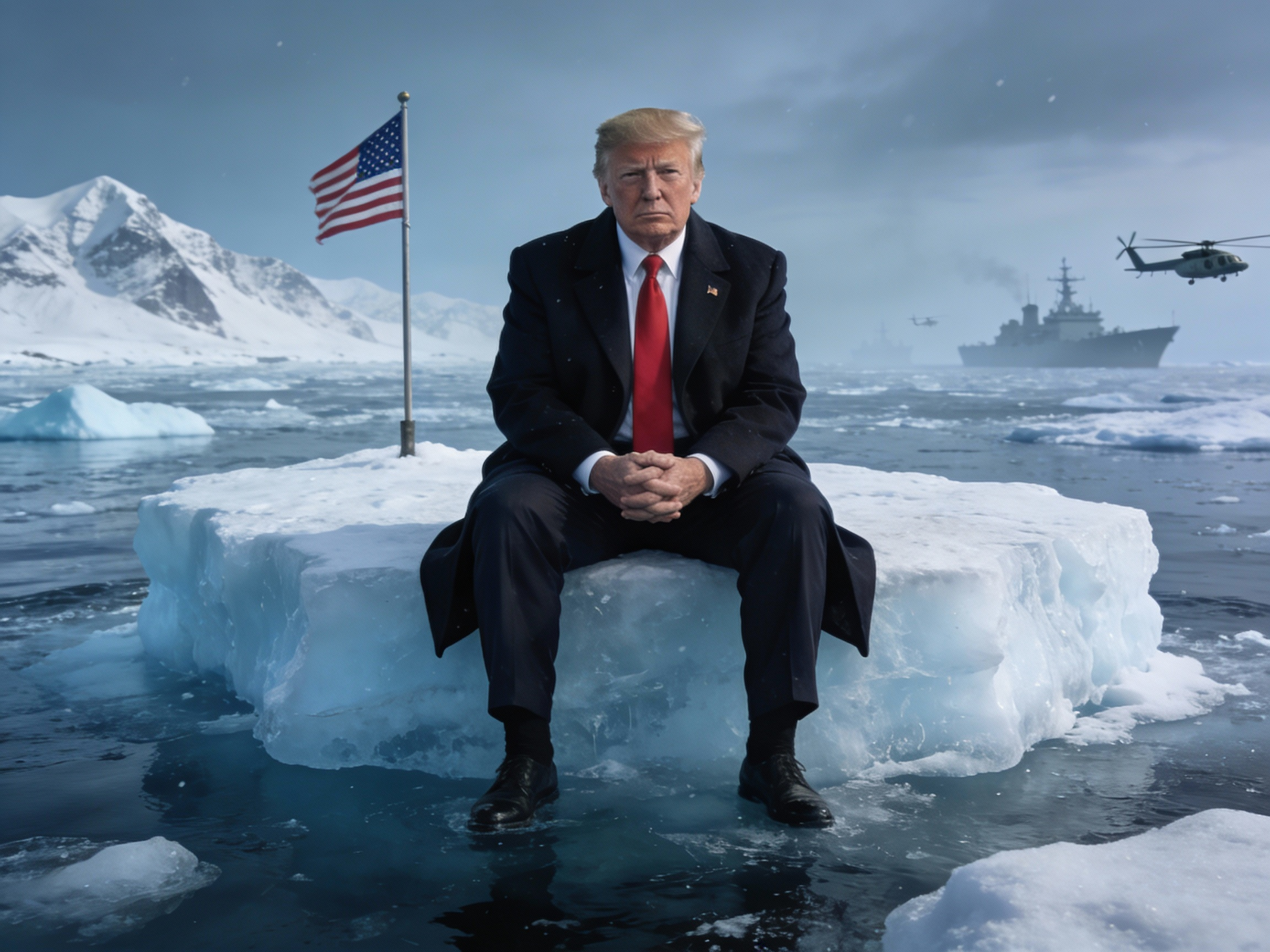
For decades, the United States has viewed Greenland as a strategically vital territory. Since World War II, American military planners and policymakers have understood its importance for Arctic security, global defense systems, and access to critical resources. What previous administrations discussed quietly behind closed doors, Donald Trump chose to say openly.

Trump said he wanted Greenland.

The reaction from legacy media was immediate and furious. Denmark was outraged. European leaders, including Emmanuel Macron, criticized the idea. Headlines mocked Trump, calling the proposal absurd, imperialistic, even dangerous. Once again, the familiar narrative returned: Trump the dictator, Trump the destabilizer, Trump the man destroying NATO and threatening the world order.

But while the media screamed, Trump stayed calm. Smiling. Stoic.

Behind the scenes, something very different was happening.

This week, President Donald Trump arrived in Davos, Switzerland, to attend the World Economic Forum (WEF). Surrounded by the world’s global elites—the very same figures who openly despise him—Trump showed up with a large delegation and a clear agenda: make deals.

And one of the biggest deals was Greenland.

After a high-level meeting with NATO Secretary General Mark Rutte, Trump announced that a framework agreement concerning Greenland—and the wider Arctic region—had been reached. An outcome many in the legacy media had declared impossible.

In a statement released earlier today, Trump wrote:

“Based upon a very productive meeting that I have had with the Secretary General of NATO, Mark Rutte, we have formed the framework of a future deal with respect to Greenland and, in fact, the entire Arctic Region.

This solution, if consummated, will be a great one for the United States of America, and all NATO Nations. Based upon this understanding, I will not be imposing the tariffs that were scheduled to go into effect on February 1st.

Additional discussions are being held concerning the Golden Dome as it pertains to Greenland. Further information will be made available as discussions progress. Vice President JD Vance, Secretary of State Marco Rubio, Special Envoy Steve Witkoff, and others will lead the negotiations and report directly to me.”

In simple terms: Trump made a deal.

Greenland matters because it is one of the most strategic territories on Earth. As Arctic ice melts, new shipping routes open and access to vast mineral reserves becomes possible. China and Russia have both aggressively positioned themselves in the Arctic, seeking influence, infrastructure, and control over rare-earth minerals critical to modern technology, defense systems, and energy.

China already holds a near-monopoly on many of these minerals.

Greenland changes that.

According to Trump, the framework agreement includes mineral rights, defense cooperation, and integration into a broader NATO security architecture—including the proposed “Golden Dome” defense system. With American capital, technology, and expertise, Greenland’s resources can be developed responsibly, reducing Western dependence on China and strengthening collective security across Europe and North America.

This is not just a win for the United States. It is a win for the West.

For years, Europe has depended on American security while criticizing American leadership. Trump reversed that dynamic. He forced allies to negotiate seriously, share responsibility, and think strategically about the future of the Arctic.

The backlash from globalists is predictable. Trump does not speak their language. He does not respect their rituals. He does not submit to unelected institutions or consensus-driven politics. Instead, he negotiates power, territory, resources, and security—openly.

What we are witnessing is not chaos. It is a transition.

The old world order is fading. Globalism as an ideology is losing credibility. In its place, a new era is emerging—what some describe as civilizationism: a worldview that recognizes distinct civilizations, national sovereignty, cultural identity, and strategic self-interest.

Trump’s Greenland deal is not just about land or minerals. It is about redefining power in a multipolar world.

And despite what the legacy media claims, Trump didn’t lose control.

He won Greenland.

Disclaimer: The views expressed in this article are those of the author and may not reflect those of Shinybull.com. The author has made every effort to ensure the accuracy of the information provided; however, neither Shinybull.com nor the author can guarantee the accuracy of this information. This article is strictly for informational purposes only. It is not a solicitation to make any exchange in precious metal products, commodities, securities, or other financial instruments. Shinybull.com and the author of this article do not accept culpability for losses and/ or damages arising from the use of this publication.
Leave a comment

Filed under Politics

Trump vs. the Global Elite at WEF

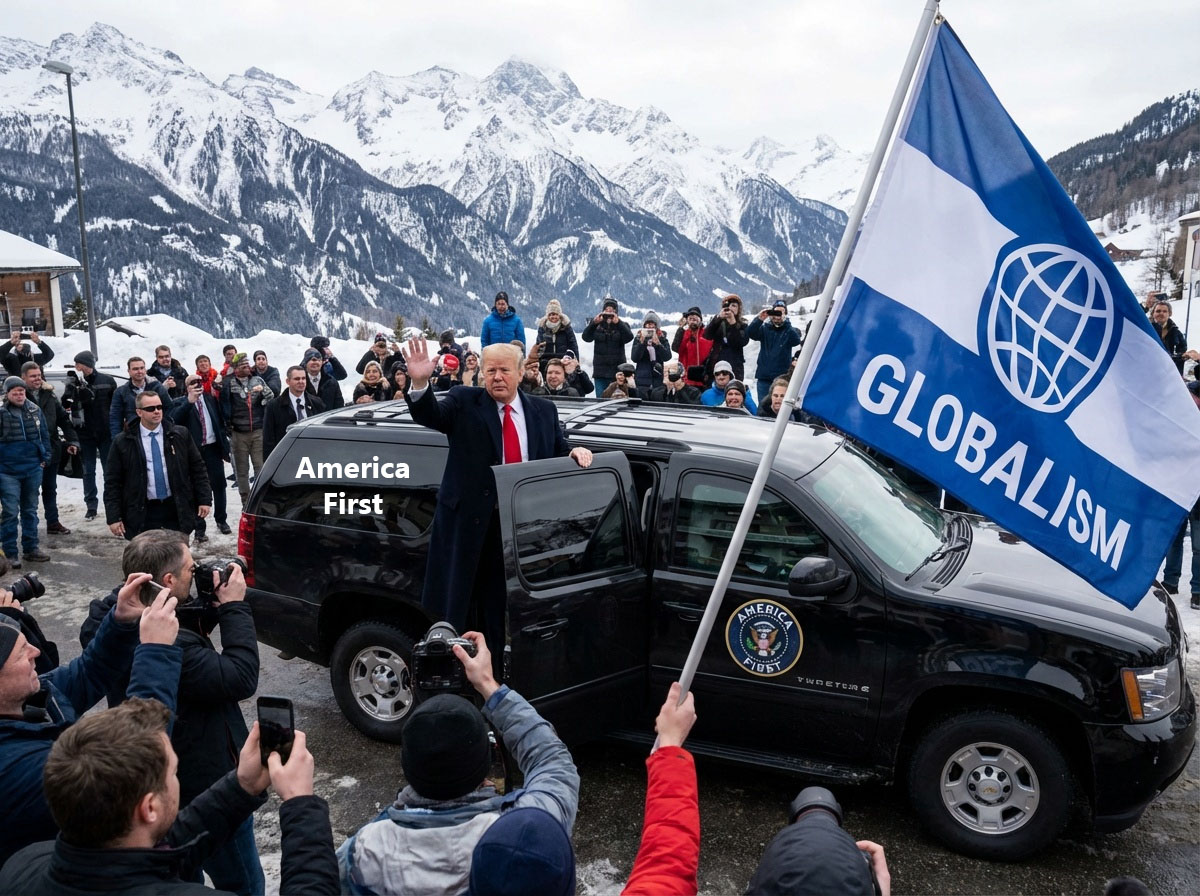
Every year, the world’s economic elite gather in Davos, Switzerland, for the World Economic Forum (WEF). Billionaires, CEOs, political leaders, and powerful institutions meet behind closed doors to discuss the future of the global economy and international business. These are the richest and most influential people on the planet.

WEF’s slogan is “Committed to improving the state of the World” and its mission is to “move the world forward together.” However, critics argue that this vision represents a globalist mindset—one where decisions are made by unelected elites, often far removed from ordinary people and national interests.

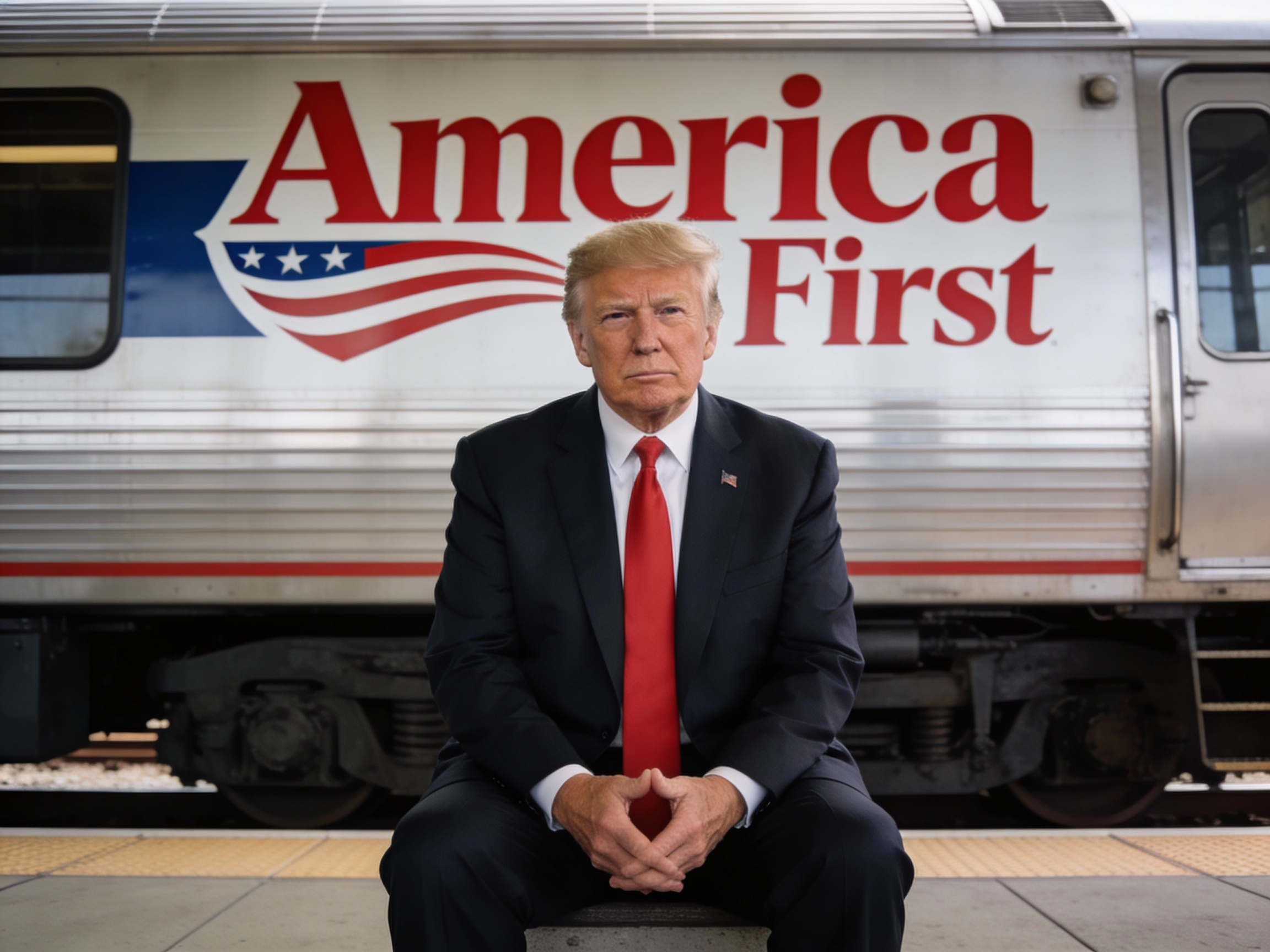
Picture: America is the locomotive.

Donald Trump stands in sharp contrast to this worldview. Trump is a populist. He speaks directly to voters, not global institutions. While the WEF elite promote globalization, open borders, and centralized decision-making, Trump represents national sovereignty, economic protection, and what he famously calls “America First.”

These are two opposing camps—and they are not on the same team. This is why Trump is deeply disliked in Davos. He challenges the system that benefits the global elite, and he refuses to speak their language or follow their script.

“America First” does not mean America alone. It means that a government’s first responsibility is to protect its own citizens. If Americans are safe, prosperous, and confident in their future, the country thrives. And when America thrives, the rest of the world benefits.

If America falls into chaos—economically, socially, or politically—the consequences are felt globally. The reason is simple: America is the engine of the world economy. It is the driver. The locomotive.

When America shines, the world shines.

Disclaimer: The views expressed in this article are those of the author and may not reflect those of Shinybull.com. The author has made every effort to ensure the accuracy of the information provided; however, neither Shinybull.com nor the author can guarantee the accuracy of this information. This article is strictly for informational purposes only. It is not a solicitation to make any exchange in precious metal products, commodities, securities, or other financial instruments. Shinybull.com and the author of this article do not accept culpability for losses and/ or damages arising from the use of this publication.
Leave a comment

Filed under Politics

World Economic Forum 2026 Kicks Off in Davos — and Donald Trump Leads Record U.S. Delegation

Davos, Switzerland — January 19, 2026
The annual World Economic Forum (WEF) gathering in the Swiss Alps begins this Monday under the theme “A Spirit of Dialogue.” Leaders from governments, business, civil society and science will convene through January 23 to confront what organizers call the most pressing global challenges of our time: geopolitical instability, economic fragmentation, technological disruption and climate change.

This year’s meeting is poised to be one of the most unpredictable yet — largely because U.S. President Donald Trump is attending in person and will lead the largest-ever American delegation to Davos.

Trump Returns to Davos with a Big Team

Trump’s presence is notable not only for its scale but also for its political symbolism. His administration will be accompanied by several Cabinet members and senior officials — including the Secretary of State, Treasury Secretary, Commerce Secretary, trade representatives, and top White House aides — marking a record-size U.S. contingent.

Last time Trump engaged with the forum, his participation was virtual and aired amid controversy. This year’s in-person return is expected to attract rock-star style attention and intense scrutiny from global leaders, the media and activists.

A “Spirit of Dialogue” Amid Global Tensions

The forum’s theme emphasizes cooperation and conversation in a world marked by deepening geopolitical fault lines. Amid economic competition, rising tariffs and shifting alliances, WEF organizers are pushing dialogue as essential for progress.

But Trump’s trademark slogan, “America First,” poses a direct challenge to the forum’s ethos of multilateral cooperation. Allies and competitors alike will be watching to see how — and if — Trump’s policies can align with broader global ambitions for cooperation, especially on trade, security and technology.

Key Issues on the Agenda

While WEF is traditionally focused on economic strategy and global collaboration, this year’s agenda is exceptionally crowded:

  • Geopolitical and security challenges: Ukraine remains a central topic, with talks planned involving U.S. officials and Ukrainian representatives about peace frameworks and reconstruction support.
  • Economic fragmentation: A recent WEF risk survey found that economic confrontation — including tariffs and trade tensions — has overtaken armed conflict as a top risk to global stability.
  • Artificial Intelligence: Discussions about how to govern and deploy AI responsibly are expected to be key, with tech leaders from companies such as Microsoft and Nvidia attending.
  • Business and innovation: With roughly 3,000 participants and about 850 CEOs from top global companies, business and investment outlooks will be central to many discussions.

Trump’s Global Footprint Heading into Davos

Trump’s foreign policy moves over the past year — from threats of tariffs over Greenland to confrontations with Iran and Venezuela — have reshaped parts of the international agenda. European leaders are preparing for high-stakes talks with the U.S., including possible retaliatory measures tied to trade tensions that are already threatening transatlantic unity.

Although climate and “woke” cultural topics were reportedly de-emphasized in programming after negotiations with U.S. officials, the core business of the forum — economic cooperation and innovation — remains indispensable.

A Pivotal Moment for Global Order

This year’s Davos is widely perceived as a test of whether global leaders can adapt the old world order to 21st-century challenges — or whether a fundamentally new framework for cooperation will emerge. With Trump’s America firmly in the spotlight and AI and economic confrontation rising as cross-cutting issues, the balance between national interests and collective global action will be under intense scrutiny.

As the world’s eyes turn to the Swiss Alps, the question is no longer whether dialogue will take place — but whether it can translate into real solutions.

Disclaimer: The views expressed in this article are those of the author and may not reflect those of Shinybull.com. The author has made every effort to ensure the accuracy of the information provided; however, neither Shinybull.com nor the author can guarantee the accuracy of this information. This article is strictly for informational purposes only. It is not a solicitation to make any exchange in precious metal products, commodities, securities, or other financial instruments. Shinybull.com and the author of this article do not accept culpability for losses and/ or damages arising from the use of this publication.

Leave a comment

Filed under Politics

French Income tax would be scrapped for everyone under 30, and interest-free loans of up to €100,000 would be offered to younger families under Marine Le Pen

It`s time for the final round of the presidential battle in France, and Wednesday 20th will be critical for both, Macron and Le Pen. Those who win the war on words on Wednesday can end up as the next president in France.

But many people in France don`t know what to vote for this time. Le Pen is a far-right politician, and she and her party are in a good position to win this time. Opinion polls show that 47% of French voters want Le Pen to win.

Marine Le Pen sent shockwaves through Europe with her latest comments on NATO.

Le Pen said in a press conference that France will leave NATO if she wins the presidency. In 2019, Macron warned Europe and said; NATO is becoming brain-dead. He also said that Europe can no longer rely on America to defend NATO allies.

Macron said on October 21, 2019, that it is high time for Europe to «wake up».

Le Pen also suggested a strategic reconciliation between NATO and Russia once the war is over. On top of that, she wants to reform the EU from the inside. This is why Europe and NATO are so nervous over the French election on Sunday.

Le Pen believes that France can be useful in the resolution of the world`s great disorders, if and only if it is independent. What protesters don`t like is that Le Pen will start an alliance with Putin if she wins the election.

This election is crucial not just for France, but for the whole of Europe, and this is why investors should care. Le Pen is opposed to globalization, and she believes that it is a threat to French society. She proposed the replacement of the world trade organization. And the abolition of the IMF.

Le Pen is also against immigration and considers it a tool of Islamic extremism. Her party is best known for immigration issues, but less known for its economic policies. But she has changed since 2017, and she`s more focused on people`s cost of living.

She wants to eliminate VAT on a basket of foods while cutting the rate from 20 to 5 percent on electricity and petrol. She is more protectionist, and nationalist than Macron who is considered to be a man with a business-friendly agenda.

«Give the French their money back», is Le Pen`s slogan, and she has proposed big tax cuts and new spending. Income tax would be scrapped for everyone under 30, and interest-free loans of up to €100,000 would be offered to younger families, with the debt forgiven if they had three children.

This is good news for yellow vest protesters that started the «Gilets Jaunes» movement in France in 2018, originally a protest against a tax rise on petrol and diesel.

A French sovereign wealth fund would be created to promote an economy focused on what she calls «localism» as opposed to Macron`s «globalism».

People in France believe that Macron is a «president of the rich», and younger voters are angry mostly because of the nationwide cost of living crisis. Younger voters are also angry because of the lost years of their life due to the Covid pandemic and government lockdowns. This has also made an anti-establishment group against the French government.

Marine Le Pen knows this, and that`s why she is focusing on younger voters. The inflation in the eurozone is at its highest ever, and purchasing power and the cost of living is the single most important issue for 58% of voters and a clear majority within every age group except for those 18 to 24, for whom the environment ranks first.

Marine Le Pen is anti-NATO and anti-EU, friendly with Russia`s Vladimir Putin, and she doesn`t want a Frexit, and that has come under scrutiny.

Last Sunday was a good day for Mèlenchon, who finished close behind Le Pen. Polls suggest 30% of Mèlenchon voters might vote for Macron, and 23% for Le Pen. The rest is expected to abstain or vote blank next Sunday.

Macron made history in 2017 when he became the youngest president in France at the age of 39. He promotes democracy and liberalism, and he`s a globalist. He is a favorite to win the election, and 53% want him to be re-elected.

But, it can also be a close race, while 40% of the French voters are still undecided, so the outcome is uncertain. If Macron wins again, it would be a symbolic moment as he will be the first president for 20 years to win a second term.

Four years ago, the man behind Brexit, Nigel Farage, predicted that Marine Le Pen will win the French presidential election in 2022. Time will show.

Disclaimer: The views expressed in this article are those of the author and may not reflect those of Shinybull.com. The author has made every effort to ensure the accuracy of the information provided; however, neither Shinybull.com nor the author can guarantee such accuracy. This article is strictly for informational purposes only. It is not a solicitation to make any exchange in precious metal products, commodities, securities, or other financial instruments. Shinybull.com and the author of this article do not accept culpability for losses and/ or damages arising from the use of this publication.

Leave a comment

Filed under Politics