
Tag Archives: faith

The cost of living and the blame game

People are angry, and that’s why they voted for Mamdani as the next Mayor of New York.
People are sick and tired of struggling to make ends meet. In his victory speech, Mamdani said:

“We choose hope over tyranny. Hope over big money and small ideas. Hope over despair. Tonight, we have stepped out from the old into the new.”

His supporters are already marching in the streets, saying they don’t want Trump as a king or a dictator.

Hmm… I think I’ve heard this before.
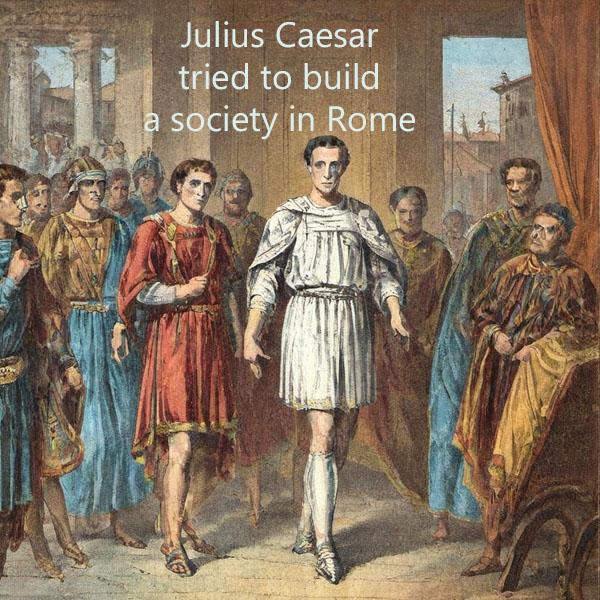
More than two thousand years ago, in Rome, another man was accused of wanting to be king.
His name was Julius Caesar.

A group of Roman senators assassinated Caesar out of fear that his growing power and titles, especially dictator for life, would destroy the Roman Republic.
They claimed they were saving democracy, but their actions plunged Rome into chaos and civil war.

It was a betrayal that changed history, and a reminder of how fear, power, and instability often go hand in hand.

History Repeats Itself

Fast forward to France, 1848. The people were exhausted. Food prices were soaring, unemployment was rising, and inequality had reached unbearable levels.
King Louis Philippe I, once known as the Citizen King, had promised a fairer, more modern France. But over time, his government became detached from ordinary people’s struggles.

One of the main sources of anger was the tax system. The poor and working class bore a heavy burden through indirect taxes on essentials like food, salt, and fuel, while wealthy landowners and property owners paid relatively little. Voting rights were also tied to property ownership, meaning most citizens had no political voice. When food prices spiked in the late 1840s, ordinary people were paying high taxes on top of already expensive necessities. Economic frustration reached a tipping point.

People in New York voted for Mamdani, who wants to raise taxes and, at the same time, give people fast and free buses. How is that going to be?

When protests erupted in February 1848, the king tried to silence them. Instead, the anger exploded.
Barricades filled the streets of Paris, and after just a few bloody days, Louis Philippe abdicated the throne and fled to England in disguise.

The monarchy collapsed. The Second Republic was born.
But what came next? A new leader. Louis-Napoleon Bonaparte, nephew of Napoleon I, rose to power, promising to restore stability and hope. Within four years, he declared himself Emperor.

Sound familiar?

It’s the same old story: people rise up against a system they believe is unjust, only to end up under a new one that looks strangely similar.
Each era has its slogans: “liberty,” “hope,” “change,” “the people’s revolution”, yet the same problems remain. Prices go up. Ordinary citizens struggle. The rich adapt and survive.
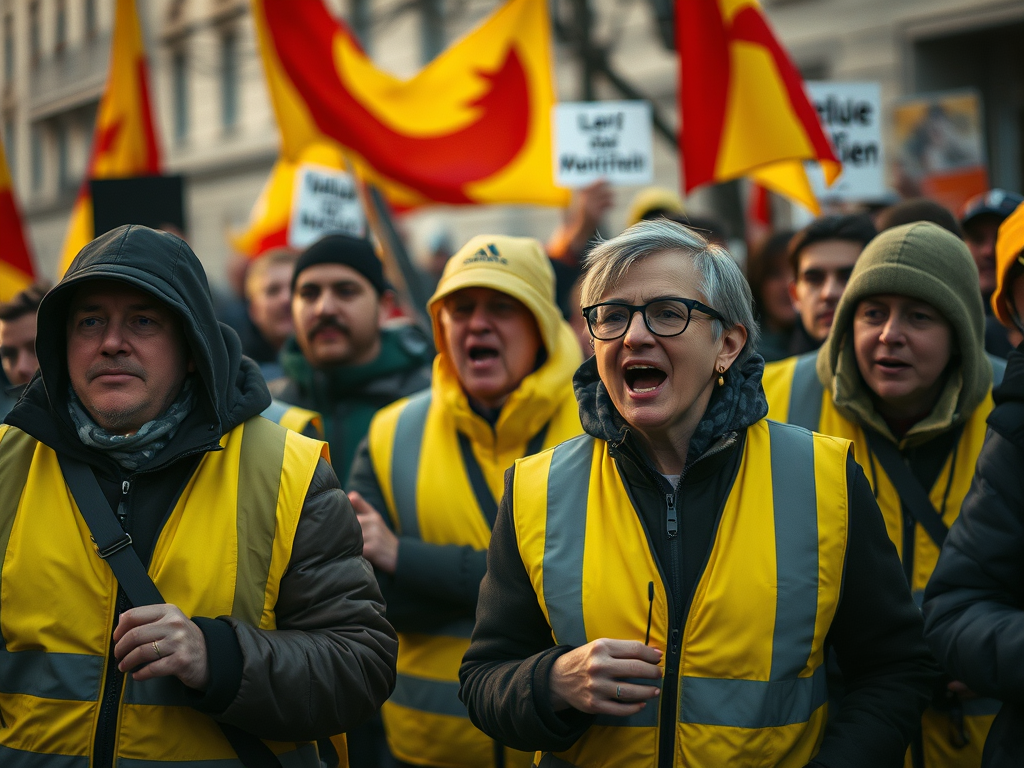
Take a look at France today with its Yellow Vest protesters. People are struggling with their cost of living. I wrote an article about that for the first time, many years ago. And who is to blame now? The King? Napoleon? No, it`s Macron.

So, Why Are Prices Rising Again?

The cost of living has become the defining issue of our time. Food, housing, and energy prices are rising faster than wages. Families feel squeezed, not just in New York or Paris, but across the Western world.

But who is to blame?

It’s tempting to point the finger at politicians, corporations, or billionaires. Yet the truth is more complex. The problem isn’t one person. It’s the system itself.

A mix of factors drives today’s inflation:

  • Global supply chain disruptions from the pandemic and wars.
  • Energy shocks as the world shifts away from fossil fuels.
  • Corporate pricing power in markets where competition has shrunk.
  • Decades of easy money and debt have inflated asset prices but left wages behind.

Governments print money to stimulate the economy, corporations raise prices to protect profits, and central banks hike interest rates to cool inflation, all while ordinary people pay the price.

It’s a cycle that keeps repeating, no matter the century. In ancient Rome, it was grain shortages. In 1848, in France, it was bread and taxes. Today, it’s rent and electricity.

The Real Lesson

Historically, when people struggle, they often look for someone to blame, such as a king, a tyrant, or a president. Get rid of Trump, and everything will be fine. Get rid of Macron, and the sun will shine. They think removing the person will fix the system. But as history shows us, that rarely works.

Trump isn’t the cause of America’s problems. He’s a symptom of them.
Just as Caesar wasn’t the reason Rome was collapsing, but rather the outcome of deep divisions and economic inequality that had built up for years.

When the cost of living becomes unbearable, people revolt. Sometimes at the ballot box, sometimes in the streets.

But unless we learn from history, each “revolution” just sets the stage for the next crisis.

In the end, it’s not about kings or dictators. It’s about systems.
And if we don’t fix the system, the anger, fear, and struggle will continue. Just as it has for more than 2,000 years.

Disclaimer: The views expressed in this article are those of the author and may not reflect those of Shinybull.com. The author has made every effort to ensure the accuracy of the information provided; however, neither Shinybull.com nor the author can guarantee the accuracy of this information. This article is strictly for informational purposes only. It is not a solicitation to make any exchange in precious metal products, commodities, securities, or other financial instruments. Shinybull.com and the author of this article do not accept culpability for losses and/ or damages arising from the use of this publication.

Leave a comment

Filed under Politics

Confronting Evil: What Bill O’Reilly’s Book Is Saying to the World

We are near World War III. We are all only seconds away from a disaster. Charlie Kirk was assassinated just like JFK. Is this a spiritual strategy? Are Demons among us? What world are we living in? When we examine history, we already know the world we are living in. History repeats itself. It`s a war between good and evil, and Bill O`Reilly wrote a book about evil.

Bill O’Reilly, together with Josh Hammer, takes on a complex subject in Confronting Evil: Assessing the Worst of the Worst. The book explores some of history’s most notorious figures and events, aiming not just to recount their crimes but to push readers toward moral reflection. Below is a breakdown of what the book covers, the deeper themes it conveys, and what it asks of its audience.

1. What the Book Is About

Confronting Evil surveys individuals, movements, and regimes that the authors consider among history’s most destructive, ranging from Genghis Khan and Caligula to Stalin, Hitler, Mao, Khomeini, Vladimir Putin, and modern criminal enterprises such as the Mexican drug cartels.

Each chapter explores how these figures rose to power, the suffering they inflicted, and what their actions reveal about the human capacity for cruelty.

The book defines evil as deliberate harm against human beings, committed without remorse, and emphasizes that this reality has existed throughout history. From the biblical story of Cain and Abel to present-day conflicts.

2. Key Themes / Implicit Messages

Several themes run throughout the book:

  • Moral Absolutism: The authors assume there are clear moral standards by which actions can be judged as evil, mainly rooted in a Judeo-Christian worldview.
  • Evil as Timeless: History demonstrates that evil is not confined to a single culture or era; it reemerges in different forms across the ages.
  • History as Teacher: Studying past atrocities equips us to recognize similar patterns in the present.
  • The Cost of Complacency: Good people who ignore or excuse evil allow it to grow unchecked.

3. What the Authors Want Readers to Do Right Now

O’Reilly and Hammer are not merely documenting villains; they are calling readers to action. The book pushes its audience to:

  • Be aware: Recognize evil in history and in today’s world.
  • Exercise judgment: Develop moral clarity to distinguish true evil from ordinary wrongdoing.
  • Reject passivity: Speak out, resist, and refuse to enable evil by silence.
  • Learn vigilance: Use historical knowledge as a safeguard against repetition.

4. What the Book Is Saying to the World

At its core, Confronting Evil delivers a stark message:

Evil is real, universal, and destructive. It has shaped human history and remains present today. The only way to prevent its spread is for ordinary people to recognize it, resist it, and act with courage. Inaction is itself a form of complicity.

The book speaks not just to historians or political analysts but to everyone, urging that moral clarity is essential in a world where complacency can have devastating consequences.

Conclusion

Confronting Evil is less a history book than a moral manifesto. By cataloging “the worst of the worst,” O’Reilly and Hammer remind readers that evil is not an abstraction. It is a lived reality, and its recurrence depends on whether we confront it or look the other way. The book’s challenge is timeless: when faced with evil, will we choose to act?

Let`s look at the timeline:

Evil has been a part of human history since the earliest recorded times. From ancient empires to modern dictatorships, from mass enslavement to genocides, each age has carried its own manifestations of cruelty. Bill O’Reilly’s book Confronting Evil: Assessing the Worst of the Worst underscores a sobering truth: evil is timeless, real, and destructive, and our responsibility is not to ignore it.

This article presents a broad timeline of some of history’s most infamous evils, woven together with the key message from O’Reilly’s work: that good people must recognize and resist evil rather than remain passive.

Ancient World (Before and Around Jesus)

  • Assyrian Empire (900–600 BCE): Brutal conquests, terror as state policy.
  • Roman Empire: Mass slavery, public executions, and crucifixion. Most famously, the crucifixion of Jesus (~30 CE).

Lesson: Even in civilizations admired for culture and progress, cruelty and systemic oppression thrived.

Middle Ages (500–1500 CE)

  • Crusades (1096–1291): Holy wars between Christians and Muslims resulting in massacres of civilians in Jerusalem and beyond.
  • Mongol Conquests (1206–1368): Millions killed under Genghis Khan. Destroyed entire cities.
  • Spanish Inquisition (from 1478): Torture and executions in the name of religion. Executions of Jews, Muslims, and heretics.
  • Black Death (from 1347 – 1351): Not an act of human evil (a plague), but responses included scapegoating and massacres of Jews in Europe.

Lesson: Religion and ideology, when abused, can justify widespread bloodshed.

Early Modern Period (1500–1800 CE)

  • Atlantic Slave Trade: Millions of Africans were enslaved and shipped across oceans.
  • Colonial Atrocities: Indigenous peoples across the Americas and beyond were decimated.
  • Witch Hunts: Tens of thousands tortured and killed across Europe and America.

Lesson: Systemic exploitation, fear, and superstition can fuel organized cruelty.

19th Century

  • Trail of Tears (1830s): Forced removal of Native Americans in the U.S.
  • Belgian Congo (1880s–1908): Millions died under King Leopold II’s regime.

Lesson: Greed and empire-building often came at the expense of human dignity and life.

20th Century

  • Armenian Genocide (1915–1916).
  • Stalin’s USSR (1920s–50s): Purges, gulags, famine.
  • Nazi Germany (1933–1945): Holocaust and World War II.
  • Mao’s China (1949–1976): Great Leap Forward, Cultural Revolution.
  • Cambodia (1975–1979): Khmer Rouge’s genocide.
  • Rwanda (1994): ~800,000 slaughtered in 100 days.
  • Balkan Wars (1990s): Ethnic cleansing and mass graves.

Lesson: The bloodiest century in human history proved how modern states and ideologies could amplify destruction on an industrial scale.

21st Century

  • 9/11 (2001): Terrorist attacks killed ~3,000.
  • Darfur (2003–2008): Ethnic killings in Sudan.
  • ISIS (2014–2019): Terror, genocide of Yazidis, global violence.
  • Syrian Civil War (2011–present): Massive civilian suffering and war crimes.
  • Mexican Drug Cartels (2000s–present): Violence, fear, and systemic corruption.
  • Russia’s Invasion of Ukraine (2022–present): War crimes and mass displacement.

Lesson: Evil persists in modern forms, such as terrorism, organized crime, and authoritarian aggression.

The Core Message: Why Confront Evil?

Bill O’Reilly’s Confronting Evil emphasizes three central truths:

  1. Evil is real and recurring. It is not confined to the past.
  2. History teaches vigilance. Understanding past atrocities helps us recognize patterns.
  3. Inaction enables evil. As John Stuart Mill warned: “Bad men need nothing more to compass their ends, than that good men should look on and do nothing.”

Conclusion

From ancient empires to today’s conflicts, history demonstrates that evil never disappears. It adapts. The challenge for every generation is to confront it, resist complacency, and act with moral clarity. The question O’Reilly leaves us with is timeless: will we shine a light on evil, or turn away and let it spread?

Disclaimer: The views expressed in this article are those of the author and may not reflect those of Shinybull.com. The author has made every effort to ensure the accuracy of the information provided; however, neither Shinybull.com nor the author can guarantee the accuracy of this information. This article is strictly for informational purposes only. It is not a solicitation to make any exchange in precious metal products, commodities, securities, or other financial instruments. Shinybull.com and the author of this article do not accept culpability for losses and/ or damages arising from the use of this publication.

Leave a comment

Filed under Curiosity, Politics

Jesus and God: The Anchor in Times of Loss

At Charlie Kirk’s funeral, the atmosphere was heavy with grief, yet also charged with hope. Friends, family, and followers reflected on Kirk’s legacy, weaving together memories of his activism with deep expressions of faith.

What stood out most wasn’t politics or ideology. It was the repeated invocation of Jesus and God as the ultimate source of comfort.

When tens of thousands gathered to honor Charlie Kirk, it quickly became clear that the memorial was not merely about a man. It was about something far greater: faith in Jesus Christ and the eternal hope found in God.

(Picture: A golden sunrise breaking through clouds – symbolizing hope, resurrection, and God’s eternal light after darkness.)

Speakers reminded the congregation that Kirk’s life, though tragically cut short, was not the end of his story. “Charlie is watching from above,” one said, pointing to the Christian belief in eternal life. The message was clear: while death silences the body, the soul remains alive in the presence of God.

This belief is not abstract. The Bible itself reassures the grieving: “He will wipe away every tear from their eyes, and death shall be no more” (Revelation 21:4). Such promises shift the perspective from despair to hope, from loss to continuity.

The funeral also underlined a greater truth. That faith provides resilience when the world seems unbearable. Whether one personally shares this faith or not, the testimony of the mourners demonstrated how belief in God can transform sorrow into strength.

Speakers repeatedly returned to the same truth. Charlie’s life was grounded in the Gospel. His wife, Erika Kirk, delivered words that stunned many: “I forgive him because it is what Christ did, and it is what Charlie would do.” In those few sentences, she reminded the world that forgiveness is not a sign of weakness, but rather a divine strength.

Her words echoed Jesus Himself: “Father, forgive them, for they do not know what they are doing.”

The service emphasized that political ideology is not the ultimate solution for humanity’s struggles. As Tucker Carlson boldly put it, “The real solution is Jesus, not politics.” Senator Marco Rubio also spoke of salvation history, pointing to Christ’s suffering, death, resurrection, and promised return.

These are not abstract ideas. They are the very heartbeat of Christianity. Charlie Kirk’s friends and loved ones testified that his mission was not only to debate culture and politics but also to lead people to Christ.

He wanted to save young men from despair, hatred, and sin, pointing them to a better path in God.

Faith also framed the way people spoke about Charlie’s death. Again and again came the assurance that he is “watching from above.” That his soul is in the hands of God. This belief brought comfort to thousands, serving as a reminder that life is more than what we see.

Ultimately, the memorial turned into a proclamation: Jesus is Lord, God is faithful, and forgiveness is possible even in the darkest hour.

The takeaway is simple but profound: human leaders rise and fall, tragedies strike without warning, but God remains constant. In the words of Christ:

I am the way, the truth, and the life. No one comes to the Father except through me.”

Charlie Kirk’s life and death are now a testimony to that truth.

Many people around the world don’t believe. Many are sceptical, and perhaps the deepest response to skepticism about faith comes not from a preacher, but from psychiatrist Carl Jung himself. He had a lot of clients and saw things ordinary people didn`t see.

When asked if he believed in God, Jung replied: “Believe? I know!”

That certainty. The unshakable conviction that God is real was the foundation of Charlie Kirk’s life and mission. It is also the hope that sustains millions today.

Disclaimer: The views expressed in this article are those of the author and may not reflect those of Shinybull.com. The author has made every effort to ensure the accuracy of the information provided; however, neither Shinybull.com nor the author can guarantee the accuracy of this information. This article is strictly for informational purposes only. It is not a solicitation to make any exchange in precious metal products, commodities, securities, or other financial instruments. Shinybull.com and the author of this article do not accept culpability for losses and/ or damages arising from the use of this publication.

Leave a comment

Filed under Politics

From 9/11 to 10/11

The Assassination of Charlie Kirk and Its Impact on America

Many people remember September 11, 2001 — a day that changed America forever. Now, September 10, 2025, will also be etched into history.

On that day, a sniper shot and killed Charlie Kirk in Utah. But this was not only an attack on a man — it was an attack on the very foundations of the United States: democracy, freedom of speech, and the core American values that millions cherish.

Former President Donald Trump said in a speech afterward:

“The assassin tried to silence Charlie with a bullet, but he failed. We will ensure that his voice, his message, and his legacy will live on for countless generations.”

Paradoxically, the attempt to silence Kirk has amplified his voice. His message now resonates louder than ever before.

A Pattern of Violence

This is not the first act of political violence against conservative figures.
Donald Trump himself survived an assassination attempt last year. Congressman Steve Scalise was shot. A man armed with a rifle went to Justice Brett Kavanaugh’s home. Rand Paul was violently attacked by a neighbor, breaking his ribs.

Even beyond politics, chaos has escalated: riots in Los Angeles, trans shooters killing children, Jewish people shot outside an embassy, and ICE agents receiving death threats so severe that they wear masks to protect their families. Elon Musk’s car was reportedly firebombed.

Social Media’s Dark Celebration

Perhaps most shocking of all were the reactions online. The Daily Mail reported on videos showing left-wing extremists openly celebrating Kirk’s death. Many said he “deserved to be shot.”

For many Americans, this response was deeply disturbing — not just because of the murder itself, but because of the apparent normalization of hate and violence on social media.

Part of a Tragic American Pattern

Kirk’s name now joins a tragic list in American history: Abraham Lincoln, John F. Kennedy, Robert F. Kennedy, Martin Luther King Jr., and Malcolm X — all assassinated for standing up for their beliefs.

The FBI has stated that the ammunition used in the Kirk assassination was engraved with transgender and antifascist slogans. Utah police noted that the state still has the death penalty, and prosecutors are considering its use in this case.

A Turning Point?

Charlie Kirk was the CEO of Turning Point Action, a powerful voice for conservative youth. His death raises a haunting question:

Will this be a turning point for America — or just another chapter in a growing era of political hatred?

One thing is sure: just as 9/11 changed America, 10/11 will be a date the world will remember.

Disclaimer: The views expressed in this article are those of the author and may not reflect those of Shinybull.com. The author has made every effort to ensure the accuracy of the information provided; however, neither Shinybull.com nor the author can guarantee the accuracy of this information. This article is strictly for informational purposes only. It is not a solicitation to make any exchange in precious metal products, commodities, securities, or other financial instruments. Shinybull.com and the author of this article do not accept culpability for losses and/ or damages arising from the use of this publication.

Leave a comment

Filed under Politics

Óscar Romero: The Voice of the Voiceless

Óscar Arnulfo Romero, the Archbishop of San Salvador, became one of the most important moral voices of the 20th century. Known as “the voice of the voiceless,” he stood against injustice, poverty, and state violence in El Salvador during a time of deep political and social turmoil. His assassination in 1980 shocked the world and transformed him into a global symbol of faith, courage, and human rights.

Early Life and Church Career

Romero was born on August 15, 1917, in Ciudad Barrios, El Salvador. He entered the seminary at an early age and was ordained as a priest in 1942. For decades, Romero was regarded as a conservative and cautious church leader, prioritizing pastoral duties over politics. His appointment as Archbishop of San Salvador in 1977 was welcomed by El Salvador’s ruling elite, who saw him as someone unlikely to challenge the status quo.

Transformation and Advocacy

However, Romero’s outlook changed dramatically after witnessing the growing violence in El Salvador and the suffering of the poor. A pivotal moment came with the assassination of his close friend, Father Rutilio Grande, a Jesuit priest who worked with marginalized rural communities. From then on, Romero became an outspoken critic of human rights abuses, corruption, and the repression carried out by El Salvador’s military-backed government.

Every Sunday, Romero’s sermons were broadcast nationwide by radio. He used them to denounce violence, call for peace, and demand justice for the poor. His words inspired hope among the oppressed but provoked anger among the powerful.

Assassination

On March 24, 1980, Romero was shot and killed while celebrating Mass at a hospital chapel in San Salvador. His assassination, carried out by a death squad linked to the government, marked a turning point in El Salvador’s history. His funeral, attended by hundreds of thousands, was violently disrupted by gunfire and bombs, symbolizing the brutality of the era.

Legacy

Romero’s death did not silence his message. Instead, it amplified it worldwide. He became an enduring symbol of the struggle for justice and human dignity. His example continues to inspire human rights defenders, faith leaders, and activists worldwide.

In 2015, Pope Francis beatified Romero, declaring him a martyr. On October 14, 2018, he was canonized as a saint by the Catholic Church, officially recognized for his commitment to defending the poor and oppressed.

Conclusion

Óscar Arnulfo Romero’s life and death reflect the power of moral courage in the face of oppression. He stood alongside the marginalized when it was most dangerous to do so, and in doing so, became a beacon of hope. More than four decades after his assassination, Romero’s voice still resonates: a call for justice, peace, and unwavering solidarity with the voiceless.

Disclaimer: The views expressed in this article are those of the author and may not reflect those of Shinybull.com. The author has made every effort to ensure the accuracy of the information provided; however, neither Shinybull.com nor the author can guarantee the accuracy of this information. This article is strictly for informational purposes only. It is not a solicitation to make any exchange in precious metal products, commodities, securities, or other financial instruments. Shinybull.com and the author of this article do not accept culpability for losses and/ or damages arising from the use of this publication.

Leave a comment

Filed under Curiosity, Politics