Tag Archives: Apple

The Apple is getting bigger

Apple is for me the best marketing company on this planet right now. How is it possible to make so many people around the globe to sleep day and night outside to wait for an Apple store to sell their new product?

Apple is a great success in the West but China will become a more important player in the future. Revenue in China grew 71 percent, to $16,8 billion, Apple said in its financial earnings report earlier today.

Revenue in total jumped 27 percent to $58 billion ($45,6 billion in 2014), and their profit for its Q2 jumped from $10,2 billion last year to $13,6 billion in 2015. That`s above Wall Streets estimates, which is awesome.

Apple-Watch-logo-main1

CEO Tim Cook said that their March quarter is the best ever, and reported a higher rate of people switching from Android smartphones to iPhones wich is profitable for Apple. Last year they sold 43,7 million iPhones, but this year they sold 61,2 million.

This is thanks to sales in greater China, which is mainland China, Taiwan and Hong Kong. While iPhones sales goes up, the iPad sales goes down. They sold 16,4 million iPads last year, but now the sale declined to 12,6 million, but what is the difference between an iPad and a big screen iPhone?

Apple`s capital return program increased by 50 percent, using a total of $200 billion in cash by the end of March 2017. The money will be used to increase share repurchases and lift Apple`s dividend.

Apple started to sell Apple Watch on friday and they said the demand is exceeding initial supply. They will reveal sales figures for the new Watch later together with other products. How many units do you think Apple have sold so far? 2 million? 2,5 million? 3 million?

Pebble sold 1 million in one year. Samsung sold 1,2 million last year. This is what Apple have sold in one single day! But how fancy is the Watch market actually? Not as fancy as the mobile phone. 1,2 billion smartphones were sold last year. About 5 – 6 million sold in the smartwatch market I guess.

But the smartwatch market can grow. Yes, of course it can, but I`m in doubt (Sorry Tim Cook). Yes, I know that Apple didn`t sell many iPod`s at the early stage, but it took off and killed the MP3 players from Sony. Now, both are dead.

People was skeptical about the new iPhone too, and said «no BlackBerry-killer.» But we all know the rest of the story. Iphone is a big success. So can the new Apple Watch be. Not only a success in sales volume, but the most profitable too. It depends on how you measure success?

Apple Watch prices start as low as $349 and goes as high as $20,000. You can imagine the margins? I know that Pre-order inventories of the most expensive watch, which is the gold Apple Watch Edition, was sold out in less than one hour in China.


Click the link below and check out the Fan Fund

https://www.eventbrite.com/e/fan-fund-tickets-15580655159


Disclaimer: The views expressed in this article are those of the author and may not reflect those of Shiny bull. The author has made every effort to ensure accuracy of information provided; however, neither Shiny bull nor the author can guarantee such accuracy. This article is strictly for informational purposes only. It is not a solicitation to make any exchange in precious metal products, commodities, securities or other financial instruments. Shiny bull and the author of this article do not accept culpability for losses and/ or damages arising from the use of this publication.

Leave a comment

Filed under Stocks

Apple’s Tim Cook leads different

Spend your Easter holiday to read about the World`s greatest leader here at shinybull.com. It is a long story, so take your time. This story is from the April 1, 2015 issue of Fortune. Enjoy!

Leave a comment

Filed under Politics

Alibaba in Jerusalem

The Chinese Giant Alibaba that pulled off one of the biggest IPO`s in Wall Street`s history last year is partnering with Israeli venture capital firm JVP (Jerusalem Venture Partners). It is so much negative talk about Israel in the media, so why are Alibaba doing this?

This year it is 70 years since the Holocaust and the first genocide since the world war II was found in Bosnia in 1992. Thousands of Bosnian Muslim men and boys were killed, and it was «ethnic cleansing.» U.S Assistant Secretary of State Richard Holbrooke called Bosnia «the greatest failure of the West since the 1930`s.» It`s too much hate in Europe today.

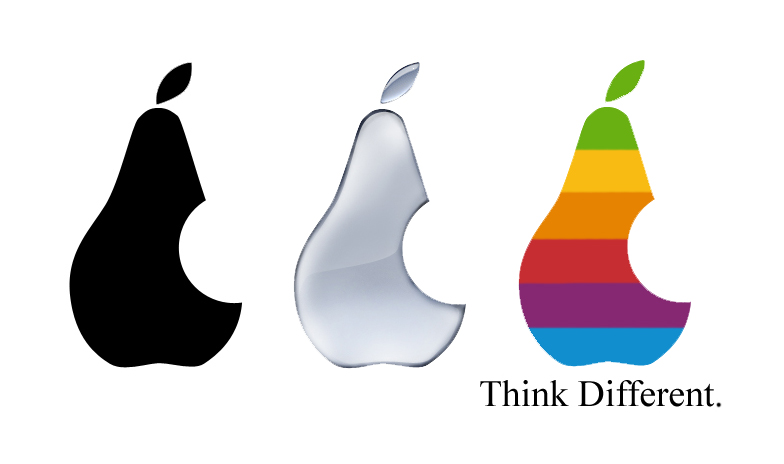
Think_Different2

The Chinese people has another sight. They see human capital. They see talents. More Chinese people are seen in Iran as well as in Africa at the moment. The Chinese people are not killing them, but collaborate with them. They are friends.

The Chinese giant Alibaba is partnering with JVP which have $1 billion under management, attracted Alibaba`s attention with several of its recent «wins», exits for companies like security firm CyberArk and CyActive.

CyActie was recently bought by Paypal for $60 million and CyberArk was listed on Nasdaq in 2014. Some 20 JVP-invested firms have achieved exits since the company was established in 1993. In 2012, JVP was ranked as one of the top ten VC`s in the world.

JVP has had other notable successes, including early support and investment for XtremIO, which was sold to EMC in 2012 for close to $500b.

Alibaba has already invested $5 million in Visualead which is an Israel start-up that develops QR code technology. The investment with JVP will give Alibaba entrèe to the heart of the top technologies being developed in Israel today.

Israel`s most important tech industries is the cyber-security field and the world-wide market for cyber-security products, services and technologies was currently worth about $80 billion annually and rising, and Israel had about 10% of that. That makes Israel a power in cyber-security with great talents and great resources.

Accompanying the Alibaba executives who closed the deal with JVP is a group of Chinese investors and corporate executives, including Jason Lu, VP and Chief Risk Officer of Alipay, a subsidiary of Alibaba and one of China`s largest online payment firms.

Many of the world`s biggest companies are looking to Israel. Apple, which began operations in Israel in 2012 has about 700 employees in Israel, but work with more than 6,000 Israelis. Apple`s Herzliya R&D center is the second-largest in the world.

Along with hiring more Arabs, Israel has been encouraging tech companies to hire more woman and ultra-Orthodox Israelis. Increasing diversity in the workplace was a lesson Israel could learn from Apple. Keep in mind that Steve Job`s father was an Arab, born in Syria. Steve Jobs died in 2011, at the age of 56.

«True innovation can only result from full access to education for all, regardless of race, religion, or sex,» the president Rivlin said. Diversity is also an important issue to Cook himself.

Apple is one of the few companies that publishes a statistical breakdown of the gender and ethnic background of employees. Looking at diversity as «going far beyond the traditional categories of race, gender and ethnicity.

“It includes personal qualities that usually go unmeasured, like sexual orientation, veteran status, and disabilities. Who we are, where we come from, and what we’ve experienced influence the way we perceive issues and solve problems. We believe in celebrating that diversity and investing in it,” Tim Cook said.

Israel is very important to Apple and Tim Cook said that «Apple is in Israel because the engineering talent here is incredible. You guys are incredibly important to everything that we do and to all the products that we build.»

With multi-million dollar acquisitions and investments Indian companies also hope to tap into Israel`s flourishing innovation and start-up ecosystem. India`s industrial corporations are also increasingly looking to Israel for their innovation and technology needs.

India`s Tata Group is the lead investor in Tel Aviv University`s Technology Innovation Momentum Fund worth $20 million. The Indian Wipro has set up a Venture Capital arm with a war-chest of $100 million.

The Indian IT-giant Infosys announced the acquisitions of Panaya. An Israeli automation technology provider for estimated $200 million. Infosys is a global leader in IT-consulting and outsourcing. Their market cap is 41,01B.

They are looking for innovations that would give the company an edge over other global competitors. They reported a revenue of $8,25 billion in 2014 and shored up its existing start-up fund to $500 million.

War is stupid.

Human Capital and Team Work is the future.


Click the link below and check out the Fan Fund

https://www.eventbrite.com/e/fan-fund-tickets-15580655159


Disclaimer: The views expressed in this article are those of the author and may not reflect those of Shiny bull. The author has made every effort to ensure accuracy of information provided; however, neither Shiny bull nor the author can guarantee such accuracy. This article is strictly for informational purposes only. It is not a solicitation to make any exchange in precious metal products, commodities, securities or other financial instruments. Shiny bull and the author of this article do not accept culpability for losses and/ or damages arising from the use of this publication.

Leave a comment

Filed under Stocks

Kodak has a new strategy

The new economy is here and the new economy will intensify. Old giants drop like stones, but how can companies foresight their competitors next move? Take a look at the good old giant Kodak. What have happened to them?

Kodak`s annual sales 25 years ago was $19 billion, but that was then. Now, it`s all turned up side down. Their workforce has been cut from 145,000 to only 8,000, and their annual sales today is only $2 billion. A sharp drop for the New York City company Kodak.

Kodak-film-roll

When you hear the name Kodak, you probably think film, but another film-company was not the reason why Kodak plummeted. The film-company Kodak was losing market shares because of the new mobile phone revolution.

Today, many of the pictures is taken by a mobile phone. A cell phone. How many pictures do you think is taken only with the iPhone worldwide? And how could the dominant brand in photography see that coming?

Kodak tried to make some things to participate in the shift in the market, but as photography started to move from analog film to digital, Kodak were largely left behind. When film went from «essential» to «nostalgic» the film giant Kodak did never recover.

Not only the film-company disappeared, but also the retailers in the same business. No one is delivering their film to the retailer anymore. Not only Kodak lost on this shift, but the retailers was also hardly hit by the new economy.

You all know what the dominant camera is today. Kodak is and was not a phone company and that`s probably why they didn`t make a new phone, because that`s the product that really killed the film giant.

What should Kodak do?

It`s difficult for a company to make the right decisions when the revenues is plummeting, but it can be easy for other to look back and say you should do this and that. In my opinion, there is big opportunities for everyone. For example, Steve Jobs built and rebuilt Apple, but they were not the first phone maker on the market.

Take a look at the finnish multinational communications and information technology company Nokia. The worlds biggest phone maker a few years ago. Nokia`s history started in 1865 when mining engineer Fredrik Idestam established a ground wood pulp mill on the banks of the Tammerkoski rapids in the town of Tampere, Finland (then part of the Russian Empire).

The predecessors of the modern Nokia were the Nokia Company, Finnish Rubber Works Ltc and Finnish Cable Works Ltd. In 2014, Nokia employed 61,656 people across 120 countries with annual revenue of around €12,73 billion. It is the world`s 27th-largest company.

The Finnish business and Nokia`s founder and leader Eduard Polòn founded Finnish rubber Works. A manufacturer of galoshes and other rubber products. He decided to use the name «Nokia» (the town) as a brand name for his products to differentiate his products from Russian competitors.

The legacy of Suomen Gummitehdas lives on in Nokian Tyres.

The electronics section of the cable division was founded in 1960. In the 1970`s, Nokia became more involved in the telecommunications industry by developing the Nokia DX 200, a digital switch for telephone exchanges. Nokia was a key developer of GSM (2G) (Global System for Mobile Communications), the second-generation mobile technology that could carry data as well as voice traffic.

NMT (Nordic Mobile Telephony), the world`s first mobile telephony standard to allow international roaming, provided expertise for Nokia in developing GSM, which was adopted in 1987 as the new European standard for digital mobile technology.

One year later, in 1988, Nokian Tyres, manufacturer of tyres, split from Nokia Corporation.

In the 1980s under CEO Kari Kairamo, Nokia expanded into new fields, mostly by acquisitions. In the late 1980s and early 1990s, the corporation ran into serious financial problems, partly due to heavy losses in its television manufacturing division.

Kairamo committed suicide in 1988. After Kairamo’s death, Simo Vuorilehto became Nokia’s chairman and CEO. In 1990–1993, Finland underwent a severe recession which also struck Nokia.

Probably the most important strategic change in Nokia`s history was made in 1992, when the new CEO Jorma Ollila made a crucial strategic decision to concentrate solely on telecommunications.

As late as 1991, more than a quarter of Nokia`s turnover came from sales in Finland. However, after the strategic change of 1992, Nokia sales to North America, South America and Asia became significant.

The worldwide popularity of mobile telephones, beyond even Nokia`s most optimistic predictions, created a logistical crises in the mid-1990`s, prompting Nokia to overhaul its entire supply chain.

By 1998, Nokia`s focus on telecommunications and its early investment in GSM technologies had made the company the world`s largest mobile phone manufacturer, a position it held until 2012.

Between 1996 and 2001, Nokia`s turnover increased almost fivefold from 6,5 billion euros to 31 billion euros. Nokia acquired Smartphone, a company making Smartphone OS. Sybian was Nokia`s main smartphone operating system until 2011.

Apple`s iPhone, originally launched in 2007, was initially still outsold by Nokia smartphones, most notably the Nokia N95 for some time. Symbian had a dominating 62,5% market share as of Q4 2007, ahead of Microsoft`s Windows Mobile (11,9%) and RIM (10,9%).

Symbian dropped and Apple and Android grew. On 2 September 2013, Microsoft announced that it would acquire Nokia`s mobile device business in a deal worth €3,79 bn, along with another €1,65 bn to licence Nokia`s portfolio of patents for 10 years; a deal totaling at over €6,5 bn.

Steve Ballmer considered the purchase to be a «bold step into the future» for both companies.

Kodak has a new plan to grow and stay alive. The company is mining its patent library to find new business models. People around the world use their phones to take pictures and Kodak will try to reach the phone market by an old patent.

Kodak need to look for their intellectual property and be innovative in the photography business. They probably have an old patent that can turn talent in optics and chemistry into new money in other industries?

Nokia`s history shows us that everything is possible!


Click the link below and check out the Fan Fund

https://www.eventbrite.com/e/fan-fund-tickets-15580655159


Disclaimer: The views expressed in this article are those of the author and may not reflect those of Shiny bull. The author has made every effort to ensure accuracy of information provided; however, neither Shiny bull nor the author can guarantee such accuracy. This article is strictly for informational purposes only. It is not a solicitation to make any exchange in precious metal products, commodities, securities or other financial instruments. Shiny bull and the author of this article do not accept culpability for losses and/ or damages arising from the use of this publication.

Leave a comment

Filed under Stocks

All-Time High for Digital Music

As a music lover I`m following the music market closely, and streaming services has increased in value of one-third from 2013. The streaming services is overtaking CD`s for the first time. Pandora, Spotify, Rhapsody and SiriusXM are among the leaders in this business.

Audio streaming and downloads accounts for 64% of the total market, and according to the Recording Industry Association of America (RIAA), sales of digital music formats hit $4,51 billion in 2014.

headphones

Permanent downloads remain the largest source of revenue at 37 percent.

Streaming services is up $1,87 billion in 2014 and paid subscriptions earned $7,7 million last year. Retail revenue value came in at $6,97 billion last year.

The figure is slightly down from the previous year and points to a flat revenue picture for the industry, which has long worried about revenue decline from digital music piracy and the obsolescence of physical formats like CD`s.

Apple`s acquisition of Beats Electronics will change the streaming business. Apple`s iTunes revenue has plummeted and that`s why they bought Beats. They want to compete with one of the biggest in this business; the Swedish brand Spotify.

Apple is planning to sell the music cheaper than it is today. Is that good for the music industry?

The problem in the music tech industry right now is that the ecosystem is broken and has been broken for many years now. If Apple sells the music cheaper, then the others will follow. Apple and Spotify will earn on it, but I don`t really care about them.

The most important thing in the music industry is that the money goes to the producers and artists of the music. Not to the distributors. The music industry need a new business model for music tech companies and change the copyright reforms.

Spotify is used by more than 50 million people but is it profitable for the artists? Taylor Swift`s decision to yank her music off of Spotify is one of the latest episode in the battle over the music industry`s diminishing profits.

Spotify`s payout range is $0,006 to $0,0084 per stream. With 46,3 million streams, Taylor Swift`s payout is $280k – $390k for her chart-toppin single «Shake it off».

Apple already have their own market and is poised to be a big winner, but Spotify will be difficult to break. Rdio and Deezer need to kick ass to still be in the market, and Facebook has been in bed with Spotify for years now, so Spotify will remain strong.

Artists can earn money from other arenas like the live concert subscription service Jukely. People can see all the concerts they want for only $25 a month. Live.ly failed but a similar product is up and running right now. Maybe they will succeed with their new Set.FM.

YouTube is planning to debut an analytical tool that will provide geographical viewer information to help artists route tours and that one is similar to Pandora`s Amp. Facebook inches closer to YouTube`s traffic with 3 billion views a day.

Clean Bandit`s megahit «Rather Be» is the most streamed song of 2014, the Official Chart Company can reveal. The song was streamed 39,7 million times. 15 billion songs were streamed in 2014, and the number is almost double of that in 2013, where 7,5 billion tracks were streamed.

«Rather be» fends off competition from Pharrell Williams’ monster hit Happy, which takes second place with 35 million streams. Close to Happy is John Legend`s «All of me» with 34,9 million streams.

This is a big jump in music streaming in only one year, but this is just the beginning. The massive growth means that streaming now accounts for 12,6 percent of all music consumed in the UK, compared to only 6,2 percent in 2013.

What do you think will happen with new services including Apple`s Beats and Google`s YouTube Music Key set to launch later this year? The platform`s growth will skyrocket in the next 12 months as it cements its position at the heart of mainstream music consumption.


Click the link below and check out the Fan Fund

https://www.eventbrite.com/e/fan-fund-tickets-15580655159


Disclaimer: The views expressed in this article are those of the author and may not reflect those of Shiny bull. The author has made every effort to ensure accuracy of information provided; however, neither Shiny bull nor the author can guarantee such accuracy. This article is strictly for informational purposes only. It is not a solicitation to make any exchange in precious metal products, commodities, securities or other financial instruments. Shiny bull and the author of this article do not accept culpability for losses and/ or damages arising from the use of this publication.
Leave a comment

Filed under Uncategorized