
Category Archives: Politics

60% of the United States Naval Forces will be stationed in the Asia-Pacific by 2020

The South China Sea is very important and it has always been that. It is a marginal sea that is part of the Pacific Ocean, encompassing an area from the Singapore and Malacca Straits to the Strait of Taiwan of around 3,500,000 square kilometers.

The areas importance largely results from one-third of the worlds shipping sailing through its waters and that it is believed to hold huge oil and gas reserves beneath its seabed. The South China Sea is important for three main reasons:

  1. Oil, gas, fish and minerals
  2. Shipping
  3. A valuable buffer for China`s defense

The big question is; who is owning the sea? China are ignoring its neighbours, claiming that The South China Sea belongs to China, but other countries doesn`t agree with that, and here starts the tension.


Karta_CN_SouthChinaSea


The South China Sea is located;

  • South of mainland China, including the island of Taiwan, in the east;
  • east of Vietnam and Cambodia;
  • west of the Philippines;
  • east of the Malay peninsula and Sumatra, up to the Strait of Malacca in the west and
  • north of the Bangka-Belitung Island and Borneo

China and Vietnam have both been vigorous in prosecuting their claims. China (various governments) and South Vietnam each controlled part of the Parcel Island before 1974, so this conflict is not something new.

In July 2010, US Secretary of State Hillary Clinton called for the Peoples Republic of China to resolve the territorial dispute. China responded by demanding the US keep out of the issue. This came at a time when both countries have been engaging in naval exercises in a show of force to the opposing side, which increased tension in the region.

The United States have so far a lot of provocative acts, and Chinese Navy chief Admiral Wu Shengli warned that these kind of acts can be a minor incident that sparks war. The Communist media recently said;

«If the United States’ bottom line is that China is to halt activities, then a US-China war is inevitable in the South China Sea. We do not want a military conflict with the Unites States, but if it were to come, we have to accept it.»

Last word is not said in this conflict, and Vice President Joe Biden said in a speech at the U.S Naval Academy:

«In the disputed waters of the South China Sea, the United States does not privilege the claims of one nation over another, but we do unapologetically stand up for the equitable and peaceful resolution of disputes and for the freedom of navigation, and today these principles are being tested by Chinese activities in the South China Sea.

U.S foreign policy is rebalancing toward the vast potential of the Asia-Pacific region, but we cant succeed if you dont show up. That`s why 60% of the United States Naval Forces will be stationed in the Asia-Pacific by 2020.

I repeat what Vice President Joe Biden said: 60% of the United States Naval Forces will be stationed in the Asia-Pacific by 2020. This is a conflict that will continue in years to come, and it is a dangerous conflict.

A war between the United States and China will be catastrophic for them both. First of all, Chia is a huge supplier for American merchants. A strong dollar against a cheap Yuan is profitable for Americans, but a war can change that.

China has been steadily accumulating US treasury securities for decades. Additionally, trade data from the US Census Bureau shows that China has been running a big trade surplus with the US since 1985.

This means that China sells more goods and services to the US, than the US sells to China.

Will China try to «buy out» the US markets through its debt accumulation?

The war with China right now is not a currency war. Nor is it a trade war. No, it is a real military war which is not hypothetical anymore. It`s real.


Disclaimer: The views expressed in this article are those of the author and may not reflect those of Shiny bull. The author has made every effort to ensure accuracy of information provided; however, neither Shiny bull nor the author can guarantee such accuracy. This article is strictly for informational purposes only. It is not a solicitation to make any exchange in precious metal products, commodities, securities or other financial instruments. Shiny bull and the author of this article do not accept culpability for losses and/ or damages arising from the use of this publication.

wall


Leave a comment

Filed under Politics

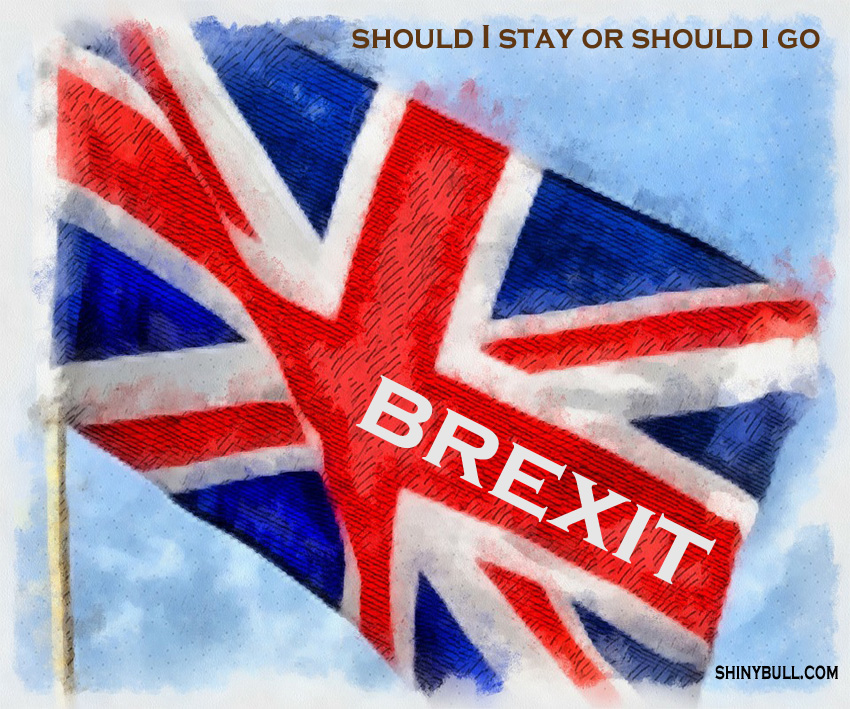
“Brexit” could trigger World War III, Prime Minister David Cameron said

Europe can be on a brink of a new war. Again! Wow, it`s been a long time since the last big war in Europe. Is time for a new one? We have many «triggers» out there, and it seems like everything blows up to a perfect storm.

Prime Minister David Cameron said that peace in Europe can be threatened if people in Britain votes to leave the European Union. David Cameron arguing that EU is a peace project and UK has regretted «turning its back» on Europe in the past.

David Cameron wants to stay in the European Union and many people agree with him. But not all of them. Boris Johnson are on the opposite side. He sparked criticism when he suggested the conflict in Ukraine was an example of «EU foreign policy-making on the hoof».


brexit


Former Swedish prime minister Carl Bildt branded him an !apologist for Putin». Boris Johnson said the comments were «absolutely contemptible» and called for and apology. He repeatedly condemned Russia`s actions in Ukraine.

Earlier this week, NATO members warned about a «Brexit». In an open letter to Daily Telegraph, they said it would be «very troubling» if the UK jumps out ot the European Union membership. Camerons warning was bolstered by five former secretary generals of the Wests military alliance Nato. Lord Peter Carrington, Javier Solana, Lord George Robertson, Jaap De Hoop Scheffer and Anders Fogh Rasmussen bolstered Cameron`s warning.

David Cameron said in a speech earlier this week that Britain must stay in the EU to help prevent the Continent being ripped apart by another conflict. He also said that «Brexit» could trigger World War III, also claiming that the government doesn`t have any plans for a «Brexit».

Wow, who wants to go for a «Brexit» on the June 23 referendum?

Mr. Cameron also said: «Can we be so sure peace and stability on our continent are assured beyond any shadow of doubt? Is that a risk worth taking? «I never be so rash to make that assumption.»

A few hours later, Mr Cameron was attacked by Boris Johnson, who said: «People should think very hard before they make these kinds of warnings».

Just look at the history, and what Cameron referred to in Britains role in «pivotal moments in European history: Blenheim, Trafalgar, Waterloo, our countrys heroism in the Great War and, most of all, our long stand in 1940.

Cameron also said: «What happens in our neighbourhood matter to Britain. That was true in 1914, 1940, 1989…and it is true in 2016.»

Mr Cameron also recalled how Winston Churchill «argued passionately for Western Europe to come together, to promote free trade and build institutions which would endure so our continent would never again see such bloodshed».

A YouGov poll for Good Morning Britain found 42% of voters back In and 40% Out.


skjold5

Disclaimer: The views expressed in this article are those of the author and may not reflect those of Shiny bull. The author has made every effort to ensure accuracy of information provided; however, neither Shiny bull nor the author can guarantee such accuracy. This article is strictly for informational purposes only. It is not a solicitation to make any exchange in precious metal products, commodities, securities or other financial instruments. Shiny bull and the author of this article do not accept culpability for losses and/ or damages arising from the use of this publication.

Leave a comment

Filed under Politics

Citigroup claim that the United States is no longer a democracy, but a Plutonomy

Citigroup Inc is another ridiculous cheap stock that is trading at just 8,31 times estimated 2016 earnings. A little bit cheaper than Bank of America. Citigroup Inc is also trading below its book value. It feels like a «bank robbery» to buy that stock.

Their revenue is expected to decline from $19,27 billion to $17,46 billion, which means an earnings per share of $1,03 and that is down from $1,51 last year, according to Reuters. Once the biggest bank, now ranked number four by assets, it`s obviously going in wrong direction for Citi.

The financial crisis in 2007, hit the bank hard as they were exposed to banks, and indirect to real estate. That was bringing the bank down. Citi were one of the few banks that knew a lot about the real estate market before the financial crisis. Let`s go back in time to 2005.


plutonomy

Citigroup introduced Plutonomy.

This buzz word was initially coined by analysts at Citigroup in 2005 to describe the incredible growth of the U.S economy during that period despite increasing interest rates, commodity prices and an inflated national debt.

Citigroup analysts argued that as such an economy continues to grow in the face of contradictory elements, the more important the society`s ultra rich become to maintaining such growth. The analysts also believed that in addition to the U.S, Canada, Great Britain and China are also becoming plutonomies.

Plutonomy is economic growth that is powered and consumed by the wealthiest upper class of society. Plutonomy refers to a society where the majority of the wealth is controlled by an ever-shrinking minority; as such, the economic growth of the society becomes dependent on the fortunes of that same wealthy minority.

This leads to the next step: Plutocracy, which is a government controlled exclusively by the wealthy either directly or indirectly. A plutocracy allows, either openly or by circumstance, only the wealthy to rule. This can then result in policies exclusively designed to assist the wealthy, which is reflected in its name.

On October 16, 2005, Citi wrote a letter to its rich customers, telling them that the world was divided into two blocks; the Plutonomy and the rest. Their conclusion was that the United States was no longer a democracy, but it become a plutonomy.

A society controlled by the top 1% of the population that have more wealth than the bottom 95% of households combined.

Citi warned about the growing gap between rich and poor and said it was a new era of aristocracy. One of the U.S bank regulators, Bill Black uncovered the savings and loans scandal in the 80`s, so trouble in the banking sector is not something new.

In September 2004, FBI publicly warned about a mortgage fraud ‘epidemic’. The Bush administration transferred (from 9/11 case) 500 white color FBI specialists out of dealing with white color crime. It was the greatest wave of white color crime in the world’s history. FBI said that 80% of the mortgage losses was induced by lender personal. No one is in prison for the crime, and all the CEO`s have gone away with it.

The bursting of the U.S housing bubble, which peaked in 2004, caused the values of securities tied to U.S real estate pricing to plummet, damaging financial institutions globally. The financial crisis is the worst financial crisis since the Great Depression of the 1930`s.

It threatened the collapse of large financial institutions, which was prevented by the bailout of banks by national governments, but the stock market still dropped worldwide. In many areas, the housing market also suffered, resulting in evictions, foreclosures and prolonged unemployment.

The crisis was a result of high risk, complex financial products, undisclosed conflicts of interest; the failure of regulators, the credit rating agencies, and the market itself to rein in the excesses of Wall Street.

Critics argued that credit rating agencies and investors failed to accurately price the risk involved with mortgage-related financial products, and that governments did not adjust their regulatory practices to address 21st -century financial markets.

In the immediate aftermath of the financial crisis palliative monetary and fiscal policies were adopted to lessen the shock to the economy, but don`t complain. You were warned.

Bank stocks are very cheap relative to the markets and analysts have trimmed their Citi target prices marginally, despite the rise of interest rate. JPMorgan lowered its price target to $54, and Deutsche Bank reiterated a Hold rating for Citigroup Inc.

Citi is trading at $44,99, up +1,67% on thursday which is another great day for Citigroup this week. The stock has been trading to the upside all week followed by other banks in that sector.

Investors will look out for a beat-the-street surprise on friday. A surprise they have provided the last four straight quarters.

Watch out for the report on Friday.


sam

Disclaimer: The views expressed in this article are those of the author and may not reflect those of Shiny bull. The author has made every effort to ensure accuracy of information provided; however, neither Shiny bull nor the author can guarantee such accuracy. This article is strictly for informational purposes only. It is not a solicitation to make any exchange in precious metal products, commodities, securities or other financial instruments. Shiny bull and the author of this article do not accept culpability for losses and/ or damages arising from the use of this publication.

Leave a comment

Filed under Politics, Stocks

The goal to end “too big to fail” and protect the American taxpayer by ending bailouts is only a goal

It was a great day for banks on Wednesday, while all the big banks were up, leading the financial sector as the big winner. Up +2,27%. All the banks on my screen is in green, and the most active bank shares are JPMorgan Chase & Co, Bank of America, Citigroup Inc and Wells Fargo & Co.

JPMorgan Chase & Co reported a quarterly profit that topped low market expectations. The drop in profit was the first in five quarters, but investors was focusing on the positives and pushed the bank stocks up. Not only JPMorgan Chase & Co, but also its competitors.

Banking regulators like Federal Reserve and the Federal Deposit Insurance Corporation gave a failing grade to five big banks on Wednesday, on their plans for a bankruptcy giving them until October 1 to make amends or risk sanctions.


bailout


According to Reuters, this could end with braking up the banks, and it underscore how the debate about banks being «too big to fail» continues to rage in Washington. This is the first time regulators have issued joint determinations flunking banks` plans, commonly called «living wills».

If the banks do not correct serious «deticiencies» in their plans by October, they could face stricter regulations, like higher capital requirements or limits on business activities.

The requirement for a living will was part of the Dodd-Frank Wall Street reform legislation passed in the wake of the 2007-2009 financial crisis, when the U.S government spent billions of dollars on bailouts to keep big banks from failing and wrecking the U.S economy.

The plans they have are separate from the Fed`s stress tests, where banks demonstrate stability by showing how they would withstand economic shocks in hypothetical scenarios.

«The FDIC and Federal Reserve are committed to carrying out the statutory mandate that systemically important financial institutions demonstrate a clear path to an orderly failure under bankruptcy at no cost to taxpayers,» FDIC Chairman Martin Gruenberg said in a statement.

«Today`s action is a significant step toward achieving that goal.»

Thomas Hoenig said the plans show that no firm is «capable of being resolved in an orderly fashion through bankruptcy.»

«The goal to end «too big to fail» and protect the American taxpayer by ending bailouts remains just that: only a goal.»

The biggest banks doesn`t have any plans for themselves if a new financial crisis are turning into panic and chaos, which means, if the panic hit the market today, the government need to prop up the banks called «too big to fail» if they want to avoid financial chaos.

Democratic president candidate Hillary Clinton said regulators need to break big banks apart if they don`t fix their living will problems over time. Bernie Sanders, said on Twitter that many banks have only gotten bigger since they were bailed out during the financial crisis.

One of them is obviously not Citigroup. They have cut more than 26% of its assets since its peak in 2007. Citiygroup was the largest U.S bank but is now ranked number 4 (ranked by assets).

The regulators continue to assess plans for four foreign banks labeled «systemically important» and that is Barclays PLC, Credit Suisse Group, Deutsche Bank AG, DBKGN.DE, and UBS Group AG. Citigroup`s living will did pass, but regulators noted it had «shortcomings.»

I will look for Citigroup`s report on Friday.


sam

Disclaimer: The views expressed in this article are those of the author and may not reflect those of Shiny bull. The author has made every effort to ensure accuracy of information provided; however, neither Shiny bull nor the author can guarantee such accuracy. This article is strictly for informational purposes only. It is not a solicitation to make any exchange in precious metal products, commodities, securities or other financial instruments. Shiny bull and the author of this article do not accept culpability for losses and/ or damages arising from the use of this publication.

Leave a comment

Filed under Politics, Stocks

Sell your shares in Zimbabwe before April 1

Chinas GDP growth were 14% a few years ago, but now the worlds second-largest economy is lowering the growth target to about 6,5% – 7% in 2016. 7% is still very good, but the economy is slowing down faster than expected.

The economic growth is slowing while China`s Central government budget deficit as a percentage of GDP is growing. The target is 3% in 2016, and China will continue to be a global economic engine. But what is the next China?

It can be Africa which is a hot commodity, but some investors are in doubt. They think it is unstable and unsafe. Some claims it is so much violence in Kenya, but the infrastructure in Kenya makes it a worthy long-term investment.

Africa

Africa is a growing economy with a huge and young population. It has so far been a daunting place to start and run a company there. Very often, it is expensive to start a new business in Africa.

Bank loans come with double-digit interest rates. The electricity grid is sub-par and diesel generators cost a fortune, but many thing are getting better according to the World Bank.

There is a lot of reform happening in Africa right now.

The World Bank publishes a parallel ranking of the countries that have pushed through the most business-friendly reforms. Five African countries are on the top-10 list, which is Kenya, Mauritania, Senegal, Benin and Uganda.

Botswana is the least corrupt country in Africa which is an important factor for entrepreneurs and their investors. This is a country that rely heavily on revenues from the diamond trade to fuel its growth.

Rwanda is an economic success story. Many years of reforms have made it much more easy to open and run a business, and it is far easier to get credit there. Only one country is better and that is Mauritius.

It has commercial links to India, China and the east coast of Africa. Mauritius is often on top of the ranking list for competitiveness and ease of doing business due to its liberal approach to regulation and taxation. What about Zimbabwe?

Zimbabwe

Zimbabwe had rough days, particularly between 2005 and 2008, were hyperinflation decimated the economy. The Central Bank issued currency with expiration dates of six months, effectively longer than the actual life of the currency.

The American dollar replaced the Zimbabwean dollar as the country`s main currency, and now Zimbabwe has started to retiring it’s almost worthless local currency in favor of the U.S dollar.

35 quadrillion Zimbabwean dollars are equal to US $1.

Monthly inflation rate hit 3,5 million percent eight years ago, and prices doubled every 25 hours. Zimbabwe has the second-worst hyperinflation in history, behind post-war Hungary.

It all started in 2000, when Mugabe changed his economic policy and implemented land reform. Mugabe granted farmland owned by white citizens to indigenous black Zimbabweans. They turned from an agriculture exporter to an importer, which resulted  in 94 percent unemployment rate and hyperinflation.

Zimbabwe is known for its mineral resources. It has the world`s second largest deposit of chrome and platinum after South Africa, and President Robert Mugabe wants to take over all diamond operations.

Zimbabwes leader since 1987, Robert Mugabe eager to nationalize Zimbabwes diamond industry, and news from Zimbabwe leaves little to be desired about the small former British colony.

He says the country`s wealth had been looted by the existing miners.

“The state will now own all the diamonds in the country. Companies that have been mining diamonds have robbed us of our wealth. That is why we have now said the state must have a monopoly,” said Mugabe in an interview with the state broadcaster earlier this month.

Foreign investor also need to hurry up and sell their shares to blacks or close before April 1st.

Companies owned by foreigners face closure unless they sell or give up 51% of their shares to black Zimbabweans by April 1, said indigenization Minister Patrick Zhuwao.

“Comply by that date or close shop, comply by that date or face the full wrath of the law,” Bloomberg quotes Zhuwao, who is also President Robert Mugabe`s nephew.

IMF asked the Mugabe administration to clarify Zimbabwe`s policy on black empowerment. Zimbabwe has agreed to major reforms including compensation for evicted white farmers.

President Mugabe is known for evicting white farmers. In 2010, the Guardian reported that Mugabe used land reforms to reward his allies rather than ordinary black Zimbabweans. The newspaper`s sources reported Mugabe and his supporters owned about 40% of the land seized from white farmers.

The white farmers received no compensations after being evicted.

«If white settlers just took the land from us without paying for it, we can, in a similar way, just take it from them without paying for it,» said Mugabe.


sb-star

Disclaimer: The views expressed in this article are those of the author and may not reflect those of Shiny bull. The author has made every effort to ensure accuracy of information provided; however, neither Shiny bull nor the author can guarantee such accuracy. This article is strictly for informational purposes only. It is not a solicitation to make any exchange in precious metal products, commodities, securities or other financial instruments. Shiny bull and the author of this article do not accept culpability for losses and/ or damages arising from the use of this publication.

Leave a comment

Filed under Commodities, Emerging markets, Politics, Stock market