
Author Archives: Ket Garden

Behind the Curtain: The Hidden Forces of the Matrix

We often hear that politicians are just puppets on a stage, controlled by unseen powers behind the curtain. But who exactly are these hidden manipulators pulling the strings?

Some say they are the Archons. Who are they?

The Archons and the Invisible Power

The term Archon comes from ancient Gnostic teachings and is often used as another name for demonic or lower-dimensional forces. According to Gnostic cosmology, the Archons created the physical universe as a kind of illusion. A false reality meant to trap human souls.

These entities are not truly human. They are alien, energetic beings that, according to some theorists, established religion, politics, and social systems as tools of control.

Together, they form what many describe as a hidden world government that operates through both extraterrestrial and occult forces.

Another term often used in this context is the Deep State. An interconnected web of influence where both Archons and the earthly elite share a single goal: control of the human race.

A World Beyond the Visible

Reality, according to these ideas, is not just physical matter. It also consists of layers of energy and vibration that most humans cannot perceive. The Archons exist on one of these higher-frequency planes. They can manipulate human perception, and in rare cases, even take human form or possess individuals.

Some people claim to have seen shadow figures. Dark silhouettes or fleeting shapes that appear in moments of emotional or spiritual intensity. Conspiracy researchers believe these are manifestations or projections of non-human entities that feed on fear, stress, and conflict.

David Icke and the Reptilian Control System

Author and speaker David Icke popularized this theory, describing the Archons as reptilian or interdimensional beings who feed on low-frequency human energy. Fear and anger, he says, are their food. To maintain their control, they have built a global “control system” that keeps humanity locked in stress, division, and confusion.

This system includes politics, religion, media, and economics. All designed to manipulate perception. In this view, the world is not ruled by random governments but by a global cabal of interconnected power structures.

According to Icke, humans are naturally conscious, divine beings. Yet the Archons’ control grid, often called the Matrix, acts as a mental and energetic prison that prevents spiritual awakening. When people live in fear or hate, their vibration lowers, making them easier to manipulate and feeding the Archons’ need for energy.

The Digital Matrix

The most effective modern tool of control, many say, is technology. We have surrendered our privacy in exchange for convenience. Our smartphones, ironically called “smart,” constantly monitor us. But who are they really smart for?

Social media platforms manipulate emotions and thoughts through algorithms that create echo chambers, reinforcing existing beliefs. This keeps humanity trapped in a digital consciousness bubble. A new layer of the Matrix.

As technology advances into the Internet of Things (IoT), where homes, cars, and even bodies are connected to the internet, complete surveillance becomes possible. Artificial Intelligence can collect and analyze every movement, emotion, and preference.

The ultimate goal, according to some, is to copy human consciousness digitally, disconnecting humanity from its natural freedom and intuition. This creates an energy-vampire structure where human thoughts and emotions become the “fuel” for the system itself.

The Frequency War

Human consciousness operates like a receiver and transmitter of frequencies. Constant exposure to digital noise, signals, and radiation can disturb this field, weakening intuition, sleep, and emotional balance.

Some theorists even argue that 5G and other high-frequency technologies can influence human consciousness by manipulating the energetic field we experience as reality. The result? People remain stuck in lower vibrational states, fear, stress, and confusion, making it easier for the Matrix to maintain control.

A Pattern as Old as Time

But is this system truly new? Probably not. It may be as ancient as civilization itself. Simply taking new forms as humanity evolves. To understand this, we must look back into history, where traces of similar control structures and mysteries appear again and again.
Ancient Builders and Alien Connections: A Hidden Global Network?

Throughout history, we find structures so monumental and precise that they continue to challenge our understanding of ancient civilizations. From the Pyramids of Giza to Puma Punku, the Nazca Lines, and the colossal stones of Ba’albek, these sites raise one essential question:

How could ancient humans have achieved such feats without advanced tools, machines, or global communication?

Some researchers propose a bold idea. Ancient civilizations did not work alone. Instead, extraterrestrial beings may have guided or assisted them. The striking similarities among pyramids in Egypt, Mesoamerica, and China suggest a shared source of knowledge. Could there have been a hidden global network, orchestrated by visitors from beyond Earth?

Communication Beyond Time and Distance

If these beings were truly advanced, they would not need wires or satellites. Theories suggest they used:

  • Telepathic communication — mind-to-mind connection beyond language.
  • Planetary energy grids — ley lines and magnetic currents as a global communication system.
  • Celestial navigation — aligning temples with Orion, Sirius, and the Pleiades to form a “cosmic map” linking civilizations.

Seen through this lens, the great monuments were not just tombs or temples. They may have been energy hubs, markers, or resonant transmitters that connected humanity to something far greater.

The Mystery Remains

Mainstream archaeology credits human ingenuity, organization, and persistence. Yet the global similarities, the mathematical precision, and the unexplained engineering continue to raise questions.

If ancient civilizations truly had no contact, then maybe, just maybe, the connection came from elsewhere.

Final Reflection

Whether one views the Archons as literal entities or symbolic forces of control, the underlying message remains powerful: humanity must awaken. The more we allow fear and division to dominate, the more we strengthen the systems that confine us.

But when we choose awareness, love, and higher consciousness, and when we step beyond manipulation and illusion, the Matrix begins to lose its power.

Perhaps, the greatest act of rebellion in any age is simply this:
to wake up and remember who we truly are.

Disclaimer: The views expressed in this article are those of the author and may not reflect those of Shinybull.com. The author has made every effort to ensure the accuracy of the information provided; however, neither Shinybull.com nor the author can guarantee the accuracy of this information. This article is strictly for informational purposes only. It is not a solicitation to make any exchange in precious metal products, commodities, securities, or other financial instruments. Shinybull.com and the author of this article do not accept culpability for losses and/ or damages arising from the use of this publication.

Leave a comment

Filed under Curiosity

Who Is Hamas? The Truth About Gaza’s Rulers

Ordinary people in Gaza hate Hamas and want to get rid of it. But how easy is that when we all know they rule Gaza with an iron fist? If you disagree with them, they will simply silence you. Or kill you. And that’s what’s happening in Gaza right now.

Once Hamas claims to seek peace with Israel, it soon turns its weapons on its own people. Who, then, is Hamas, and what are they really doing?

Origins of Hamas

Hamas (Ḥarakat al-Muqāwamah al-ʾIslāmiyyah — “Islamic Resistance Movement”) was founded in 1987 during the First Intifada. It grew out of the Egyptian Muslim Brotherhood, promoting a radical Islamist ideology that rejects Israel’s right to exist.

Its 1988 charter openly called for Israel’s destruction and the creation of an Islamic state over all of historical Palestine. From the beginning, Hamas mixed social welfare with terrorism, using religious faith and nationalism to recruit followers and strengthen control.

Brainwashing and Indoctrination

We can ask ourselves where all this hate comes from. But it’s not hard to understand when you see how Hamas uses propaganda and fear to shape generations.

The Nazis once said that a lie repeated enough times becomes the truth. The same can be said about Hamas.

In schools, mosques, and media, they constantly repeat messages of hatred against Jews and Israel. Children are taught that dying as a “martyr” is the greatest honor. The organization glorifies violence and uses religion as a tool of manipulation. This is how the terrorist organization Hamas is recruiting suicide bombers to attack innocent people in Israel.

The Years of Terror

Before Israel built its security barrier (the wall) along the Gaza border, Hamas repeatedly sent young suicide bombers into Israel, especially during the Second Intifada (2000–2005). Civilians were the main targets. People on buses, in cafés, markets, and restaurants.

Some of the worst attacks included:

  • Jerusalem Sbarro Restaurant bombing (2001): 15 killed, over 100 injured.
  • Dolphinarium disco bombing (2001): 21 young people killed.
  • Hebrew University bombing (2002): 9 killed, including U.S. citizens.

Even before Israel’s withdrawal from Gaza in 2005, militants in Gaza, including Hamas, began firing rockets and mortars into southern Israel. Towns like Sderot and Ashkelon have lived under constant threat ever since.

In 2006, Hamas fighters kidnapped Israeli soldier Gilad Shalit, holding him captive for over five years before finally releasing him in exchange for over 1,000 Palestinian prisoners, many of whom had blood on their hands.

Hamas’s Control Over Gaza

Since taking full control of Gaza in 2007, Hamas has turned the area into both a fortress and a prison. They suppress political opponents, control the media, and punish anyone who dares to speak against them.

Billions in international aid meant for rebuilding homes and hospitals have instead been used to build tunnels, buy rockets, and train new fighters.

Ordinary Gazans are the real victims. Trapped between Hamas’s authoritarian rule and the consequences of its endless wars.

What`s disappointing about this case is the legacy media`s unbalanced reports from the conflict. We often hear from poor civilians in Gaza. They usually lie, and sometimes they say people have no home and that it’s cold in Gaza. The fact is that the weather is hot.

The Hidden Face of Hate: When “Support for Gaza” Becomes Antisemitism

In the weeks and months following every escalation in Gaza, television screens, social media feeds, and newspaper headlines fill with global protests and statements of “solidarity with Gaza.” Many of these come from people who genuinely care about the suffering of civilians, and compassion is vital.
But somewhere along the way, something darker has mixed in: a growing wave of disguised antisemitism, hate hidden beneath the surface of supposed “support.”

From Sympathy to Scapegoating

It begins with empathy. People reacting to images of destruction, mourning the deaths of children, and demanding peace. But in protest slogans and online comments, empathy often turns into something else:

  • “Zionists” becomes a code word for “Jews.”
  • Calls for “Free Palestine” are twisted into chants like “From the river to the sea,” which deny Israel’s right to exist.
  • Jewish students, shops, and synagogues in Europe and the U.S. face vandalism or threats, even though they have nothing to do with the Israeli government.

This isn’t solidarity. It’s scapegoating. The line between political protest and racial or religious hate has blurred.

How Hate Disguises Itself

Modern antisemitism rarely looks like the open hatred of the 1930s. Today, it hides behind political and moral language, calling itself “anti-Zionism,” “human rights activism,” or “decolonization.”
But the pattern is the same: blame all Jews for the actions of a few, question their right to safety, and deny their history.

  • In some university protests, Jewish students have been told to “go back to Poland.”
  • Online, “pro-Gaza” threads are flooded with conspiracy theories about Jews controlling governments or media.
  • In demonstrations, Israeli flags are burned alongside slogans calling for “intifada” or “death to the occupiers.”

These aren’t calls for justice. They’re echoes of history, and they’re dangerous.

A Moral Test for the West

True solidarity with Palestinians means demanding an end to terror and manipulation. Not cheering for those who fire rockets from schoolyards. Genuine peace means condemning antisemitism wherever it appears, even when it hides behind fashionable activism.

The West now faces a moral test:
Can we support innocent people in Gaza without reviving one of humanity’s oldest hatreds?
Can we tell the difference between compassion and hate?

The answer depends on honesty and courage. Because antisemitism doesn’t vanish when it changes its name. It only grows stronger in the shadows.

The Media’s Blind Spot

Mainstream media often amplifies this confusion. In their effort to highlight humanitarian crises, many journalists avoid distinguishing between legitimate criticism of Israeli policy and antisemitic rhetoric.
As a result, the public conversation becomes one-sided: Israeli military actions are headline news, while Hamas’s use of human shields, executions of civilians, and years of rocket attacks barely make the front page.

This selective storytelling doesn’t just distort reality. It feeds resentment. It reinforces the false idea that Jews are “the oppressors” and Palestinians “the victims,” without showing that both societies suffer under extremists like Hamas.

The Echo of Lies: How Hate Survives Through Propaganda

Hate rarely starts as hate. It begins as a whisper — a repeated story, a single narrative told again and again until it becomes a kind of truth. History has shown us this pattern many times before. The Nazis understood it all too well: “Repeat a lie often enough, and it becomes the truth.” That same dark psychology is alive today, in new forms and new places.

We see it in Gaza, where Hamas indoctrinates generations through education, media, and religion. Not to seek peace, but to preserve conflict. From childhood, people are taught not only to distrust but to despise. Over time, these beliefs stop feeling like opinions and start feeling like identity. When that happens, reason and compassion disappear.

But this manipulation doesn’t end there. Across the world, much of what we see in legacy media now echoes a similar distortion — not always intentional, but often biased. The story becomes simplified: one side good, one side evil. Complex truths are ignored because they don’t fit the headline. And beneath this imbalance, something ancient and dangerous grows, a modern form of antisemitism disguised as “support for the oppressed.”

People march in the streets, believing they are standing for justice, yet their chants echo the slogans of those who would destroy, not build. Sympathy for innocent civilians in Gaza, which is both human and necessary, is twisted into hatred toward Jews as a whole. It’s a trap of perception, built by years of selective narratives and emotional manipulation.

Meanwhile, Hamas continues to spend vast sums on weapons and tunnels instead of schools and hospitals. Iran and other foreign actors feed this machine of destruction, funding the tools of war while ordinary people suffer in poverty. And still, the cameras turn, the slogans spread, and the lie grows louder.

Propaganda doesn’t only distort the truth. It divides humanity. It turns empathy into anger, and understanding into fear. To fight it, we must learn to question what we’re told. We must see beyond the headlines, beyond the slogans, beyond the images carefully designed to provoke outrage.

The path forward isn’t found in hate, but in clarity. In seeing the difference between the innocent and the manipulative, between compassion and deception. Because if lies can echo, so can truth.

As Plato warned: “Those who are able to see beyond the shadows and lies of their culture will never be understood, let alone believed, by the masses.” That is why seeking truth is never easy, but it is always necessary.

Conclusion: The Real Enemy of Gaza’s People

Hamas is more than a militant group. They are the ruling power in Gaza with a dual role: political/social authority, and armed resistance. But their priorities often harm the people they claim to represent.

If peace or justice is ever to come, Gaza’s people need rules that protect them, accountability, transparency, and a governing power that places civilian needs above military ambition.

When the world watches the suffering in Gaza, it’s easy to blame Israel. But behind every destroyed building and every tragic image, there’s a more profound truth: Hamas has built its power on the suffering of its own people.

It’s not Israel that keeps Gaza poor and oppressed. It’s Hamas. Until they are gone, peace and freedom will remain out of reach for both Palestinians and Israelis.

Disclaimer: The views expressed in this article are those of the author and may not reflect those of Shinybull.com. The author has made every effort to ensure the accuracy of the information provided; however, neither Shinybull.com nor the author can guarantee the accuracy of this information. This article is strictly for informational purposes only. It is not a solicitation to make any exchange in precious metal products, commodities, securities, or other financial instruments. Shinybull.com and the author of this article do not accept culpability for losses and/ or damages arising from the use of this publication.
Leave a comment

Filed under Politics

A Historic Day for the Middle East: Defense, War, and the Challenge of Perspective

It is a very historic day for the Middle East today. A «Long and painful nightmare» is over, Trump says. Trump arrived in Tel Aviv to mark the release of Israeli hostages by the terrorist organization called Hamas.

Trump is very proud of this moment. Maybe the best moment of his life. Trump has done something that nobody before him has achieved. Trump has made peace in the Middle East. He released 20 living hostages. A day that none of their families thought would come.

Trump delivered a speech in which he said America joined its ally in two «everlasting vows»: Never forget, and never again.» He also said that the war is over. A war that was ugly, but Hamas is not alone.

Iran is the leading foreign backer of Hamas, whose attack on Israel on Oct. 7, 2023, saw 1.200 people killed and hundreds taken hostage. Weapons taken out of Libya during the chaotic post-2011 period ended up in many places.

UN and expert reporting show Libyan arsenals were looted and trafficked to many different places. According to author Hanne Nabintu Herland, Norway dropped 588 bombs in Libya, where millions of civilians were killed. Thousands of bombs were given to the terrorist organization Hamas after the war in Libya.

Israel has the right to defend itself, and Israel`s response and the ensuing war have left more than 67.000 Palestinians dead, including thousands of civilians, according to Gaza`s Health Ministry.

Gaza itself has been largely destroyed, with most buildings in ruins. It looks like Hiroshima during World War II. About 80% of Gaza has been destroyed. Is this the right thing to do? People and legacy media have criticized Israel for what they have done in Gaza. Was what Israel has done in Gaza Okay?

Let`s start with Israel. The Israeli-Palestinian conflict is one of the most complex and emotionally charged disputes in modern history. Few elements symbolize this tension more than the wall — or security barrier — that separates Israel from the Palestinian territories.

To understand why this wall exists and why Hamas remains at the heart of the story, we have to look back at what happened before its construction and how events unfolded afterward.

Israel built the wall because the terrorist organization Hamas attacked civilians in Israel. For many Palestinians, Hamas presented itself as a movement of resistance and social welfare — running schools, hospitals, and charity networks, especially in Gaza, where poverty and unemployment were widespread. But for Israel and much of the international community,

Hamas’s violent actions and refusal to recognize Israel’s right to exist made it a terrorist organization, a designation now shared by the United States, the European Union, Canada, and several others. So, the Israeli war was against the terrorists in Gaza. Not civilians in Gaza.

Before the Wall: Years of Violence

The 1990s and early 2000s were some of the bloodiest years in Israeli history, marked by a wave of suicide bombings, shootings, and other attacks carried out by Hamas and other militant groups. The Second Intifada (2000–2005) became a turning point.

Hamas’s attacks were frequent and devastating:

  • Bus bombings in Jerusalem and Tel Aviv targeted civilians commuting to work or school.
  • Restaurants, shopping malls, and markets were attacked, turning ordinary places into sites of tragedy.
  • The Sbarro restaurant bombing (2001) killed 15 people and injured more than 100.
  • The Dolphinarium discotheque bombing (2001) took the lives of 21 teenagers.
  • At the Hebrew University bombing (2002), nine were killed, including American students.

By the early 2000s, hundreds of Israeli civilians had been killed in suicide bombings. For Israelis, daily life became a constant state of alert. Ordinary activities — riding a bus, eating in a café, or sending a child to school — carried real danger.

Hamas justified these attacks as “resistance,” while Israel viewed them as terrorism designed to destroy peace efforts.

The Decision to Build the Wall

In 2002, amid the peak of the Second Intifada, Israel began constructing the security barrier — a combination of concrete walls, fences, and checkpoints — along the West Bank. The stated goal was simple: to stop suicide bombers and other infiltrations from Palestinian territories into Israeli cities.

The wall was — and still is — controversial.
For Israel, it was a defensive necessity that saved lives. After its construction, suicide bombings dropped by more than 90%. For Palestinians, however, it represented occupation and separation, cutting them off from farmland, workplaces, and family on the other side. The wall physically entrenched a psychological divide that had already existed for decades.

The Gaza Factor and Hamas’s Rise to Power

While the wall focused on the West Bank, Gaza was undergoing its own transformation. After years of pressure and violence, Israel withdrew from Gaza in 2005, removing settlements and military presence. The expectation was that Palestinians would take this opportunity to build a functioning, peaceful society.

Instead, political infighting erupted between Hamas and Fatah — the dominant Palestinian political faction led by Mahmoud Abbas. In 2007, Hamas violently seized control of Gaza, expelling Fatah forces and establishing a de facto Islamist government.

From that moment, Gaza’s relationship with Israel changed completely. Hamas began developing rocket capabilities, importing weapons, and digging tunnels under the border to carry out attacks or smuggle goods. The nature of the threat shifted from suicide bombings to indiscriminate rocket fire targeting southern Israel.

Towns like Sderot, Ashkelon, and Be’er Sheva faced years of rocket attacks. Israel responded with airstrikes and, on several occasions, full-scale military operations — each causing widespread destruction in Gaza and significant civilian casualties.

The Human Cost

Both sides have suffered immensely.
For Israelis, the threat from Gaza remains constant — alarms, shelters, and the fear of sudden attacks are part of daily life.
For Palestinians in Gaza, life is defined by poverty, unemployment, and blockades that restrict movement and trade. Thousands of civilians have been killed or displaced in repeated conflicts.

Hamas continues to reject Israel’s right to exist and invests heavily in military infrastructure — rockets, tunnels, and paramilitary forces — while ordinary Gazans struggle to access clean water, electricity, and healthcare.

Israel, for its part, argues that the blockade is a necessary security measure to prevent Hamas from rearming. Critics, including human rights groups, counter that it amounts to collective punishment and fuels further resentment.

A Cycle Without End

The wall did succeed in its primary purpose — it stopped most terrorist infiltrations into Israel. Yet, it also reinforced the sense of division, mistrust, and hopelessness between the two peoples. Hamas’s control over Gaza has created a political stalemate: Israel refuses to negotiate with a group committed to its destruction, while Hamas uses Israel’s restrictions to rally anger and support among Palestinians.

Every few years, the cycle repeats: rocket attacks, Israeli airstrikes, and devastating humanitarian crises. Each side claims victory; neither side wins peace.

Conclusion: Fear and Freedom

The story of Hamas, Israel, and the wall is not simply about terrorism or defense — it is about fear and survival, two emotions that dominate the landscape of the Middle East.
Israel built a wall because it felt it had no other choice. Hamas attacks because it believes violence is the only path to freedom. Between them are millions of people — Israelis and Palestinians — who simply want to live ordinary lives.

In the end, walls may stop bombers, but they cannot build trust. The challenge for both sides remains the same as it was before the first stone was laid: to find a way to balance security and justice, defense and dignity, fear and hope — the hardest balance of all.

So, why do nearly everybody criticize Israel for what they are doing in Gaza?

When Defense Becomes a Crime: A Double Standard in How the World Sees War

Today, it seems nearly every news outlet is focused on criticizing Israel for civilian casualties in Gaza. Headlines scream about women and children killed, often implying moral failure or injustice. And yet, when we look back at modern history, we see a striking pattern: war almost always claims innocent lives, no matter who is involved.

Take the 1999 NATO bombing of Yugoslavia. During 78 days of airstrikes, hundreds of civilians were killed, including children. The death of three-year-old Milica Rakić in her home in Batajnica became emblematic of the human cost of war. Serbia now has memorials, statues, and ceremonies honoring the children who died. Dozens of names are remembered publicly as a symbol of lives lost during the campaign. Cluster munitions, unexploded ordnance, and indiscriminate bombing caused these deaths — the same tragic consequences we lament in other conflicts today.

NATO was acting in what it claimed to be defense and stabilization, yet civilian casualties were inevitable. And yet, when similar actions are taken by other nations in their own defense, the global narrative often shifts. Israel, for example, builds walls and conducts targeted operations against groups like Hamas, whose own record includes attacks on civilians and using human shields. Israel emphasizes its right to protect its citizens from terrorism, just as NATO justified its actions in Serbia and elsewhere. But public opinion and media framing frequently focus only on one side of the equation.

The pattern is not new. History is full of wars where civilians suffered while the aggressors were vilified and the defenders celebrated — or vice versa, depending on perspective. What often changes is the narrative: who tells the story, which victims are remembered, and which are ignored. In Serbia, memorials commemorate the children killed by NATO; in Israel, civilians caught in crossfire are highlighted in international media. Both are real tragedies. Both are consequences of war.

At the heart of this is human nature. When a society or individual is threatened, defense is instinctive. If harm persists, measures escalate. Walls are built. Armies act. Lives are lost. History shows repeatedly that the morality of defense is complicated by the inevitability of collateral damage. Civilian deaths are always tragic, yet they are not always evidence of moral failure — often, they are evidence of the harsh realities of conflict.

The lesson is clear: to truly understand war and peace, we must look honestly at all sides. Criticism must be proportional, and we must remember that war does not spare innocence. Nations act to survive; civilians sometimes pay the price. Recognizing this complexity is not the same as justification — it is acknowledgment of reality.

If the global community wishes to promote peace, it must do so consistently. Selective outrage, when only certain wars or victims are highlighted, distorts understanding and prevents meaningful solutions. Every civilian life lost, whether in Serbia, Gaza, Iraq, or elsewhere, deserves remembrance. Every act of defense, every effort to protect citizens, deserves careful analysis.

War is tragic, complex, and unavoidable in human history. Only by recognizing its patterns, learning from them, and holding ourselves to consistent moral standards can we hope to reduce suffering and approach a more peaceful world.

Leave a comment

Filed under Politics

Diplomacy or Weapons as the Way to Peace?

“Every war begins with the illusion of victory. Every peace begins with the courage of dialogue. Which will we choose?”

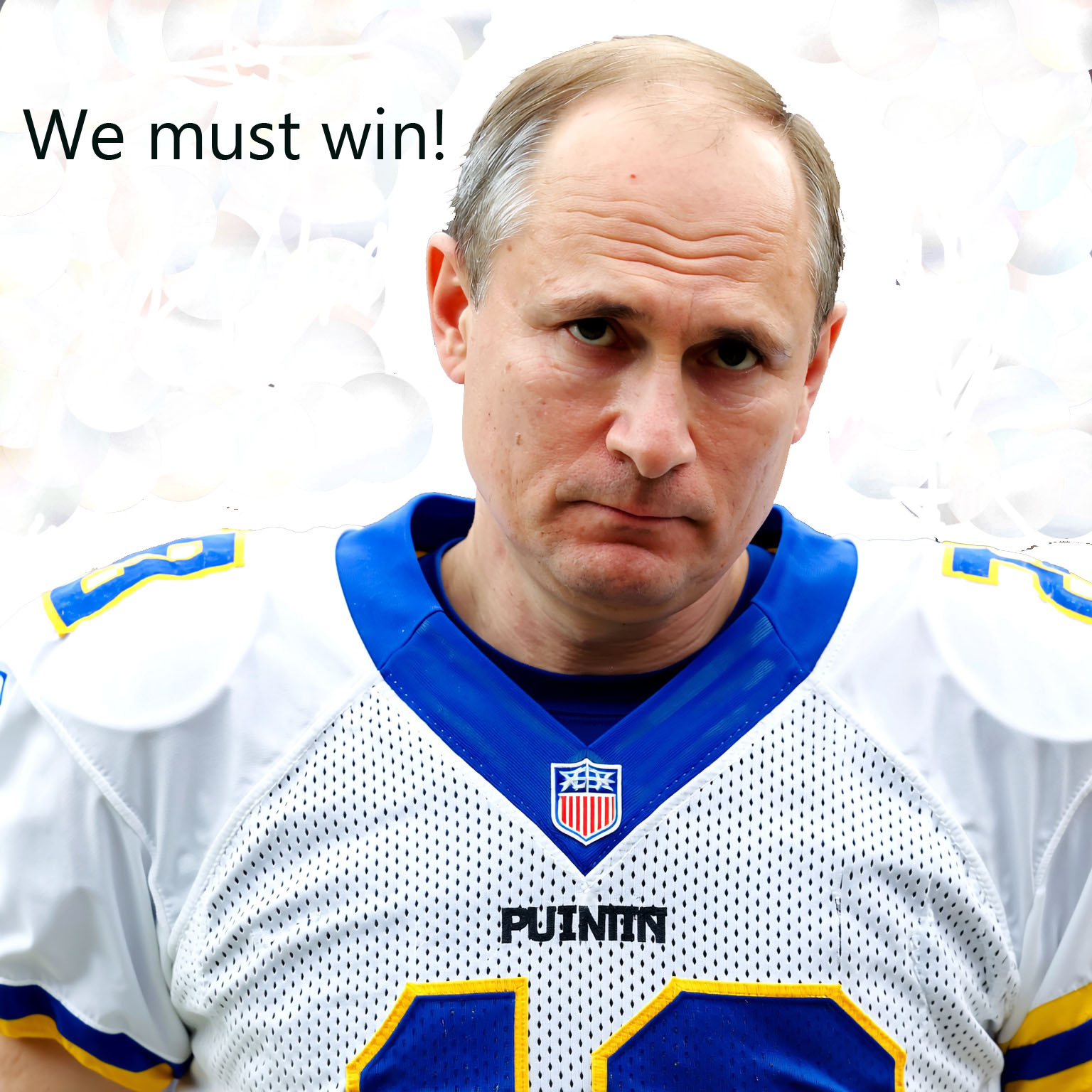
History has already shown us the price of arrogance. Twice in the last century, the world descended into total war because nations believed they had no choice but to fight and that they had to win. Today, as leaders repeat the same words, we stand once again at the edge of disaster.

The world has already witnessed two devastating global conflicts — the First and Second World Wars. Now, many fear that we stand on the brink of a Third. The war in Ukraine rages on, while violence flares in Israel and Gaza. What is striking is that leaders on all sides declare that they must win. Even NATO’s former Secretary General Jens Stoltenberg has insisted that “weapons are the way to peace.”

But have we truly learned nothing from history?

After the First World War, nations attempted to chart a new course. The Treaty of Versailles of 1919 and the creation of the League of Nations were intended to establish an international order in which diplomacy, rather than war, would resolve conflicts. The idea was collective security: dialogue, negotiation, and the prevention of another catastrophic war.

And yet, within two decades, the world was plunged into an even deadlier conflict. The League of Nations failed because nationalism, greed, and great-power rivalry proved stronger than the will to compromise. Diplomacy was drowned out by ambition, unresolved grievances, and economic instability.

It feels eerily similar today. We see frozen conflicts, festering grievances, and leaders proclaiming that victory — and only victory — is the only acceptable outcome. But as history shows, not everyone can win.

Think of a football match: two teams, both determined to be victorious. Only one side can claim the win after 90 minutes. But wars do not have a clock. Wars end only when destruction, exhaustion, or overwhelming force brings them to a halt. In the past, that sometimes meant entire armies fighting to the last man. In the 20th century, it meant the atomic bomb. It was not diplomacy that ended the Second World War — it was unprecedented violence.

This raises an unsettling truth: humans often respond more to fear than to reason. Diplomacy, without urgency, is easily dismissed. But when fear peaks — when cities are destroyed, when civilians suffer, when nuclear annihilation looms — only then do leaders suddenly discover the language of negotiation.

If history repeats itself, then humanity may once again stumble toward self-destruction. The tragic irony is that while weapons may bring silence to the battlefield, they rarely bring true peace. Peace, lasting peace, requires the courage to pursue diplomacy before fear takes control.

Because if “weapons are the way to peace,” we may find that peace comes only after there is nothing left to save.

Fear, it seems, is the actual driver of humanity. Diplomacy is too often dismissed until it is too late. And when diplomacy fails, fear and destruction rule.

History is clear: bombs may end wars, but they do not prevent them from happening. Dialogue does.

Diplomacy is not a sign of weakness – it is a sign of wisdom. If history teaches us anything, it is this: bombs can end wars, but only dialogue can prevent them. The choice is ours, and the clock is ticking.

Disclaimer: The views expressed in this article are those of the author and may not reflect those of Shinybull.com. The author has made every effort to ensure the accuracy of the information provided; however, neither Shinybull.com nor the author can guarantee the accuracy of this information. This article is strictly for informational purposes only. It is not a solicitation to make any exchange in precious metal products, commodities, securities, or other financial instruments. Shinybull.com and the author of this article do not accept culpability for losses and/ or damages arising from the use of this publication.

Leave a comment

Filed under Politics

“Is Hate Speech Really Free Speech?”

Freedom of speech is one of our most cherished rights, yet it’s also one of the most misunderstood. Where do we draw the line between free expression and harassment? When mocking becomes humiliation, and jokes turn into attacks, dignity is lost. And dignity, just like freedom, is a human right.

Freedom of speech is one of the most important rights in democratic societies. It allows people to express thoughts, ideas, and beliefs publicly without fear of government censorship or punishment. This includes spoken words, written expression, art, and the exchange of information.

But freedom of speech is not absolute. A central question remains: Is hate speech really free speech, or does it cross into something else, harassment, abuse, and the violation of human dignity?

(Picture: Reflection: When Disrespect Becomes the Norm

The public treatment of leaders is a mirror of society’s values. Since 2016, we have seen how mockery and humiliation, like the “Trump balloon,” are used not to challenge policies, but to strip a person of dignity. Whether or not one agrees with Trump, the method of ridicule says more about us than about him.

When humiliation replaces respectful disagreement, it weakens the foundations of democracy. It creates a culture where harassment becomes normalized, spreading to schools, workplaces, and everyday life. If the West tolerates public harassment at the highest levels, how can we hope to eliminate bullying and harassment among teenagers?

Freedom of speech is not a license to abuse. A society that wants to survive and grow stronger must defend both freedom and dignity, because without dignity, freedom eventually collapses.)

The Limits of Free Speech

While free speech is widely protected, democratic societies do place boundaries on it. According to the First Amendment in the U.S. and Article 19 of the Universal Declaration of Human Rights, restrictions are lawful when necessary to protect:

  • Public order
  • National security
  • Public health
  • The rights and reputations of others

Categories such as incitement to violence, true threats, defamation, obscenity, and fraud are not protected speech. In other words, freedom of speech is not a license to abuse.

When Speech Becomes Harassment

Harassment goes beyond free expression. It is a form of discrimination that involves unwanted, offensive, intimidating, or humiliating behavior. Examples include:

  • Derogatory jokes, racial or ethnic slurs
  • Unwanted comments about religion or appearance
  • Pressure for sexual favors
  • Offensive graffiti, cartoons, or images

Harassment can take different forms:

  1. Verbal or written (insults, threats, degrading comments)
  2. Physical (unwanted contact, intimidation)
  3. Visual (symbols, gestures, offensive imagery)

When harassment becomes repetitive, it turns into bullying, often leaving lasting emotional scars. At its worst, harassment and humiliation constitute psychological abuse and may even lead to criminal charges.

Freedom of Speech vs. Human Dignity

Here lies the conflict: freedom of speech is a right, but human dignity is also a right. Dignity means recognizing the intrinsic value of every human being and treating them with respect.

Mocking or humiliating people, whether powerful leaders or ordinary individuals, strips them of their dignity. It erodes respect. And if harassment is normalized at the highest levels of media and comedy, how can we expect young people in schools to learn respect and kindness?

A Question for Media and Comedians

Since 2016, comedians and media outlets have mocked, criticized, and even harassed the most powerful man on the planet. Some say it’s fair satire; others see it as relentless humiliation. But here’s the real issue: if harassment is accepted at the top of society, how can it be eliminated in classrooms, workplaces, or online communities?

The principle is simple: free speech must not become a weapon to degrade others.

Respect as the Foundation

Every person, regardless of power, status, or circumstance, deserves:

  • Respect: showing esteem for their humanity
  • Dignity: recognizing their inherent worth
  • Equality: treating all people fairly

Speech that destroys these values is not freedom—it’s abuse.

The Role of Platforms

In the digital era, platforms amplify speech through Section 230 protections in U.S. law, which shield platforms from being sued for user content. However, the responsibility ultimately lies with the individual: what you post online is your responsibility.

Social media can either become a space for respectful dialogue or a weapon of harassment. The choice belongs to us.

Conclusion

Free speech is vital to democracy, but it comes with responsibility. Hate speech, harassment, and humiliation are not the same as free expression; they are violations of dignity.

The way forward is not to silence voices, but to promote respect, reject harassment, and recognize that freedom without responsibility can lead to abuse.

Disclaimer: The views expressed in this article are those of the author and may not reflect those of Shinybull.com. The author has made every effort to ensure the accuracy of the information provided; however, neither Shinybull.com nor the author can guarantee the accuracy of this information. This article is strictly for informational purposes only. It is not a solicitation to make any exchange in precious metal products, commodities, securities, or other financial instruments. Shinybull.com and the author of this article do not accept culpability for losses and/ or damages arising from the use of this publication.

Leave a comment

Filed under Politics