
Tag Archives: Migration

Britain Is Awake: How the Assassination of Charlie Kirk Sparked a Global Uprising

The assassination of Charlie Kirk has sent shockwaves far beyond the United States. What began as a national tragedy is rapidly becoming a global turning point. From Britain to South Korea, millions are taking to the streets — people who say they have been ignored, dismissed, and demonized for decades are now finding their voice.

And the world’s elites are paying attention.

Donald Trump, who has spoken for years about the silent majority, is now seeing those people rally in the open. They see him as their voice, and they refuse to be silenced after Kirk’s death. They march not out of hatred, but out of love — for their own countries, their people, and their futures.

Elon Musk and Tommy Robinson Call Out Britain’s Decline

In a live broadcast, Tommy Robinson spoke on stage while Elon Musk joined via satellite. Musk warned that Britain is experiencing “a slow but rapidly accelerating erosion” driven by mass uncontrolled migration and government failure.

“The government has failed in its fundamental duty to protect its own citizens, including children,” Musk said. “This has to stop. There must be massive government reform, and the people need to be in charge — not an uncaring bureaucracy.”

Robinson questioned Musk about his commitment to free speech. Musk replied that without it, “you can’t get to the truth. Democracy only works when people are free to debate.”

“A Government Against the People”

Both Musk and Robinson argued that Britain’s government no longer represents the interests of its people. “It has become a government against the people — not for the people,” Musk said.

They condemned censorship, political persecution, and the culture of fear that silences citizens. They pointed to how many on the left celebrate violence and openly cheered Kirk’s murder. “Whether you choose violence or not, violence is coming to you,” Musk warned. “You either fight back, or you die.”

The Woke Culture Debate

Robinson also inquired about Musk’s views on the rise of “woke culture” and its impact on innovation. Musk argued that Diversity, Equity, and Inclusion (DEI) policies often reward identity over merit, which he called “super racist, super sexist, and anti-Christian.”

“We should make decisions based on talent, hard work, and integrity,” Musk said. “Not on sex, race, or religion. The woke virus is the opposite of fairness and common sense.”

Media, Migration, and Hidden Agendas

The two went on to accuse Britain’s media of covering up the crisis. “The BBC is complicit in Britain’s destruction,” Musk claimed. “You, the people, are paying for the BBC. And you’re forced to pay for your own destruction.”

They argued that mass migration is used as a political strategy — a way to import new voters to secure left-wing power. Musk called it “a strategy that will succeed if it’s not stopped.”

Technology, Censorship, and the Future

Asked whether platforms like X or AI could give power back to ordinary people, Musk warned that technology alone can’t save democracy. “It depends on the government in charge. A corrupt government will use technology to suppress the people. Britain needs a new government — and it can’t wait four years.”

He called for the dissolution of Parliament and fresh elections. “You have to fight for your future. If not, there won’t be a future,” he said.

Hope Amid Decline

Musk lamented Britain’s decline from a bold, innovative nation into one “stifled by bureaucracy” and regulation. He said leaving the EU was the right move, but Britain has “stayed on EU-style regulations and even made them worse.”

“Civilization is fragile,” Musk concluded. “If the people of Britain take charge and install a government that truly represents them, Britain can have a great future. But we must fight for it.”

“If the people of Britain take charge and ensure there’s a government that represents their interests—and not foreign interests—then Britain has a great future,” Musk said.
“Many British people had lost hope,” Robinson added. “But after today’s scene, you’ve got hope again, Britain. Britain is awake!”

Disclaimer: The views expressed in this article are those of the author and may not reflect those of Shinybull.com. The author has made every effort to ensure the accuracy of the information provided; however, neither Shinybull.com nor the author can guarantee the accuracy of this information. This article is strictly for informational purposes only. It is not a solicitation to make any exchange in precious metal products, commodities, securities, or other financial instruments. Shinybull.com and the author of this article do not accept culpability for losses and/ or damages arising from the use of this publication.

Leave a comment

Filed under Politics

Germany enjoyed the so-called «Wirtschaftswunder,» (economic miracle) but that has come to an end

For decades, Germany was synonymous with economic strength. Ever since World War II, it enjoyed the so-called «Wirtschaftswunder,» or economic miracle that followed the postwar recovery, which blessed Germany with almost four decades of high growth.

High growth thanks to German engineering, and manufacturing industries. The economic growth eventually slowed down, but Germany had established itself as the industrial heart of Europe, fueled by exports of products with large margins like cars machinery, and chemicals.

Companies like Volkswagen, BMW, Siemens, and BASF became global leaders with German products seen as pinnacles of quality and reliability. As a result of all that, people in Germany enjoyed high salaries, and high quality of life.

Their economic model was built on a few key pillars; strong manufacturing base. A highly skilled workforce, commitment to quality, and very strong exports. But this has come to an end. Last year, Germany was the only G-7 economy to shrink. It`s also the group`s slowest-growing economy with a growth to GDP at -0.1%.

It goes up and down. Down -0,5, up 0,1, down, 0,1, up 0,2, down -0,4, up 0,2, and then down again to -0,1.

Picture: Old economy vs New economies

Germany, long considered the economic engine of Europe, is currently facing significant challenges, leading to concerns that its economy may be stalling or «broken.» What in the world is happening in Germany, and what are the key factors that are affecting their economy right now?

It`s an energy crisis. Germany was dependent on Russian Gas. Germany relied heavily on Russian natural gas before the war in Ukraine. The subsequent sanctions and supply disruptions have led to a severe energy crisis, pushing up prices and harming energy-intensive industries like chemicals, manufacturing, and heavy machinery.

They also have a green transition challenge. Germany is trying to transition to renewable energy, but the shift away from nuclear and coal has left the country vulnerable during this energy crunch. This has increased costs for businesses and households, causing slower growth.

Germany`s economy is heavily reliant on exports, especially in industries like automotive and machinery. Global demand has softened, and supply chain disruptions from the COVID-19 pandemic continue to affect production.

The German auto industry, in particular, has been slow to transition to electric vehicles compared to competitors like Tesla, and Chinese manufacturers. This lag is putting pressure on a key pillar of the country`s economy.

Germany`s economy narrowly avoided recession in early 2023, but growth remains sluggish. High inflation and low consumer spending have contributed to weak economic activity. The combination of rising wages, energy prices, and inflationary pressures has increased production costs, leading to reduced profitability for businesses.

On top of that, you have an aging population. Germany`s population is aging rapidly, and the working-age population is shrinking. This is leading to labor shortages in key sectors and higher social welfare costs, creating long-term economic challenges.

In addition; they have migration struggles. While the country has relied on immigration to fill gaps in the labor market, recent shifts in public sentiment and policy restrictions have made it harder to sustain this approach.

Their biggest companies have been there for about 100 years, but there is a shift in the market. Germany has been criticized for lagging behind in digitalization and innovation, particularly in fields like AI and tech start-ups. This is reducing its competitiveness in the global economy.

Another problem is Germany`s heavily regulated business environment and complex bureaucracy. This can stifle innovation and make it harder for new businesses to scale up.

Like many others, Germany has trade challenges and the global demand is weak. As the global economy faces uncertainty, especially with China`s slowing growth, demand for Germany`s exports has dropped.

Germany`s economic model has long been dependent on strong export markets, so this is a major issue!

At least; EU Tension. Economic divergence within the European Union, especially between northern, and southern European economies, adds another layer of complexity, affecting Germany`s trade relations within the bloc.

It all started in France. Yellow Vest protesters went to the streets for months and years and protested against higher oil prices, electricity bills, and expensive toll stations. Their standard of living was shrinking.

This happened at a time when Donald Trump was cutting taxes and made the best economy in the U.S. ever. People in France asked for a Trump-like figure, but everything has gone straight up since then, and now we see severe problems in Germany and other places.
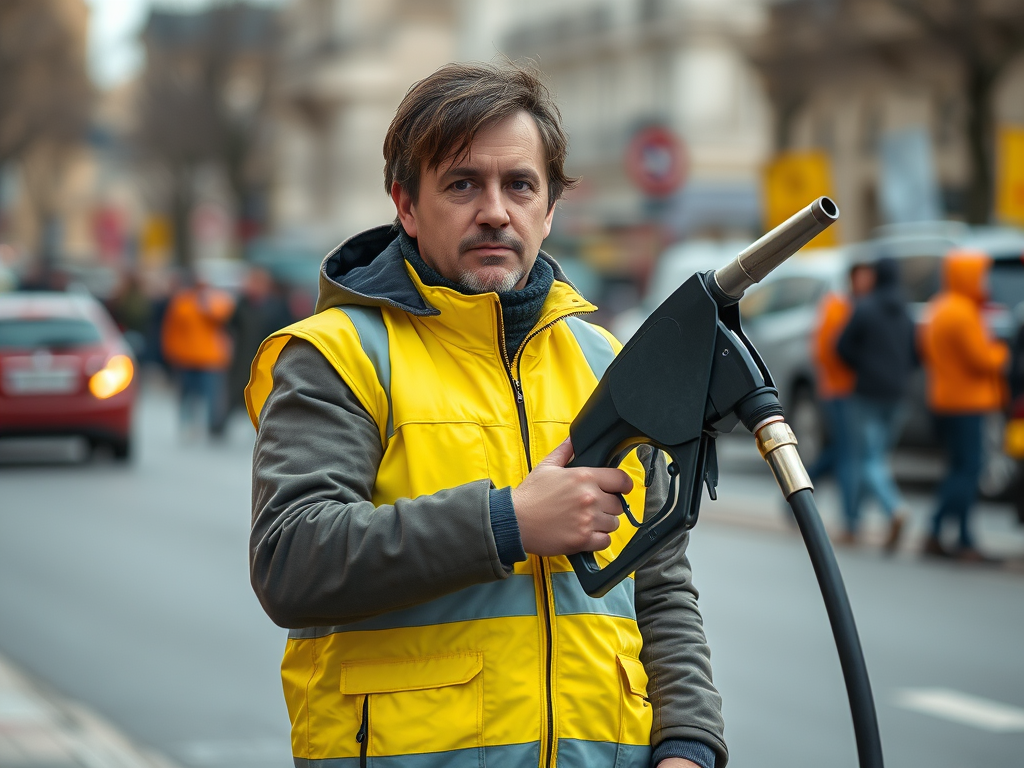
Picture: Yellow Vest protesters against high oil prices and low standard of living

This is happening at a time were productivity in the U.S. is great. Germany`s productivity is down -0,1%, while the productivity in the U.S. is up 3%. They are the best. They are at the top of the list! Even better than China! And the stock market goes up. Wow!

Germany`s economy is not «broken,» but it is facing severe challenges. Energy costs, inflation, global demand weakness, and structural issues in key industries like manufacturing are causing slower growth.

Long-term concerns like demographic changes and lagging investment in innovation also threaten future competitiveness. While these challenges are significant, Germany has strong economic fundamentals and could recover with strategic reforms and investments.

However, the current climate is tough, and the country is at a critical point in addressing these issues. Germany is in trouble.
Disclaimer: The views expressed in this article are those of the author and may not reflect those of Shinybull.com. The author has made every effort to ensure the accuracy of the information provided; however, neither Shinybull.com nor the author can guarantee such accuracy. This article is strictly for informational purposes only. It is not a solicitation to make any exchange in precious metal products, commodities, securities, or other financial instruments. Shinybull.com and the author of this article do not accept culpability for losses and/ or damages arising from the use of this publication.
Leave a comment

Filed under Politics

Around 40% of voters in Italy remain undecided and no party or alliance is expected to earn an outright majority

Take a look at the history and you can clearly see that all the roads leads us back to Rome and Italy.

A country that gave the world pizza. The founder of that dish is a genius. The term pizza was first recorded in the 10th century, in a Latin manuscript from the Southern Italian town of Gaeta in Lazio.

Not only that. Rome is also the capital of Italy, and serves as the capital of the Lazio region. The Vatican City is an independent country inside the city boundaries of Rome, which means Rome has been often defined as capital of two states. 4,3 million residents live in the metropolitan City of Rome, and most of them head to the polls on Sunday in a vote that will be closely watched by European leaders.

Italys election on Sunday will test Europenerves, because it can make instability in the eurozones thrid-largest economy. It should be a great place on earth, but it isnt. Italy`s unemployment rate rose to 11,1 percent in January 2018, and the youth unemployment rate fell to 31,5 percent, which is the lowest since December 2011.

The Italian economy advanced by 0,3 percent on quarter in the three months to December of 2017, so the growth is very slow. The Italian stock marked plummeted during the financial crisis ten years ago. The unemployment rate was at its lowest in 2007, but skyrocketed after the crisis.

Italy`s Government debt reached an all time high of 132 percent in 2016 which is more than the U.S but it dropped to 131,5 percent last year. Italy need a change, but that change can be painful and Italy can be drown into months of further political deadlock.

Around 40% of voters remain undecided and no party or alliance is expected to earn an outright majority, according to analysts.

European leaders are watching this election closely because so far, polls are telling us that the populist, anti-European Union Five Star Movement (M5S) is the biggest party. Twice as big as Forza Italia and the Democratic party at the second place.

The M5S is founded by Beppe Grillo who is a popular comedian and blogger. The party is considered populist, anti-establishment, environmentalist, anti-globalist, and Eurosceptic. At the 2013 general election the M5S was the most voted party.

People in Italy and many of their parties are euroskeptic, and one issue has dominated the pre-election debate, and that is immigration. Hundreds of thousands have arrived from Africa to Italy recently, and the debate over immigration has highlighted racial tensions ahead of Sunday`s vote.

Right-wing parties have pushed an anti-immigration agenda, and former Italian Prime Minister Silvio Berlusconi has warned that all the migrants in Italy has caused «serious social alarm,» and said that more than 600 000 undocumented migrants must be deported.

Migration has been a serious issue in Italy in many decades. When the Pope look outside the window in the Vatican, he can see some right-wing parties, but also some neo-fascist political parties.

Fascism is also coming from Italy. The founder of fascism is Benito Mussolini and he outlined three principles of a fascist philosophy.

  1. Everything in the state. The Government is supreme and the country is all-encompassing, and all within it must confront the ruling body, often a dictator.
  2. Nothing outside the state. The country must grow and the implied goal of any fascist nation is to rule the country, and have every human submit to the government.
  3. Nothing against the state. Any type of questioning the government is not to be tolerated. If you do not see things our way, you are wrong. If you do not agree with the government, you cannot be allowed to live and taint the minds of the rest of the good citizens.

The use of militarism was implied only as a means to accomplish one of the three above principles, mainly to keep people and rest of the world in line. Fascist countries are known for their harmony and lack of internal strife. There are no conflicting parties or elections in fascist countries.

There were a demonstration in Maceratata on February 10, and Italian protesters hold a banner reading «Against fascism, racism and sexism, everyday, in all cities.» Similar to how it was in Italy about 100 years ago, but it was a different march. The opposite.

The March on Rome was an organized mass demonstration in October 1922, which resulted in Benito Mussolini`s National Fascist Party. Fascists saw WWI as a revolution that brought massive changes to the nature of war, society, the state and technology.

Italy has an unproven new system in place for the voters. On top of that there is a bloc of undecided voters, so analysts say that Italy is headed toward a hung parliament. Berlusconi`s right-wing coalition can win. So can the Democratic party, Forza Italia and other centrist allies. It can also be a populist government of M5S and Northern League.

Another option is that the Gentiloni government will continue like it is today. If so, they will start long discussions on whether to build an all-party technical government.

The political situation in Italy right now, with its government instability, economic problems and repeated elections are building up to a perfect storm. It can be harmful for one of the main European democracies, but it can be very harmful for an already weak European Union in an already weak continental alliance too. Especially after Brexit.

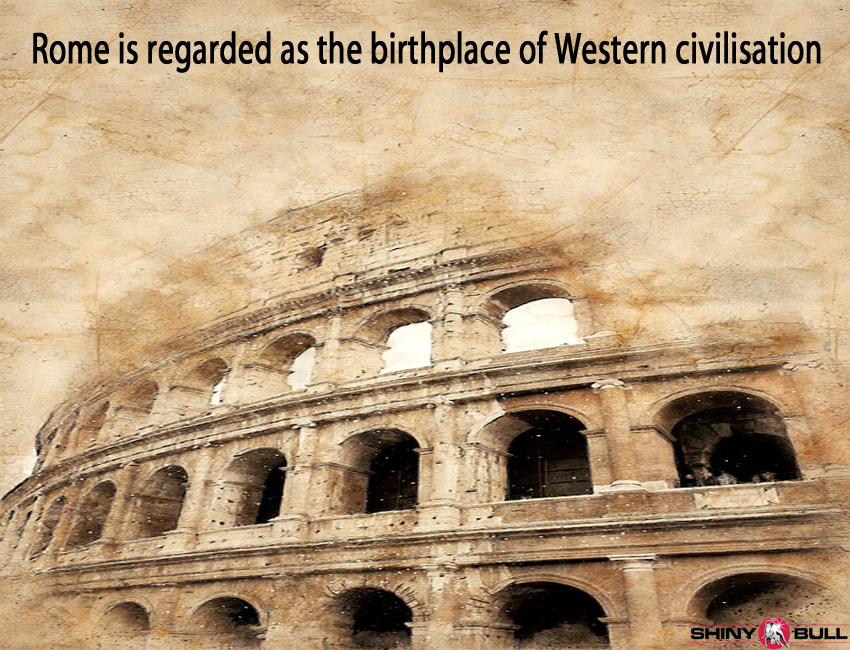
Rome is called the «Caput Mundi» (Capital of the World). Rome is also regarded as the birthplace of Western civilisation and by some as the first ever metropolis. Rome is the 3rd most visited in the European Union, and Colosseum are among the world`s most visited tourist destinations.

After the fall of the Western Empire, which marked the beginning of the Middle Ages, Rome fell under the political control of the Papacy. All of this is a part of an evolution, so the show must go on.

Disclaimer: The views expressed in this article are those of the author and may not reflect those of Shiny bull. The author has made every effort to ensure accuracy of information provided; however, neither Shiny bull nor the author can guarantee such accuracy. This article is strictly for informational purposes only. It is not a solicitation to make any exchange in precious metal products, commodities, securities or other financial instruments. Shiny bull and the author of this article do not accept culpability for losses and/ or damages arising from the use of this publication.

———————————————–advertisement——————————————————-

Polo Shirt

High quality Polo shirt with Shinybull logo. This version is made from breathable 100% cotton. Short sleeves and ribbed armbands.

$125.00

Polo Shirt

High quality Polo shirt with Shinybull logo. This version is made from breathable 100% cotton. Short sleeves and ribbed armbands.

$125.00

Leave a comment

Filed under Politics