
Tag Archives: Inflation

Hyper inflation of 231,150,888,87 percent in July

Janet Yellen and the FED raised the rates and its expected to see them raise the rates at least a couple of times before the end of this year. In addition; they are planning to raise the rates three times next year. Wow. What about the inflation? Let`s take a look at Japan, Venezuela and Zimbabwe.

Nikkei reach its all-time high on December 29th 1989. The stock market plummeted and did never come back. Japan started to grow after world war II and was among the first in the world to use robots in the 70s and 80s.

Japan used robots especially in the auto and techno industry. The optimism went to be a huge euphoria og Nikkei reached 38.957.44 and ended the day at 38.915.87 on December 29th 1989. As you may know; Japan started to «print» money. But what happened to the inflation?
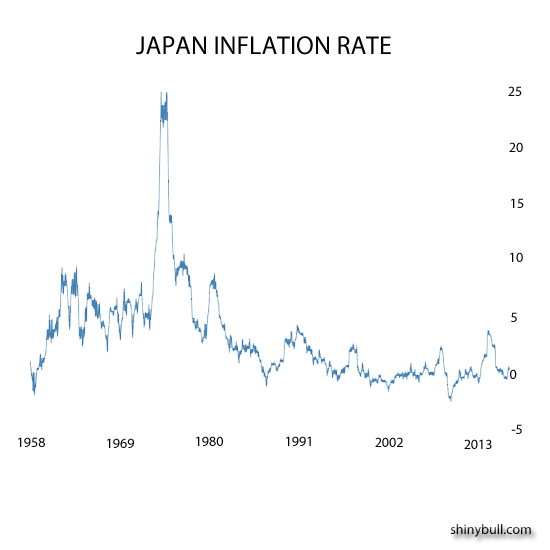
As you can see from the chart above, Japans inflation increased the early 90s and then it started to decline again. You can see from the chart that it went up again in the late 90`s, but not for a long time. It drops every time it goes up.

Consumer prices increased 0,4 percent YoY in January this year. Transportation cost posted the first annual gain since March of 2015 and prices went up faster for clothing and footwear and recreation and culture.

Inflation rate reached an all-time high of 24,9 percent in February of 1974 and a record low of -2,5 percent in October of 2009. It`s a different and more scary story in Venezuela.

It`s not getting better in Venezuela and it goes from bad to extremely bad right now. What in the world is going on? Venezuela has the highest inflation rate in the world right now. Economic turmoil in Venezuela has made the bolivar go straight up to heaven.

Some analysts say it could reach 2000 percent in 2017. No, I`m not kidding; 2000 percent. President Nicolàs Maduro who is elected after the death of socialist firebrand Hugo Chàvez explained the shock move by accusing US-backed «mafias» of conspiring to destabilize his country’s economy by hoarding bank notes.

Take a good look at the chart above. Consumer prices in Venezuela jumped 800 percent YoY in 2016, following a 180,9 percent rise in 2015. It is the highest inflation rate on record after the slump in oil prices led to a severe recession and food shortages.

Venezuela reached an all-time high of 800 percent in December of 2016 and a record low of 3,22 percent in February of 1973. You think 800 percent is much? Take a look at Zimbabwe.

The worst of the inflation occurred in 2008, leading to the abandonment of the currency. The peak month of hyperinflation occurred in mid-November 2008 with a rate estimated at 79,600,000% per month. That is what I call hyper-inflation.

This resulted in US$1 becoming equivalent to the staggering sum of Z$2,621,228. The rate went up 585,84 percent in 2005. 1,281,11 percent in 2006 and 66,212,3 percent in 2007. And then it exploded; Up 231,150,888,87 percent in July of 2008. Wow.

Hyper-inflation like that mean that the price can jump when you are sitting on the bus. That can be problematic for some customers but also for business owners.

Any Zimbabwean dollars acquired needed to be exchanged for foreign currency on the parallel market immediately, or the holder would suffer a significant loss of value.

For example, a mini-bus driver charged riders in Zimbabwean dollars, but different rates throughout the day. The evening commute was highest-priced. He sometimes exchanged money three times a day, not in banks but in back office rooms and parking lots.

Lack of confidence in government to practice fiscal restraint feeds on itself. In Zimbabwe, neither the issuance of banknotes of higher denominations nor proclamation of new currency regimes led holders of the currency to expect that the new money would be more stable than the old.

Remedies announced by the government never included a believable basis for monetary stability. Thus, one reason the currency continued to lose value, causing hyperinflation, is that so many people expected it to.

What about a hyper-inflation in the U.S? Is it possible? What can go wrong, and what will happen? I will write more about that later on this week.


Disclaimer: The views expressed in this article are those of the author and may not reflect those of Shiny bull. The author has made every effort to ensure accuracy of information provided; however, neither Shiny bull nor the author can guarantee such accuracy. This article is strictly for informational purposes only. It is not a solicitation to make any exchange in precious metal products, commodities, securities or other financial instruments. Shiny bull and the author of this article do not accept culpability for losses and/ or damages arising from the use of this publication.
Leave a comment

Filed under Politics, Stock market

Banks are in focus this week and ECB could change its forward guidance

The FED is expected to increase the short-term interest rate by 25 basis points this week. If the FED does not raise rates at he March FOMC meeting, it will be a big surprise for many investors. Two things to look for is unemployment and inflation.

The FED is not the only one to have a look at the rates this month. BOJ and ECB is also looking at the rate. All this is headed for an exiting week.


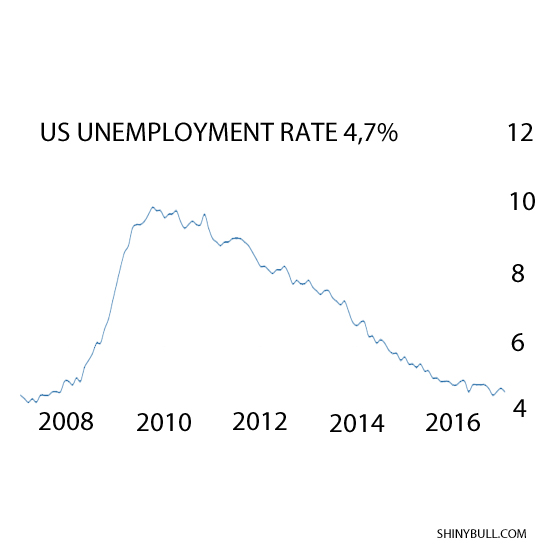
The U.S unemployment rate fell to 4,7 percent last month which is in line with market expectations. Labor force participation rate increased by 0,1 percentage point to 63 percent, and the number of unemployment persons was almost unchanged at 7,5 million.

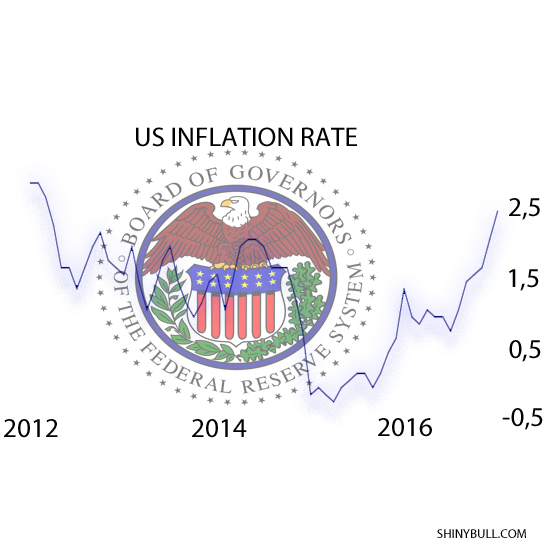
Inflation rate is at near 5-year high of 2,5 percent, which is the highest since March of 2012. The inflation rate accelerated for the sixth consecutive month, mainly boosted by gasoline prices. Energy prices jumped 10,8 percent YoY and food prices declined 0,2 percent.


Watch out for inflation in February 2017 on Wednesday 15 at 12:30 PM. forecast is 2,5%.

Mario Draghi and ECB discussed whether rates can rise before QE ends. A big surprise for many analysts. Why are they doing that? The fact is that they are not satisfied with negative interest rates. This negative rates is squeezing banks’ profit margins because they are not matching the cost, and that will make if difficult for banks to lend to households and companies.

BNP Paribas has predicted the deposit rate will be increased this September, and QE is intended to run until at least the end of 2017. Some people said at least mid-2018. Anyway; analysts will scrutinize the ECB statement on Thursday to look for any changes.

BOJ will have an Interest rate decision on Thursday 16th at 03:00 AM. Forecast is -0,1 percent, which is the same as its January 2017 meeting. In January, policymakers also decided to maintain its 10-years government bond yield target around zero percent.

Economic growth forecast is 1,5 percent for 2017 fiscal year from an earlier projection of a 1,3 percent growth.

Banks are in focus this week and ECB could change its forward guidance.


trump100_b


Disclaimer: The views expressed in this article are those of the author and may not reflect those of Shiny bull. The author has made every effort to ensure accuracy of information provided; however, neither Shiny bull nor the author can guarantee such accuracy. This article is strictly for informational purposes only. It is not a solicitation to make any exchange in precious metal products, commodities, securities or other financial instruments. Shiny bull and the author of this article do not accept culpability for losses and/ or damages arising from the use of this publication.

Leave a comment

Filed under Politics, Quantitative Easing

Very important week

Next week will be exiting. The earnings season is at the end and investors focus now will be on a flood of data coming in. It all starts on monday March 14 were the Bank of Japan will announce its policies.

Bank of Japan Gov. Haruhiko Kuroda is in a special situation. Just like ECBs Mario Draghi, he talked about his «bazooka» and said he wanted to do whatever it takes to get Japans economy back on track to a stable growth.

debt

The answer so far is negative interest rate, and they started charging commercial banks 0,1% interest on some reserves last month. That lowered the borrowing cost, but on the other hand, it made some confusion about the effects on Japan`s savers.

Haruhiko Kuroda has been called to parliament for questioning many times and more than any other central bank chief during the same period. Japanese 10-year Government Bonds traded at -0,20% for the first time in history and dropped farther into negative territory.

Negative rate is also seen in Sweden, Denmark and Switzerland. Sweden`s goal is to raise the inflation. The goal in Denmark and Switzerland is to prevent the currency to raise too much.

Negative rates can be the new normal because none of them turn this situation into a strong economic growth. So, What about America?

All eyes will be on Federal Reserve Chair Janet Yellen and the Federal Open Market Committee (FOMC). The FOMC meeting will kick off on Tuesday 15, and the Fed`s interest rate decision is the highlight on Wednesday 16, with the 2 p.m ET announcement followed by a 2,30 press conference with Fed Chair Janet Yellen.

According to Wall Street Journal`s Jon Hilsenrath who is the mouthpiece of the Fed, the central bank will hold off raising rates this month, but will leave the door open for a hike in April or June this year.

U.S Consumer prices went up 1,4% YoY in January of 2016, and the inflation rate accelerated for the fourth straight month which is very impressive. CPI for February 2016 is scheduled to be released on Wednesday 16.

The European Central Bank (ECB) followed BOJ, and increased QE by 20 billion euros per month on thursday. Not only that. They also lowered interest rates, which is an unexpectedly strong move. The ECB increased its monthly bond buying from 60 to 80 billion euros and drove commercial deposit rates from -0,30% to -0,40% and cut a main refinance rate from 0,05% to 0,00%.

As you may know, many people are very angry. Not only in Europe, but also in America. The middle class is wiped out and businessman Donald Trump knows that. He doesn`t like what he see and want to do something about it; Make America great again.

The battle for the White House continues, and next week`s Ohio and Florida primaries would give Donald Trump the knockout blow necessary to capture the GOP nomination. Anti-Trump groups are spending millions of dollar on TV ads to attack him. Is that enough to stop him? If not, it will be a short way left to the White House.

Very important week.


sbnews

Disclaimer: The views expressed in this article are those of the author and may not reflect those of Shiny bull. The author has made every effort to ensure accuracy of information provided; however, neither Shiny bull nor the author can guarantee such accuracy. This article is strictly for informational purposes only. It is not a solicitation to make any exchange in precious metal products, commodities, securities or other financial instruments. Shiny bull and the author of this article do not accept culpability for losses and/ or damages arising from the use of this publication.
Leave a comment

Filed under Politics, Quantitative Easing, Stock market

Inflation and Gold

Investors buy gold because they think that gold is a hedge against inflation. The value of the paper currency falls in terms of the goods and services that it can buy and inflation goes in the opposite direction; up.

Investors love gold when inflation is high and as you may know, gold has a direct relationship with inflation. So when inflation goes up so does the demand for gold. Imminent hyper inflation was expected during the QE program, but that is not the reality right now.

You can track inflation using the Consumer Price Index (CPI). This index measures how the price of a basket of consumer goods and services changes. CPI will give you a picture of the increase in the level of prices.

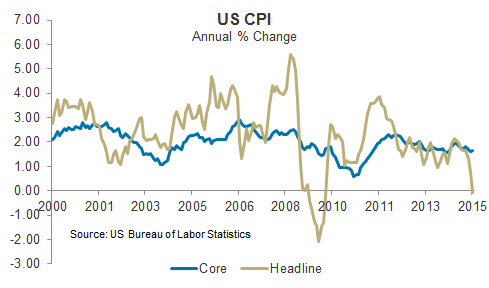
us cpi

This data is released by the U.S Bureau of Labor statistics on a monthly basis. U.S inflation rate is -0,09%, (released Feb 26, 2015), compared to 0,76% in December and 1,58% last year. This is lower than the long-term average of 3,32%. Down -111,8%.

Inflation fell in January for a third straight month as U.S consumers continued to spend less on gas, food prices flattened and as costs retreated for new vehicles,used cars and trucks, household furnishings and operations, airline fares, alcohol and tobacco. U.S inflation turned negative for the first time since 2009.

The CPI measures what American pays for everything from cloths, airline tickets, fruits and vegetables to cars. Declines were again led by energy as prices at the pump tumbled about 19%. Gasoline prices have plunged 35% over the past 12 months.

A slower pace of inflation means consumers can buy more with their money, but a sustained decline over and extended period (deflation), can wreak havoc on an economy. Falling energy prices are beginning to filter down into other areas.

Core US inflation advanced 1,6% over the last 12 months, and the core 12-month reading is the benchmark inflation figure monitored by the Federal Open Market Committee (FOMC) as it helps in deciding where to set the key interests rate.

«We think inflation is going to move lower before it moves higher. Declining oil prices have had a very major influence,» Fed Chairwoman Janet Yellen said in a testimony.

The current level remains below the Fed`s 2% annual inflation target. In written remarks read to Congress, Janet Yellen stated:

“The Committee expects inflation to decline further in the near term before rising gradually toward 2 percent over the medium term as the labor market improves further and the transitory effects of lower energy prices and other factors dissipate, but we will continue to monitor inflation developments closely.”

Consumer Price Index data for February inflation and the annual period is scheduled for release on March 24, 2015.


Click the link below and check out the Fan Fund

https://www.eventbrite.com/e/fan-fund-tickets-15580655159


Disclaimer: The views expressed in this article are those of the author and may not reflect those of Shiny bull. The author has made every effort to ensure accuracy of information provided; however, neither Shiny bull nor the author can guarantee such accuracy. This article is strictly for informational purposes only. It is not a solicitation to make any exchange in precious metal products, commodities, securities or other financial instruments. Shiny bull and the author of this article do not accept culpability for losses and/ or damages arising from the use of this publication.

Leave a comment

Filed under Commodities, Politics, Quantitative Easing

Gold rally


Gold and Silver bulls were on the run yesterday as the precious metals rallied after the FOMC meeting, and this run-up was the best in a very long time. Gold hit the key psychological resistance at $1,300.

Gold

Investors are buying this precious metals as a safe-heaven amid risk aversion in the market place, a slumping dollar and strong technical buying. Buy stop orders were triggered at technical levels to accelerate the advance in gold and silver prices.

Spot gold was last quoted up $40,20, trading at $1,318, and July Comex silver is up one dollar to $20,84 an ounce. The civil war in Iraq remains a major factor and continues to prompt risk aversion among traders and investors, and in turn safe-heaven buying in gold.

Crude oil prices are rallying on worries about Iraqi crude oil exports being reduced and investors are worried that the violence in Iraq could spread to other Arab nations. Fed Chair Janet Yellen`s comments at her press conference rallied stock, bond and the precious metals markets. In addition; she said that the interest rates are not going to be raised any time soon.

But what can we expect in the future? Well, I like to take a look at Japan, because they know how to print money. Despite the significantly bigger hammer it`s using to attempt to create inflation, growth and inflation have remained muted.

Look at the inflation in Japan. It remains low, year after year after year. Nothing is happening. That`s strange because they have printed so much money. This is probably what we will se in the U.S too. Low inflation and worst of all; deflation.

ECB is on the way to print money too. It looks like this will be a deflationary world. What a trend QE is! So, what will happen if the Chinese real estate prices start to collapse? And slowing in Germany and further slowing in the real estate recovery in the U.S?

The stock market will simply continue to edge up if none of these events come to pass, because right now, there`s nowhere else for investors to go. One of the things Fed Chair Janet Yellen said after the press conference was that the stock market is at a good valuation and is not a «bubble».

Many people were listening and bought stocks with both hands. CNBC and other News channels say that Yellen has given a «green light» for stock traders to buy. Remember; we are five years into a bull market, and they are talking about «green light»?

I have seen the same things going on many times. Again and again. When we are at the top, like we are now, everyone is bullish and tell you to jump aboard and buy stocks. I my opinion, we are now at the top on the trend from 2000 and 2007, and that`s pretty scary. People tend to do the same thing; they buy on tops and get smashed on bottoms. I just want to warn you; be cautious.

This is the nature. It reminds me of the Word Cup Champion in Soccer from 2010; Spain. The winners are out of the World Cup 2014, as they goes from the top to the bottom. Many of the players hail from Real Madrid and Barcelona, which is two of the soccer`s richest clubs. Most of the players in Spain earn more in a year than a Spanish worker earns in 40 years. You couldn`t belive that when you saw they lose 2-0 against Chile. They are simply not hungry enough. The European championship from 2008 also saw a humiliation 5-1 loss to Holland earlier this week. Six year on the top is now over.

I`m watching the markets very closely right now. As you may know, bull markets come to an end, and so do bull market rallies. When the last buyer is in the game, it is over and the correction or a big bear market comes. But how can we know when that day is coming? What is the sign we should look for? I will talk about that next week. In the meantime; many soccer players are now working hard to get the GOLD!


Disclaimer: The views expressed in this article are those of the author and may not reflect those of Shiny bull. The author has made every effort to ensure accuracy of information provided; however, neither Shiny bull nor the author can guarantee such accuracy. This article is strictly for informational purposes only. It is not a solicitation to make any exchange in precious metal products, commodities, securities or other financial instruments. Shiny bull and the author of this article do not accept culpability for losses and/ or damages arising from the use of this publication.
 

Leave a comment

Filed under Commodities, Stock market