
Category Archives: Stock market

Economists expected slower growth, but these numbers indicate that the U.S. economy continues to perform well

YouTubers are full of negativity. Recession is near! Be ready! This is scary! Sell your stocks! The economy is bad! Well, everything isn`t good, but the growth in the U.S. is still very good. Just take a look at the numbers.

More good news came out earlier today. The U.S. job market in October 2024 has shown surprising strength, with 254,000 new jobs added in September. Far exceeding expectations. This strong growth brings the unemployment rate down to 4.1% (which is relatively low historically), and hourly wages are growing at an annual rate of 4%.

Economists expected slower growth, but these numbers indicate that the U.S. economy continues to perform well, and there’s optimism about avoiding a recession. However, voter sentiment still lags, as many remain concerned about inflation and the broader economic outlook

Not only the U.S. stock market is going up. Take a look at the China Stock Market. The China Stock Market has gone down and sideways for about 18 months but took back that downturn within a couple of weeks. This is amazing.

The recent surge in China’s stock market over the past two weeks is likely driven by several factors, including improved investor sentiment, government stimulus measures, and better-than-expected economic data. China’s government has implemented policies to stabilize the property sector, cut interest rates, and support industries, encouraging domestic investment.

Additionally, optimism about easing geopolitical tensions and a potential economic rebound is fueling this upward momentum. However, concerns remain about long-term growth and regulatory uncertainties, which could influence future market performance.

But China is not alone. ECB is doing the same. BOJ is doing the same, and so is the FED among many others. New money is coming into the stock market, and the stock market continues to climb higher.
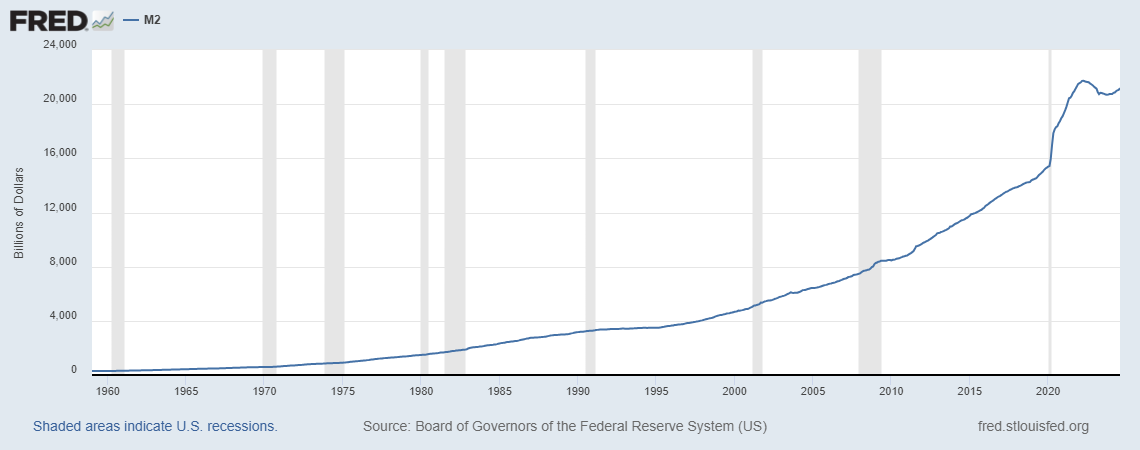
The massive printing of $21.17 trillion by the U.S. and other central banks, mainly in response to crises like the pandemic, significantly increased liquidity in the global financial system. This money printing was aimed at stimulating economies, propping up financial markets, and providing emergency relief. However, it also led to inflationary pressures as too much money chased too few goods.

The excess liquidity fueled asset bubbles raised debt levels and forced central banks to later tighten policies to combat the resultant inflation. Balancing liquidity while avoiding hyperinflation remains challenging.

The U.S. most recently engaged in significant money printing during the COVID-19 pandemic, particularly in 2020 and 2021, through measures such as the Federal Reserve’s Quantitative Easing (QE) program.

As of July 2024, the M1 money supply (monthly supply) in the United States stood at approximately 18 trillion dollars, marking a significant decrease from the previous year. This decline followed a notable contraction in the M1 money supply during the latter half of 2022 and the first six months of 2023.

The Fed injected trillions of dollars into the economy by purchasing government bonds and mortgage-backed securities to maintain liquidity, lower interest rates, and stimulate growth. By mid-2021, the Fed had expanded its balance sheet by over $4 trillion. However, exact figures for ongoing or current printing efforts are often adjusted depending on economic conditions.

Disclaimer: The views expressed in this article are those of the author and may not reflect those of Shinybull.com. The author has made every effort to ensure the accuracy of the information provided; however, neither Shinybull.com nor the author can guarantee such accuracy. This article is strictly for informational purposes only. It is not a solicitation to make any exchange in precious metal products, commodities, securities, or other financial instruments. Shinybull.com and the author of this article do not accept culpability for losses and/ or damages arising from the use of this publication.

Leave a comment

Filed under Politics, Stock market

The U.S. economy is in a relatively healthy state in 2024

Nearly everybody is talking about a recession. Everything will collapse they say. Let me tell you what recession is. It is a period of temporary economic decline during which trade and industrial activity are reduced, generally identified by a fall in GDP in two successive quarters.

The U.S. economy is far from a recession. Not even near.

The U.S. economy grew at an annualized rate of 3,0% in the second quarter of 2024. This robust growth exceeded earlier estimates of around 2,4%. The key drivers behind this stronger-than-expected growth were increases in consumer spending, particularly on durable goods, and services, and business investments in equipment, and structures. Additionally, private inventory investment provided a significant boost to GDP.

While the growth is positive, it`s not without some areas of weakness. This 3,0% growth signals resilience in the U.S. economy despite challenges such as elevated interest rates, and inflation, which have been moderating but still present pressures on households purchasing power. Residential fixed investment, which includes housing construction, continued to decline.

The growth in Q2 reflects a strong performance compared to previous quarters, suggesting that the U.S. economy is in a relatively healthy state in 2024. So, while growth is solid, there are still headwinds related to inflation and specific sectors of the economy like housing.

Disclaimer: The views expressed in this article are those of the author and may not reflect those of Shinybull.com. The author has made every effort to ensure the accuracy of the information provided; however, neither Shinybull.com nor the author can guarantee such accuracy. This article is strictly for informational purposes only. It is not a solicitation to make any exchange in precious metal products, commodities, securities, or other financial instruments. Shinybull.com and the author of this article do not accept culpability for losses and/ or damages arising from the use of this publication.
Leave a comment

Filed under Stock market

What will happen in the stock and crypto market if the FED cuts the interest rates?

Investors are watching the FED on Wednesday, and they are all but certain the FED will cut interest rates. But how much? 25 points or 50 points? That`s the real big debate among investors right now. But regardless, what will happen to the stock and crypto market if the FED cuts the rates?

There is more than 60% probability that the FED will cut the rates by 50 basis points. When the FED cuts interest rates, it typically impacts the stock market in several key ways.

Lower interest rates reduce borrowing costs for companies, which can lead to higher profitability due to cheaper access to capital. This generally encourages investment in stocks, driving prices higher. Sectors like technology and consumer discretionary tend to benefit the most from lower rates as they are more reliant on borrowing for growth.

Reduced rates also make loans and mortgages cheaper for consumers and businesses, encouraging spending and investment. This increased spending can lead to economic growth, which is positive for corporate earnings and stock prices.

In addition, growth stocks, especially in tech and innovation, often outperform because their future earnings are more heavily impacted by interest rates. Lower rates increase the present value of their future earnings, making them more attractive to investors.

At the same time, bond yields typically fall, making bonds less attractive compared to stocks. Investors may shift their portfolios from bonds to equities in search of better returns, which can push stock prices higher.

On top of all that, the risk appetite increase. Lower rates often reduce the returns on safer investments like savings accounts or Treasury bonds. As a result, investors may take on more risk by moving into stocks, which offer the potential for higher returns.

But keep in mind, that market reactions can vary!

What happens in the market is also psychology, and you will never know where the rabbit is jumping. A lot of investors are full of recession fears. If the FED cuts rates in response to a slowing economy or recession concerns, the stock market might react negatively if investors see the rate cut as a sign of underlying economic trouble.

On top of that, you have a lot of inflation concerns. If rate cuts are perceived to spur excessive inflation, it could lead to volatility in markets, especially if inflation erodes corporate profit margins.

In summary, while rate cuts generally boost the stock market, the context and economic conditions surrounding the decision play a crucial role in determining the actual market response. Not only that. It can also have a notable impact on the crypto market, similar to how it affects traditional financial markets.

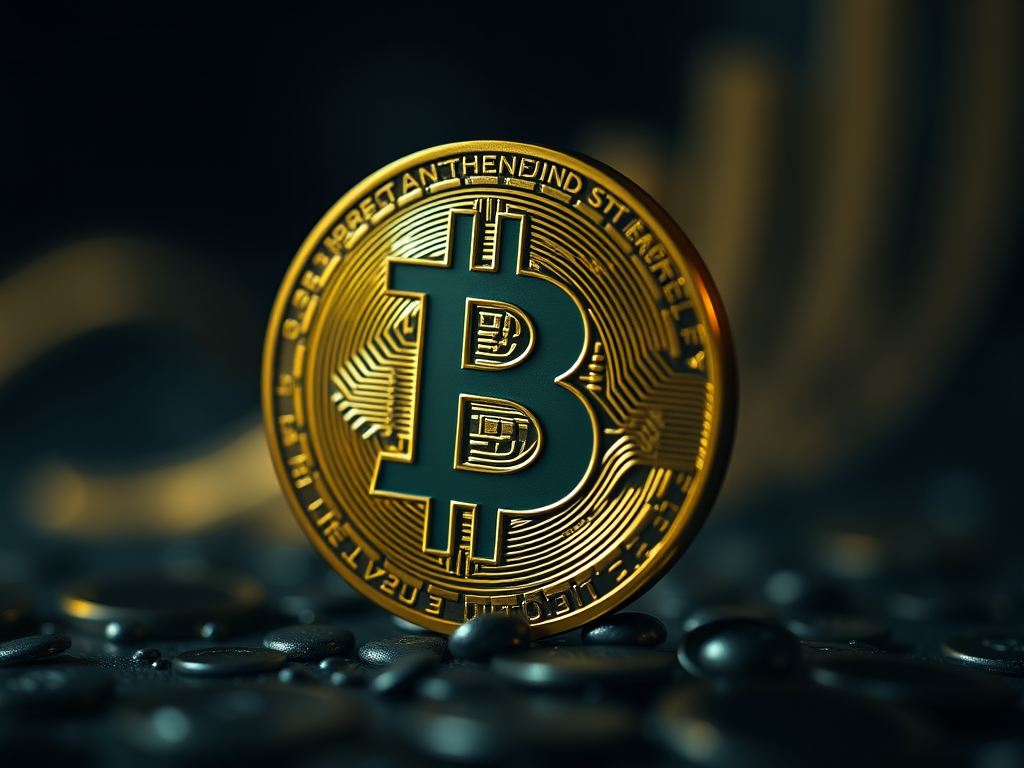
The risk appetite in the crypto market will increase. Lower interest rates typically reduce returns on low-risk assets like bonds and savings accounts. This often leads investors to seek higher returns in riskier assets, including cryptocurrencies. As a result, crypto prices, particularly for Bitcoin and Ethereum, could rise as investors move capital into digital assets.

A rate cut can also weaken the U.S. dollar, as lower rates make the currency less attractive to foreign investors. Cryptocurrencies, particularly Bitcoin, are often seen as a hedge against currency devaluation. A weaker dollar could boost demand for Bitcoin and other digital currencies as an alternative store of value.

Improved liquidity comes on top of all this. Lower borrowing costs mean individuals and businesses can access cheaper captal. Increased liquidity in financial markets often benefits speculative assets like crypto, as more people can invest and trade.

Cryptocurrencies are often viewed similarly to growth stocks-assets with high potential but also high risk. Lower rates typically benefit growth sectors since the future value of earnings becomes more appealing. This may lead to surge in the crypto market.

Not only that. A FED rate cut can encourage institutions to diversify their portfolios, including moving into digital assets. As traditional investment returns diminish, institutions might allocate more to Bitcoin, Ethereum or other cryptocurrencies.

But, like the stock market, there are potential risks in the crypto market as well.

If the rate cut fuels inflation, it may lead to instability in traditional markets, which could spill over into the crypto space. Inflation could either positively affect crypto as a hedge or introduce volatility if the overall economic outlook worsens.

While rate cuts generally boost risk assets, they could signal economic weakness, which may also introduce market uncertainty. Cryptocurrencies can be highly sensitive to shifts in sentiment, reacting both positively and negatively to macroeconomic trends.

Overall, a FED rate cut is likely to boost the crypto market, especially if it leads to increased liquidity and risk-taking behavior among investors. The fear index is still below 20 (17,61) as of writing on Tuesday. Where will it end later in this week?

Disclaimer: The views expressed in this article are those of the author and may not reflect those of Shinybull.com. The author has made every effort to ensure the accuracy of the information provided; however, neither Shinybull.com nor the author can guarantee such accuracy. This article is strictly for informational purposes only. It is not a solicitation to make any exchange in precious metal products, commodities, securities, or other financial instruments. Shinybull.com and the author of this article do not accept culpability for losses and/ or damages arising from the use of this publication.

Leave a comment

Filed under Crypto, Stock market, Stocks

A warning from FedEx

FedEx plummeted more than 20% on Friday, and it was the worst day ever for the stock, based on data going back to 1978, according to Dow Jones Market Data. I repeat the worst day for the stock since 1978!

The real reason for the drop is the demand for freight which dropped significantly. It isn`t funny to be a CEO when you know that your company has lost $11 billion in market value, but that`s a fact.

The company will take some essential steps to fix some of the problems. They will cut some costs. Cut worker’s hours. Park some aircraft, and close more than 90 FedEx Office locations.

CEO Raj Subramaniam isn`t optimistic about the economy and claims we will see a recession very soon. But he is not alone in saying so. The chief executive officer of McDonald`s Corp. said earlier this week he expects a minor US recession in 2023 and a more significant one in Europe.

Earnings from FedEx were worse than expected. Earnings came in at $3,44 a share, which is well short of the $5,10 average estimate of analysts. Revenue of $23,2 billion ended in August missed expectations. FedEx is trading at $161,02 on Friday.

Photo by Mike Shinzo on Pexels.com
Disclaimer: The views expressed in this article are those of the author and may not reflect those of Shinybull.com. The author has made every effort to ensure the accuracy of the information provided; however, neither Shinybull.com nor the author can guarantee such accuracy. This article is strictly for informational purposes only. It is not a solicitation to make any exchange in precious metal products, commodities, securities, or other financial instruments. Shinybull.com and the author of this article do not accept culpability for losses and/ or damages arising from the use of this publication.

Leave a comment

Filed under Stock market

Nasdaq plummeted more than 5%

What a day in the stock market. Nasdaq plummeted 5,16%. That`s 632,84 points. Dow Jones and S&P 500 were also sharply down, followed by cryptos like Bitcoin. They all went down because the annual inflation rate in the US eased for a second straight month to 8,3% in August of 2022.

This is the lowest number in four months, so why did investors have so much panic? The rate is down from 8,5% in July. But it`s down from 9,1% in June, so, it’s on the way down. For all I know, it will continue the same path, and probably end up in the opposite direction; deflation in the long run.

The energy index increased by 23,8% (32,9% in July). Gasoline increased 25,6% (44% in July). Fuel oil increased 68,8% (75,9% in July).

Photo by Wendy Wei on Pexels.com

Natural gas increased 33% vs 30,5%, and electricity was at the highest since August 1981, at 15,8%. Prices for food rose by 11,4%, and that is the most since 1979. The shelter is up 6,2%, which is the most since 1984.

CPI, which excludes volatile energy and food prices, increased 6,3% in a year. This is the most since March, and up markedly from 5,9% in June and July.

The Federal Reserve has done a lot to push down inflation because inflation over time could have dramatic consequences for consumers. The Fed has been hawkish when it comes to interest rate hikes this year.

They try to make it expensive for consumers to borrow, and the interest rate hikes will affect consumers’ interest rates like credit cards, loans, and mortgage rates.

CPI measures changes in the cost of consumer goods and is a key indicator of just how bad inflation is.

Economists anticipated a lower CPI in August, but the index rose 0,1% from the previous month and 8,3 on an annual basis. More rate hikes from the Fed will force consumers to change their lifestyles in the future.

The Fed looks at CPI when deciding whether to raise rates or not. Experts claim that we must expect the Fed to continue to be very aggressive when it comes to rate hikes. So, fasten your seat belts.

So far this year, the central bank has already raised rates by 225 basis points, and many investors are waiting for another 75 basis point rate hike at their meeting next week.

The cost of living is increasing. Higher electricity bills, food, gasoline, and gas prices are making it difficult for many, and it isn`t easy to borrow either. The cost of borrowing is also increasing. On the other side; the rate on your saving account is also increasing.

Experts predict that we could see many more months of rampant inflation.

The Fed funds futures are pricing in a 36% chance that the bank will raise its benchmark rate by a full percentage point. Nomura forecasted a 100 basis point hike in September.

Investors don`t like Fed`s hawkishness, and they are worried that the Fed`s inflation fight will bring in a recession. On the other hand; the Fed is also ramping up the unwinding of its balance sheet to $95 billion per month.

Disclaimer: The views expressed in this article are those of the author and may not reflect those of Shinybull.com. The author has made every effort to ensure the accuracy of the information provided; however, neither Shinybull.com nor the author can guarantee such accuracy. This article is strictly for informational purposes only. It is not a solicitation to make any exchange in precious metal products, commodities, securities, or other financial instruments. Shinybull.com and the author of this article do not accept culpability for losses and/ or damages arising from the use of this publication.

Leave a comment

Filed under Stock market