
In recent remarks, U.S. Senator Marco Rubio addressed what the White House and the State Department have described as “civilizational erase”—a term used to express concern about long-term pressures facing the Western alliance. The argument is not primarily about military strength or immediate security threats, but about the cultural and civilizational foundations that bind the United States and Europe together.
According to Rubio, the West is more than a network of states linked by defense treaties such as NATO. It is a civilization shaped by a shared history, a shared legacy, shared values, and shared priorities. These include commitments to individual liberty, human rights, democratic self-governance, and the rule of law. If these common foundations are weakened or dismissed, the alliance risks being reduced to a purely technical defense arrangement—functional, but fragile.
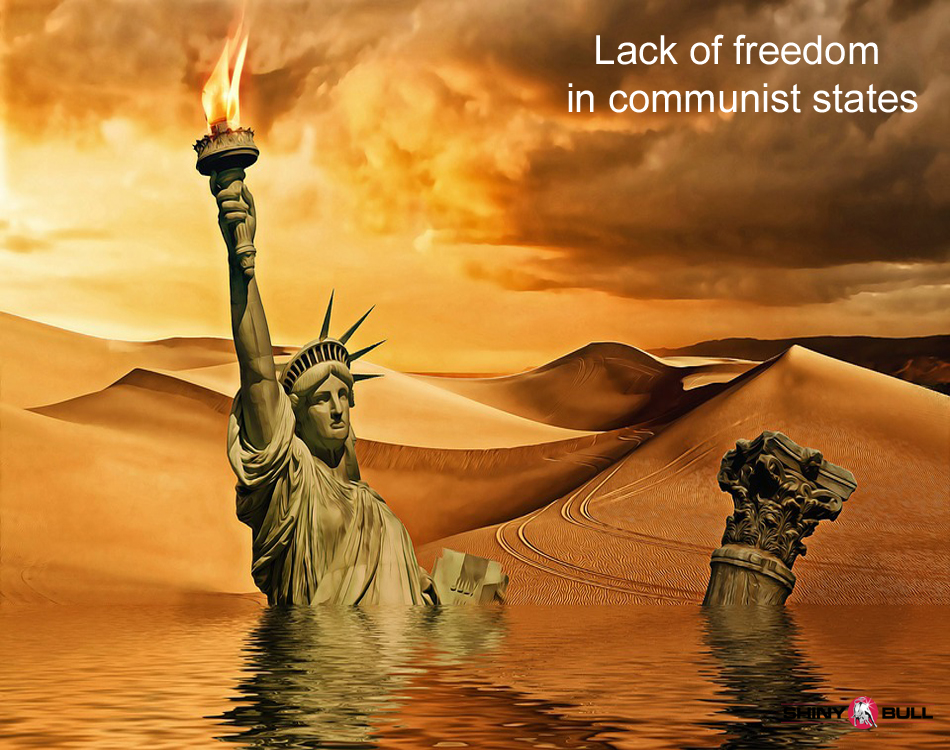
Rubio emphasizes that the American political system did not emerge in isolation. Many of its core ideas were inherited from Europe and from Western civilization more broadly. Concepts such as liberty, the value of the individual, and self-governance trace their origins to classical antiquity. Greek reflections on democracy and citizenship, combined with Roman legal and political thought, formed the intellectual groundwork for later European institutions and, ultimately, the founding principles of the United States.
Roman ideas such as libertas—the understanding that citizens possess rights protected by law—along with notions of civic duty, constitutional order, and legal equality, were central to this inheritance. These ideas were refined over centuries and carried forward into modern Western political culture. In this sense, freedom and liberty are not merely contemporary political slogans, but the result of a long civilizational development stretching back to Greece and Rome.
The concern Rubio raises is that if this shared cultural and historical understanding is eroded or denied, the transatlantic relationship could weaken over time. Discussions within NATO, he notes, increasingly extend beyond military coordination to broader questions of societal cohesion, mass migration, and cultural continuity. Some leaders address these issues openly, while others acknowledge them more privately. Either way, Rubio argues they represent a factor that cannot be ignored if the alliance is to remain durable.
From this perspective, the idea of “civilizational erase” is not about exclusion, but about memory. It is about whether the West continues to recognize the principles that gave rise to its institutions in the first place. Rubio contends that the United States—explicitly founded on Western principles such as liberty, individual rights, and self-governance—should be unapologetic in acknowledging and defending this shared inheritance.
If that inheritance is reduced to something secondary or optional, the alliance risks losing its deeper rationale. What would remain, Rubio suggests, is a defense agreement without a civilizational core. In the long run, that would place the ties between the United States and Europe under strain, not because of external enemies alone, but because of an internal loss of shared meaning.

Disclaimer: The views expressed in this article are those of the author and may not reflect those of Shinybull.com. The author has made every effort to ensure the accuracy of the information provided; however, neither Shinybull.com nor the author can guarantee the accuracy of this information. This article is strictly for informational purposes only. It is not a solicitation to make any exchange in precious metal products, commodities, securities, or other financial instruments. Shinybull.com and the author of this article do not accept culpability for losses and/ or damages arising from the use of this publication.
 Ket Garden
 Business, Politics, Finans