Donald Trump is warning all the American citizens about the Democrats and Kamala Harris. Trump played a clip from Kamala Harris` Oprah interview at a North Carolina rally. During Kamala Harris` recent interview with Oprah, a few moments stood out for their controversial nature.
One of the most notable comments was Harris admitting that she owns a gun and saying; «If somebody breaks into my house, they`re getting shot.» This blunt statement surprised Oprah and many viewers.
Some also criticized Harris for appearing out of touch when she discussed a $50,000 tax deduction for small businesses, which Oprah jokingly dismissed as «a tiny business,» further stirring online debates.
Oprah`s reaction to Kamala Harris during her interview seemed mixed, especially when Harris made some blunt remarks, like discussing her gun ownership and self-defense.
While Oprah didn`t explicitly express shock, her surprise was evident in her body language and responses, particularly when Harris spoke about small business tax deductions and made more direct comments on abortion and self-defense. Oprah`s lighthearted pushback, like calling a $50,000 tax deduction «tiny,» reflected moments where she seemed taken aback by Harris` statements.
Kamala Harris has faced criticism from various political commentators and the public, with some labeling her as «childish» or «empty» in terms of substance. These critiques often stem from her public speaking style, where her remarks can sometimes appear overly simplistic or filled with awkward laughter.
For example, her tendency to repeat basic talking points in interviews and speeches has led some to feel that she lacks depth on complex issues.
Opinions on her leadership vary widely, and while some view her as progressive and compassionate, others perceive her as lacking the gravitas expected of a vice president. Her approach to policy and communication is ineffective, and she`s too weak for a role as a representative of the U.S. This is not how a cheerleader acts. This is absolutely embarrassing. For the U.S., and for the free world.
Disclaimer: The views expressed in this article are those of the author and may not reflect those of Shinybull.com. The author has made every effort to ensure the accuracy of the information provided; however, neither Shinybull.com nor the author can guarantee such accuracy. This article is strictly for informational purposes only. It is not a solicitation to make any exchange in precious metal products, commodities, securities, or other financial instruments. Shinybull.com and the author of this article do not accept culpability for losses and/ or damages arising from the use of this publication.

Investors are watching the FED on Wednesday, and they are all but certain the FED will cut interest rates. But how much? 25 points or 50 points? That`s the real big debate among investors right now. But regardless, what will happen to the stock and crypto market if the FED cuts the rates?
There is more than 60% probability that the FED will cut the rates by 50 basis points. When the FED cuts interest rates, it typically impacts the stock market in several key ways.
Lower interest rates reduce borrowing costs for companies, which can lead to higher profitability due to cheaper access to capital. This generally encourages investment in stocks, driving prices higher. Sectors like technology and consumer discretionary tend to benefit the most from lower rates as they are more reliant on borrowing for growth.
Reduced rates also make loans and mortgages cheaper for consumers and businesses, encouraging spending and investment. This increased spending can lead to economic growth, which is positive for corporate earnings and stock prices.
In addition, growth stocks, especially in tech and innovation, often outperform because their future earnings are more heavily impacted by interest rates. Lower rates increase the present value of their future earnings, making them more attractive to investors.
At the same time, bond yields typically fall, making bonds less attractive compared to stocks. Investors may shift their portfolios from bonds to equities in search of better returns, which can push stock prices higher.
On top of all that, the risk appetite increase. Lower rates often reduce the returns on safer investments like savings accounts or Treasury bonds. As a result, investors may take on more risk by moving into stocks, which offer the potential for higher returns.
But keep in mind, that market reactions can vary!
What happens in the market is also psychology, and you will never know where the rabbit is jumping. A lot of investors are full of recession fears. If the FED cuts rates in response to a slowing economy or recession concerns, the stock market might react negatively if investors see the rate cut as a sign of underlying economic trouble.
On top of that, you have a lot of inflation concerns. If rate cuts are perceived to spur excessive inflation, it could lead to volatility in markets, especially if inflation erodes corporate profit margins.
In summary, while rate cuts generally boost the stock market, the context and economic conditions surrounding the decision play a crucial role in determining the actual market response. Not only that. It can also have a notable impact on the crypto market, similar to how it affects traditional financial markets.
The risk appetite in the crypto market will increase. Lower interest rates typically reduce returns on low-risk assets like bonds and savings accounts. This often leads investors to seek higher returns in riskier assets, including cryptocurrencies. As a result, crypto prices, particularly for Bitcoin and Ethereum, could rise as investors move capital into digital assets.
A rate cut can also weaken the U.S. dollar, as lower rates make the currency less attractive to foreign investors. Cryptocurrencies, particularly Bitcoin, are often seen as a hedge against currency devaluation. A weaker dollar could boost demand for Bitcoin and other digital currencies as an alternative store of value.
Improved liquidity comes on top of all this. Lower borrowing costs mean individuals and businesses can access cheaper captal. Increased liquidity in financial markets often benefits speculative assets like crypto, as more people can invest and trade.
Cryptocurrencies are often viewed similarly to growth stocks-assets with high potential but also high risk. Lower rates typically benefit growth sectors since the future value of earnings becomes more appealing. This may lead to surge in the crypto market.
Not only that. A FED rate cut can encourage institutions to diversify their portfolios, including moving into digital assets. As traditional investment returns diminish, institutions might allocate more to Bitcoin, Ethereum or other cryptocurrencies.
But, like the stock market, there are potential risks in the crypto market as well.
If the rate cut fuels inflation, it may lead to instability in traditional markets, which could spill over into the crypto space. Inflation could either positively affect crypto as a hedge or introduce volatility if the overall economic outlook worsens.
While rate cuts generally boost risk assets, they could signal economic weakness, which may also introduce market uncertainty. Cryptocurrencies can be highly sensitive to shifts in sentiment, reacting both positively and negatively to macroeconomic trends.
Overall, a FED rate cut is likely to boost the crypto market, especially if it leads to increased liquidity and risk-taking behavior among investors. The fear index is still below 20 (17,61) as of writing on Tuesday. Where will it end later in this week?
Disclaimer: The views expressed in this article are those of the author and may not reflect those of Shinybull.com. The author has made every effort to ensure the accuracy of the information provided; however, neither Shinybull.com nor the author can guarantee such accuracy. This article is strictly for informational purposes only. It is not a solicitation to make any exchange in precious metal products, commodities, securities, or other financial instruments. Shinybull.com and the author of this article do not accept culpability for losses and/ or damages arising from the use of this publication.
Former Clinton adviser Mark Penn has called for an internal investigation into ABC News following the 2024 presidential debate between Donald Trump and Kamala Harris. Penn raised concerns that the debate may have been rigged in favor of Harris.
He cited the moderators` disproportionate fact-checking of Trump while allowing Harris to go unchallenged on multiple occasions, creating an impression of bias.
Penn suggested ABC should hire an independent law firm to review internal communications to determine if there was an intentional effort to manipulate the debate outcome. He emphasized that the network`s moderators fact-checked Trump extensively but failed to scrutinize Harris`s claims, despite allegations that she made several false statements.
Penn also noted Harris`s close personal connections with ABC executives, adding to the suspicion of favoritism.
This criticism has come from both Republicans and some Democrats, and Trump himself said he would not participate in any more debates due to what he perceived as unfair treatment.
So far, there is no credible evidence to suggest that any debate, including one involving Donald Trump and Kamala Harris was rigged by ABC or any other network. Allegations of rigged debates are often raised in highly charged political invironments, but such claims typically lack substantiation, but an investigation could give us an answer.
In the U.S., presidential debates are organized by the Commision of Presidential Debates (CPD), a non-partisan organization. Networks like ABC or others that air these debates follow CPD guidelines, and the debate format, moderators, and rules are agreed upon by the campaigns in advance.
The first presidential debate between Donald Trump and Kamala Harris in 2024 drew 67,1 million viewers in the U.S. Despite the high viewership, the debate was met with significant controversy, particularly due to claims of bias in the moderation.
Viewership for presidential debates has historically fluctuated, with key factors like the candidates involved and the political climate influencing audience size. In comparison, the first debate in 2020 between Donald Trump and Joe Biden drew about 73 million viewers.
This is nothing compared to the most-watched U.S. Presidential debate ever; the debate between Donald Trump and Hillary Clinton on September 26, 2016, which attracted 84 million viewers.
This broke the previous record held by the 1980 debate between Jimmy Carter and Ronald Reagan, which drew around 80,6 million viewers.
The 2016 Trump-Clinton debate`s record viewership was attributed to the high level of interest in the polarizing candidates and the intense political climate. It was broadcast across multiple networks and also streamed online, though the 84 million figure only accounts for traditional TV viewership.
But people can see and hear and make up their own minds, and if they see something unfair, they will react. That`s exactly what people are doing. And this is exactly why the trust in media is declining.
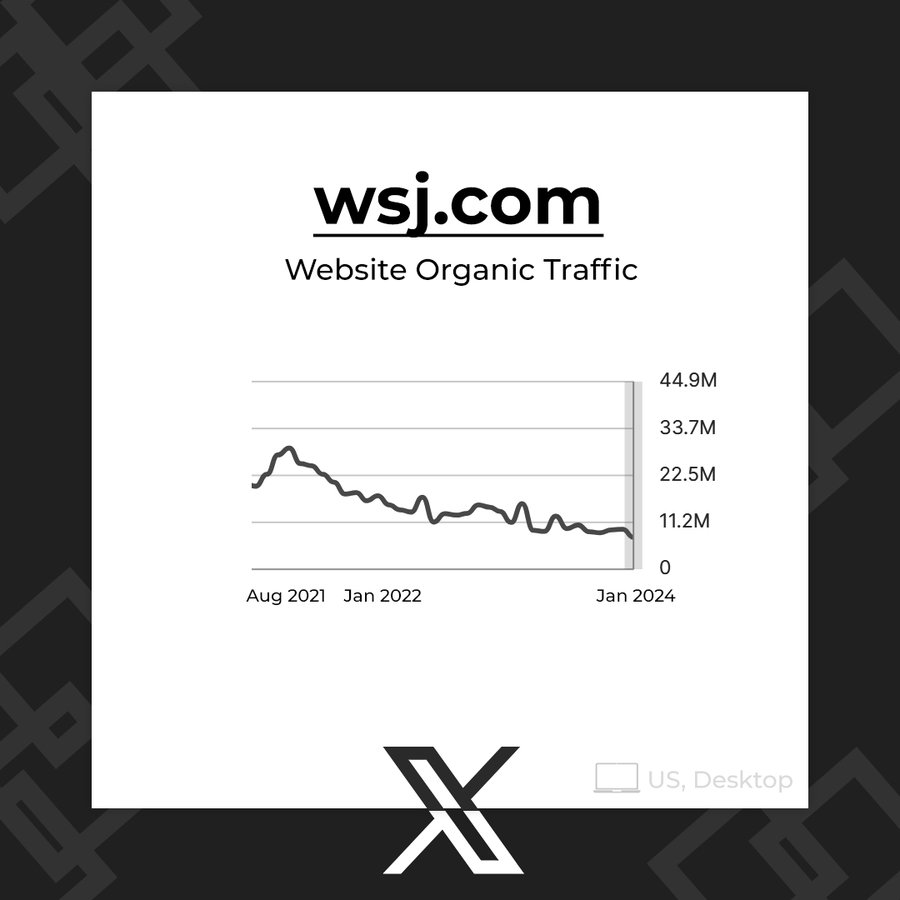
Trust in legacy media has seen a significant decline over the past 20 years. According to Gallup, trust in mass media (newspapers, TV, radio) has dropped from around 55% in 1999 – 2001 to about 32% in 2022.
This decline has been gradual but became more pronounced in the past decade, especially during and after the 2016 U.S. Presidential election, when media credibility was increasingly questioned.
Around 55% of Americans said they trusted the media «A great deal» or «a fair amount,» in 2001. This number fell to 32% in 2016, largely fueled by political polarization. In 2022, trust hit a near-record low at 32%, with trust among Republicans being particularly low (just 14%) and Democrats at 70%.
Pew Research Center also reported a consistent decline in trust, especially among younger audiences and Republicans. They found that in 2021, only 26% of Americans said they trusted national news organizations «a lot» or «somewhat.»
The decline is attributed to factors like increased political polarization, the rise of social media, and widespread perceptions of bias or sensationalism in traditional news outlets. This decline has created a trust gap, where many Americans now turn to alternative media sources or social media for information.
Disclaimer: The views expressed in this article are those of the author and may not reflect those of Shinybull.com. The author has made every effort to ensure the accuracy of the information provided; however, neither Shinybull.com nor the author can guarantee such accuracy. This article is strictly for informational purposes only. It is not a solicitation to make any exchange in precious metal products, commodities, securities, or other financial instruments. Shinybull.com and the author of this article do not accept culpability for losses and/ or damages arising from the use of this publication.
Kamala Harris has been advocating for measures that some describe as attempts to control prices, particularly in response to inflation and rising costs of living. Specifically, she has proposed a federal ban on «price gouging,» which is intended to prevent companies from excessively raising prices on essential goods, such as groceries, during times of crisis.
Capitalists do not like this idea and claim that Harris and the Democrats are Communists. So, why did we spend so much time and money to end the Cold War if we want to control the prices like a Communist country?
During the Cold War, price gouging was a phenomenon that was observed primarily in capitalist countries, particularly during times of crisis, but the context in which it occurred and how it was addressed varied significantly between capitalist and communist states.
In communist countries (Eastern Bloc), price gouging as understood in capitalist terms was less common due to the centrally planned economies. Prices were typically set by the state, not by market forces, and essential goods were often heavily subsidized to ensure affordability for all citizens.
However, this system led to other problems, such as shortages and black markets, where goods could be sold at much higher prices than the official state prices.
In the Soviet Union, for example, shortages of consumer goods often led to long queues and the emergence of black markets where items were sold at inflated prices. While this wasn`t «price gouging» in the traditional capitalist sense (since it was not sanctioned by the market but rather occured outside the official economy) it was a response to the inefficiencies of the planned economy.
In these countries, the official rhetoric condemned profiteering and exploitation, which were seen as capitalist vices. However, the reality of scarcity and black markets meant that some forms of price manipulation and gouging did occur, though they were illegal and contrary to the ideals of the communist system.
In capitalist countries (Western Bloc), price gouging was most notable during economic crisis or emergencies. For example, during the oil crisis of the 1970s, gasoline prices in the United States surged dramatically, leading to accusations of price gouging by oil companies.
Similarly, during natural disasters or periods of scarcity, prices for essential goods could skyrocket. These instances were often met with public outcry and, in some cases, government intervention to cap prices or punish those who were seen as taking advantage of the situation.
The U.S government occasionally imposed price controls to prevent gouging, such as during World War II, and in the 1970s during the Nixon administration, which introduced price freezes and controls to combat inflation and prevent excessive profiteering.
The Cold War era thus illustrates the challenges both systems faced in managing the distribution and pricing of essential goods under different economic models.
But the Cold War is history. So, why are we talking about price gouging now?
It all started in 2018 in France. The Yellow Vest protesters were primarily protesting against the rising cost of living. The movement began in November 2018 as a grassroots protest against a proposed fuel tax hike, which many people felt disproportonately affected low-income and rural citizens who rely on cars for transportation.
The protest quickly grew into a broader movement against economic inequality, high taxes, and the perception that the government was out of touch with ordinary people. They shouted at Trump and his policy; lower taxes, peace, prosperity and freedom.
Legacy Media thought that the protesters were Right-Wing Extremists, but they were ordinary people in all ages. Legacy Media very often turned the picture up-side-down.
The initial trigger for the protests was the announcement of an increase in fuel taxes, which the government justified as part of its environmental policy to reduce carbon emissions. However, many protesters viewed this as an unfair burden on working-class people, particularly those living in rural areas who had few alternatives to driving. In addition, they also increased the cost on toll stations.
Protesters were angry about the difficulty of making ends meet, especially as wages had stagnated while the cost of essentials, including housing and energy, had continued to rise.
So, what is happening in a society when gasolin prices increase? Price on toll stations increase? Energy prices increse? Taxes increase?
The food prices increase.
A study from 2024 showed that oftentimes when allegations of «price gouging» are made, the profit margins of sellers and vendors is substantially lower than critics believe, such as in the case of grocers recently accused of «price gouging» who actually had a 1,2% profit margin after expenses, with Kroger having their highest profits in the previous 15 years occuring in 2018 at 3%.
In March 2024, the Federal Trade Commission accused grocery chains in the U.S. of price gouging. The Commission also sued to block the proposed acquisition of Albertsons by Kroger citing the need for more competition to keep prices down.
In Australia in 2023 and 2024, major supermarket chains Coles and Woolworths received criticism as price gouging, especially in less competitive markets. Coles and Woolworths control 65% of Australia`s grocery market.
A 2022 Working Paper by the International Monetary Fund explores the implementation of windfall profit taxes (higher tax rate on profits), which have gained renewed interest following the COVID-19 pandemic, the war in Ukraine, and subsequent surges in energy and food prices.
The paper discusses the potential of such taxes as a tool for efficently taxing economic rents, which are often a result of monopolistic power or unexpected events like pandemics, war, or natural disasters, and contribute to windfall profits. Such profits have raised public and policy concerns about price gouging, where firms are perceived to be profiting excessively from unforseen circumstances.
Price gouging is a pejorative term used to refer to the practice of increasing the prices of goods, services, or commodities to a level much higher than is considered reasonable or fair by some. This commonly applies to price increases of basic necessities after natural disasters.
Usually, this event occurs after a demand or supply shock. The term can also be used to refer to profits obtained by practices inconsistent with a competitive free market, or to windfall profits.
In some jurisdictions of the United States during civil emergencies, price gouging is a specific crime.
Price gouging is considered by some to be exploitative and unethical and by others to be a simple result of supply and demand.
Price gouging is similar to profiteering (unethical) but can be distinguished by being short-term and localized and by being restricted to essentials such as food, clothing, shelter, medicine, and equipment needed to preserve life and property.
In jurisdictions where there is no such crime, the term may still be used to pressure firms to refrain from such behavior. The term is used directly in laws and regulations in the United States and Canada, but legislation exists internationally with similar regulatory purpose under existing competition laws.
It is sometimes used to refer to practices of a coercive monopoly that raises prices above the market rate by deliberately curtailing production. Alternatively, it may refer to suppliers’ benefiting to excess from a short-term change in the demand curve.
Price gouging became highly prevalent in news media in the wake of the COVID-19 pandemic, when state price gouging regulations went into effect due to the national emergency. The rise in public discourse was associated with increased shortages related to the COVID-19 pandemic.
The resulting inflation after the pandemic has also been blamed, at least in part by some on price gouging. During the pandemic, the idea of «Greedflation» or seller’s inflation also moved out of the progressive economics fringe by 2023 to be embraced by some mainstream economists, policymakers and business press.
There is some price gouging-related lawsuits during the COVID-19 pandemic. In response to the issuance of emergency price gouging regulations, multiple state attorneys general and federal agencies have investigated potential cases of price gouging impacting consumers and agencies. Since regulatory measures vary in states, there is no uniform interpretation of price gouging violations, and it is left to state courts to decide.
On August 11, 2020, New York Attorney General Letitia James sued Hillandale Farms, one of the largest U.S egg producers, for allegedly price gouging more than four million cartons of eggs by increasing prices by almost five times during the pandemic.
The lawsuit alleges that the price increases were an effort to profit off of higher consumer demand during the pandemic. To Settle the lawsuit, Hillandale Farms agreed to donate 1,2 million eggs to New York food banks.
As of March 2021, Proskauer Rose counted 42 states that have emergency regulations or price-gouging statutes. Price-gouging is often defined in terms of the three criteria listed below:
Period of emergency: The majority of laws apply only to price shifts during a declared state of emergency or disaster.
Necessary items: Most laws apply exclusively to items essential to servival, such as food, water, and housing.
Price ceilings: Laws limit the maximum price that can be charged for given goods.
Washington state does not have a specific statue addressing price gouging, can nevertheless have sought to apply its consumer protection act to argue that high prices during COVID-19 for PPE was an «unfair» or «deceptive» practice.
Statutory prohibitions on price gouging become effective once a state of emergency has been declared. States have legislated different requirements for who must declare a statae of emergency for the law to go into effect.
Some state statues that prohibit price gouging, including those of Alabama, Florida, Mississippi, and Ohio, prohibit price increases only once the President of the United States or the state`s governor has declared a state of emergency in the impacted region.
The EU does not include «price gouging» explicitly in regulation. Article 102 of the Treaty on the Functioning of the European Union is «aimed at preventing undertakings who hold a dominant position in a market from abusing that position.»
As stated, «such abuse may, in particular, consist in: a) directly or indirectly imposing unfair purchase of selling prices or other unfair trading conditions….»
In 2016, the EU Commissioner for Competition Margrethe Vestager stated that the EU Commission will «intervene directly to correct excessively high prices» specifically within the gas industry, pharmaceutical industry and in cases of abuse of standard-essential patents.
They attack grocery stores with 1,6% profit margin. But what about the oil industry with their profit margin of 30 percent? The Pharmaceutical companies also have up to 30 percent profit margins.
The profit margin in the pharmaceutical industry can vary widely depending on factors such as the type of company (e.g., big pharma, biotech, generic manufacturers), the specific market, and the company’s business model. However, in general, the pharmaceutical industry is known for having relatively high profit margins compared to many other sectors.
For major pharmaceutical companies, profit margins can often be quite high. Net profit margins for large pharmaceutical companies typically range from 15% to 30%. This is due to a combination of high revenue from patented drugs, substantial investment in research and development, and significant pricing power in many markets.
A few large multinational corporations dominate the global oil market, which is characteristic of an oligopoly. This market structure means that while no single company controls the entire market, a small group of powerful companies can influence supply, pricing, and market conditions.
OPEC, made up of major oil-exporting countries, acts like a cartel by coordinating production levels among its members to influence global oil prices. While not a monopoly, OPEC wields significant power over global oil supply and prices by adjusting output based on market conditions.
Allocative efficiency holds that when prices function properly, markets tend to allocate resources to their most valued uses. In turn, those who value the good the most and are able to afford it will pay a higher price than those who do not value the good as much or who are unable to afford it.
According to Friedrich Hayek in «The use of Knowledge in Society» (1945), prices can act to coordinate the separate actions of different people as they seek to satisfy their desires.
Economist Thomas Sowell argue that laws prohibiting price gouging worsens emergencies for both buyers and sellers.
So, let`s hope for a free market unless a crisis occurs.
Disclaimer: The views expressed in this article are those of the author and may not reflect those of Shinybull.com. The author has made every effort to ensure the accuracy of the information provided; however, neither Shinybull.com nor the author can guarantee such accuracy. This article is strictly for informational purposes only. It is not a solicitation to make any exchange in precious metal products, commodities, securities, or other financial instruments. Shinybull.com and the author of this article do not accept culpability for losses and/ or damages arising from the use of this publication.

Vice President Kamala Harris said in a speech at the DNC convention, that Donald Trump doesn`t fight for the middle class people. She said he is fighting for himself, and his rich friends. Instead of a Trump tax hike, we will pass a middle-class tax cut, she said.
When did Trump say he is planning a tax hike? Never. Trump and the Republicans stand for the opposite. They want to cut taxes and it is their core values. It is the Democrats that want to increase the taxes.
Harris’ economic proposal is 28% corporate tax. 44,6% capital gains tax. 25% tax on unrealized gains. Price controls. No tax on tips, and up to $6K Child tax credit.
Many people do not understand politics, and they don`t know the difference between left and right. They don`t understand the difference between the Democrats and Republicans.
The Democrats on the left side want to steal as much money as they can from people. Republicans do the opposite, and tax cuts are very important to Republicans.
Tax cuts are a significant priority for Republicans in the U.S. Tax policy has been a central issue for the Republican Party for many decades, with tax cuts often being at the forefront of their economic agenda. Here are a few key reasons why tax cuts are important to Republicans:
LIMITED GOVERNMENT: Tax cuts are seen as a way to limit the size and scoop of government. By reducing the amount of revenue the government collects, Republicans aim to curb government spending and encourage more efficient use of resources.
SUPPLY-SIDE ECONOMICS: This economic theory, often associated with Republican policy, suggests that lower taxes lead to increased production, investment, and innovation, which in turn can boost overall economic activity and eventually increase government revenue despite the lower tax rates.
INDIVIDUAL FREEDOM: Many Republicans believe that individuals should have the freedom to spend and invest their money as they see fit, rather than having the government take a larger share through taxation. Tax cuts are seen as a way to enhance personal liberty by reducing government intervention in people`s financial lives.
POLITICAL IDENTITY: Tax cuts have become a core part of the Republican Party`s identity. Prominent Republican leaders, such as Ronald Reagan and George W. Bush, have implemented significant tax cuts during their administrations, reinforcing the party`s commitment to this issue.
Harris said she want to cut taxes, and you can see thousands of people at the DNC convention agree with her, but this is a Republican policy. Saying that Trump will hike taxes is a BIG LIE.
You can also see that nearly all the Democrats Freedom banners, but this is a Republican agenda. They are stealing everything that Trump and the Republicans stands for. Why? They don`t have their own agenda. They don`t have a clear vision for the future. This is embarrassing.
Tax cuts are a cornerstone of Republican economic philosophy, reflecting their broader goals of promoting economic growth, limiting government, and enhancing individual freedom.
Disclaimer: The views expressed in this article are those of the author and may not reflect those of Shinybull.com. The author has made every effort to ensure the accuracy of the information provided; however, neither Shinybull.com nor the author can guarantee such accuracy. This article is strictly for informational purposes only. It is not a solicitation to make any exchange in precious metal products, commodities, securities, or other financial instruments. Shinybull.com and the author of this article do not accept culpability for losses and/ or damages arising from the use of this publication.