
Some people love Trump, and some people hate him. 75 million voted for Trump and they are satisfied. Trump and his supporters believe a «golden era» is coming. But people on the other side are scared as hell. They believe that Trump will take the U.S. out of NATO. That doesn`t make sense. What in the world is going on here?
I`m sick and tired of the blame game we see. Legacy Media is blaming Trump for all the wrong things that are going on. And some people believe in it. Europe is building its own defense system, and don`t blame Trump for that.
It can be a huge problem, but it can also be great. But are we friends or foes?
EU, NATO, and PESCO
The European Union’s push to develop its own defense capabilities through initiatives like PESCO (Permanent Structured Cooperation) has sparked discussion over its future relationship with NATO and the United States. While NATO has been the backbone of European security since its founding in 1949, Europe’s focus on an independent military framework reflects a changing security landscape. Although the U.S. and EU share foundational values of freedom and peace, recent defense dynamics raise questions about the stability of this historic alliance.
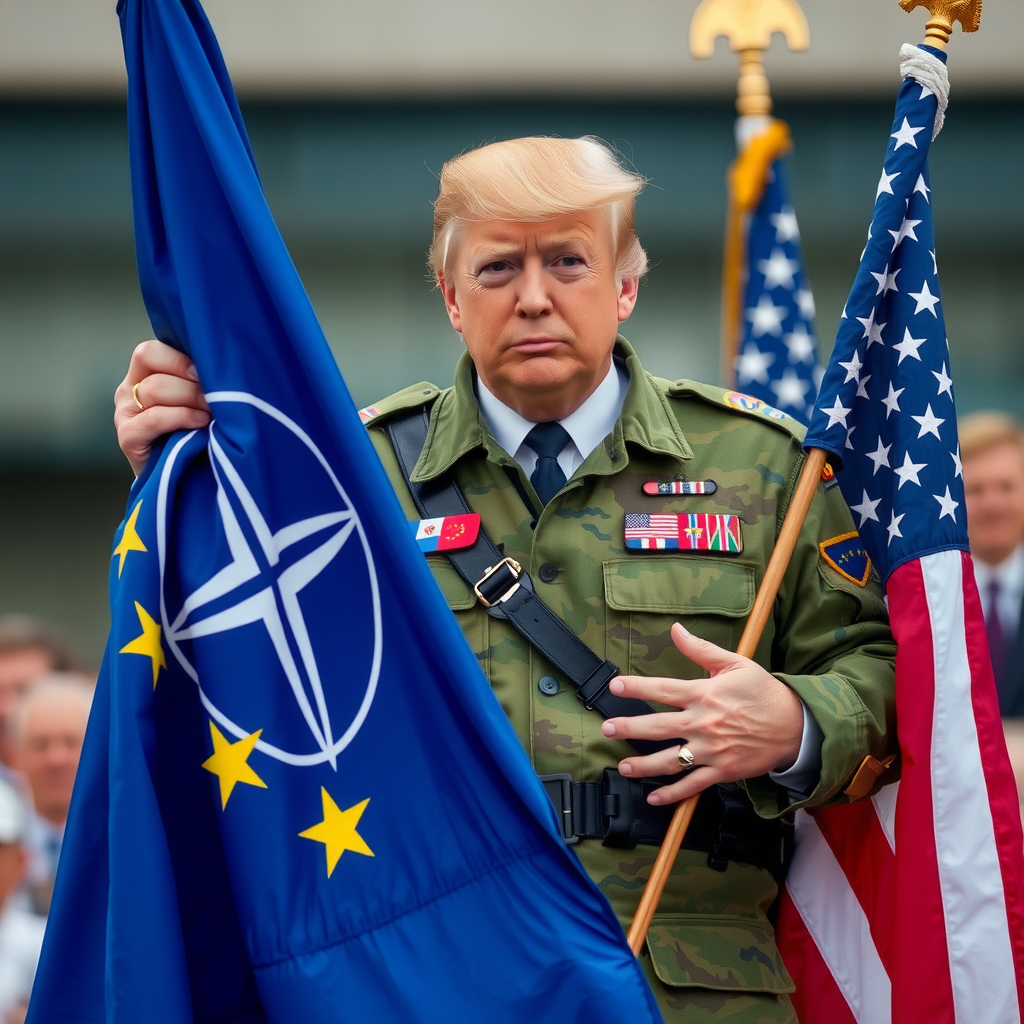
NATO and the Trump Era: Increased Accountability
During his presidency, Donald Trump pressed NATO members to meet the alliance’s defense spending guideline of 2% of GDP, arguing that the U.S. bore too much of the financial burden for European security. This pressure led to significant increases in European defense budgets and served as a catalyst for Europe’s own defense initiatives. Contrary to fears of Trump wanting to leave NATO, his administration actually reinforced the alliance by pushing members to fulfill their financial commitments. As a result, Europe began preparing for a future where it could play a larger role in its own security.
The Emergence of PESCO: Europe’s Bid for Strategic Autonomy
PESCO represents the EU’s efforts to streamline its defense policies and collaborate more closely on security issues. Established in 2017, PESCO involves 25 EU member states who have agreed to invest, plan, develop, and operate defense capabilities collaboratively. The initiative seeks to address European security needs in a manner complementary to NATO, ensuring that Europe can act independently if required while supporting NATO’s broader objectives.
While some interpret PESCO as a step toward a “European army,” EU leaders have emphasized that the initiative is not intended to replace NATO but to strengthen Europe’s defense posture. The goal of “strategic autonomy” remains complex, as Europe’s leaders debate how to balance independence with their commitment to the NATO alliance.
Complex Relations Between Allies: NATO, PESCO, and the U.S.
The relationship between the EU and the U.S. is marked by shared interests but also significant challenges. Traditionally, both have aligned on security matters through NATO, yet the EU’s pursuit of PESCO hints at a desire for more independent decision-making. In scenarios where U.S. priorities shift toward the Indo-Pacific, Europe’s stronger defense mechanisms could offer the flexibility to address regional security concerns independently, such as issues in North Africa and Eastern Europe.
At the same time, a divergence in priorities, such as differing views on China or the Middle East, could test NATO’s cohesion. NATO’s structure requires a consensus, meaning that conflicting EU and U.S. agendas might hinder unified responses to global crises. Europe’s need for strategic autonomy may strengthen its regional security, but risks duplicating NATO’s efforts without close alignment, raising concerns about potential inefficiencies and gaps in defense.
Russia, Ukraine, and NATO’s Role
The Russian invasion of Ukraine underscored NATO’s role in European security. NATO’s support for Ukraine demonstrates the alliance’s commitment to European stability and its role in deterring aggression on the continent. However, NATO members have been cautious about allowing Ukraine to join as a full member due to the potential escalation with Russia. This ongoing conflict has prompted European nations to reconsider their dependence on U.S. security support, highlighting the importance of a robust European defense capability within PESCO while maintaining NATO’s strategic unity.
Challenges and Opportunities for NATO and EU Cooperation
In an ideal scenario, NATO and PESCO would complement each other, with Europe taking on more regional security responsibilities to balance the alliance. A stronger European defense framework could allow the U.S. to address global priorities while ensuring Europe’s security. However, if cooperation between the EU and NATO falters, their overlapping efforts could result in competition rather than synergy, impacting collective peace and stability.
The rise of cyber threats, climate change, and global health crises underscores the need for close transatlantic coordination. NATO’s historical role has been to unify Western democracies under a shared vision of freedom and peace. As the EU strengthens its defense mechanisms, NATO’s role may evolve, necessitating a recalibrated approach that respects Europe’s pursuit of autonomy while preserving shared security interests.
Conclusion: A Balanced Path Forward
The EU’s defense initiatives through PESCO represent a logical evolution in Europe’s security landscape, reflecting both its commitment to NATO and its desire for greater self-reliance. This development could reinforce NATO by sharing the security burden more equitably. However, maintaining cohesion and avoiding unnecessary duplication is essential. The EU and the U.S. must prioritize open dialogue and collaboration to ensure that NATO and PESCO complement each other, creating a resilient security framework for the modern world.

Disclaimer: The views expressed in this article are those of the author and may not reflect those of Shinybull.com. The author has made every effort to ensure the accuracy of the information provided; however, neither Shinybull.com nor the author can guarantee such accuracy. This article is strictly for informational purposes only. It is not a solicitation to make any exchange in precious metal products, commodities, securities, or other financial instruments. Shinybull.com and the author of this article do not accept culpability for losses and/ or damages arising from the use of this publication.
 Ket Garden
 Shiny bull