
Tag Archives: Middle East

Iran: Executions and the Threat of Public Death Sentences Against Protesters – A New and Alarming Phase

In the wake of the largest protests against the Iranian regime in decades, the world has witnessed a sharp increase in the use of the death penalty in Iran. According to human rights organizations, at least 1,500 people were executed in 2025—an unprecedented level in the history of the Islamic Republic. Many of these executions followed expedited proceedings and lacked what the regime itself would describe as a thorough and fair trial. The death penalty has increasingly been used as a tool to spread fear and crush opposition.

Reports of arrests, mass killings, and brutal reprisals against protesters have been widespread. In some cases, families have been informed that executions were imminent, with only very short notice.

Erfan Soltani – A Symbol of a New Threat

The 26-year-old Iranian protester Erfan Soltani was arrested during the large-scale demonstrations that began in early January 2026. He was quickly sentenced to death on charges of moharebeh—“enmity against God”—a grave accusation frequently used against political opponents in Iran. His family was reportedly given only ten minutes to say goodbye before his planned hanging, triggering international condemnation and warnings from the United States of possible consequences should the execution be carried out.

Following international pressure, including statements from U.S. political leadership, some sources reported that the planned execution may have been postponed or canceled. However, Iran’s judiciary has claimed that parts of the media coverage were “fabricated” and has denied that a death sentence was definitively issued in the case, as reported by some outlets.

Even though the specific outcome of this case remains contested, it nonetheless illustrates a clear pattern: Iranian authorities have made extensive use of the death penalty for years, and protesters have been sentenced after extremely rapid proceedings that human rights groups describe as inadequate and deeply unjust.

A Pattern of Death Sentences Against Opposition

The use of capital punishment in Iran is not new and has long been a recurring element of how the regime responds to protests and dissent. During the demonstrations following the death of Mahsa Amini in 2022, several protesters were sentenced to death and executed on charges such as moharebeh and efsad-e fel-arz (literally “corruption on earth”).

In 2024, the United Nations and human rights organizations reported that at least hundreds of protesters and others had been executed on such charges, often following rushed and highly questionable judicial processes.

What This Means

These developments signal a new phase in Iran’s response to domestic unrest: not only violent crackdowns and mass arrests, but also the threat of capital punishment as a public instrument of intimidation. While some of the most extreme claims circulating online—such as reports of tens of thousands of death sentences—are unsubstantiated or false, there are documented cases of executions and a genuine fear that the death penalty is being used to silence criticism and suppress protest.


Parallels to Afghanistan: Public Terror as a Tool of Power


Developments in Iran also evoke strong parallels to Afghanistan under Taliban rule. There, the regime has employed public executions, hangings from streetlights, and the display of bodies in public spaces as a deliberate strategy to intimidate the population into submission. This is not merely punishment—it is symbolic terror, where death is made visible to crush resistance throughout society.

Human rights organizations have documented how the Taliban have carried out public hangings, often on charges of “treason,” “immorality,” or collaboration with enemies, without fair trials. The objective is the same as what now appears to be emerging in Iran: to make it unmistakably clear that resistance is not merely dangerous, but fatal.

When Iranian authorities now threaten—or signal—the possibility of public executions of protesters, the country moves toward the same form of tyranny. This is no longer about punishing individuals, but about staging fear. A public execution is meant to be seen, shared, and remembered. It is a warning: This could happen to you.

The difference between Iran and Afghanistan is primarily ideological and historical—not methodological. Both regimes use religious justification, vague charges such as “enmity against God,” and extreme violence to retain power. The result is a society in which the rule of law is sidelined and fear replaces justice.

When Evil Comes Back Around

Jesus said that people can read the signs of the heavens and the earth, yet still misunderstand the times they live in. Today, we see how tyrannies that oppress, torture, and kill believe themselves invincible. But history is clear: the evil you spread to others will eventually return—often in ways that shake even the most powerful.

The Nazis fell, and their leaders were held accountable. Tyrannies in Afghanistan, Iran, and elsewhere carry the same seeds of their own destruction. Karma is not a myth; it is an inexorable law: what you sow, you will reap.

For those who protest, who seek truth and freedom, the danger is real—but their courage writes history. For those who tyrannize their people, punishment is unavoidable—not always immediate, but certain. The universe has a way of restoring balance, and history never forgets.

Fear can keep people down for a time. But justice, truth, and karma are ultimately unstoppable.

When Tyrannies Fall: The Judgment of History

History teaches us one thing with brutal clarity: tyrannies never last forever. They may appear strong, terrifying, and invincible in the moment, but they always carry the seeds of their own destruction. Nazi Germany is among the clearest examples. Built on ideology, fear, propaganda, and systematic violence, it ultimately collapsed under the weight of its own crimes.

After World War II came the Nuremberg Trials. For the first time in history, leaders of a regime were held personally accountable for crimes against humanity. It was not revenge. It was the rule of law’s response to barbarism. A clear message to the world: “Following orders” is no excuse when human rights are trampled.

What many ask today is why contemporary theocratic tyrants—such as the clerical regime in Iran—continue to evade the same historical reckoning. A regime that executes its own people, supports terrorist organizations, oppresses women, silences truth, and weaponizes religion commits crimes not only against its own citizens but against humanity as a whole.

If history is to be more than words in textbooks, it must also serve as a moral compass. Just as the Nazis were brought to trial after the war, today’s oppressors deserve legal accountability—not for the sake of vengeance, but for justice. Not only for the people of Iran, but for all who believe in human dignity, freedom, and responsibility.

History does not forget.
It only waits.

Disclaimer: The views expressed in this article are those of the author and may not reflect those of Shinybull.com. The author has made every effort to ensure the accuracy of the information provided; however, neither Shinybull.com nor the author can guarantee the accuracy of this information. This article is strictly for informational purposes only. It is not a solicitation to make any exchange in precious metal products, commodities, securities, or other financial instruments. Shinybull.com and the author of this article do not accept culpability for losses and/ or damages arising from the use of this publication.
Leave a comment

Filed under Politics

Iran’s Bazaar Revolt Points to a Moment of Acute Regime Vulnerability

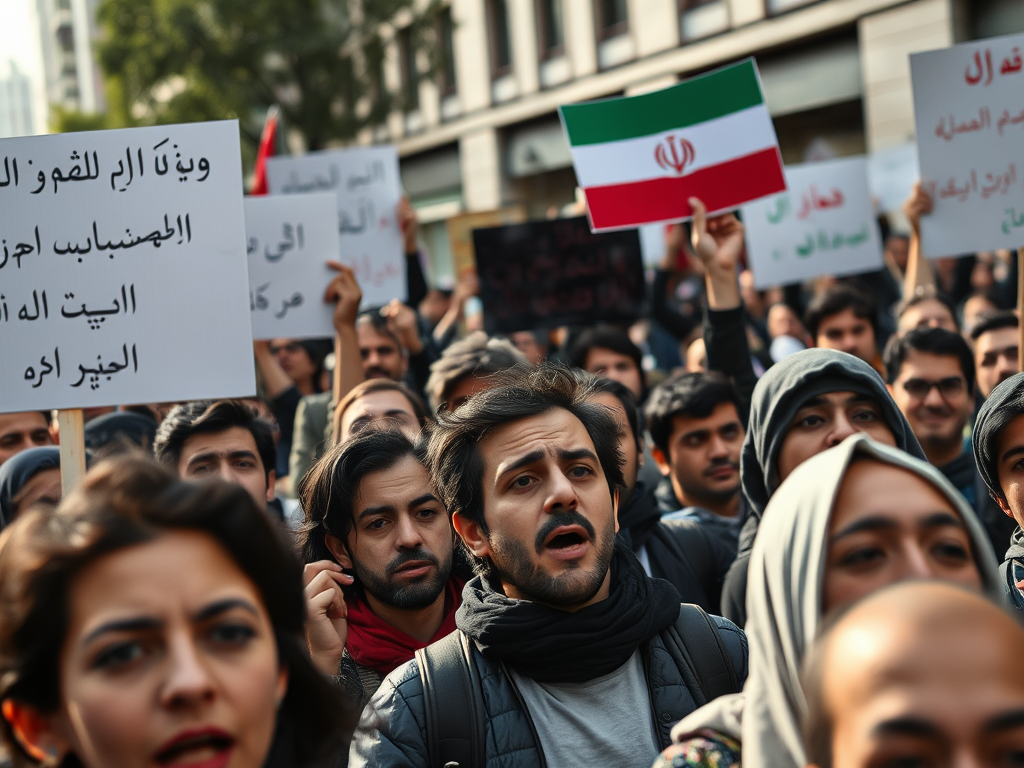
Iran is entering a period of heightened political risk as economic collapse, environmental stress, and elite defection converge in ways not seen for decades. The latest wave of unrest, which began on December 28 in Tehran’s Grand Bazaar, has spread across more than 100 cities, evolving from local economic protest into a broader challenge to the Islamic Republic’s authority.

While demonstrations are not new in Iran, the participation of the bazaar merchant class marks a potentially decisive shift. In Iran’s modern political history, the withdrawal of support by the bazaaris has tended to occur at moments of acute regime vulnerability and has coincided with major political realignments — most notably in 1978–79.

The Bazaar as a Political Barometer

The Grand Bazaar is the backbone of Iran’s domestic economy. Its dense networks of traders, wholesalers and importers connect supply chains, liquidity and social influence across the country. Historically, bazaar merchants have not functioned as a permanent opposition force. Instead, they have acted as pragmatic political actors, aligning themselves with whichever system appeared capable of guaranteeing stability, access and predictability.

In 1979, they withdrew support from the Shah and aligned with the clerical opposition. For more than four decades thereafter, they formed part of the Islamic Republic’s core economic coalition.

That coalition now appears to be fracturing.

When bazaar merchants close their shops, the impact goes far beyond symbolism. Commercial shutdowns disrupt distribution networks, freeze working capital and send a powerful signal that confidence in the state’s economic management has eroded. In Iran’s political system, such signals matter — not because they immediately bring down governments, but because they indicate that the regime’s traditional mechanisms of consent are weakening.

Economic Breakdown as the Catalyst

The immediate driver of unrest is economic collapse.

Over the past year:

  • The Iranian currency has lost approximately 60 per cent of its value
  • Food prices have risen by around 72 per cent
  • Medicine costs have increased by roughly 50 per cent
  • Inflation is estimated to be near 50 per cent

For many households, life savings have been effectively erased. For merchants dependent on imports, business has become unviable. The government’s decision to abolish subsidised exchange rates, combined with higher taxes, has sharply increased costs while currency volatility has made price-setting nearly impossible.

Compounding the crisis is a breakdown in basic infrastructure. Water reservoirs in several regions are reportedly at critically low levels, electricity supply is unreliable, and public services are deteriorating. The state is increasingly unable to provide core public goods: water, power, food security or employment.

In practical terms, the implicit social contract between state and society has collapsed.

From Economic Stress to Political Exposure

The scale and composition of the protests suggest that this is no longer a narrow economic dispute. Demonstrations now include merchants, workers and middle-class families, while confrontations with security forces have intensified. Dozens have reportedly been killed in clashes with the Revolutionary Guard.

The government’s response has oscillated between repression and improvised economic concessions. One widely reported offer — a small monthly payment to encourage protesters to disperse — was interpreted less as relief than as an admission of fiscal exhaustion.

Externally, the regime also faces heightened geopolitical pressure. Former US president Donald Trump has publicly warned of retaliation should violence against protesters continue. While such statements should be interpreted cautiously, Tehran remains acutely aware of Washington’s capacity to escalate economic and strategic pressure.

Political Realignment and the Search for Alternatives

As confidence in the Islamic Republic erodes, political symbols long considered marginal are resurfacing. Reza Pahlavi, the exiled son of Iran’s last Shah, has declared that the current system is approaching the end of the road and has called 2026 “the year of change”.

There is no clear evidence that monarchist forces are directing the protests. But the re-emergence of such figures reflects a deeper vacuum: a growing search for legitimacy outside the clerical system itself. In moments of systemic stress, Iranian politics has historically gravitated toward realignment rather than reform.

Even within elite circles, unease is evident. Persistent reports of contingency planning by senior figures underscore the perception that the current unrest represents more than a temporary disturbance.

A Regime Under Structural Pressure

The Islamic Republic retains formidable coercive capacity, and regime change is far from inevitable. But the convergence of economic collapse, environmental stress and elite defection suggests that Iran has entered a phase of structural instability.

The withdrawal of bazaar support does not in itself determine political outcomes. Historically, however, it has signalled moments when existing power arrangements were no longer sustainable.

Iran may now be approaching such a moment.

Disclaimer: The views expressed in this article are those of the author and may not reflect those of Shinybull.com. The author has made every effort to ensure the accuracy of the information provided; however, neither Shinybull.com nor the author can guarantee the accuracy of this information. This article is strictly for informational purposes only. It is not a solicitation to make any exchange in precious metal products, commodities, securities, or other financial instruments. Shinybull.com and the author of this article do not accept culpability for losses and/ or damages arising from the use of this publication.

Leave a comment

Filed under Politics

Who Is Hamas? The Truth About Gaza’s Rulers

Ordinary people in Gaza hate Hamas and want to get rid of it. But how easy is that when we all know they rule Gaza with an iron fist? If you disagree with them, they will simply silence you. Or kill you. And that’s what’s happening in Gaza right now.

Once Hamas claims to seek peace with Israel, it soon turns its weapons on its own people. Who, then, is Hamas, and what are they really doing?

Origins of Hamas

Hamas (Ḥarakat al-Muqāwamah al-ʾIslāmiyyah — “Islamic Resistance Movement”) was founded in 1987 during the First Intifada. It grew out of the Egyptian Muslim Brotherhood, promoting a radical Islamist ideology that rejects Israel’s right to exist.

Its 1988 charter openly called for Israel’s destruction and the creation of an Islamic state over all of historical Palestine. From the beginning, Hamas mixed social welfare with terrorism, using religious faith and nationalism to recruit followers and strengthen control.

Brainwashing and Indoctrination

We can ask ourselves where all this hate comes from. But it’s not hard to understand when you see how Hamas uses propaganda and fear to shape generations.

The Nazis once said that a lie repeated enough times becomes the truth. The same can be said about Hamas.

In schools, mosques, and media, they constantly repeat messages of hatred against Jews and Israel. Children are taught that dying as a “martyr” is the greatest honor. The organization glorifies violence and uses religion as a tool of manipulation. This is how the terrorist organization Hamas is recruiting suicide bombers to attack innocent people in Israel.

The Years of Terror

Before Israel built its security barrier (the wall) along the Gaza border, Hamas repeatedly sent young suicide bombers into Israel, especially during the Second Intifada (2000–2005). Civilians were the main targets. People on buses, in cafés, markets, and restaurants.

Some of the worst attacks included:

  • Jerusalem Sbarro Restaurant bombing (2001): 15 killed, over 100 injured.
  • Dolphinarium disco bombing (2001): 21 young people killed.
  • Hebrew University bombing (2002): 9 killed, including U.S. citizens.

Even before Israel’s withdrawal from Gaza in 2005, militants in Gaza, including Hamas, began firing rockets and mortars into southern Israel. Towns like Sderot and Ashkelon have lived under constant threat ever since.

In 2006, Hamas fighters kidnapped Israeli soldier Gilad Shalit, holding him captive for over five years before finally releasing him in exchange for over 1,000 Palestinian prisoners, many of whom had blood on their hands.

Hamas’s Control Over Gaza

Since taking full control of Gaza in 2007, Hamas has turned the area into both a fortress and a prison. They suppress political opponents, control the media, and punish anyone who dares to speak against them.

Billions in international aid meant for rebuilding homes and hospitals have instead been used to build tunnels, buy rockets, and train new fighters.

Ordinary Gazans are the real victims. Trapped between Hamas’s authoritarian rule and the consequences of its endless wars.

What`s disappointing about this case is the legacy media`s unbalanced reports from the conflict. We often hear from poor civilians in Gaza. They usually lie, and sometimes they say people have no home and that it’s cold in Gaza. The fact is that the weather is hot.

The Hidden Face of Hate: When “Support for Gaza” Becomes Antisemitism

In the weeks and months following every escalation in Gaza, television screens, social media feeds, and newspaper headlines fill with global protests and statements of “solidarity with Gaza.” Many of these come from people who genuinely care about the suffering of civilians, and compassion is vital.
But somewhere along the way, something darker has mixed in: a growing wave of disguised antisemitism, hate hidden beneath the surface of supposed “support.”

From Sympathy to Scapegoating

It begins with empathy. People reacting to images of destruction, mourning the deaths of children, and demanding peace. But in protest slogans and online comments, empathy often turns into something else:

  • “Zionists” becomes a code word for “Jews.”
  • Calls for “Free Palestine” are twisted into chants like “From the river to the sea,” which deny Israel’s right to exist.
  • Jewish students, shops, and synagogues in Europe and the U.S. face vandalism or threats, even though they have nothing to do with the Israeli government.

This isn’t solidarity. It’s scapegoating. The line between political protest and racial or religious hate has blurred.

How Hate Disguises Itself

Modern antisemitism rarely looks like the open hatred of the 1930s. Today, it hides behind political and moral language, calling itself “anti-Zionism,” “human rights activism,” or “decolonization.”
But the pattern is the same: blame all Jews for the actions of a few, question their right to safety, and deny their history.

  • In some university protests, Jewish students have been told to “go back to Poland.”
  • Online, “pro-Gaza” threads are flooded with conspiracy theories about Jews controlling governments or media.
  • In demonstrations, Israeli flags are burned alongside slogans calling for “intifada” or “death to the occupiers.”

These aren’t calls for justice. They’re echoes of history, and they’re dangerous.

A Moral Test for the West

True solidarity with Palestinians means demanding an end to terror and manipulation. Not cheering for those who fire rockets from schoolyards. Genuine peace means condemning antisemitism wherever it appears, even when it hides behind fashionable activism.

The West now faces a moral test:
Can we support innocent people in Gaza without reviving one of humanity’s oldest hatreds?
Can we tell the difference between compassion and hate?

The answer depends on honesty and courage. Because antisemitism doesn’t vanish when it changes its name. It only grows stronger in the shadows.

The Media’s Blind Spot

Mainstream media often amplifies this confusion. In their effort to highlight humanitarian crises, many journalists avoid distinguishing between legitimate criticism of Israeli policy and antisemitic rhetoric.
As a result, the public conversation becomes one-sided: Israeli military actions are headline news, while Hamas’s use of human shields, executions of civilians, and years of rocket attacks barely make the front page.

This selective storytelling doesn’t just distort reality. It feeds resentment. It reinforces the false idea that Jews are “the oppressors” and Palestinians “the victims,” without showing that both societies suffer under extremists like Hamas.

The Echo of Lies: How Hate Survives Through Propaganda

Hate rarely starts as hate. It begins as a whisper — a repeated story, a single narrative told again and again until it becomes a kind of truth. History has shown us this pattern many times before. The Nazis understood it all too well: “Repeat a lie often enough, and it becomes the truth.” That same dark psychology is alive today, in new forms and new places.

We see it in Gaza, where Hamas indoctrinates generations through education, media, and religion. Not to seek peace, but to preserve conflict. From childhood, people are taught not only to distrust but to despise. Over time, these beliefs stop feeling like opinions and start feeling like identity. When that happens, reason and compassion disappear.

But this manipulation doesn’t end there. Across the world, much of what we see in legacy media now echoes a similar distortion — not always intentional, but often biased. The story becomes simplified: one side good, one side evil. Complex truths are ignored because they don’t fit the headline. And beneath this imbalance, something ancient and dangerous grows, a modern form of antisemitism disguised as “support for the oppressed.”

People march in the streets, believing they are standing for justice, yet their chants echo the slogans of those who would destroy, not build. Sympathy for innocent civilians in Gaza, which is both human and necessary, is twisted into hatred toward Jews as a whole. It’s a trap of perception, built by years of selective narratives and emotional manipulation.

Meanwhile, Hamas continues to spend vast sums on weapons and tunnels instead of schools and hospitals. Iran and other foreign actors feed this machine of destruction, funding the tools of war while ordinary people suffer in poverty. And still, the cameras turn, the slogans spread, and the lie grows louder.

Propaganda doesn’t only distort the truth. It divides humanity. It turns empathy into anger, and understanding into fear. To fight it, we must learn to question what we’re told. We must see beyond the headlines, beyond the slogans, beyond the images carefully designed to provoke outrage.

The path forward isn’t found in hate, but in clarity. In seeing the difference between the innocent and the manipulative, between compassion and deception. Because if lies can echo, so can truth.

As Plato warned: “Those who are able to see beyond the shadows and lies of their culture will never be understood, let alone believed, by the masses.” That is why seeking truth is never easy, but it is always necessary.

Conclusion: The Real Enemy of Gaza’s People

Hamas is more than a militant group. They are the ruling power in Gaza with a dual role: political/social authority, and armed resistance. But their priorities often harm the people they claim to represent.

If peace or justice is ever to come, Gaza’s people need rules that protect them, accountability, transparency, and a governing power that places civilian needs above military ambition.

When the world watches the suffering in Gaza, it’s easy to blame Israel. But behind every destroyed building and every tragic image, there’s a more profound truth: Hamas has built its power on the suffering of its own people.

It’s not Israel that keeps Gaza poor and oppressed. It’s Hamas. Until they are gone, peace and freedom will remain out of reach for both Palestinians and Israelis.

Disclaimer: The views expressed in this article are those of the author and may not reflect those of Shinybull.com. The author has made every effort to ensure the accuracy of the information provided; however, neither Shinybull.com nor the author can guarantee the accuracy of this information. This article is strictly for informational purposes only. It is not a solicitation to make any exchange in precious metal products, commodities, securities, or other financial instruments. Shinybull.com and the author of this article do not accept culpability for losses and/ or damages arising from the use of this publication.

Leave a comment

Filed under Politics

Donald Trump did not come to Washington to win praise from the beltway elites and America needs four more years of a Warrior in the White House

Ivanka Trump introduced her father on the RNC on Thursday and she started to say that she is a proud daughter of the people`s president. He is is our commander-in-chief, champion of the American worker, defender of common sense and our voice for the forgotten men and women of this country, she said.

«I was shocked to see people leave major challenges unsolved, so they can blame the other side and campaign on the same issue in the next election. But Donald Trump did not come to Washington to win praise from the beltway elites.

Donald Trump came to Washington for one reason, and one reason alone: To Make America Great Again! Ivanka said.

Furthermore, she said; «We want a society where every child can live in a safe community and go to a great school of their choice.

We want a culture where differences of opinions and debate are encouraged, not canceled; where law enforcement is respected; where our country`s rich diversity is celebrated; and where people of all backgrounds, races, genders, and creeds have the chance to achieve their God-given potential.

This is the future that my father is working to build each day.

We were in the Oval Office, with my father`s top economic advisors, and the president was pushing to keep the promise he made to renegotiate the bad trade deals that had gutted millions of middle-class jobs.

Most of his advisors argued that the economy was so strong following our historic tax and regulatory cuts, that it didn’t make sense to risk «rocking the boat.»

After the meeting, as I walked with my father back to the Residence, he said, «You know, the reason this has never been done before is that our leaders haven`t had the guts.

When the economy is good, they settle for good, and when things are bad, they don`t have the will or ability, so they kick the can until it`s someone else`s problem.

He was right. If my father didn`t take on these fights, no one would.

In the moments that followed, President Trump refused to settle for a good deal, he wanted a great deal – and ultimately, that`s exactly what we got.

Donald Trump rejects the cynical notion that our greatest achievements are behind us – he believes that nothing is beyond our reach, and the best is yet to come. All my life, I have seen how my dad believes in the potential of each individual.

Four years ago in Cleveland, I said that President Trump would deliver for working women. Last year, over 70% of all new jobs were secured by women.

During President Trump`s first three years in office, 72% of new jobs went to Americans who had been OUT of the workforce.

Just weeks ago, he re-wrote history by making a peace agreement in the Middle East – the biggest breakthrough in a quarter-century.

For the first time in a long time, we have a president who has called out Washington`s hypocrisy and they hate him for it.

Dad, people attack you for being unconventional, but I love you for being real, and I respect you for being effective.

Our President refuses to surrender his beliefs to score points with the political elite.

To my father, you are the elite. He only cares about scoring points with you.

If these problems were easy to solve, previous presidents would have done so. But you don`t achieve different results by doing things the same way.

Washington has not changed Donald Trump. Donald Trump has changed Washington.

America doesn`t need another empty vessel who will do whatever the media and the fringe of his party demands.

Now more than ever, America needs four more years of a Warrior in the White House.»

To contact the author; post@shinybull.com

Disclaimer: The views expressed in this article are those of the author and may not reflect those of Shinybull.com. The author has made every effort to ensure the accuracy of the information provided; however, neither Shinybull.com nor the author can guarantee such accuracy. This article is strictly for informational purposes only. It is not a solicitation to make any exchange in precious metal products, commodities, securities, or other financial instruments. Shinybull.com and the author of this article do not accept culpability for losses and/ or damages arising from the use of this publication.

Leave a comment

Filed under Politics

Netanyahu`s re-election improved the changes of a peace deal between Israel and the Palestinians

Benjamin Netanyahu is set to be Israel`s longest-serving prime minister despite ongoing probes and a tough election campaign against a former military chief. Netanyahu faced tough challenge from the military veteran Gantz, who has the security credentials prized by Israeli’s and a clean-hands image.

This referendum was all about Netanyahus character, as hes likely to be indicted on corruption charges later this year. But people in Israel voted for him because they don`t care about some cigars and a few packages. He is suspected of wrongfully accepting $264,000-worth of gifts, which prosecutors said included cigars and Champaign, from tycoons and dispensing favours in alleged bids for improved coverage by an Israeli newspaper and a website.

Attorney General Avihai Mandelblit intends to charge Netanyahu in three craft cases, but Netanyahu claim he is innocent but will also stand down if convicted. Netanyahu is called «the magican» and «King Bibi», and he has previously said that the corruption probes were fabricated by opponents who can`t defeat him at the ballot box.

Netanyahu became the leader of Likud in 1993 and won the 1996 elections, becoming Israels yongest-ever Prime Minister, serving his first term from June 1996 to July 1999. He worked as a Finance Minister from 2003 to 2005 in Ariel Sharons governments.

Following the assassination of Yitzhak Rabin, his temporary successor Shimon Peres decided to call early elections in order to give the government a mandate to advance the peace process. Netanyahu hired Republican political operative Arthur Finkelstein to run his campaign, and he became the youngest person in history of the position and the first Israeli Prime Minister to be born in the State of Israel.

Netanyahu`s victory over the pre-election favorite Shimon Peres surprised many. The main catalyst in the downfall of the latter was a wave of suicide bombings shortly before the elections, on 3 and 4 March 1996.

Palestinians carried out two suicide bombings, killing 32 Israelis, with Peres seemingly unable to stop the attacks. Unlike Peres, Netanyahu did not trust Yasser Arafat and conditioned any progress at the peace process on the Palestinian National Authority fulfilling its obligations, mainly fighting terrorism, and ran with the campaign slogan «Netanyahu – making a safe peace».

He engaged in a major reform of the Israeli economy, which was credited by commentators as having significantly improved Israels subsequent economic performance. During Netanyahus decade in power, Israel`s economy grew nearly 75 percent.

Netanyahu retook the Likud leadership in December 2005, after Sharon left to form a new party, Kadima. In December 2006, Netanyahu retook the Likud leadership in Opposition in the Knesset and Chairman of Likud.

Following the 2009 parliament election, in which Likud placed second and right-wing parties won a majority. He formed a coalition government. He won electoral victory in the 2013 elections for the third time, and in the 2015 elections for the fourth time, matching David Ben-Gurion for most premierships, and he is the only prime minister in Israel`s history to have been elected three times in a row.

This is a historic day for Israel, and one of the secret weapons in this election is the relationship with the U.S president Donald Trump who recognized Jerusalem as Israels capital and recognizing Israeli sovereignty over the Golan Heights. He also delivered Netanyahu a jackpot when he was withdrawing from the Iran nuclear deal.

Netanyahus re-election improved the changes of a peace deal between Israel and the Palestinians. «Hes been a great ally and hes a friend. Id like to congratulate him on a well-thought-out race,» Trump said.

«I think well see some pretty good action in terms of peace,» Trump told reporters at the White house on Wednesday. «I never made a promise. But everyone said you cant have peace in the Middle East with Israel and the Palestinians. I think we have a chance,» Trump said.

Before the inauguration in 2017, Trump assigned his son-in-law, Jared Kushner, to seek the «deal of the century» by coming up with a new Middle East peace plan. Pompeo has also said that they have some new and fresh and different ideas.

Kushner said a few weeks ago that the Trump administration will not release its peace plan prior to the election this week. He is working with Trump`s former personal lawyer Jason Greenblatt to present economic elements of the plan to wealthy Arab allies after series of meetings at the Munich Security Conference in Warsaw, Poland.

It would be great for Netanyahu if the peace plan is released before coalition formation because that can broaden his coalition. But he has said in the past that he will not divide Jerusalem, even if Palestinians say they want to establish their capital there as well. Jerusalem is a pivot point and that can also disrupt Natanyahu`s ability to hold together a coalition.

If Kushner can`t achieve Mideast peace, nobody can, Trump said.

Disclaimer: The views expressed in this article are those of the author and may not reflect those of Shiny bull. The author has made every effort to ensure accuracy of information provided; however, neither Shiny bull nor the author can guarantee such accuracy. This article is strictly for informational purposes only. It is not a solicitation to make any exchange in precious metal products, commodities, securities or other financial instruments. Shiny bull and the author of this article do not accept culpability for losses and/ or damages arising from the use of this publication.

Leave a comment

Filed under Politics