
Tag Archives: Crypto

This Is Not a Global Recovery. It’s an American One

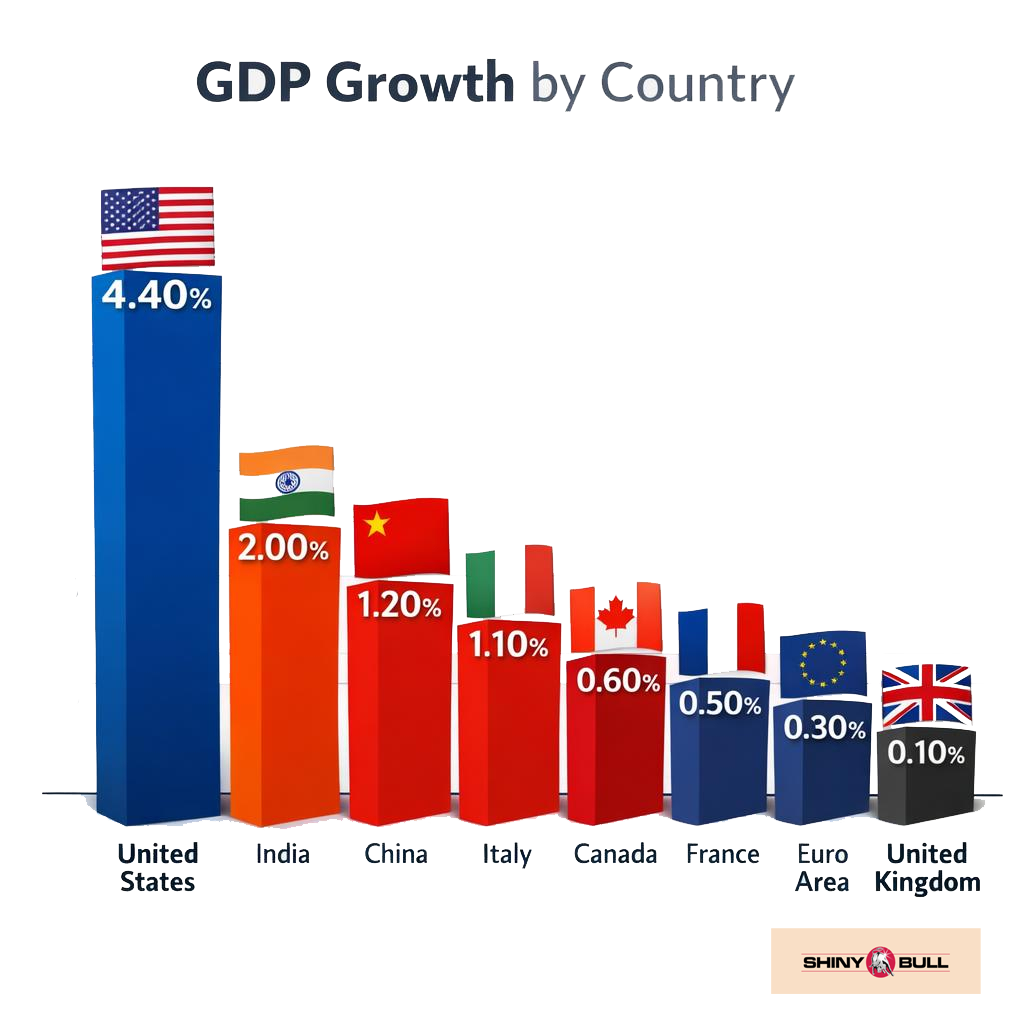
When we look at GDP growth, one thing becomes very clear: the United States is in a league of its own. With growth at 4.4 percent, the U.S. economy is running far ahead of other major economies.

India comes in second — but at less than half the U.S. rate. China, once the global engine of growth, is now barely above one percent. Europe paints a much weaker picture: the euro area, France, and the UK are hovering near stagnation. Italy does a bit better, but still far behind the U.S.

The takeaway is simple: global growth is no longer evenly distributed. The world is increasingly dependent on one dominant economic engine — the United States.
Trumponomics, Taxes, and Tariffs

This dominance is not accidental. Trumponomics — including tax cuts, deregulation, and strategic trade measures — has been designed to strengthen domestic growth. Lower taxes have incentivized investment, increased consumption, and created a multiplier effect across multiple sectors. Simply put: lower taxes mean more growth.

Tariffs have also contributed, protecting key industries and encouraging reshoring. While not the main driver of GDP growth, they amplify the effect of pro-growth policies, keeping production and capital inside the United States.

Crypto and Blockchain: America’s Catalyst

Digital infrastructure, crypto, and blockchain have emerged as powerful catalysts for U.S. economic dominance. While crypto-related activity still represents only a small fraction of U.S. GDP today, it facilitates faster capital flows, scalable services, and innovative financial systems.

Blockchain doesn’t drive the economy on its own — but it reinforces American economic advantage and positions the U.S. to maintain its lead as digital systems expand.

Blockchains are the future, not just for finance, but for the infrastructure of value itself. And America is at the forefront.

Innovation vs. Bureaucracy

A key driver behind continued U.S. economic growth is innovation—particularly in advanced manufacturing and energy technology. Companies like Tesla, led by Elon Musk, have played a pioneering role by pushing battery technology to a new level, giving the U.S. a clear competitive advantage in electric vehicles and energy storage.

In contrast, Europe—and Germany in particular—has been slowed by regulatory complexity and bureaucratic inertia. While innovation in the U.S. is often enabled by speed, scale, and risk-taking, European industry must navigate dense layers of regulation, approval processes, and political compromise.

For Germany, whose economy is deeply tied to the automotive sector, this loss of momentum has broader consequences. And as Germany remains the economic locomotive of the EU, the effects of slower innovation are amplified across Europe—raising the question of whether regulation has begun to outweigh competitiveness.

One Engine, Many Passengers

Put it all together: Trumponomics, smart policy, tariffs, and innovative digital infrastructure. The result? America continues to dominate while Europe struggles with stagnation, and China slows. Emerging markets chase momentum.

Growth today in the United States comes not from soil or oil alone, but from systems designed to turn value into profit. Lower taxes, strategic policy, and innovation create a self-reinforcing cycle — one that keeps the U.S. in the driver’s seat.

Oil once defined power. Today, code, capital, and blockchain define it. And in that world, the United States still owns the refinery.

Disclaimer: The views expressed in this article are those of the author and may not reflect those of Shinybull.com. The author has made every effort to ensure the accuracy of the information provided; however, neither Shinybull.com nor the author can guarantee the accuracy of this information. This article is strictly for informational purposes only. It is not a solicitation to make any exchange in precious metal products, commodities, securities, or other financial instruments. Shinybull.com and the author of this article do not accept culpability for losses and/ or damages arising from the use of this publication.

Leave a comment

Filed under Politics

Is this crazy, bubble-like speculation?

Coinbase went public a few days ago and that helped crytocurrencies like Bitcoin and Etherium. But the biggest winner this week was a little dog. A cryptocurrency called Dogecoin. That coin has gone up 400% in a week. Not bad for a little dog, eh?

Fortune wrote about the «Coinbase Effect» which is a new phenomenon in the world of cryptocurrency. The idea is that the price of cryptocurrencies that are going to be listed for sale on a dominant crypto exchange such as Coinbase, begin to rise in the days after the news becomes public.

According to Barron`s, the effect of getting a cryptocurrency listed on the exchange plays a big role in what cryptocurrencies gain acceptance and which ones may get left behind. One of those who seems to survive is Dogecoin, but some people are worried it`s already a bubble. Time will show.

To contact the author: post@shinybull.com

Disclaimer: The views expressed in this article are those of the author and may not reflect those of Shinybull.com. The author has made every effort to ensure the accuracy of the information provided; however, neither Shinybull.com nor the author can guarantee such accuracy. This article is strictly for informational purposes only. It is not a solicitation to make any exchange in precious metal products, commodities, securities, or other financial instruments. Shinybull.com and the author of this article do not accept culpability for losses and/ or damages arising from the use of this publication.

Leave a comment

Filed under Crypto

Crypto Party!

Wednesday will be a historic day. Coinbase will make stock market history as the first company specializing in cryptocurrencies to launch an initial public offering. Well, it`s not a traditional IPO but a direct listing called DPO.

This can probably be the most important IPO/DPO of 2021, and the most interesting thing about this IPO/DPO is the difference between the traditional centralized market and the decentralized cryptocurrency market.

I wrote about Bitcoin 8 years ago and the price at that time was $100 – $200, and it has been a wild ride since then. The Coinbase IPO comes at a time were Bitcoin is trading at an all-time high around $63,000.

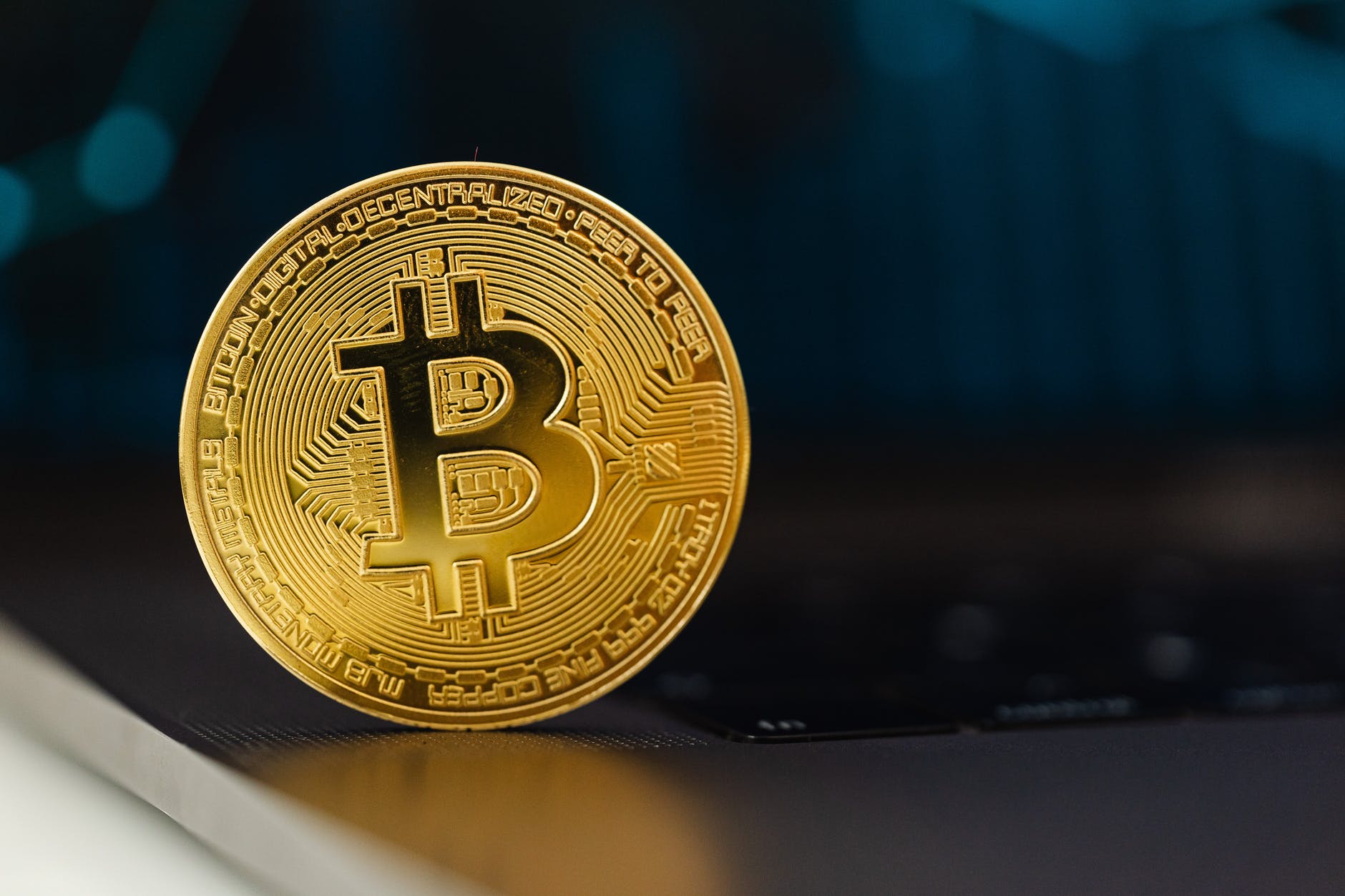
Photo by Karolina Grabowska on Pexels.com

A lot of people are very sceptical about the cryptocurrency market, but this IPO/DPO can reduce this scepticizm and make more people to invest in this market which is a great alternative currency in the future.

The company is founded in 2012 but have a valuation of around $100 billion. They have 56 million users in over 100 countries, and last week, Coinbase reported a revenue of $1,8 billion for the first quarter of 2021. In 2020 they reported revenue of $1,14 billion. Up 139% from 2019.

There is great oportunities, but Coinbase also comes with its own set of risks.

The company said in its prospectus that its revenue is «substantially dependent on the prices of crypto assets and volume of transactions conduted on our platform» and that 56% of its revenue comes from Bitcoin and Etherium transactions.

Coinbase warns that if cryptocurrency prices, demand or volume declines, its business would be severely affected. While the company has established security protocols, it also noted that there is always potential for cyber attacks or security breaches.

«We have experienced from time to time, and may experience in the future, breaches of our security measures due to human error, malfeasance, insider threats, system errors or vulnerabilities, or other irregularities,» Coinbase wrote in its prospectus.

«Unauthorized parties have attempted, and we expect that they will continue to attempt, to gain access to our system and facilities, as well as those of our customers, partners, and third-party service providers.»

In addition, Coinbase cites «significant regulatory uncertainty» as one of its major business concerns, noting that regulators around the globe have increased their scrutiny of digital currencies.

A valuation of $100 billion will make Coinbase the biggest financial exchange in the world. Its operating margin of around 55% is far from that of Wall Street banks last year.

Coinbase generated 0,46% on each dollar it traded in cryptocurrrencies for customers. Last year, ICE and Nasdaq made an average of 0,01% on each dollar of securities traded. As you can see, this is big business for Coinbase, but for how long will it last?

They`re not alone in the crytocurrecy market, and sooner or later, I believe that competitors like Binance, Gemini, Kraken or Bitstamp to name a few, will follow Coinbase and push the fees down.

The operating margins for the largest investment banks is about 23%. If Coinbase drops to that level, with a revenue growth at a strong 21%, the company will be worth $18,9 billion, according to Fortune. Keep in mind that 21% revenue growth is what Nasdaq achieved in its rapid growth phase.

Keep in mind that the Coinbase IPO media is talking about is not an IPO. It is a DPO, which is a direct listing and I don`t know why media mistakenly describe it as an IPO. The difference is that IPO shares get allocated at a pre-established price. Direct listing shares do not.

In an IPO, investment bankers set the share price as high as they think the market will pay for the shares. In an DPO, there is no pre-set price dedicated by a group of investment bankers. IPO raise new capital, but direct listings do not.

The DPO will not fill Coinbase`s pockets with cash, but it will make it more easy for them to raise capital going forward. A DPO is a liquidity event. An IPO is a capital-raising event. That`s the difference.

Therefore; an IPO is less volatile than an DPO, because large institutions and other shareholders are typically locked up in the first 6-12 months. A DPO doesn`t have that kind of lockup and can dump the shares the same day they go public.

We didn`t see unexpected volatility in Spotify and Slack when they went public in their DPO, but Palantir`s shares slumped the day the lockup expired.

Coinbase shareholders will probably wait and see how trading is going before submitting their offers, and that can affect the nubmer of shares being traded and could exacerbate price swings. But that`s exactly how it is in the crypto space right now.

Coinbase has registered 114,850,769 shares eligible for sale, but nobody knows how many shares will change hands on Wednesday. It is a direct listing and the market sets the initial price. Not a group of investment bankers in an IPO. That`s exactly how it is in the crypto space. Open and transparent.

Wednesday will be a historic day and this week will be a good week for the crypto market. Let the crypto party begin.

To contact the author: post@shinybull.com

Disclaimer: The views expressed in this article are those of the author and may not reflect those of Shinybull.com. The author has made every effort to ensure the accuracy of the information provided; however, neither Shinybull.com nor the author can guarantee such accuracy. This article is strictly for informational purposes only. It is not a solicitation to make any exchange in precious metal products, commodities, securities, or other financial instruments. Shinybull.com and the author of this article do not accept culpability for losses and/ or damages arising from the use of this publication.

Leave a comment

Filed under Crypto, DPO, IPO