
Something big is happening in the restaurant market. Not only in the United States, but also across Europe. Fast food chains are no longer as crowded as they once were, and many brands are being forced to close underperforming locations. A reset in the restaurant industry has begun, and both customers and companies are feeling the impact. Some will lose. Others will emerge as winners.
There are many reasons behind this shift, but one of the most outspoken voices driving the conversation is Robert F. Kennedy Jr.. He has not minced words when it comes to the state of modern diets. “We are pumping ourselves full of poison,” he has said, criticizing the widespread reliance on ultra-processed, convenience-driven food.
From McDonald’s burgers to sugar-heavy soft drinks, Kennedy frames current eating habits as a public health crisis. His message is clear: Americans need to return to whole, unprocessed foods and rethink what they consume daily. We hear exactly the same words in Europe as well.
He frequently highlights fast food chains, ultra-processed meals, and sugary beverages, but his message goes beyond simple criticism. It signals a deeper shift in consumer behavior. The restaurant industry, long built on cheap, mass-produced meals, is starting to feel the pressure.
And Kennedy is not the only reason for this reset.
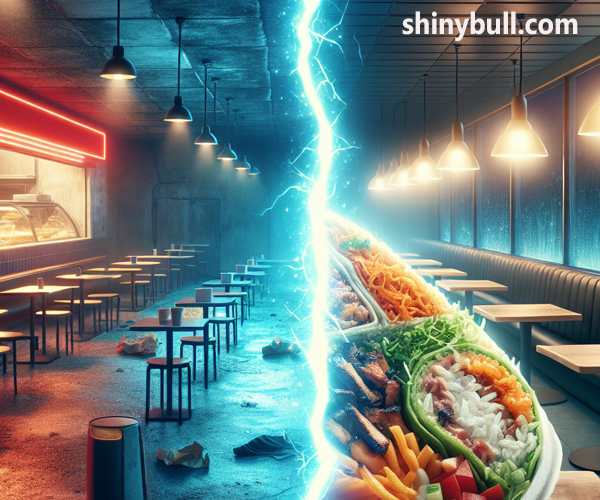
Rising costs, inflation, and labor shortages are forcing restaurants to increase prices, while growing health awareness is making consumers more selective. The result is a fundamental shift. This is not a collapse. It is a reorganization. Old models built purely on convenience and scale are giving way to faster, more focused, and more health-conscious concepts. The era of unchecked fast food dominance may be fading, and those who adapt will define the next phase of the industry.
Winners and Losers in the Reset
The reset is already reshaping the competitive landscape. Fast-casual chains like Chipotle Mexican Grill, Sweetgreen, and Cava are thriving, offering customizable meals that combine speed with perceived quality. Delivery-first concepts, sometimes operating without traditional dining rooms, are also gaining ground by reducing costs and meeting customers where they are.
Even global giants like McDonald’s and Starbucks are adapting. They are streamlining menus, investing in technology, and focusing on convenience. At the same time, they are closing weaker locations to strengthen overall performance.
Meanwhile, parts of the traditional restaurant sector are struggling. Chains like TGI Fridays and Applebee’s are shutting down locations as they fail to compete with faster, simpler, and more clearly defined concepts. Consumers are increasingly unwilling to pay premium prices for slow, predictable dining experiences that offer little differentiation.
In many ways, the industry is entering a Darwinian phase. Only the most adaptable and focused players are likely to survive.
The Role of Perceived Value
At the center of this shift lies one critical factor: perceived value.
Fast food was once synonymous with low prices and convenience. Today, that equation has changed. A typical fast food meal can now cost nearly as much as a casual dining experience, without delivering the same quality or atmosphere. This creates a growing disconnect between price and expectation.
Inflation, labor costs, and rising ingredient prices have forced companies to raise prices, but consumers have not adjusted their expectations at the same pace. The result is a value gap. Customers are increasingly asking a simple question: Is it worth it?
The brands that succeed in this new environment are those that can combine speed, quality, and transparency. Increasingly, value is no longer defined by price alone. It is shaped by health, experience, and trust.
The Future of Food: Speed, Identity, and Experience
Looking ahead, the restaurant industry is likely to become more focused, more digital, and more brand-driven.
The winners will not simply be those who serve food quickly, but those who offer a clear identity and a compelling experience. Niche concepts built around health, global flavors, or strong visual branding are gaining traction, particularly among younger consumers.
At the same time, delivery platforms and mobile ordering are transforming how people interact with restaurants. The physical location is becoming less important, while digital presence becomes central. In this new environment, a restaurant is no longer just a place to eat. It is a brand, a lifestyle, and increasingly, a piece of content designed to be shared.
A Cultural Shift, Not Just an Industry Change
What Robert F. Kennedy Jr. has tapped into goes far beyond fast food or restaurant pricing. It reflects a broader cultural shift: growing health awareness, rising skepticism toward industrial systems, and a stronger demand for authenticity.
The reset unfolding in the restaurant industry mirrors similar transformations across the global economy. Outdated models are being challenged, and new ones are emerging in their place.
Fast food chains are not disappearing, but they are being forced to evolve.
In the end, the real question is not whether the industry will survive, but which version of it will define the future, and whether it will align with a population that is slowly, but surely, rethinking what it means to eat well.

Disclaimer: The views expressed in this article are those of the author and may not reflect those of Shinybull.com. The author has made every effort to ensure the accuracy of the information provided; however, neither Shinybull.com nor the author can guarantee the accuracy of this information. This article is strictly for informational purposes only. It is not a solicitation to make any exchange in precious metal products, commodities, securities, or other financial instruments. Shinybull.com and the author of this article do not accept culpability for losses and/ or damages arising from the use of this publication.
 Ket Garden
 Business, Politics, Finans