
In the wake of the largest protests against the Iranian regime in decades, the world has witnessed a sharp increase in the use of the death penalty in Iran. According to human rights organizations, at least 1,500 people were executed in 2025—an unprecedented level in the history of the Islamic Republic. Many of these executions followed expedited proceedings and lacked what the regime itself would describe as a thorough and fair trial. The death penalty has increasingly been used as a tool to spread fear and crush opposition.
Reports of arrests, mass killings, and brutal reprisals against protesters have been widespread. In some cases, families have been informed that executions were imminent, with only very short notice.
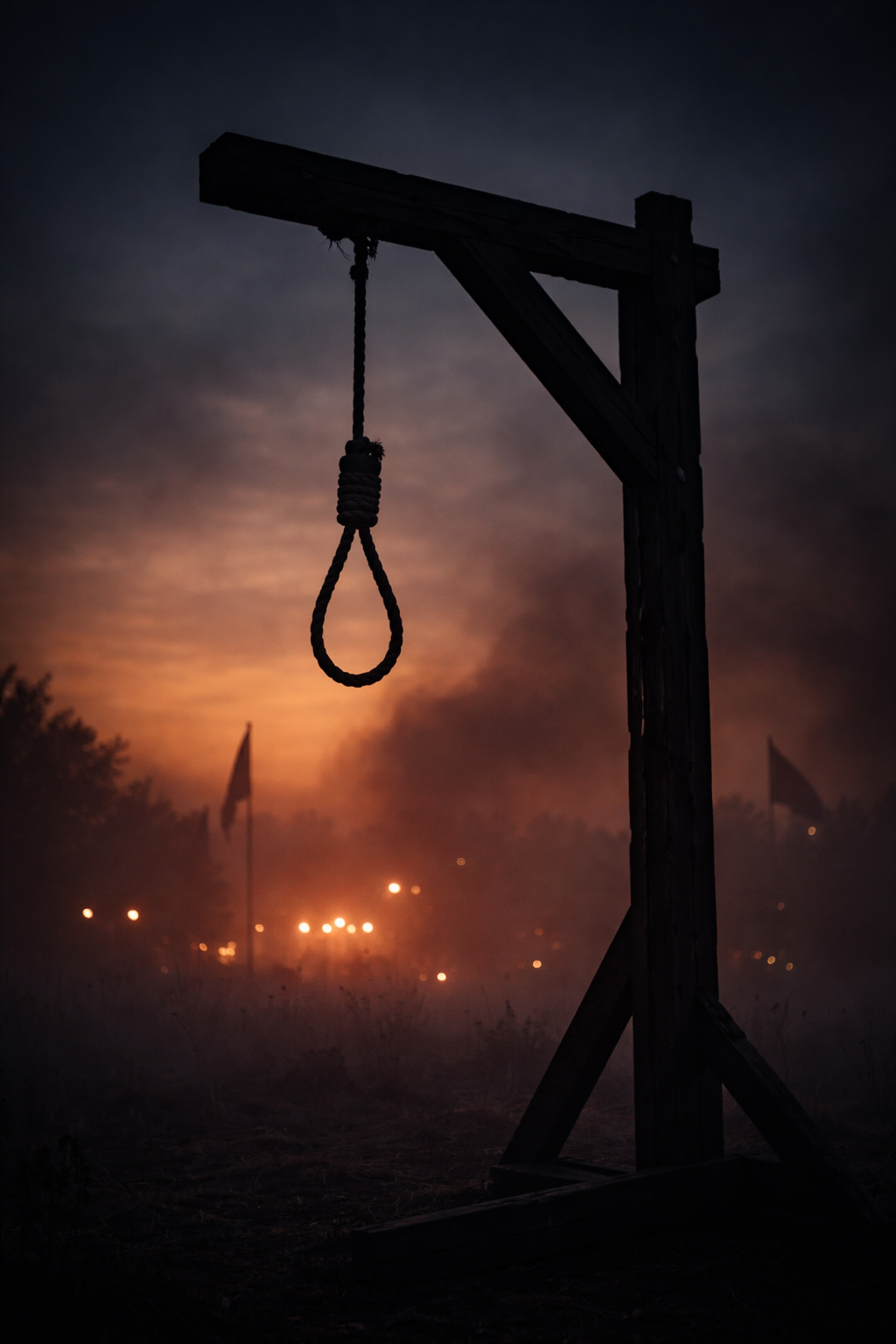
Erfan Soltani – A Symbol of a New Threat
The 26-year-old Iranian protester Erfan Soltani was arrested during the large-scale demonstrations that began in early January 2026. He was quickly sentenced to death on charges of moharebeh—“enmity against God”—a grave accusation frequently used against political opponents in Iran. His family was reportedly given only ten minutes to say goodbye before his planned hanging, triggering international condemnation and warnings from the United States of possible consequences should the execution be carried out.
Following international pressure, including statements from U.S. political leadership, some sources reported that the planned execution may have been postponed or canceled. However, Iran’s judiciary has claimed that parts of the media coverage were “fabricated” and has denied that a death sentence was definitively issued in the case, as reported by some outlets.
Even though the specific outcome of this case remains contested, it nonetheless illustrates a clear pattern: Iranian authorities have made extensive use of the death penalty for years, and protesters have been sentenced after extremely rapid proceedings that human rights groups describe as inadequate and deeply unjust.
A Pattern of Death Sentences Against Opposition
The use of capital punishment in Iran is not new and has long been a recurring element of how the regime responds to protests and dissent. During the demonstrations following the death of Mahsa Amini in 2022, several protesters were sentenced to death and executed on charges such as moharebeh and efsad-e fel-arz (literally “corruption on earth”).
In 2024, the United Nations and human rights organizations reported that at least hundreds of protesters and others had been executed on such charges, often following rushed and highly questionable judicial processes.
What This Means
These developments signal a new phase in Iran’s response to domestic unrest: not only violent crackdowns and mass arrests, but also the threat of capital punishment as a public instrument of intimidation. While some of the most extreme claims circulating online—such as reports of tens of thousands of death sentences—are unsubstantiated or false, there are documented cases of executions and a genuine fear that the death penalty is being used to silence criticism and suppress protest.
Parallels to Afghanistan: Public Terror as a Tool of Power
Developments in Iran also evoke strong parallels to Afghanistan under Taliban rule. There, the regime has employed public executions, hangings from streetlights, and the display of bodies in public spaces as a deliberate strategy to intimidate the population into submission. This is not merely punishment—it is symbolic terror, where death is made visible to crush resistance throughout society.
Human rights organizations have documented how the Taliban have carried out public hangings, often on charges of “treason,” “immorality,” or collaboration with enemies, without fair trials. The objective is the same as what now appears to be emerging in Iran: to make it unmistakably clear that resistance is not merely dangerous, but fatal.
When Iranian authorities now threaten—or signal—the possibility of public executions of protesters, the country moves toward the same form of tyranny. This is no longer about punishing individuals, but about staging fear. A public execution is meant to be seen, shared, and remembered. It is a warning: This could happen to you.
The difference between Iran and Afghanistan is primarily ideological and historical—not methodological. Both regimes use religious justification, vague charges such as “enmity against God,” and extreme violence to retain power. The result is a society in which the rule of law is sidelined and fear replaces justice.
When Evil Comes Back Around
Jesus said that people can read the signs of the heavens and the earth, yet still misunderstand the times they live in. Today, we see how tyrannies that oppress, torture, and kill believe themselves invincible. But history is clear: the evil you spread to others will eventually return—often in ways that shake even the most powerful.
The Nazis fell, and their leaders were held accountable. Tyrannies in Afghanistan, Iran, and elsewhere carry the same seeds of their own destruction. Karma is not a myth; it is an inexorable law: what you sow, you will reap.
For those who protest, who seek truth and freedom, the danger is real—but their courage writes history. For those who tyrannize their people, punishment is unavoidable—not always immediate, but certain. The universe has a way of restoring balance, and history never forgets.
Fear can keep people down for a time. But justice, truth, and karma are ultimately unstoppable.
When Tyrannies Fall: The Judgment of History
History teaches us one thing with brutal clarity: tyrannies never last forever. They may appear strong, terrifying, and invincible in the moment, but they always carry the seeds of their own destruction. Nazi Germany is among the clearest examples. Built on ideology, fear, propaganda, and systematic violence, it ultimately collapsed under the weight of its own crimes.
After World War II came the Nuremberg Trials. For the first time in history, leaders of a regime were held personally accountable for crimes against humanity. It was not revenge. It was the rule of law’s response to barbarism. A clear message to the world: “Following orders” is no excuse when human rights are trampled.
What many ask today is why contemporary theocratic tyrants—such as the clerical regime in Iran—continue to evade the same historical reckoning. A regime that executes its own people, supports terrorist organizations, oppresses women, silences truth, and weaponizes religion commits crimes not only against its own citizens but against humanity as a whole.
If history is to be more than words in textbooks, it must also serve as a moral compass. Just as the Nazis were brought to trial after the war, today’s oppressors deserve legal accountability—not for the sake of vengeance, but for justice. Not only for the people of Iran, but for all who believe in human dignity, freedom, and responsibility.
History does not forget.
It only waits.

Disclaimer: The views expressed in this article are those of the author and may not reflect those of Shinybull.com. The author has made every effort to ensure the accuracy of the information provided; however, neither Shinybull.com nor the author can guarantee the accuracy of this information. This article is strictly for informational purposes only. It is not a solicitation to make any exchange in precious metal products, commodities, securities, or other financial instruments. Shinybull.com and the author of this article do not accept culpability for losses and/ or damages arising from the use of this publication.
 Ket Garden
 Business, Politics, Finans