
The Tyler Robinson case sends a chilling message to the world — when punishment fades, chaos rises.
Prosecutors are seeking the death penalty for Tyler Robinson, the man accused of assassinating conservative activist Charlie Kirk in Utah. Robinson could face one of the harshest punishments in U.S. law: death by firing squad.
Utah is one of only two U.S. states — along with South Carolina — that still allow this method of execution. The last person to be executed by firing squad in the United States was Ronnie Lee Gardner, who faced the same punishment in Utah in 2010. Robinson could be next.
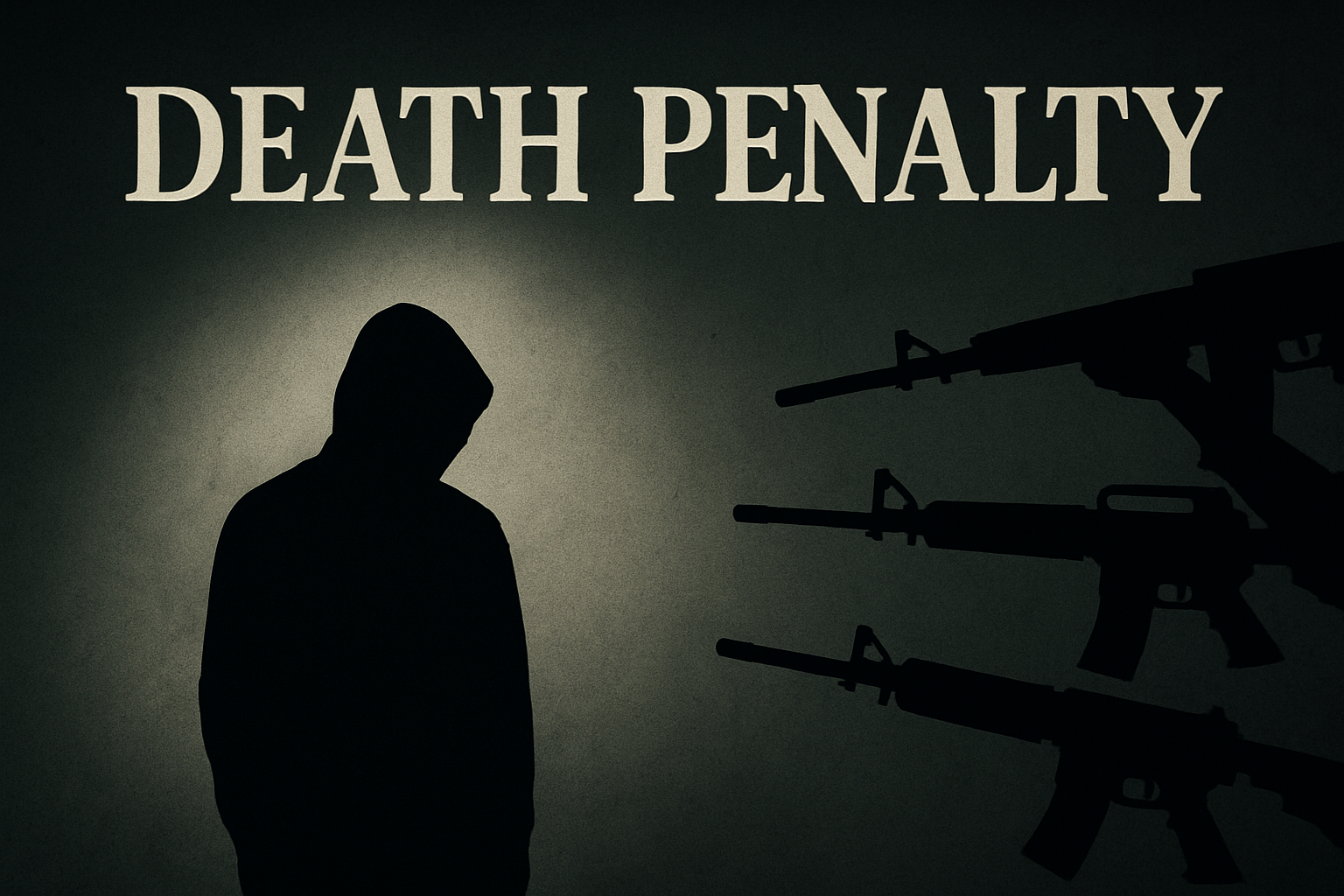
This case has sharply divided the public. Some are celebrating Kirk’s death, while others are furious and see Robinson as a symbol of evil. The contrast reveals a deep fracture in society — one side applauding the act, the other demanding justice.
Yet beyond politics, this case carries a powerful lesson for the world: if someone chooses to commit a senseless and destructive act, they must pay the price.
In many places, punishments have grown so lenient that they no longer scare anyone. And when people feel they have little to lose, they are more likely to take reckless risks. Weak justice systems can actually make the criminal more criminal, emboldening those who believe they will escape serious consequences.
This is why some argue that punishment must be strong enough to deter, not just to punish. The death penalty, while controversial, is seen by many as a way to send an unmistakable message:
“If you destroy lives, you will lose your own freedom — or your life.”
Whether or not Robinson is ultimately executed, this case has already become more than just a trial — it has become a warning to the world.
Justice must be clear. Consequences must be real.
Because if they aren’t, chaos will grow.
Dr. Hannah Cole, a criminal psychologist, summarized it clearly:
“When punishment becomes uncertain or too soft, high-risk individuals feel they have nothing to lose. That’s when society becomes most dangerous — when people stop fearing consequences. Deterrence isn’t about cruelty. It’s about protecting the innocent.”
And there is evidence supporting that view. Nations such as the United Arab Emirates and Qatar, which maintain strict penalties for violent crimes, have some of the lowest murder rates in the world. Meanwhile, many countries with softer penalties have seen rising violent crime. This contrast highlights a harsh truth: leniency can invite lawlessness, but strong deterrence can preserve peace.

Disclaimer: The views expressed in this article are those of the author and may not reflect those of Shinybull.com. The author has made every effort to ensure the accuracy of the information provided; however, neither Shinybull.com nor the author can guarantee the accuracy of this information. This article is strictly for informational purposes only. It is not a solicitation to make any exchange in precious metal products, commodities, securities, or other financial instruments. Shinybull.com and the author of this article do not accept culpability for losses and/ or damages arising from the use of this publication.
 Ket Garden
 Shiny bull